CFB 1KR Engine (1.0 VTi / 1.0i) 72 HP: Ownership Impressions, Issues, Fuel Consumption and Used-Buying Tips
Key points in short (TL;DR)
- Extremely reliable 3-cylinder naturally aspirated engine, developed in cooperation with Toyota (based on the famous 1KR-FE).
- The engine uses a timing chain instead of a timing belt, which drastically reduces regular maintenance costs.
- No expensive components such as a dual-mass flywheel, turbocharger or sensitive injectors.
- Very low fuel consumption in city driving, ideal for short trips.
- Loud on the motorway, and the lack of torque is noticeable on inclines and under load.
- Robotised gearboxes (ETG / 2-Tronic) can be jerky and require specific maintenance; the manual gearbox is recommended.
Contents
- Introduction: A small engine with big potential
- Technical specifications
- Reliability and maintenance
- Specific parts and costs
- Fuel consumption and performance
- Additional options and modifications
- Gearboxes: Failures and maintenance
- Buying used and conclusion
Introduction: A small engine with big potential
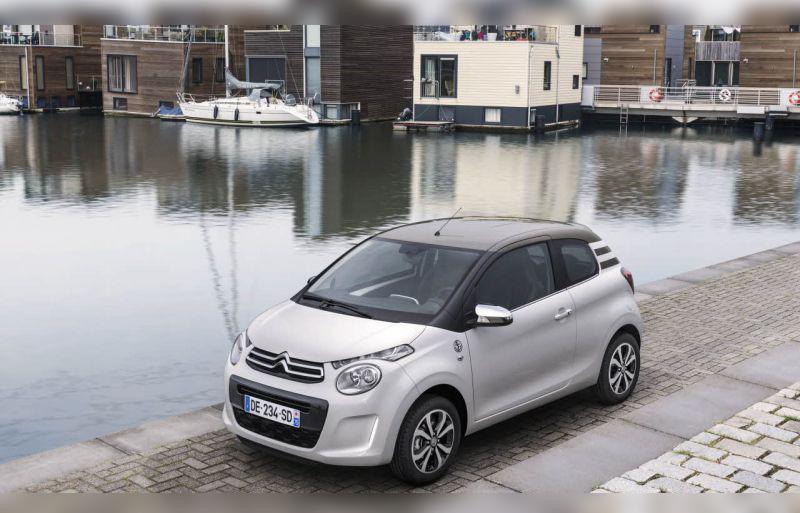
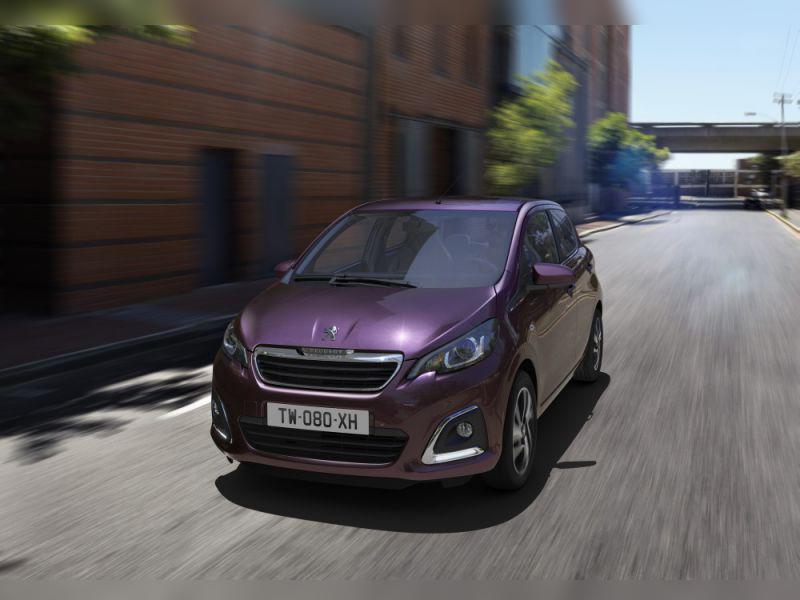
The engine designated as CFB 1KR, better known within the PSA group (Citroën and Peugeot) as 1.0 VTi or 1.0i, is the heart of the A-segment. It was installed in models such as the Citroën C1 II and Peugeot 108 (in standard, S&S, Airscape and TOP! Cabrio versions). It is tried-and-tested mechanicals originating from Toyota. It was designed to be light, simple, extremely economical and above all – cheap to own. If you are looking for a power unit for daily threading through city traffic, this is one of the most rational choices on the European market.
Technical specifications
| Parameter | Specification |
|---|---|
| Engine displacement | 998 cc |
| Engine power | 53 kW (72 HP) |
| Torque | 126 Nm |
| Engine codes | CFB, 1KR |
| Injection type | Indirect (Multi-Point Injection - MPI) |
| Air intake | Naturally aspirated engine (No turbo) |
Reliability and maintenance
Powertrain and most common failures
This engine can boast the fact that it uses a timing chain instead of a timing belt. Thanks to that, there is no classic “major service” in the sense of mandatory timing replacement at a specific mileage. The chain is designed to last as long as the engine itself, although in practice it is recommended to visually and acoustically inspect it at around 150,000 km. If you hear a metallic "rattle" or "scraping" from the engine area during a cold morning start, that is a clear symptom that the chain has stretched and that it is time to replace the timing set.
As for the most common issues, the CFB 1KR engine has no catastrophic flaws that will leave you stranded, but it does have a few characteristic weak points. First on the list is the water pump. Its service life often does not exceed 80,000 to 100,000 km. Drivers may notice this through a slight loss of coolant (antifreeze) or traces of pink fluid around the pump itself. Also, ignition coils tend to fail, which results in rough running, loss of power and the "Check Engine" light coming on in the instrument cluster.
Oil and regular servicing
For a regular minor service this engine takes exactly 3.1 litres of engine oil (including the filter). The manufacturer strictly recommends 5W-30 or 0W-20 (especially for S&S – Start&Stop systems, for faster lubrication with frequent starts in city driving). As for oil consumption, these engines are "tight" from the factory, but once they pass 150,000 km, consumption of around 0.2 to 0.3 litres per 1,000 km is considered normal tolerance. If you notice bluish smoke from the exhaust under acceleration, this is a sign that the piston rings or valve stem seals have worn, usually due to irregular oil changes or past overheating.
Since this is a petrol engine, regular spark plug replacement is crucial for smooth running and optimal fuel consumption. From the factory they usually come with iridium spark plugs which are replaced at around 90,000 km, although due to poorer fuel quality it is recommended to replace them earlier, at around 60,000 km. Symptoms of worn spark plugs are harder starting, jerking when accelerating from low revs and uneven idle (the engine already has mild vibrations due to 3 cylinders, but with bad plugs they become unbearable).
Specific parts and costs
What makes this engine a true savings champion is what it doesn’t have. The CFB 1KR does not have a dual-mass flywheel – it uses a simple, solid flywheel, which from the outset eliminates headaches about expensive replacements when the clutch fails. It also has no turbocharger; it is a classic naturally aspirated engine, which means an immediate (albeit modest) throttle response and the absence of costly turbo failures.
The fuel system is indirect (MPI), with one injector per cylinder in the intake manifold. These petrol injectors are extremely robust, rarely clog and are not overly sensitive to fuel impurities. If slight clogging does occur (symptoms: weaker acceleration, mild jerking), preventive ultrasonic cleaning is a cheap and very effective procedure.
In terms of emissions, since it is a petrol engine, this model does not have a DPF filter and does not use AdBlue fluid, which frees you from the biggest nightmares of modern diesels. Depending on the exact production year and Euro standard, some versions have an EGR valve, although on this petrol engine it rarely causes problems; only in extreme cases of exclusively stop-and-go city driving can soot build up, but it is relatively easy and inexpensive to clean.
Fuel consumption and performance
Is this car “sluggish”?
With its 72 HP and 126 Nm of torque, the engine is anything but "sluggish" – as long as you stay in the city. The Citroën C1 and Peugeot 108 weigh under 900 kg, so this unit pulls very briskly from traffic light to traffic light. However, the picture changes drastically outside town. With four passengers on board, the air conditioning on and a slight incline, the engine quickly runs out of breath and the driver is forced to frequently shift down with the accelerator pedal pressed to the floor.
City economy and motorway noise
Realistic city fuel consumption is in the range of 5.5 to 6.5 l/100 km, depending on driving style and traffic density. On open roads, with smooth driving, consumption easily drops below 4.5 l/100 km.
On the motorway, however, it does not cope very well. At a cruising speed of 130 km/h, the engine spins at a very high around 3,800 to 4,000 rpm (in 5th gear). This results in a significantly increased noise level in the cabin, reduced comfort and a sharp rise in fuel consumption, which then exceeds 7 litres. At these speeds the car also requires a firm hand on the steering wheel due to the light body’s sensitivity to crosswinds.
Additional options and modifications
LPG conversion
If you cover huge mileages, installing LPG is technically possible and not expensive (depends on the market) thanks to the simple MPI injection system. However, the question of cost-effectiveness arises, as this engine already uses very little fuel. In addition, the valves on this engine (due to their origin and material) can be sensitive to the higher combustion temperatures of LPG, so installing a so‑called “valve saver” system (additional valve lubrication and cooling – Flashlube) is absolutely recommended to prevent premature valve seat recession or burning.
Chipping (Chiptuning / Stage 1)
The simple answer: Don’t waste your money. Since this is a small naturally aspirated engine without a turbo whose boost could be increased, a Stage 1 remap brings a laughable gain of barely 4 to 6 HP and a minimal torque increase. In everyday driving you will not notice any difference, and you will only put additional stress on the mechanicals.
Gearboxes: Failures and maintenance
Two types of gearboxes are paired with the CFB 1KR engine: a classic 5-speed manual gearbox and a 5-speed robotised gearbox (designated ETG in Citroën models and 2-Tronic in Peugeot models).
Manual gearbox and clutch
The manual gearbox is robust, but due to constant city use the clutch kit (friction plate, pressure plate, release bearing) regularly wears out. Fortunately, due to the absence of a dual-mass flywheel, clutch replacement costs fall into the “not expensive” category (depends on the market). Symptoms of a worn clutch are a very high biting point of the pedal and slipping when accelerating uphill. As for gearbox failures, occasional wear of the 1st or 2nd gear synchros can occur, causing the gearbox to "crunch" during fast shifts.
Robotised gearbox (ETG / 2-Tronic)
This is not a conventional automatic. It is a standard manual gearbox with electric motors (actuators) added to operate the clutch and change gears instead of you. This system is known for jerky and very rough gear changes, especially in stop-and-go traffic. Clutch actuators are prone to failure, and replacement or overhaul falls into the expensive category (depends on the market). If the automatic transmission judders when moving off or makes long pauses between gears, a computer calibration (adaptation) of the actuators or replacement of the entire clutch kit is required.
One golden rule applies to both gearboxes: although many claim that gearbox oil is “lifetime” and does not need changing, every good mechanic will advise replacing the gearbox oil at 60,000 to 80,000 km, which extends the service life of bearings and synchros.
Buying used and conclusion
What to check before buying?
- Cold-start sound test: Ask the seller not to start the car before you arrive. When you start it, listen carefully. If you hear the metallic rattle of the chain from the area near the passenger-side wheel, factor in the cost of timing replacement.
- Visual inspection under the bonnet: Look around the water pump and auxiliary belt area. Pink or bluish crystallised traces indicate coolant leakage and an imminent pump replacement.
- Test drive: Release the clutch (on the manual). If the pedal only bites right at the top of its travel, the clutch kit is at the end of its life. On the robotised gearbox, gently apply throttle from a standstill – the car should move off smoothly, without strong jerks and “kangarooing”.
- Idling behaviour: The engine will shake slightly because it has three cylinders – that is normal by design – but the revs should not fluctuate and it should not “stumble”.
Final verdict
The CFB 1KR (1.0 VTi 72 HP) engine is a fantastic engineering compromise designed strictly for its target group. If you live in an urban area and use the car for commuting, university, taking kids to school or delivery work – this is by far one of the most cost-effective powertrains you can buy in a used car. Regular maintenance is affordable, and the risk of eye‑wateringly expensive failures is minimal. Avoid robotised gearboxes unless an automatic is absolutely essential to you, choose the classic manual, change good-quality oil regularly and this little engine will serve you for hundreds of thousands of kilometres without major issues.