B48A20E Engine
- Engine
- 1998 cm3
- Aspiration
- Twin-power turbo, Intercooler
- Fuel
- Petrol (Gasoline)
- Fuel injection system
- Direct injection
- Power
- 265 hp
- Torque
- 400 Nm
- Cylinders
- 4
- Valves
- 16, 4 per cylinder
- Cylinders position
- Inline
- Valvetrain
- VALVETRONIC
- Oil capacity
- 5.25 l
- Coolant
- 10.8 l
- Systems
- Start & Stop System, Particulate filter
# Vehicles powered by this engine
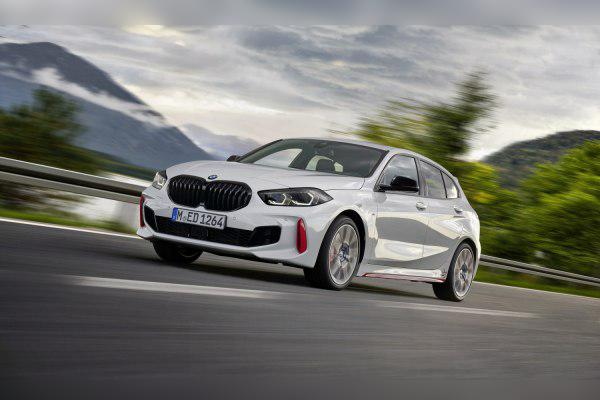
BMW B48A20E (128ti) – Experiences, Problems, Fuel Consumption and Used Car Buying Guide
The B48A20E engine represents the pinnacle of engineering among Munich’s two‑liter four‑cylinders, specifically tuned for a model that stirred up a lot of dust – the BMW 128ti (F40). This is BMW’s answer to the Volkswagen Golf GTI; the first true front‑wheel‑drive “hot hatch” from Bavaria.
This powerplant is part of the modular “B” engine family and a direct successor to the N20 engine. Although it shares its base with engines found in the 3 or 5 Series, the version in the 128ti is specific because it is mounted transversely, which dictates certain differences in maintenance and supporting components. In this text we’ll frankly analyze whether this is an engine that will put a smile on your face or empty your wallet.
Key points in short (TL;DR)
- Performance: Explosive engine with 400 Nm of torque available at low revs. It never feels “lazy” in any situation.
- Drivetrain: Transversely mounted, front‑wheel drive (FWD) with a Torsen mechanical limited‑slip differential.
- Timing: Uses a timing chain mounted at the rear of the engine (by the gearbox). More reliable than on older models, but expensive to replace.
- Cooling: Weak point are the plastic housings and coolant hoses that become brittle.
- Fuel consumption: Moderate on the open road, but in the city it easily exceeds 10–11 liters if you have a “heavy right foot”.
- GPF filter: Equipped with a gasoline particulate filter. Sensitive to short urban trips.
- Recommendation: An excellent choice for enthusiasts who want a modern, fast car, but it requires strict maintenance of the oil and cooling system.
Contents
- Technical specifications
- Reliability and Maintenance
- Specific Parts and Costs
- Fuel Consumption and Performance
- Additional Options and Modifications
- Gearbox
- Buying Used and Conclusion
Technical specifications
These are the factory figures for the B48A20E version found in the 128ti:
| Specification | Value |
|---|---|
| Engine code | B48A20E |
| Displacement | 1998 cc (2.0 L) |
| Power | 195 kW (265 hp) |
| Torque | 400 Nm at 1350–4600 rpm |
| Configuration | Inline 4‑cylinder |
| Injection type | Direct injection (High Precision Injection) |
| Charging | Twin‑scroll turbo + intercooler |
Reliability and Maintenance
Timing system: Chain or belt?
The B48A20E engine uses a timing chain. Unlike some older BMW engines, the chain on the B48 series has proven to be much more durable and is not prone to snapping without warning. However, there is a catch. The chain is located at the rear of the engine (towards the cabin/gearbox). Although it is designed to last the life of the engine, in practice a preventive inspection or replacement is recommended at around 200,000 km, or if you hear rattling on cold start. Due to the chain’s position, replacement is labor‑intensive and expensive, as it requires removal of the engine or gearbox.
Most common failures and symptoms
Although this is a robust engine, owners should pay attention to the following:
- Coolant leaks: This is the most common issue. The problematic points are the water pump and the oil filter housing, as well as plastic return hoses that become brittle from heat and crack. Symptom: Smell of coolant in the cabin or a puddle under the car.
- Fuel tank venting system: The purge/vent valve can stick, which leads to rough idle or a “Check Engine” light.
- VANOS solenoids: They can get dirty or fail, causing loss of power and uneven torque delivery.
Service intervals and oil
There is no “major service” in the classic sense (belt replacement) because of the chain, but the auxiliary (serpentine) belt and tensioner should be replaced at around 100,000 km. The oil is the lifeblood of this engine. The B48A20E takes approximately 5.25 liters of oil. The recommended grade is usually 0W‑20 or 5W‑30 (BMW Longlife‑17 FE+ specification). Recommendation: Forget the factory 30,000 km interval. Change the oil every 10,000 km, 15,000 km at the absolute most. The turbocharger and the fine channels of the VANOS system will thank you.
Oil consumption
B48 engines are known for being “tight” and not consuming much oil. Consumption of up to 0.5 liters per 10,000 km is acceptable, especially if the car is driven aggressively in Sport mode. If it uses more than a liter between minor services, that points to issues with piston rings or valve stem seals, or a leak at the turbo.
Spark plugs (petrol)
Since this is a high‑performance engine with direct injection, the spark plugs are under heavy load. Replacement is recommended every 40,000 to 60,000 km. If the engine is tuned (Stage 1), this interval should be halved (every 20–30k km), using one‑step‑colder plugs.
Specific Parts (Costs)
Dual‑mass flywheel
Although it comes exclusively with an automatic gearbox, this setup uses a dual‑mass flywheel (or a similar torsional damping system within the torque converter/assembly) to reduce torsional vibrations of the four‑cylinder. It is long‑lasting, but in case of failure (knocking at idle, vibrations), replacement is expensive (depends on the market).
Injection system and turbo
It uses piezo‑electric direct injection. The injectors are generally reliable, but very sensitive to poor fuel quality. A faulty injector manifests as rough running, black smoke, or engine “knock”. The engine uses a single twin‑scroll turbocharger. There are not two turbos, but one turbo with two exhaust gas channels, which reduces turbo lag. Turbo lifespan is usually over 200,000 km with regular oil changes and proper cooldown after spirited driving.
Emissions: DPF/GPF and EGR
This model (as a modern petrol) does not have a DPF (Diesel Particulate Filter), but it does have a GPF (Gasoline Particulate Filter), also known as OPF. It serves to trap soot. If you drive only in the city, it can clog, which will trigger a warning light on the dash. The solution is to hit the motorway and drive at higher revs (3000+) for about 20 minutes. It also has an EGR valve, but on petrol engines it clogs far less often than on diesels. AdBlue: This engine does not have an AdBlue system, as it is a petrol. That’s one less thing to worry about in maintenance.
Fuel Consumption and Performance
Real‑world fuel consumption
Do not fully trust the factory figures. In real‑world use:
- City driving: Expect between 9.5 and 12 l/100 km. In heavy stop‑and‑go traffic and Sport mode, this easily goes above 13 liters.
- Open road: Here the engine is surprisingly efficient. With normal driving it uses about 6.5 to 7.5 l/100 km.
Is the engine “lazy”?
Absolutely not. With 265 hp and 400 Nm in a 1 Series body, this car is a true pocket rocket. The engine pulls linearly from low revs all the way to the redline. The feeling of body weight disappears thanks to the high torque.
Motorway and cruising
On the motorway the engine is in its element. Thanks to the 8‑speed gearbox, at 130 km/h the engine spins at a low 2000–2200 rpm. This ensures cabin quietness and reasonable fuel consumption. Overtakes are instant and do not require drastic downshifts.
Additional Options and Modifications
LPG conversion
Theoretically possible, but not recommended and not cost‑effective. The engine has direct injection, which requires sophisticated liquid‑phase LPG injection systems (Direct Liquid Injection). Such systems are very expensive (depends on the market), and since the engine still has to use a certain percentage of petrol to cool the injectors, the payback period is too long. You also lose boot space, which is already limited.
Remap (Stage 1)
The B48 engine is “locked” potential. It is very tuning‑friendly. A safe Stage 1 remap can raise power to about 300–310 hp and torque to 450–470 Nm without mechanical changes. The engine can mechanically handle this power without issues, provided it is regularly maintained. Beyond that (Stage 2) already requires changes to the exhaust system (downpipe) and improved cooling.
Gearbox
Type of gearbox
With the B48A20E engine in the 128ti you only get an 8‑speed Steptronic Sport automatic gearbox. It is important to note: this is NOT the famous ZF 8HP gearbox used in rear‑wheel‑drive BMWs (3 Series, 5 Series). Since the engine is mounted transversely, this is an Aisin gearbox (Japanese manufacturer). A manual gearbox was not an option for the 128ti in most markets.
Gearbox reliability and failures
The Aisin 8‑speed is robust and reliable, but somewhat slower to react compared to the ZF 8HP. Most common issues: Harsh shifts from first to second when cold (software‑related or just a characteristic) and potential mechatronics problems at high mileage if the oil is not changed.
Gearbox maintenance
BMW often states that the gearbox oil is “lifetime”. Do not listen to that. The oil in the automatic gearbox should be changed every 60,000 to 80,000 km. This is crucial for the longevity of the valves inside the gearbox. The cost of an oil change is not small (depends on the market), but it is far lower than a full gearbox rebuild.
Note on the differential: The 128ti has a Torsen mechanical limited‑slip differential on the front axle. Although often considered maintenance‑free, check your specialist’s recommendations for differential oil changes if you drive on track frequently.
Buying Used and Conclusion
What to check before buying?
- Cold start: Listen to the engine when it is completely cold. Any chain rattling in the first 3–5 seconds is a bad sign.
- Coolant leaks: Open the bonnet and use a torch to inspect the area around the water pump and under the intake manifold. White residue indicates coolant leaks.
- Service history: Check whether the oil was changed more frequently than every 30,000 km. If the car has done 90,000 km with only 3 oil changes, walk away.
- Gearbox: The gearbox must shift smoothly, without jolts, especially when slowing down and coming to a stop.
- Tyre condition: Since this is a powerful front‑wheel‑drive car, unevenly worn front tyres can indicate suspension issues or aggressive driving by the previous owner.
Final verdict
The B48A20E engine in the BMW 128ti is a fantastic piece of machinery. It offers an excellent balance between everyday usability and sporty performance. It is not as problematic as some older BMW engines, but it does require an owner who understands that “longlife” service intervals are not an option if longevity is the goal.
This engine is aimed at drivers who want excitement behind the wheel, are ready to pay a bit more for fuel and quality maintenance, but in return get one of the best 2.0 turbo engines on the market.
Was this content useful to you?
Your opinion helps us to improve the quality of the content.