B48 Engine
- Engine
- 1998 cm3
- Aspiration
- Twin-power turbo, Intercooler
- Fuel
- Petrol (Gasoline)
- Fuel injection system
- Direct injection and Multi-port manifold injection
- Power
- 312 hp
- Torque
- 400 Nm
- Cylinders
- 4
- Valves
- 16, 4 per cylinder
- Cylinders position
- Inline
- Valvetrain
- Double-VANOS, VALVETRONIC
- Systems
- Start & Stop System
# Vehicles powered by this engine
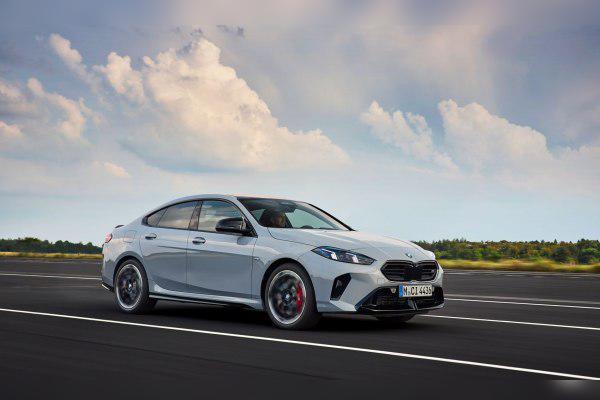
BMW B48 (2.0T 312 HP) – Experiences, Problems, Fuel Consumption and Buying Used
Key points (TL;DR)
- Highly capable engine: The 312 HP version of the B48 is a factory “turned up” unit that offers serious performance, but demands meticulous maintenance.
- Timing chain instead of belt: Located at the rear of the engine (towards the cabin), which makes replacement more complex and expensive, but it is far more durable than on the old N20 engines.
- Cooling system is a weak point: Plastic housings, hoses and junctions are prone to cracking due to high operating temperatures. Coolant leaks are a common issue.
- Transmission (DCT): The F74 model uses a 7‑speed dual‑clutch gearbox. It’s fast, but in stop‑and‑go city driving it can be jerky and requires regular oil changes.
- Sensitive to fuel quality: Direct injection and the GPF filter require only premium high‑octane fuel.
- Recommendation: An excellent engine for enthusiasts who want hot‑hatch performance in a sedan‑like package, provided the maintenance budget isn’t tight.
Contents
- Introduction and Applications
- Technical Specifications
- Reliability and Maintenance
- Specific Components (Costs)
- Fuel Consumption and Performance
- Additional Options and Modifications
- Transmission and Drivetrain
- Buying Used and Conclusion
Introduction and Applications
BMW’s B48 engine is the heart of the Bavarian manufacturer’s modern lineup when it comes to four‑cylinder units. The specific version discussed here, with 312 HP and 400 Nm, represents the very top of the range for this 2.0‑liter engine. It is installed in models bearing the M35i badge (or M235 in the case of the new F74 2 Series Gran Coupe). This is not a “regular” 320i engine that has simply been tuned via software; here we have reinforced pistons, a modified crankshaft, a larger turbocharger and a more efficient cooling system to cope with the high specific load.
This engine is a direct answer to the two‑liter “beasts” from Audi (S3) and Mercedes (AMG A35/A45). It is important because it proves that BMW can build an extremely powerful engine on a transverse platform (front‑biased drivetrain with xDrive), while still maintaining the level of refinement required for everyday driving.
Technical Specifications
| Parameter | Value |
|---|---|
| Engine code | B48 (likely B48A20T2 or a later revision) |
| Displacement | 1998 cc (2.0 L) |
| Power | 230 kW / 312 HP |
| Torque | 400 Nm |
| Injection type | High Precision Injection (Direct) |
| Forced induction | TwinPower Turbo (single twin‑scroll turbo) + intercooler |
| Configuration | Inline 4‑cylinder |
Reliability and Maintenance
Does this engine have a timing belt or a chain?
The B48 engine uses a timing chain. Unlike older generations (the notorious N47 diesel or early N20 petrol), the chain on B48 engines has proven to be much more durable. However, it is located at the rear of the engine (towards the cabin/gearbox). Although it is not designed to be replaced at a fixed interval, in practice it can stretch at higher mileages (over 200,000 km) or due to poor maintenance. Replacement is very expensive (varies by market) because it requires removing the engine or gearbox.
What are the most common issues with this engine?
Although the mechanical components (pistons, crankshaft) are very robust, the ancillaries are sensitive:
- Cooling system: This is the Achilles’ heel. The plastic coolant junction, thermostat housing and thin breather hoses become brittle from heat and crack. Symptoms include sudden coolant loss or a “sweet” smell under the hood.
- Oil filter housing: It often seeps at the joint with the engine block. The problem is that the leak can damage the alternator/AC belt if oil gets on it.
- VANOS actuators: They can fail, causing rough idle and a “Check Engine” light.
At what mileage is a major service required?
On this engine, a “major service” in the classic sense (timing belt replacement) does not exist. Instead, preventive replacement of the serpentine belt, tensioner and water pump is done. It is recommended to thoroughly inspect this system every 80,000 to 100,000 km. If you hear chain rattling (especially on cold start), that is a sign that the timing system needs urgent attention, regardless of mileage.
How many liters of oil does this engine take and which grade is recommended?
The engine takes approximately 5.25 to 5.75 liters of oil (depending on the exact engine code and oil pan, as xDrive versions may have a different pan shape). The recommended grade is 0W‑20 or 5W‑30, with the mandatory specification BMW Longlife‑17 FE+ or BMW Longlife‑04. Given the 312 HP output, it is strongly recommended to use a higher‑quality 5W‑30 or 5W‑40 oil (if allowed in your region’s owner’s manual) for better protection at high temperatures.
Does it consume oil between services?
B48 engines are significantly better sealed than their predecessors. Consumption of 0.5 to 1 liter per 10,000 km is considered acceptable, especially if driven aggressively at high RPM. If it uses more than that, first check the turbocharger and for leaks at valve stem seals or piston rings, although this is rare at lower mileages.
At what mileage should spark plugs be replaced?
This is a high‑performance engine with direct injection. The factory recommendation is often optimistic (60,000 km), but in practice spark plugs should be replaced every 30,000 to 40,000 km. Worn plugs can cause misfires, which may damage the ignition coils and even the catalytic converter.
Specific Components (Costs)
Does this engine have a dual‑mass flywheel?
Yes. Although it is paired with an automatic (DCT) gearbox, this setup uses a dual‑mass flywheel to neutralize four‑cylinder vibrations before they reach the transmission. It is a wear item, but usually lasts longer than on manual gearboxes (often over 150,000–200,000 km). Replacement is expensive (varies by market).
What kind of injection system does it have and are the injectors problematic?
It uses high‑pressure piezo‑electric direct injection. The injectors are generally reliable, but very sensitive to poor fuel quality. Injector failure manifests as fuel leaking into the cylinder, which washes oil off the cylinder walls and can lead to catastrophic engine damage. It is advisable to occasionally use fuel system cleaning additives.
Does this engine have a turbocharger and what is its lifespan?
It has one turbocharger, but it uses “TwinPower Turbo” technology, which in practice means a twin‑scroll design (two separate exhaust gas inlets). This allows for quicker throttle response. Lifespan is closely tied to oil change intervals. If you change the oil every 10–12,000 km, the turbo will easily last over 200,000 km. If you follow “Long Life” intervals of 30,000 km, expect problems much sooner.
Does this model have a DPF filter or EGR valve?
Being a petrol engine, it does not have a DPF, but newer models (especially for the EU market) have a OPF/GPF (Gasoline Particulate Filter). It rarely clogs compared to diesel DPFs, because petrol exhaust gas temperatures are higher. However, it does mute the engine sound. An EGR valve is present for emissions purposes, but on petrol engines it causes fewer soot‑related issues than on diesels.
Fuel Consumption and Performance
What is the real‑world fuel consumption in city driving?
Do not be fooled by factory figures. This is a 300+ HP engine in a not‑so‑light body with xDrive.
City driving: Expect between 11 and 14 liters per 100 km, depending on traffic and how heavy your right foot is. In extreme congestion it can exceed 15 l/100 km.
Is this engine “lazy” for the weight of the car?
Absolutely not. With 400 Nm of torque available from low revs (below 2,000 rpm), the 2 Series Gran Coupe (F74) with this engine really “flies”. Acceleration is explosive and overtaking is effortless. The “pinned to the seat” feeling is present almost all the time.
How does the engine behave on the highway and at what RPM does it cruise at 130 km/h?
This is the car’s natural habitat. Thanks to the 7‑speed gearbox, at 130 km/h the engine runs at around 2,000 to 2,200 rpm (in 7th gear). Fuel consumption then drops to a reasonable 7.5 to 9 liters per 100 km. The engine is very quiet when cruising, yet has enough power in reserve to accelerate to 160 km/h without even needing a downshift.
Additional Options and Modifications
Is this engine suitable for LPG (autogas) conversion?
Not recommended. Due to direct injection, an expensive system is required (liquid LPG direct injection or mixed LPG/petrol systems). Installation costs over 1000–1500 EUR (varies by market), and given that this is a performance‑oriented M‑lite model, LPG can cause issues with combustion temperatures and catalytic converters. You also lose trunk space, which is already limited on the Gran Coupe.
How much can this engine be safely tuned (Stage 1)?
The B48 is a favorite among tuners. A “safe” Stage 1 map that does not require hardware changes can raise power to about 340–350 HP and torque to 450–470 Nm. The engine handles this increase well, but the gearbox and xDrive system are subjected to higher loads. Before any tuning, it is essential to shorten service intervals to 8,000 km.
Transmission
Which transmissions are paired with this engine?
In the F74 M235 xDrive model, the standard setup is a 7‑speed Steptronic dual‑clutch transmission (DCT). It is important to note that this is NOT the ZF 8‑speed automatic (used in the 3 Series, 5 Series, etc. with longitudinal engines). This gearbox is designed for transverse engines (manufactured by Magna/Getrag).
What are the most common issues with the automatic (DCT) gearbox?
DCT gearboxes are quick, but mechanically complex.
Symptoms of problems: Jerking when moving off from a standstill, hesitation at low speeds, delay when engaging “R” (reverse).
Causes: Overheating in stop‑and‑go city driving, worn clutch packs, or mechatronics issues. Proper maintenance is crucial.
How much does clutch replacement cost?
Since this is a dual‑clutch gearbox, the clutch pack is a wear item, but it usually lasts longer than on a manual. Replacement is very expensive (varies by market), as it requires special tools and precise software calibration after installation.
At what mileage should the gearbox be serviced and the oil changed?
BMW often states that the oil is “lifetime”. Forget that. For a long‑lasting DCT, change the oil and filters every 60,000 km. If you drive aggressively, shorten the interval to 40,000–50,000 km. Clean oil is critical for cooling the clutches and for proper mechatronics operation.
Buying Used and Conclusion
When buying a used F74 M235 with the B48 engine, pay attention to the following:
- Cold start: The engine should run smoothly immediately after starting. Any chain rattling in the first 3–5 seconds is a bad sign.
- Coolant traces: Look for whitish marks around the coolant reservoir and hoses.
- Test drive: When warm, the gearbox must not jerk at all, especially under light acceleration or when slowing down for a traffic light.
- Service history: If the oil was changed every 30,000 km, be cautious. Look for cars whose owners did services every 10–15,000 km.
Conclusion: The 312 HP version of the BMW B48 is a fantastic piece of engineering. It offers performance that used to be reserved for M3 models from 15 years ago, with fuel consumption that is acceptable for this power level. However, this is not a “fill up and forget” car. It requires an owner who understands mechanics, respects warm‑up and cool‑down procedures, and does not skimp on quality oil and fuel. If you are that type of driver, this engine will put a smile on your face every time you press the throttle.
Was this content useful to you?
Your opinion helps us to improve the quality of the content.