B47 Engine
- Engine
- 1995 cm3
- Aspiration
- Twin-power turbo, Intercooler
- Fuel
- Diesel
- Fuel injection system
- Diesel Commonrail
- Power
- 150 hp @ 4000 rpm
- Torque
- 350 Nm
- Cylinders
- 4
- Valves
- 16, 4 per cylinder
- Cylinders position
- Inline
- Valvetrain
- DOHC
- Oil capacity
- 5.5 l
- Systems
- Start & Stop System, Particulate filter
# Vehicles powered by this engine

In short (TL;DR)
If you don’t have time to read the whole article, here’s what you need to know about the 150 hp BMW B47 engine:
- More reliable than its predecessor: The B47 has solved most of the timing chain failure issues that plagued the old N47, but the chain still needs to be checked (it’s located at the back of the engine).
- EGR cooler: This is the main weak spot. There is a risk of coolant leaking and the intake manifold catching fire (check recalls).
- AdBlue system: Almost all models with this engine have AdBlue. Sensor, pump and tank heater failures are common and not cheap.
- Performance vs fuel economy: The 150 hp (18d) version is the “sweet spot”. It offers great efficiency, is perfectly adequate for the X1 and 2 Series, while in the heavier X3 it’s fine for cruising, but not for racing.
- Transmissions: Don’t mix them up! The X3 uses the excellent ZF automatic (8-speed), while front-wheel-drive models (X1, 2 Series Active Tourer/Gran Coupe) use a 7-speed dual-clutch DCT.
- Maintenance: Shorten the oil change interval to a maximum of 15,000 km. Long-life intervals of 30,000 km will kill this engine in the long run.
Contents
Introduction: B47 – The backbone of the modern BMW range – Real-world experience, issues and buying tips
The BMW B47 engine is the direct successor to the infamous yet popular N47. Introduced in 2014 and later updated (TU – Technical Update), this 2.0‑liter diesel unit is the very heart of BMW’s sales in Europe. The version we’re talking about today carries the 18d badge and produces 150 hp.
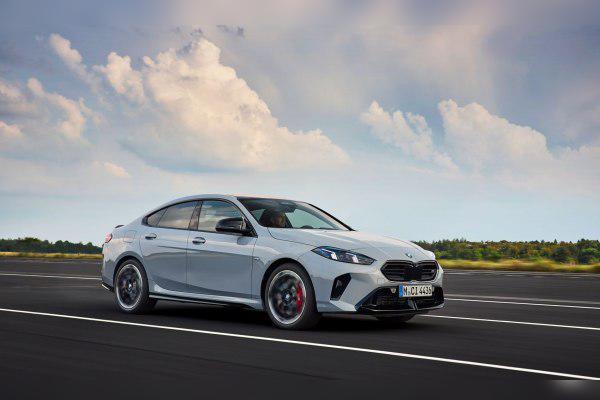
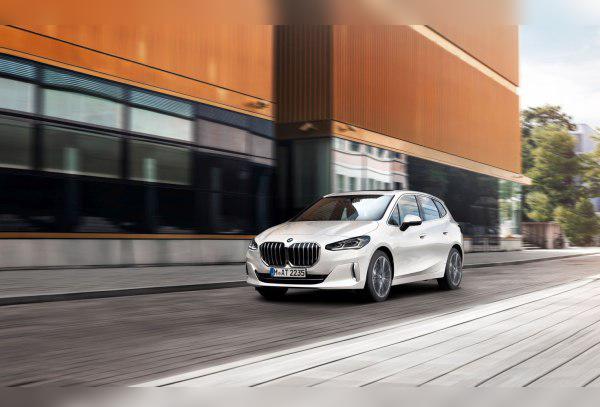
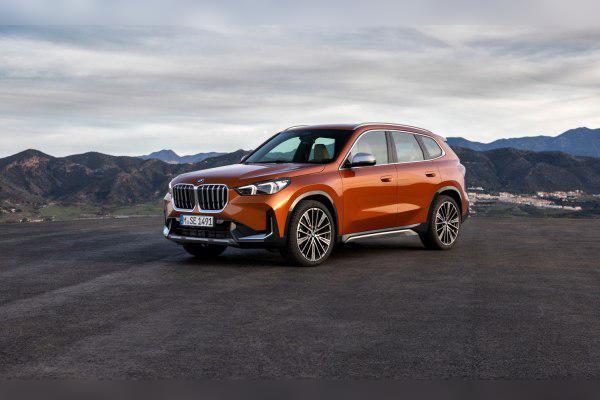
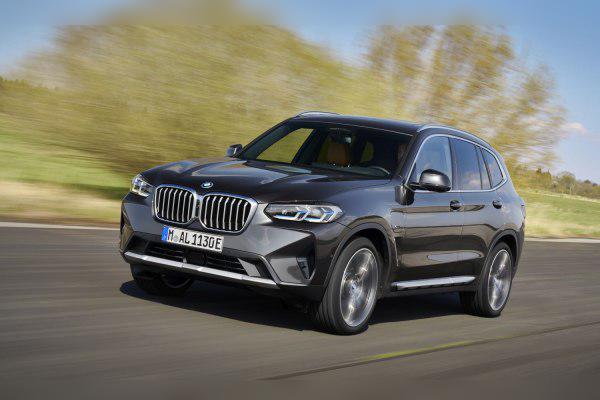
This engine powers a wide range of vehicles, from compact models such as the 2 Series Gran Coupe (F74) and the family‑oriented Active Tourer (U06), through the popular SUV X1 (U11), all the way up to the larger and heavier X3 (G01). It’s important to note that in newer models it often comes combined with Mild Hybrid (48V) technology, which assists during take‑off and reduces fuel consumption.
Technical specifications
| Parameter | Value |
|---|---|
| Engine code | B47 (B47C20 / B47D20) |
| Displacement | 1995 cc (2.0 L) |
| Power | 110 kW (150 hp) |
| Torque | 350 Nm at 1750–2500 rpm |
| Fuel type | Diesel (Euro 6 / Euro 6d‑TEMP) |
| Induction | TwinPower Turbo (single variable‑geometry turbocharger) |
| Hybrid system | MHEV (Mild Hybrid 48V) – on newer models |
Reliability and maintenance: What goes wrong?
Timing chain or belt? The eternal question.
The BMW B47 engine uses a timing chain. Unlike its predecessor (N47), where chains would snap without warning, the system here is significantly improved. Still, the chain is not eternal. It is located at the back of the engine (by the gearbox), which means replacement is a complicated and expensive job (often requires engine removal). Although they now easily go past 200,000 km, any metallic rattling on cold start is a sign you need to visit a workshop immediately.
Most common failures and symptoms
The biggest enemy of this engine is emissions equipment. The EGR cooler is prone to internal cracking. The symptom is coolant disappearing without any visible leak under the car. If coolant enters the intake manifold and mixes with soot, it can create a blockage and even cause an intake manifold fire. BMW has issued major recalls for this, so make sure to check whether your car is covered.
Also, the swirl flaps in the intake manifold can get clogged with soot and stick, which leads to loss of power and the “Check Engine” light coming on.
Service intervals and oil
There is no “major service” in the classic sense (as with a timing belt), but the chain is often replaced preventively between 180,000 and 250,000 km, or earlier if noise appears. The engine takes about 5.0 to 5.5 liters of oil (depending on the exact code and oil pan; X models sometimes take more). The recommended grade is 5W‑30 with BMW Longlife‑04 (LL04) specification.
Oil consumption: A healthy B47 should not consume a noticeable amount of oil between services. Consumption up to 0.5 L per 10,000 km can be tolerated. If it uses more, the usual culprit is the turbocharger or, less commonly, piston rings.
As for the injectors, the 150 hp (18d) variant usually uses electromagnetic (solenoid) injectors, which are more robust and cheaper to refurbish than the piezo injectors used in more powerful versions. They last a very long time, often over 250,000 km, provided you use good‑quality fuel.
Specific components and costs
Dual‑mass flywheel and vibrations
Yes, all models with this engine (both manual and automatic) have some form of vibration damping. On manuals (rare in newer model years) this is a classic dual‑mass flywheel, which suffers from city driving. On automatics, the torque converter takes over this role, but they can also have a flywheel. If you feel vibrations at idle that disappear when you rev the engine, the flywheel is suspect number one.
Turbocharger and fuel injection
The “TwinPower Turbo” badge often confuses buyers. In the 18d (150 hp) version, this engine usually has just one variable‑geometry turbocharger (VGT). That’s good news for maintenance – fewer parts to fail. Turbo lifespan is long (200k+ km) if oil is changed regularly and the engine is not switched off immediately after hard driving.
The injection system is the latest‑generation common‑rail with pressures of over 2000 bar. Injectors are not as problematic as they used to be, but they are sensitive to water in the fuel.
DPF, EGR and AdBlue – The holy trinity of emissions
This engine in all the mentioned models (G01, U11, F74) is equipped with a DPF filter, EGR valve and AdBlue (SCR) system.
AdBlue is a frequent source of headaches. The heater in the AdBlue tank can fail, or crystallized urea can clog the AdBlue injector/nozzle. Repairs are expensive (often the whole tank with pump and electronics is replaced). Maintenance only involves topping up the fluid regularly. The EGR valve clogs up from city driving. It’s recommended to occasionally “blow it out” with a longer drive on open roads.
Fuel consumption and performance: 18d in real life
Is the engine sluggish? It depends on the body style:
- In the 2 Series (F74) and X1 (U11), 150 hp and 350 Nm are more than enough for lively driving. The car pulls very strongly in mid‑range acceleration.
- In the BMW X3 (G01), this engine is the “lower limit”. With a weight close to 1.9 tons, the 18d is not a sprinter. It gets to 100 km/h respectably, but overtaking on country roads requires planning. Still, for an average family driver it’s perfectly adequate.
Fuel consumption:
- City driving: Expect between 6.5 and 8.0 liters per 100 km, depending on traffic and how heavy your right foot is (the X3 will be closer to the upper end).
- Open road: This is where the B47 shines. Consumption drops to 4.5 to 5.5 liters.
- On the motorway at 130 km/h, thanks to long gear ratios, the engine spins at a low 1800–2000 rpm (depending on the gearbox), which ensures quietness and efficiency.
Additional options and modifications
Since this is a diesel, LPG conversion is not an option (theoretically possible as diesel‑gas, but economically unviable and too complex for passenger cars).
Chip tuning (Stage 1): The B47 18d is very suitable for remapping. Hardware is often very similar to the more powerful 20d (190 hp). A safe Stage 1 remap can raise power to around 185–190 hp and torque to about 400 Nm. This drastically changes the character of the car, especially in the heavier X3. However, keep in mind that this puts additional stress on the DPF and the gearbox.
Transmission: ZF or DCT? This is where you need to pay attention!
This is the section where many people get it wrong. BMW pairs this engine with completely different gearboxes depending on the vehicle platform:
1. ZF 8HP (Steptronic) – Fitted to the BMW X3 (G01)
This is a conventional automatic with a torque converter. It is widely regarded as the best automatic gearbox on the market.
- Failures: Very rare. Extremely reliable.
- Maintenance: Although BMW claims the oil is “lifetime fill”, the gearbox manufacturer (ZF) recommends changing the oil and the pan (which also serves as the filter) every 80,000–100,000 km. Replacement cost: moderately expensive (varies by market).
2. DCT Steptronic (7‑speed dual‑clutch) – Fitted to the X1 (U11), 2 Series (F74, U06)
These models are based on a front‑wheel‑drive platform and use a Getrag dual‑clutch gearbox.
- Failures: Clutch packs wear out faster than on the ZF, especially with lots of stop‑and‑go driving or towing. Mechatronics issues are also possible.
- Maintenance: Oil changes are recommended every 60,000 km. It is more sensitive to old oil than the ZF.
Manual gearbox: Increasingly rare. If you find one, bear in mind that a clutch and flywheel kit is not cheap (very expensive), but the gearbox itself is mechanically reliable.
Buying used and conclusion
Before buying a used BMW with the B47 18d engine, pay attention to:
- Timing chain noise: Listen to the engine at first start (when cold). Any rattling from the back of the engine is a red flag.
- EGR/coolant: Check the coolant level. Look for white traces around the EGR cooler. Ask the seller whether the recall has been carried out.
- Service history: If the oil was changed every 30,000 km, be cautious. Such engines are usually full of deposits.
Final verdict
The B47 150 hp engine is an excellent choice for a rational buyer. It offers a premium driving feel with fuel costs on the level of a small city car. For the BMW X1 and 2 Series it is the ideal engine. For the BMW X3, it is “sufficient” – it will do the job perfectly as long as you’re not an aggressive driver. Reliability is high, provided you don’t ignore the warnings your car gives you.
Was this content useful to you?
Your opinion helps us to improve the quality of the content.