B58 Engine
- Engine
- 2998 cm3
- Aspiration
- Twin-power turbo, Intercooler
- Fuel
- Petrol (Gasoline)
- Fuel injection system
- Direct injection
- Power
- 333 hp
- Torque
- 450 Nm
- Cylinders
- 6
- Valves
- 24, 4 per cylinder
- Cylinders position
- Inline
- Valvetrain
- VALVETRONIC
- Oil capacity
- 6.5 l
- Coolant
- 6.9 l
- Systems
- Start & Stop System, Particulate filter
# Vehicles powered by this engine
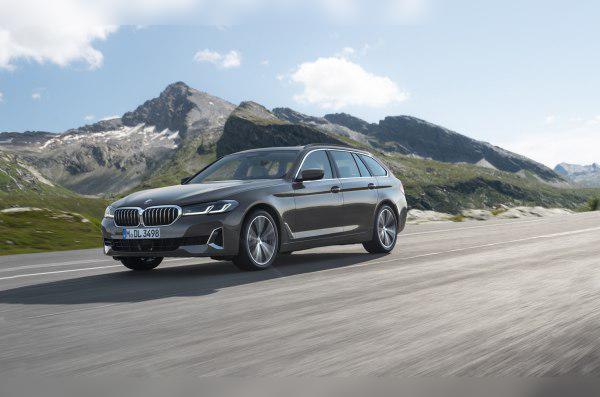
BMW B58 (3.0 Turbo) – Experiences, problems, fuel consumption and used car buying guide
Key points (TL;DR)
- One of the best BMW engines ever: The B58 is considered a modern “successor” to the legendary 2JZ engine thanks to its durability and power potential.
- Reliable timing chain: Unlike the notorious N47, the timing chain on the B58 is very durable, but it is located at the rear of the engine (towards the cabin), which makes any eventual replacement very expensive (requires engine removal).
- Fluid leaks: The biggest enemies are plastic housings, hoses and the water pump, which can fail. Loss of coolant is a common symptom.
- Mild Hybrid system (48V): The 333 hp version is a “mild hybrid”. This brings better throttle response and lower fuel consumption, but also more complex electronics and a more expensive battery.
- Oil consumption: Not as big an issue as with older BMW engines, but it does require high-quality oil and regular checks.
- ZF gearbox: Comes exclusively with the ZF 8-speed automatic, which is an industry benchmark for quality.
- Recommendation: An absolute recommendation for enthusiasts and those who want top performance in a G31 wagon, provided they are ready for premium maintenance costs.
Contents
Introduction: B58 – A jewel of Bavarian engineering
When we talk about the BMW B58 engine, we’re talking about a powerplant that restored faith in BMW reliability after the problematic series from the early 2010s. It is an inline-six (R6) with a displacement of 3.0 liters, combining silky-smooth operation with brutal power. The specific version we’re discussing (333 hp) is installed in the facelifted (LCI) BMW 5 Series Touring (G31) from 2020 onwards.
What sets this version apart from earlier B58 engines (which had 340 hp or 326 hp without hybrid assistance) is the introduction of Mild Hybrid (48V) technology. This system uses a starter-generator to smooth out turbo lag, enables “coasting” with the engine off while cruising, and helps reduce exhaust emissions. For the driver of a 540i, this means instant throttle response and a quiet cabin, but also an extra layer of complexity under the hood.
Technical specifications
| Engine code | B58B30 (Version O1/MHEV) |
| Displacement | 2998 cc (3.0 L) |
| Configuration | Inline 6-cylinder (R6) |
| Power | 245 kW / 333 hp |
| Torque | 450 Nm (available from low revs) |
| Forced induction | TwinPower Turbo (single twin-scroll turbo) + intercooler |
| Hybrid system | 48V Mild Hybrid (MHEV) |
| Fuel injection | Direct injection (High Precision Injection) |
Reliability and maintenance
Timing chain or belt?
The B58 engine uses a timing chain. The good news is that this chain is extremely robust and does not suffer from stretching or snapping at low mileage like the old N20 or N47 engines. The bad news is its position – it is located at the rear of the engine, next to the gearbox (firewall).
This was done for better weight distribution and pedestrian safety, but it means that if the chain ever needs to be replaced (usually only at very high mileage, over 250,000 – 300,000 km with good maintenance), the engine has to be removed. That makes labor costs very high (depending on the market).
Most common failures
Although mechanically “bulletproof”, the peripherals can cause issues:
- Coolant loss: This is problem number one. Leaks often appear on plastic junctions, the thermostat housing or the expansion tank cap. The B58 also has a complex cooling system with a mechanical pump and a heat management module that can get stuck.
- Oil filter housing: As with most BMWs, the oil filter housing gasket can become brittle and start leaking oil or mixing oil and coolant.
- VANOS solenoids: They can get dirty if the oil is not changed regularly, which leads to rough running or loss of power.
- PCV valve: It is integrated into the valve cover. When the membrane tears (you can hear a whistling sound), the entire valve cover has to be replaced, which is an unnecessarily expensive repair.
Service intervals and oil
Major service: Since it has a chain, there is no classic “major service” at a fixed mileage in the sense of a timing belt replacement. The chain is replaced as needed (when it starts rattling). The auxiliary (serpentine) belt and tensioners should be checked every 60,000 – 80,000 km.
Minor service and oil: The engine takes approximately 6.5 liters of oil. BMW recommends 0W-20 (for emissions and MHEV system reasons), specification LL-17 FE+. However, many experienced mechanics recommend 5W-30 (LL-04) for better protection at high temperatures, especially if you enjoy spirited driving.
Oil consumption: The B58 is not known for high oil consumption. Usage of 0.5 liters per 10,000 km is acceptable. Anything over 1 liter per 2,000–3,000 km indicates a problem (usually the PCV valve or piston rings).
Spark plugs and injectors
On this petrol engine, the spark plugs are heavily stressed due to direct injection and turbocharging. It is recommended to replace them every 40,000 to 60,000 km. If the engine is tuned, this interval should be halved. Symptoms of worn spark plugs are “stuttering” under full throttle (misfires).
Specific parts (costs)
Dual-mass flywheel:
This model comes exclusively with an automatic gearbox, so it does not have a classic dual-mass flywheel like manual transmissions. Instead, it uses a torque converter. There is a vibration damper within the assembly, but it is part of the gearbox and very rarely fails.
Turbocharger:
The engine has a single turbocharger, but it is a twin-scroll type (two exhaust gas channels). Their service life is excellent and they often exceed 200,000 km without issues. They are sensitive to shutting the engine off immediately after hard driving and to poor-quality oil. Rebuilding is possible, but a new unit is expensive (depends on the market).
Fuel injection system:
It uses high-pressure piezo injectors. They are generally reliable, but sensitive to poor fuel quality. The price of a single injector is high. The high-pressure fuel pump (HPFP) on B58 engines is very strong and rarely causes problems in stock form.
Emissions equipment (DPF/GPF/EGR):
Since this is a petrol engine, there is no DPF (Diesel Particulate Filter) or AdBlue system. However, as a 2020 model for the European market, it is equipped with an OPF (Otto Particulate Filter) – a particulate filter for petrol engines. It rarely clogs because exhaust gas temperatures on petrol engines are higher, which makes passive regeneration easier.
The engine has an EGR valve, but on petrol engines it causes nowhere near as many soot-related issues as on diesels.
Fuel consumption and performance
Is the engine “lazy”?
Absolutely not. With 333 hp and 450 Nm, the BMW 540i G31 is a real “rocket” in wagon form. The mild hybrid system fills in the gaps in acceleration, so the car feels lighter than it actually is (and it weighs almost 2 tons). It reaches 100 km/h in about 5 seconds. There is always power on tap, everywhere.
Real-world fuel consumption:
- City driving: Expect between 11 and 14 l/100 km. In heavy stop-and-go traffic it can go up to 15 l/100 km, despite the hybrid assistance.
- Country roads: With a light right foot, it is possible to get down to 7 – 8 l/100 km.
- Motorway: At 130 km/h the engine is spinning at very low revs (around 1,800 – 2,000 rpm in 8th gear). Consumption is then around 8.5 – 9.5 l/100 km.
Additional options and modifications
LPG conversion:
Technically possible, but economically and technically questionable. The B58 uses direct fuel injection into the cylinder. This requires either a system that injects liquid gas (very expensive, over 1000–1500 EUR, depending on the market) or a system that uses a mixture of petrol and gas to cool the petrol injectors. Considering the engine’s complexity and the loss of boot space (where the mild-hybrid battery often complicates things), LPG conversion is not recommended for this class of vehicle.
Remapping (Stage 1):
This is a favorite pastime among B58 owners. The engine is known as a “tuner’s dream”. A safe Stage 1 (software only) raises power to 380 – 420 hp and torque to over 550 Nm, without any mechanical changes. The engine and gearbox can handle this without issues, provided that service intervals are shortened.
Gearbox (transmission)
Which gearbox is fitted?
The 540i (G31 LCI) comes exclusively with the ZF 8HP (8-speed automatic gearbox). A manual gearbox is not an option.
Reliability and failures:
The ZF 8HP is probably the best automatic gearbox on the market today. Failures are extremely rare. If problems do occur, they are usually oil leaks from the gearbox sump (which is plastic and integrated with the filter) or from the mechatronic connector. Symptoms include harsher shifts or hesitation.
Clutch replacement?
This is a conventional automatic with a torque converter. There is no dry clutch disc that wears out like in a manual. There are clutch packs (wet clutches) inside, but they last as long as the gearbox itself if the oil is changed. Rebuilding the gearbox is very expensive.
Gearbox service:
Although BMW claims the oil is “lifetime”, the gearbox manufacturer (ZF) strictly recommends changing the oil and sump with filter every 80,000 to 100,000 km (or 8 years). If you want the gearbox to last, this is mandatory.
Buying used and conclusion
What to check before buying?
- Cold start: Listen to the engine when it’s cold. There should be no chain rattle or uneven running.
- Signs of leaks: Use a flashlight to inspect the area around the water pump and under the intake manifold. The smell of coolant in the cabin is a bad sign.
- Coolant level: If the level is below minimum, ask the owner why. The B58 should not “consume” coolant.
- Service history: Check whether the oil has been changed at a maximum of every 15,000 km. BMW’s 30,000 km interval is too long for the long-term health of this engine.
Conclusion:
The BMW 540i with the B58 engine is probably the best all-round engine choice for the 5 Series. It offers sports car performance, limousine smoothness and (relatively) acceptable fuel consumption on the open road. It is more reliable than the V8 (550i) and much more fun than the diesels (520d/530d).
It is aimed at drivers who know what they want, appreciate top-notch engineering and have the budget to maintain it. Maintenance is not cheap (parts are expensive), but the frequency of failures is low. If you find a car with a complete and verifiable service history – buy it.
Was this content useful to you?
Your opinion helps us to improve the quality of the content.