CFFB Engine
- Engine
- 1968 cm3
- Aspiration
- Turbocharger, Intercooler
- Fuel
- Diesel
- Fuel injection system
- Diesel Commonrail
- Power
- 140 hp @ 4200 rpm
- Torque
- 320 Nm
- Cylinders
- 4
- Valves
- 16, 4 per cylinder
- Cylinders position
- Inline
- Oil capacity
- 4.3 l
- Coolant
- 8 l
- Systems
- Particulate filter
# Vehicles powered by this engine

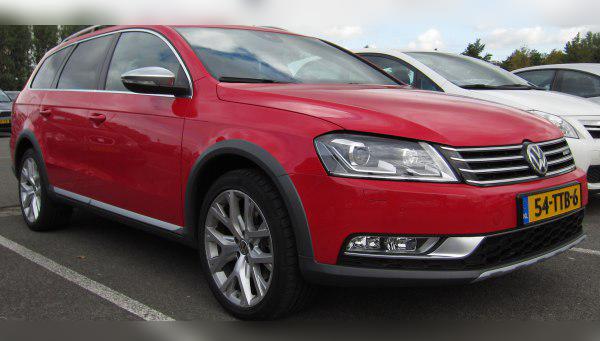
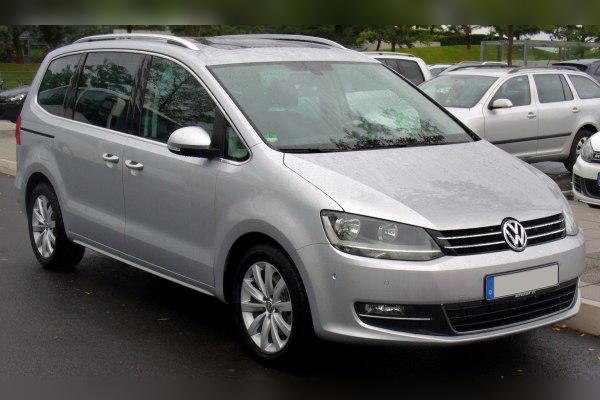
CFFB 2.0 TDI (140 HP) – Experiences, problems, fuel consumption and buying used
The most important in short (TL;DR)
- Reliability: CFFB belongs to the second generation of Common Rail (EA189) engines and is considered one of the most reliable 2.0 TDI units VW Group has made.
- Main issues: EGR valve cooler (loses coolant), DPF filter in city driving and the water pump.
- Maintenance: Requires quality 5W-30 oil and regular timing belt replacement. Do not wait for the factory 210,000 km interval.
- AdBlue/SCR: Heavier models (Sharan, Alhambra) are equipped with an SCR system which can be expensive to repair (tank heaters).
- Performance: 140 HP is the “sweet spot” – enough power for everyday driving, even in heavy bodies, with low fuel consumption.
- Recommendation: An excellent choice for families and for those who cover high mileages on open roads.
Contents
Introduction: Why is the CFFB engine important?
The CFFB engine code represents the backbone of Volkswagen Group’s diesel lineup from 2010 to 2015. It is a 2.0 TDI unit with Common Rail injection that came as a successor to the noisier and more problematic “Pumpe-Düse” (PD) engines. This engine was designed to balance stricter Euro 5 standards with the need for durability.
Its application is wide, but it is specific because it was installed in heavy vehicles such as the VW Sharan, Seat Alhambra and VW Passat Alltrack. That is why this text focuses on how this engine copes with heavier bodies and 4x4 drivetrains, as well as the specifics of the SCR (AdBlue) system, which is common on these models.
Technical specifications
| Engine code | CFFB (EA189 family) |
| Displacement | 1968 cc (2.0 L) |
| Power | 103 kW (140 HP) at 4200 rpm |
| Torque | 320 Nm at 1750–2500 rpm |
| Injection system | Common Rail (Bosch) |
| Cylinders / Valves | 4 / 16 (DOHC) |
| Charging type | Turbocharger with variable geometry (VGT) |
| Camshaft drive | Timing belt |
| Emission standard | Euro 5 (some later models Euro 6 ready) |
Reliability and Maintenance
Belt or chain?
The CFFB engine uses a timing belt to drive the camshafts. This is good news because the system is quieter and generally more predictable than the chains on some other VW engines from that period. The factory replacement interval is optimistically set at 210,000 km. However, in practice the water pump often fails earlier.
Recommendation: Do the major service at 160,000 to 180,000 km or every 5 to 7 years, whichever comes first. When replacing, be sure to change the water pump, tensioners and rollers, as well as the auxiliary belt.
Oil and oil consumption
This engine takes approximately 4.3 liters of oil. You must use oil that meets the VW 507.00 specification, most commonly in 5W-30 grade. This is crucial because of the DPF filter, as unsuitable oil creates ash that permanently clogs it.
As for oil consumption, CFFB engines are significantly better than older PD units. Consumption of 0.5 to 0.8 liters per 10,000 km is considered completely normal, especially if the vehicle is often driven on the motorway at higher revs. If the engine consumes more than a liter over a service interval, this may indicate a problem with the piston rings or turbocharger, but that is not typical.
Injectors
Unlike the notorious Siemens piezo injectors in older 2.0 TDI engines, the CFFB uses a Bosch Common Rail system with solenoid injectors (in most variants). These injectors have proven to be extremely durable and rarely cause problems before 250,000–300,000 km, provided quality fuel is used and the fuel filter is changed regularly.
Specific Parts, Costs and Failures
Dual-mass flywheel
Yes, this engine in all variants (both manual and DSG) has a dual-mass flywheel. In models such as the Sharan and Alhambra, the flywheel is under greater stress due to the vehicle’s weight. Symptoms of failure are metallic rattling when starting/stopping the engine and vibrations on the clutch pedal. The expected lifespan is around 200,000 km (city driving kills it faster). Replacement cost is high, but this is an unavoidable expense with modern diesels.
Turbocharger and EGR
The engine has a single turbocharger with variable geometry. The turbo is robust but sensitive to cold starts and shutting the engine off immediately after hard driving. A common issue on CFFB engines is the EGR valve, more precisely the EGR cooler. The plastic housing or the internal core of the cooler can crack, which leads to coolant loss. If you notice the car losing coolant but there are no puddles under the car, this is the first suspect.
DPF and AdBlue (SCR)
All CFFB engines have a DPF filter. It can clog if the car is driven exclusively in the city. Passive regeneration requires driving on open roads.
Special note for Sharan/Alhambra: These models, due to their weight, often come with an SCR system (AdBlue) to meet emission standards, even before Euro 6 in some variants. The most common failure here is not the engine itself, but the heater in the AdBlue tank. When the heater fails, the system logs a fault and may prevent the engine from starting after a certain number of kilometers. Repair involves replacing the entire module or refurbishing the heater, which can be quite expensive (depends on the market).
Fuel Consumption and Performance
Real-world fuel consumption
One has to be realistic – the Sharan, Alhambra and Passat Alltrack are heavy vehicles with worse aerodynamics than a Golf.
- City driving: Expect between 7.5 and 9.5 l/100km, depending on traffic and how heavy your right foot is. The DSG gearbox slightly increases consumption in the city.
- Open road (secondary roads): This is where the engine shines and can go down to 5.5–6.0 l/100km.
- Motorway (130 km/h): Consumption is around 6.5–7.5 l/100km.
Is the engine “lazy”?
With 140 HP and 320 Nm, this engine is no racer in a body weighing almost 1.8 tons (Sharan/Alhambra). It needs about 10.5–11 seconds to reach 100 km/h. For normal family driving and cruising, the power is more than sufficient. However, when fully loaded (7 passengers + luggage), overtaking uphill requires planning and shifting down.
At 130 km/h in sixth gear, the engine spins at a pleasant around 2,200–2,400 rpm (depending on the gearbox), which ensures quiet driving and longevity.
Gearbox: Manual or DSG?
Manual gearbox (6-speed)
The standard manual gearbox is precise and durable. It has no specific weaknesses apart from normal clutch wear. Oil change in the manual gearbox is not prescribed by the factory (“fill for life”), but it is recommended around 200,000 km for smoother shifting.
DSG gearbox (6-speed – DQ250)
The CFFB engine most commonly comes with the DQ250 gearbox with a dual wet clutch. This is one of the best DSG gearboxes.
- Maintenance: Mandatory oil and filter change in the gearbox every 60,000 km. This is not a recommendation but an order. If not done, the mechatronics will fail.
- Failures: The most expensive failures are the mechatronic unit and the clutch pack. If the gearbox jerks when taking off or hesitates when shifting, that is a warning sign.
- Flywheel: DSG models also have a dual-mass flywheel which can be heard as a “clattering” noise at idle when it is near the end of its life.
4MOTION / 4Drive (All-wheel drive)
On the Passat Alltrack and some Sharan/Alhambra variants, there is an all-wheel drive system. It uses a Haldex coupling (usually 4th or 5th generation). It is important to know that Haldex also requires oil changes (usually every 3 years or 60,000 km), otherwise the drive pump can fail.
Tuning and Modifications
The CFFB engine is very suitable for chip tuning (remap). Since it is hardware-wise very similar to the more powerful 170 HP version (CFGB), this engine can safely be raised to:
- Stage 1: Around 170–180 HP and 380–400 Nm.
This significantly changes the character of the vehicle, especially in heavy models such as the Alhambra, making overtaking easier. However, keep in mind that the increased power puts additional stress on the dual-mass flywheel and clutch, so if those parts are already near the end of their life, a remap will speed up their failure.
What to check before buying and Conclusion
When buying a used car with a CFFB engine, pay attention to:
- Cold start: Listen to the engine. Are there any metallic noises (flywheel)? Does it run smoothly immediately after starting (injectors)?
- Coolant: Check the coolant reservoir. If the level is below minimum or there are limescale traces around the tank, there may be a problem with the EGR cooler or water pump.
- Exhaust: The exhaust tip should be clean (without black soot) if the DPF is working properly. A black finger from the exhaust means the DPF has probably been removed or is cracked.
- Diagnostics: Check DPF saturation and injector corrections. For models with an AdBlue system, check for faults related to the reductant heaters.
Conclusion
The 2.0 TDI CFFB (140 HP) engine is probably the most rational choice for a used VW Group vehicle of that generation. It is powerful enough to carry large bodies such as the Sharan and Alhambra, and it does not suffer from catastrophic factory flaws that plagued its predecessors. Maintenance is not cheap (flywheel, major service, DPF), but it is predictable. If you find a car with a proper service history, especially one where the gearbox (DSG/Haldex) has been regularly maintained, you are looking at a car that can cover hundreds of thousands more kilometers.
Was this content useful to you?
Your opinion helps us to improve the quality of the content.