DJKA Engine
- Engine
- 1395 cm3
- Aspiration
- Turbocharger, Intercooler
- Fuel
- Petrol (Gasoline)
- Fuel injection system
- Direct injection
- Power
- 150 hp @ 5000 rpm
- Torque
- 250 Nm
- Cylinders
- 4
- Valves
- 16, 4 per cylinder
- Cylinders position
- Inline
- Valvetrain
- DOHC
- Oil capacity
- 4 l
- Coolant
- 8 l
- Systems
- Start & Stop System
# Vehicles powered by this engine
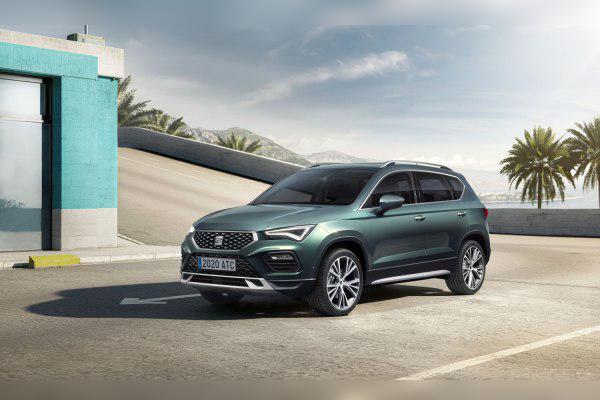
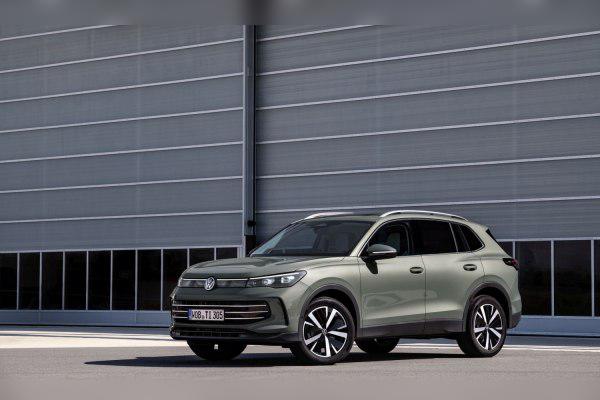
Key points in short (TL;DR)
- Engine type: 1.4 TSI (EA211 generation) – a modern, more reliable version of the famous petrol engine.
- Timing drive: Uses a timing belt, not the problematic chain from older generations.
- Main downside: Prone to carbon buildup on intake valves due to direct injection.
- Performance: 150 hp and 250 Nm is the "golden middle" for SUVs like the Ateca and Tiguan – not a sports car, but far from sluggish.
- Gearbox: Usually paired with a DSG transmission; requires regular maintenance (oil changes) to avoid expensive mechatronics failures.
- Fuel consumption: Sensitive to a "heavy right foot". In the city it can be thirsty, while on the open road it’s surprisingly economical.
- Recommendation: An excellent choice for those who drive less than 15,000 km per year and want refined operation without diesel noise.
Contents
1.4 TSI (DJKA) – The last of the Mohicans before full 1.5 TSI domination
The engine with the code DJKA is one of the later iterations of Volkswagen’s EA211 engine series. Although Europe was already largely switching to the newer 1.5 TSI (Evo) engine, the 1.4‑liter DJKA unit remained in certain models such as the Seat Ateca (facelift) and VW Tiguan (especially in versions for Eastern European and Russian markets, as well as specific export series). This engine is important because it ironed out almost all the “childhood diseases” of the old chain-driven TSI engines, offering drivers a robust petrol unit that can rival diesels in torque, but with much quieter operation.
Technical specifications
| Parameter | Value |
|---|---|
| Displacement | 1395 cc (1.4 L) |
| Power | 110 kW (150 hp) at 5000–6000 rpm |
| Torque | 250 Nm at 1500–3500 rpm |
| Engine code | DJKA (EA211 family) |
| Injection type | Direct injection (TSI) |
| Charging | Turbocharger + intercooler |
| Number of cylinders/valves | 4 cylinders / 16 valves |
Reliability and maintenance
Belt or chain?
Unlike the notorious EA111 series, the DJKA belongs to the EA211 family and uses a timing belt. This is great news for owners. The belt has proven to be far more reliable than the stretching chain. The factory interval is often listed as “inspection at 240,000 km” or replacement at 210,000 km, but from experience I recommend that the major service (belt, tensioner and water pump replacement) be done no later than 160,000–180,000 km or after 6–7 years of age, for peace of mind.
Most common issues
Although reliable, the DJKA is not flawless. The most common problem is the thermostat housing and water pump. It often happens that the plastic fails or the gasket starts leaking, which leads to coolant loss. If you notice the coolant level dropping but there are no puddles under the car, this is suspect number one.
The second frequent issue is carbon buildup on the intake valves. Since this is a direct-injection engine, fuel does not “wash” the valves. Symptoms are rough idle (tach needle fluctuating) and a slight drop in performance at higher mileage.
Oil and service intervals
This engine takes approximately 4.0 to 4.3 liters of oil (depending on filter size and sump variant). The recommended grade is usually 5W-30 (VW 504.00 standard) or the newer 0W-20 (VW 508.00) for the latest models for emissions reasons. For engine longevity, I strongly recommend 5W-30 and a fixed change interval.
Oil consumption: Modern EA211 engines are much better than their predecessors. Consumption of 0.3 to 0.5 liters per 10,000 km is completely normal and acceptable. If it uses more than 0.5 liters per 1,000 km (which is the factory limit for a warranty claim), that points to an issue with piston rings or the turbo, but on DJKA engines this is not widespread if they are regularly maintained.
Spark plugs
On turbo petrol engines, spark plugs are under higher stress. The recommendation is to replace them every 60,000 km. Don’t wait for the engine to start “misfiring”, as that can damage the ignition coils, which are much more expensive.
Specific parts (costs)
Dual-mass flywheel
Yes, models with the DJKA engine, especially those paired with a DSG gearbox (as is the case with the Ateca and Tiguan), are equipped with a dual-mass flywheel. Its role is to reduce vibrations and protect the gearbox. On petrol engines it lasts longer than on diesels due to lower vibrations, but you can expect it may need replacement at mileages over 180,000–200,000 km.
Injection system and injectors
It uses a high-pressure direct injection system. Injectors are generally durable, but they are sensitive to poor fuel quality. A faulty injector manifests as leaking (diluting the oil with petrol) or poor spray pattern (rough running, check engine light). They are not as problematic as on old diesels, but replacing a full set is not cheap (depends on the market).
Turbocharger
The engine has a single turbocharger. It is water-cooled, which extends its lifespan. However, the turbo actuator (wastegate) can stick, which leads to loss of power or going into “safe mode”. With regular oil changes and letting the engine cool down after hard driving, the turbo easily lasts over 250,000 km.
GPF/OPF filter and emissions
Since this engine is installed in models around 2020 (Euro 6 standards), it almost certainly has a GPF (Gasoline Particulate Filter) – the petrol equivalent of a DPF. The good news is that a GPF regenerates (cleans) much more easily than a diesel DPF because petrol exhaust temperatures are higher. Clogging is rare, unless the car is driven exclusively on very short trips in winter.
AdBlue: This engine does NOT use AdBlue fluid. That is reserved exclusively for diesel engines. One less thing to worry about for the owner.
Fuel consumption and performance
City driving
Don’t trust the factory figures of 6 liters. In heavy bodies such as the VW Tiguan or Seat Ateca, real-world city consumption (stop‑and‑go traffic) is between 8.5 and 10.5 liters per 100 km. If you have a heavy right foot, it easily goes over 11 liters.
Is the engine “sluggish”?
With 150 hp and 250 Nm, the engine is not sluggish. Thanks to the turbo, maximum torque is available from as low as 1500 rpm, which makes it very agile in city driving. However, in a Tiguan loaded with luggage and 4 passengers, on steep climbs you will feel that it lacks “lungs” compared to the 2.0 TDI. For an average family driver, though, the power is more than sufficient.
Motorway
This is where the DJKA feels at home. At 130 km/h in 7th gear with the DSG, the engine spins at a relaxed 2200 to 2400 rpm. That means the cabin is quiet, and fuel consumption on the open road is around 6.5 to 7.5 l/100 km, depending on the vehicle’s aerodynamics (the Tiguan uses more than the Ateca).
Additional options and modifications
LPG conversion
This is a direct-injection engine. A “standard” LPG system cannot be installed. You need a liquid direct-injection LPG system or a system that uses a mixture of petrol and LPG (to cool the petrol injectors). Such systems are expensive (often over 1000 EUR, depending on the market) and the cost-effectiveness is questionable unless you cover very high mileage. It also takes up space in the boot.
Chiptuning (Stage 1)
The 1.4 TSI DJKA responds very well to remapping. A safe Stage 1 raises power to around 170–180 hp and torque to 300–310 Nm. This drastically changes the character of the vehicle. However, be careful if you have a DSG gearbox – the map must respect the gearbox limits (especially if it’s the “dry” DQ200, although more robust variants are more common with the 150 hp version).
Gearbox: Achilles’ heel or the best part?
Which gearboxes are used?
The DJKA engine is most commonly paired with a 7‑speed DSG automatic gearbox (DQ381 – “wet” in newer/more powerful models, or DQ200 – “dry” in lighter versions). Given the torque of 250 Nm, which is the limit for the dry DQ200, heavier vehicles like the Tiguan often have the more robust DQ381. There are also 6‑speed manual gearboxes, which are very precise and reliable.
Problems and failures
- Manual gearbox: Very reliable. Failures are rare and mostly come down to replacing the clutch kit and dual-mass flywheel at higher mileage.
- DSG (automatic): The main enemies are the mechatronics unit (the brain of the gearbox) and the clutch pack.
- Failure symptoms: Jerking when setting off, hesitation when shifting, jolts when stopping.
- If it’s a “wet” DSG (clutches in oil), it is much more durable but requires regular oil changes.
Service costs
On DSG gearboxes with wet clutches, oil and filter MUST be changed every 60,000 km. This is not a cheap service (depends on the market, but it’s among the more expensive regular items), yet it is crucial for the gearbox’s lifespan. The manual gearbox officially does not require an oil change, but it is recommended to change it at 150,000 km.
Buying used and conclusion
What to check before buying?
- Cold start: Insist that the engine be completely cold. Listen to the first 5 seconds. There must be no metallic rattling (a sign of issues with variable valve timing or lifters), and the revs should stabilize quickly.
- Coolant leaks: Look at the left side of the engine (viewed from the front), where the thermostat housing is located. White or pink traces are a sign of leakage.
- DSG test: Warm up the car. Stop on an uphill, release the brake (no throttle). The car must not roll backwards, and when you apply throttle it should move off smoothly, without a jolt.
Final verdict
The 1.4 TSI (DJKA) is one of the best petrol choices in the VW Group when buying used. It offers an excellent balance between power and maintenance costs. It is intended for drivers who spend most of their time in city and suburban driving, where a diesel DPF filter would cause problems. If you drive more than 30,000 km per year, mostly on motorways, the 2.0 TDI is still a better option in terms of fuel consumption. For everyone else, the DJKA is highly recommended, provided that the DSG gearbox has been serviced regularly.
Was this content useful to you?
Your opinion helps us to improve the quality of the content.