CHZJ, DKJA Engine
- Engine
- 999 cm3
- Aspiration
- Turbocharger, Intercooler
- Fuel
- Petrol (Gasoline)
- Fuel injection system
- Direct injection
- Power
- 115 hp
- Torque
- 200 Nm
- Cylinders
- 3
- Valves
- 12, 4 per cylinder
- Cylinders position
- Inline
- Valvetrain
- DOHC
- Oil capacity
- 4 l
- Coolant
- 10 l
- Systems
- Start & Stop System
# Vehicles powered by this engine
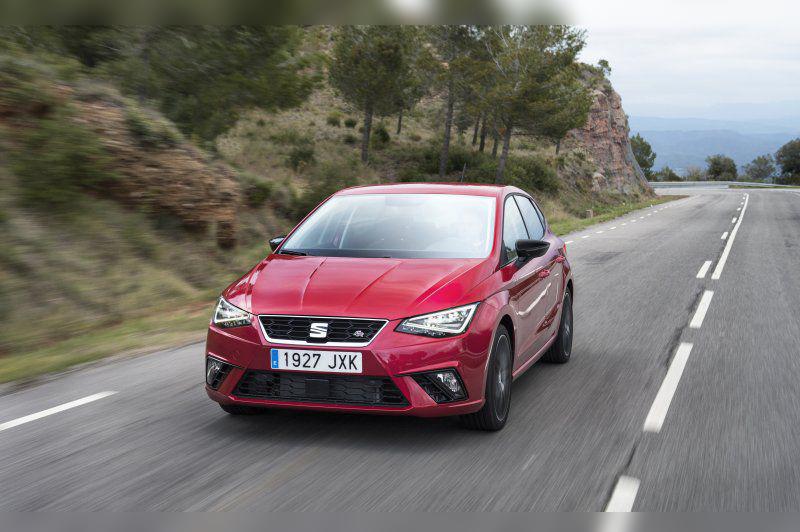
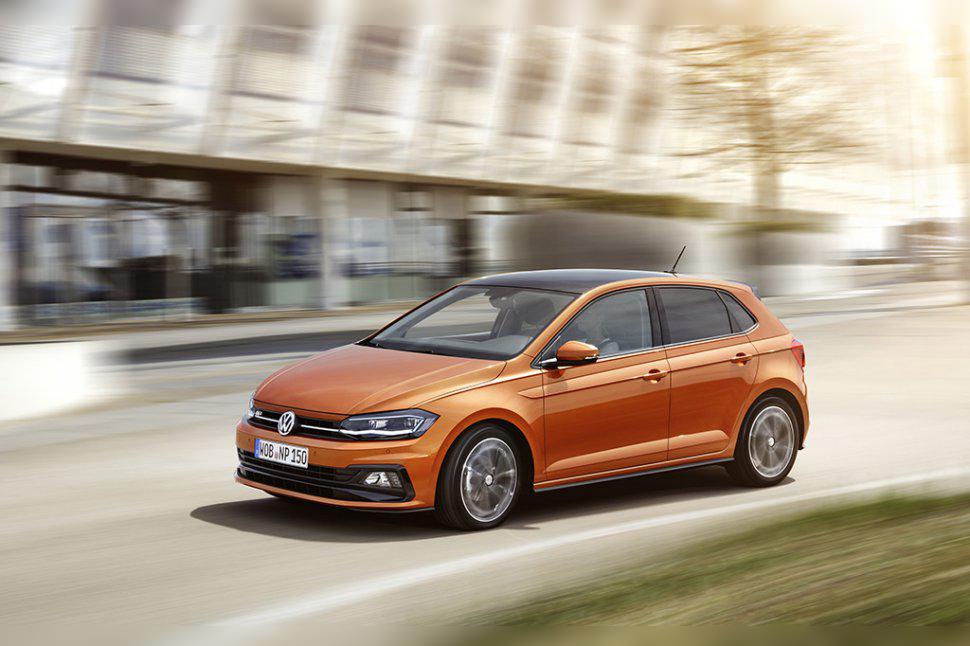
1.0 TSI (CHZJ, DKJA) 115 HP: Experiences, problems, fuel consumption and used car buying guide
Key points (TL;DR)
- Performance above expectations: With 115 HP and 200 Nm, this engine offers an excellent power-to-weight ratio for the Polo and Ibiza, making them lively even outside the city.
- 3 cylinders: The engine has a characteristic “gruff” sound and mild vibrations at idle, but sound insulation in these models is solid.
- Dual-mass flywheel: Unlike the weaker 95 HP version, the 115 HP variant almost always has a dual-mass flywheel to reduce vibrations and protect the gearbox.
- Water pump: A weak point of these engines. The thermostat housing and pump are known to start leaking relatively early.
- DSG gearbox (DQ200): If you choose an automatic, pay attention to the condition of the “dry” clutches and the mechatronics, especially if the car has been driven exclusively in heavy city traffic.
- GPF filter: Newer models (with engine code DKJA) have a gasoline particulate filter. It’s not as problematic as a diesel DPF, but it does require occasional highway driving.
- Recommendation: An excellent choice for those who want a petrol engine with low fuel consumption (similar to older diesels), yet with very decent performance.
Contents
- Introduction and engine applications
- Technical specifications
- Reliability, maintenance and failures
- Specific parts and costs
- Fuel consumption and performance
- LPG and remapping
- Gearbox: Manual vs DSG
- Used car buying tips and conclusion
Introduction and engine applications
The 1.0 TSI engine with 115 horsepower (codes CHZJ and the newer DKJA) belongs to Volkswagen’s EA211 engine family. This is a modern three-cylinder turbo petrol engine that replaced the older 1.2 TSI four-cylinders. Its role is clear: reduce emissions and fuel consumption while maintaining (and even improving) performance.
In models such as the VW Polo VI and Seat Ibiza V, this 115 HP version represents the “sweet spot” or even the top of the standard engine range (before GTI/Cupra versions). It offers significantly more punch on open roads than the 95 HP version, primarily due to higher torque and the fact that it is often paired with a six-speed gearbox.
Technical specifications
| Characteristic | Value |
|---|---|
| Displacement | 999 cc (1.0 L) |
| Configuration | Inline, 3 cylinders |
| Power | 85 kW (115 HP) at 5000–5500 rpm |
| Torque | 200 Nm at 2000–3500 rpm |
| Engine codes | CHZJ, DKJA (with GPF filter) |
| Injection | Direct injection (TSI) |
| Induction | Turbocharger + intercooler |
| Camshaft drive | Timing belt |
Reliability and maintenance
Timing belt or chain?
All 1.0 TSI engines from the EA211 series, including CHZJ and DKJA, use a timing belt. This is a major improvement over the old 1.2 and 1.4 TSI (EA111) engines, which had problematic chains. The belt here is reinforced and designed to last a long time.
Most common issues
Although the engine is generally reliable, there are some specific weak points:
- Water pump and thermostat housing: This is the most common issue. The component is plastic and, due to thermal cycles (heating–cooling), microcracks appear. The symptom is coolant loss or traces of leakage under the car. If ignored, it can lead to engine overheating.
- Rattling of the turbocharger actuator (wastegate): A metallic rattling sound is often heard when lifting off the throttle or at idle. This is usually play in the rod that controls the turbo’s wastegate valve. At first it’s only an acoustic issue, but later it can trigger a dashboard warning (Check Engine) and loss of power.
- Carbon buildup: As with any direct-injection engine, the intake valves are not “washed” by fuel. Over time, carbon deposits accumulate, which can cause rough idle. However, this typically occurs at higher mileages (over 150,000 km).
Major service (timing service)
The manufacturer often quotes optimistic intervals such as “inspection at 240,000 km”. Do not follow that. Experienced mechanics recommend replacing the timing set (belt, tensioners, water pump) at 160,000 to 180,000 km or at the latest after 8 to 10 years of age, whichever comes first. A snapped belt means catastrophic engine damage.
Oil: quantity and grade
The engine takes approximately 4.0 liters of oil (with filter).
The recommended grade depends on the service interval:
- For fixed intervals (15,000 km): 5W-30 or 5W-40 (VW 502.00 / 504.00 standard).
- For LongLife intervals and newer engines (DKJA): 0W-20 is often used (VW 508.00 standard) for better fuel economy.
Tip: For engine longevity, use 5W-30 and change it every 10,000–15,000 km.
Oil consumption
EA211 engines are significantly better in this regard than their predecessors. Oil consumption up to 0.5 liters per 10,000 km is perfectly acceptable and normal. If it consumes more than 0.5 liters per 1,000 km, this points to an issue with the piston rings or turbocharger, but that is rare at low mileages.
Spark plugs
Since this is a petrol engine with direct injection, the spark plugs are under higher stress. The factory interval is often 60,000 km, but the recommendation is to inspect and replace them at 40,000 to 50,000 km. Use only iridium/platinum spark plugs recommended by VIN.
Specific parts (costs)
Does it have a dual-mass flywheel?
Yes. The 115 HP (85 kW) version in 99% of cases comes with a dual-mass flywheel, especially when paired with the 6-speed manual gearbox. The reason is the need to smooth out the inherent vibrations of a three-cylinder engine at higher torque of 200 Nm. The 95 HP versions usually have a solid flywheel. Replacing the clutch kit together with the dual-mass flywheel is a significant expense (expensive/moderately expensive, depending on the market).
Fuel injection system and injectors
It uses high-pressure direct injection (TSI). The injectors are precise and generally durable, but sensitive to poor fuel quality. Failure of a single injector can cause a piston to “melt” due to improper fuel spray (a lean mixture raises temperatures). They are not a common problem, but if they fail, replacement is expensive.
Turbocharger
The engine has a single turbocharger. Its lifespan is closely linked to regular oil changes and driving style (cooling the turbo after spirited driving). With proper maintenance, you can expect the turbo to last over 200,000 km. As mentioned, the actuator (wastegate) is a more frequent issue than the turbo bearings themselves.
DPF / GPF / EGR
Engine codes DKJA (typically from 2018/2019 onwards) are equipped with a GPF filter (Gasoline Particulate Filter). Unlike diesels, GPF regenerates passively much more easily because petrol exhaust gases are hotter. Clogging is rare, unless the car is driven only 2–3 km per day in winter. There is an EGR valve, but it is not as problematic as on diesels because there is far less soot.
AdBlue
No. This is a petrol engine and does not have an AdBlue system.
Fuel consumption and performance
Real-world city consumption
Depending on how heavy your right foot is and how bad the traffic is, real-world city consumption ranges from 6.5 to 7.5 l/100 km. The start–stop system helps in traffic jams, but many drivers switch it off. If you drive aggressively, city consumption easily jumps to around 8.5 liters.
Is the engine “lazy”?
Absolutely not. For a Polo or Ibiza body (weighing around 1100–1200 kg), 200 Nm of torque available from just 2000 rpm makes the car feel very lively. The sensation of acceleration is better than the paper figure (115 HP) suggests. The engine is happy to rev.
Behaviour on the motorway
This is one of the biggest advantages of the 115 HP version. Thanks to the 6th gear (manual) or 7th gear (DSG), the engine is relaxed.
At 130 km/h the engine spins at around 2,600 to 2,800 rpm (depending on the gearbox). This means the cabin is quiet, and fuel consumption at that speed is about 5.5 to 6.0 l/100 km. It has no problem maintaining speeds of up to 160 km/h.
Additional options and modifications
LPG conversion
Since this is a direct-injection engine, a regular sequential LPG system cannot be installed. You need a direct-injection LPG system that either uses liquid-phase LPG (very expensive) or a system that runs on a mixture of LPG and petrol (e.g. 80% LPG, 20% petrol to cool the injectors). The economic benefit is questionable unless you cover very high mileages (over 30,000 km per year). Installation is expensive.
Remapping (Stage 1)
This engine responds very well to remapping. A safe “Stage 1” tune increases power to around 130–140 HP and torque to 230–240 Nm.
Warning: Although the engine can handle it, keep in mind that higher torque puts additional stress on the dual-mass flywheel and clutch (or clutches in the DSG). If you remap, you shorten the lifespan of the transmission.
Gearbox
Types of gearboxes
- Manual: 6-speed gearbox (MQ200 series). Precise and easy to operate.
- Automatic: 7-speed DSG dual-clutch (DQ200). This is the version with “dry” clutches.
Gearbox issues
Manual: Very reliable. Failures are rare and mostly related to the clutch kit and flywheel at higher mileages.
DSG (DQ200): This is the more sensitive point. The “dry” clutches wear out faster in stop–go city driving because the gearbox constantly “slips” the clutch in second gear.
Symptoms of DSG issues: Jerking when setting off, harsh shifts from 1st to 2nd gear, delayed response. Also, the mechatronics (the gearbox control unit) can fail, which is an expensive repair (very expensive, depending on the market).
Gearbox servicing
- Manual: The manufacturer says “lifetime oil”, but the recommendation is to change it every 80,000–100,000 km.
- DSG (DQ200): Although it is a “dry” DSG, it has oil in the gear section and oil in the mechatronics. It is recommended to check and, if needed, replace the oil in the gear section at 60,000 km, even though this is not part of VW’s regular maintenance schedule, but it extends the life of the bearings.
Used car buying guide and conclusion
Before buying a used Seat or VW with this engine, make sure to check:
- Noise at startup: Listen to a cold start. If you hear chain-like rattling (even though it has a belt, sometimes the cam phasers can rattle) or uneven running while cold, be cautious.
- Traces of coolant leaks: Check the coolant level in the expansion tank. If it is below minimum, or you see white stains around the engine, the water pump is probably due for replacement.
- Test drive (DSG): Try to gently set off uphill without pressing the accelerator (creep mode). If the car shudders, the clutches are near the end of their life.
- VIN service history check: Verify whether the car has been serviced at an authorized workshop, as these engines are sensitive to skipped services.
Conclusion: The 1.0 TSI (115 HP) engine is one of the best small petrol engines on the market. It offers performance that used to be reserved for 1.6 or 1.8 engines, while consuming fuel like a lighter. If you change the oil regularly and are aware of the potential cost of the water pump and clutch kit (dual-mass flywheel), this engine is a highly recommended choice for a modern city car that is not afraid of long journeys either.
Was this content useful to you?
Your opinion helps us to improve the quality of the content.