DLAB Engine
- Engine
- 999 cm3
- Aspiration
- Turbocharger, Intercooler
- Fuel
- Petrol (Gasoline)
- Fuel injection system
- Direct injection
- Power
- 90 hp @ 5500 rpm
- Torque
- 175 Nm
- Cylinders
- 3
- Valves
- 12, 4 per cylinder
- Cylinders position
- Inline
- Oil capacity
- 4 l
- Coolant
- 10 l
- Systems
- Start & Stop System, Particulate filter
# Vehicles powered by this engine
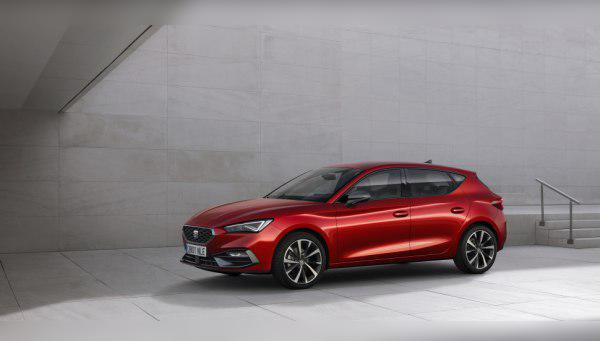
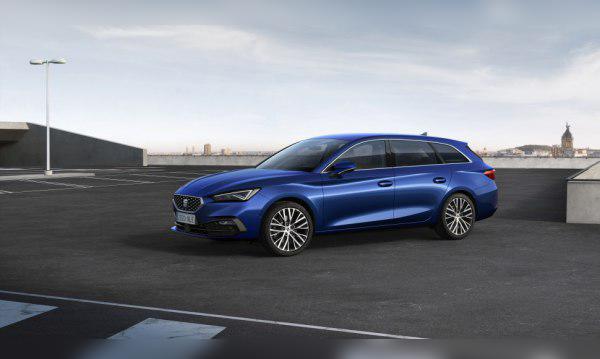
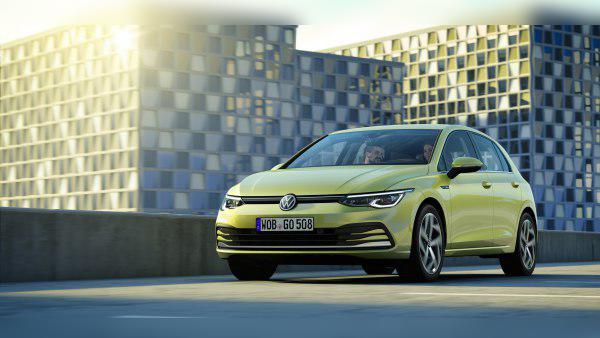
1.0 TSI (DLAB) 90 HP: Experiences, issues, fuel consumption and used car buying guide
Key points (TL;DR)
- Timing belt: The engine uses a timing belt, not a chain, which solved the problems of older TSI engine generations.
- Efficiency: Extremely low fuel consumption, especially in city driving and on secondary roads.
- Power: With 90 HP, this is the base engine. Sufficient for city driving, but requires patience and frequent shifting on the motorway.
- GPF filter: It has a gasoline particulate filter (GPF), so it requires occasional “blowing out” on open roads.
- Sound and vibrations: As a three-cylinder, it has a characteristic sound (“snorting”) and mild vibrations at idle, but sound insulation in the Golf 8 and Leon IV is excellent.
- Flywheel: In this 90 HP version it usually comes with a solid flywheel, which makes maintenance cheaper.
Contents
- Introduction and applications
- Technical specifications
- Reliability and maintenance
- Specific parts (costs)
- Fuel consumption and performance
- Additional options and modifications
- Gearbox
- Buying used and conclusion
Introduction and applications
The engine with the code DLAB belongs to the latest generation of the EA211 evo family of Volkswagen engines. It is a 1.0‑liter three‑cylinder turbo petrol engine that serves as the entry‑level (base) power unit for C‑segment models such as the VW Golf VIII and Seat Leon IV.
This engine is important because it represents a response to strict emission regulations. It operates in the so‑called Miller combustion cycle (similar to the Atkinson cycle), which allows for higher efficiency and lower emissions compared to its predecessors. Although 90 HP sounds modest by today’s standards, the torque of 175 Nm makes it surprisingly usable in everyday driving.
Technical specifications
| Parameter | Value |
|---|---|
| Engine code | DLAB |
| Displacement | 999 cc (1.0 L) |
| Configuration | Inline, 3 cylinders |
| Power | 66 kW / 90 HP |
| Torque | 175 Nm at 1600–3000 rpm |
| Injection | Direct injection (TSI) |
| Charging | Turbocharger (VTG – variable geometry on EVO models) + intercooler |
Reliability and maintenance
Does this engine have a timing belt or a chain?
The DLAB engine uses a timing belt. This is a big advantage compared to the old 1.2 and 1.4 TSI engines (EA111 generation) which had problematic chains. The belt on EA211 evo engines is reinforced with glass fibers and is designed to last a long time.
At what mileage should the major service be done?
The factory recommendation for timing belt replacement is often very optimistic (on some markets they even mention 210,000 km or “no limit, just inspection”). However, as an experienced editor, I advise you not to take that risk. Do the major service at a maximum of 150,000 to 180,000 km or after 8 to 10 years of age. The cost of an engine failure due to a snapped belt is incomparably higher than the price of a timing kit.
What are the most common failures on this engine?
Although the engine is generally reliable, pay attention to:
- Water pump and thermostat housing: This is its “Achilles’ heel”. The module is plastic and prone to coolant leaks or a stuck thermostat. If the engine is losing coolant, this is the first place to check.
- Carbon buildup: Due to direct injection, the intake valves are not washed by fuel. At higher mileage (over 150k km), carbon deposits can build up, resulting in rough running and loss of power.
- Turbocharger electronics: The turbo actuator (which regulates boost pressure) can cause issues, leading to the “Check Engine” light and the car going into “safe mode”.
How many liters of oil does this engine take and which grade is recommended?
The engine takes approximately 4.0 liters of oil (always check the level on the dipstick). For the DLAB (EVO generation), it is crucial to use low‑viscosity oil, most commonly 0W‑20 with the specification VW 508.00 / 509.00. This oil is necessary due to tight tolerances and operation in the Miller cycle. Do not use thicker oil (e.g. 5W‑40) unless the manufacturer explicitly allows it for your climate, as it can affect the operation of the variable oil pump.
Does it consume oil between services?
Modern TSI engines are much better in this regard than the old ones. Still, consumption of up to 0.3–0.5 liters per 10,000 km is considered completely normal, especially if you drive aggressively on the motorway. If you have to top up a liter every 2,000–3,000 km, that indicates a problem with the piston rings or the turbocharger.
At what mileage should the spark plugs be replaced?
Spark plugs should be replaced every 60,000 km or 4 years. Use only iridium or platinum spark plugs recommended by the manufacturer (such as NGK or Bosch), because conditions inside the cylinders of a turbo engine are extreme.
Specific parts (costs)
Does the engine have a dual‑mass flywheel?
Good news: the 90 HP version (DLAB) combined with the 5‑speed manual gearbox most often uses a solid (single‑mass) flywheel. This significantly reduces future clutch replacement costs. Still, always check by VIN, as there are variations for specific markets.
What type of injection system does it have and are the injectors problematic?
The system is direct fuel injection into the cylinders at high pressure (up to 350 bar on EVO engines). The injectors are precise and generally durable, but sensitive to poor fuel quality. A faulty injector manifests as jerking during acceleration or engine “knocking”. The price of a single injector is high (depends on the market).
Does this engine have a turbocharger and what is its lifespan?
It has a single turbocharger. On EVO versions (DLAB), a turbo with variable geometry (VTG) is often used, which is rare on petrol engines but provides better throttle response. The turbo’s lifespan is usually equal to the engine’s lifespan with regular oil changes. Failures are less common than before, and most often the actuator (electronic part) fails before the turbo’s mechanical components.
Does this model have a DPF filter or an EGR valve?
It has a GPF (Gasoline Particulate Filter), which is the petrol equivalent of a diesel DPF. It also has an EGR system. The GPF rarely clogs if the car is occasionally driven on open roads. Symptoms of a clogged GPF are loss of power and a warning light on the dashboard. Replacement is very expensive (depends on the market).
Does this engine use AdBlue?
No, this is a petrol engine and does not use AdBlue fluid.
Fuel consumption and performance
What is the real‑world fuel consumption in city driving?
This engine excels in efficiency. In real city stop‑and‑go conditions, consumption ranges between 6.0 and 7.5 l/100 km. If you drive carefully, it can go below 6 liters, which is an excellent result for a petrol engine in this class.
Is this engine “sluggish” for the weight of the car?
To be realistic: the Golf VIII and Leon IV are not light cars (around 1300 kg). With 90 HP, the car is no sports car. Up to 80 km/h it feels lively enough thanks to the turbo and torque available low down. However, when the car is fully loaded with passengers and luggage, the lack of power is noticeable, especially on uphill sections where you will have to downshift more often.
What is the engine like on the motorway and at what rpm does it cruise at 130 km/h?
On the motorway it is stable, but it lacks power reserves for overtaking at higher speeds. At 130 km/h in top gear (usually 5th gear on this model), the engine spins at around 2,800 to 3,000 rpm. That is not too noisy, but fuel consumption then rises to about 5.5–6.5 l/100 km.
Additional options and modifications
Is this engine suitable for LPG conversion?
Due to direct injection, a standard sequential LPG system cannot be installed. You need a system for direct liquid gas injection or a system that uses a mixture of petrol and LPG (e.g. 80% LPG, 20% petrol) to cool the injectors. Such systems are expensive (often over 800–1000 EUR) and the cost‑effectiveness is questionable unless you cover very high mileage.
How far can this engine be safely tuned (Stage 1)?
1.0 TSI engines have good potential. A Stage 1 remap can increase power from 90 HP to about 115–120 HP, and torque to about 200–220 Nm. This significantly changes the character of the car and makes it more pleasant to drive. However, keep in mind that this puts additional stress on the small turbo and the clutch.
Gearbox
Which manual and automatic gearboxes are fitted to this engine?
With the 90 HP DLAB variant, the standard is a 5‑speed manual gearbox (code MQ200). This weakest version is very rarely combined with an automatic; DSG is usually reserved for the more powerful 110 HP versions (eTSI). If you do find an automatic, it will be the 7‑speed DSG (DQ200) with dry clutches.
What are the most common issues with the manual gearbox?
The MQ200 is a reliable gearbox. Problems are rare, but you may encounter bearing whine (input shaft) at high mileage. The symptom is a noise that disappears when you press the clutch pedal.
Clutch replacement cost?
Since the 90 HP model usually has a solid flywheel, replacement of the clutch kit (pressure plate, disc, release bearing) is affordable. (Depends on the market, but it is among the cheaper jobs compared to diesels).
At what mileage should the gearbox be serviced and the oil changed?
VW often states that the oil in the manual gearbox is “lifetime fill”. Do not rely on that. I recommend changing the oil in the manual gearbox every 80,000–100,000 km. It is a small expense (about 2 liters of oil), and it significantly extends the life of the bearings and synchros.
Buying used and conclusion
When buying a used Golf 8 or Leon with this engine, make sure to check:
- Cold start: Listen to the engine while it is cold. There should be no metallic rattling or irregular running before the revs stabilize.
- Coolant level: Look at the coolant reservoir. If the level is low or you see traces of leakage around the engine (on the right‑hand side when viewed from the front), expect to replace the water pump.
- Oil around the turbo: Inspect the hoses around the turbo; there should not be excessive oil.
Conclusion: The DLAB 1.0 TSI with 90 HP is an excellent choice for drivers who spend most of their time in the city or on secondary roads and want a modern car (Golf 8/Leon IV) with low registration, fuel and maintenance costs. It is not for those who enjoy fast driving or frequently tow a trailer. If you find a car with a well‑documented service history, it is a rational and smart purchase.
Was this content useful to you?
Your opinion helps us to improve the quality of the content.