BSE, BSF, CCSA Engine
- Engine
- 1595 cm3
- Aspiration
- Naturally aspirated engine
- Fuel
- Petrol (Gasoline)
- Fuel injection system
- Multi-port manifold injection
- Power
- 102 hp @ 5600 rpm
- Torque
- 148 Nm @ 3800 rpm
- Cylinders
- 4
- Valves
- 8, 2 per cylinder
- Cylinders position
- Inline
- Valvetrain
- OHC
- Oil capacity
- 4.5 l
- Coolant
- 8 l
# Vehicles powered by this engine

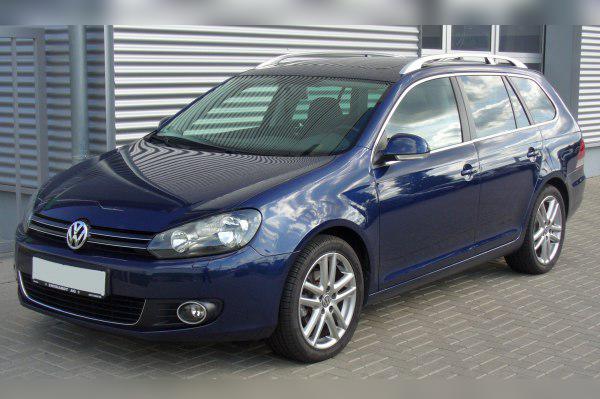
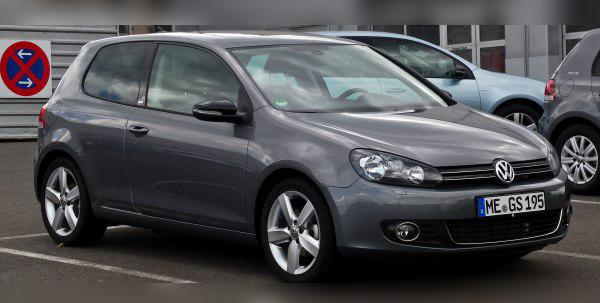
1.6 MPI (BSE, BSF, CCSA) engine – experiences, problems, fuel consumption and used car buying guide
Key points (TL;DR)
- Old-school reliability: This is a simple naturally aspirated engine that tolerates a lot of owner mistakes and poor-quality fuel.
- Ideal for LPG: One of the best more modern engines for LPG conversion thanks to its indirect injection.
- Modest performance: With 102 hp, this engine is often “lazy”, especially in heavier bodies such as the Golf VI estate.
- Oil consumption: On older units (BSE/BSF series), oil consumption due to piston rings is not uncommon.
- High fuel consumption: In the city it consumes almost as much as 2.0 engines, but goes like a 1.4.
- Maintenance: Parts are cheap and widely available, and every mechanic knows how to repair it.
- Gearbox: Manual gearboxes have “short” ratios, which increases noise on the motorway.
Contents
- Introduction and applications
- Technical specifications
- Reliability and maintenance
- Specific parts (costs)
- Fuel consumption and performance
- Additional options and LPG
- Gearbox and drivetrain
- Buying used and conclusion
Introduction and applications
The engine we’re talking about today, known under the codes BSE, BSF and CCSA, is the “last of the Mohicans” of Volkswagen’s old-school petrol engines. While TSI engines were taking over the market with their complexity, turbochargers and timing chains, this 1.6 MPI (Multi Point Injection) with 8 valves remained in the lineup as a safe haven for conservative buyers, taxi drivers and fleets.
It was installed in a wide range of VW Group vehicles and, in the context of your question, it is most commonly found in the Seat Leon II (1P) and Volkswagen Golf VI (both hatchback and estate versions). Its main role was not to impress with performance, but to offer cheap running costs and longevity. It is important to note that the CCSA version is often labeled as “MultiFuel” or BiFuel, as it is factory-adapted to run on ethanol (E85), although in our market it is driven exclusively on petrol.
Technical specifications
| Specification | Data |
|---|---|
| Displacement | 1595 cc |
| Configuration | Inline 4-cylinder, 8-valve (SOHC) |
| Power | 75 kW (102 hp) at 5600 rpm |
| Torque | 148 Nm at 3800 rpm |
| Engine codes | BSE, BSF, CCSA, CMXA |
| Injection type | MPI (indirect injection) |
| Aspiration | Naturally aspirated (no turbo) |
| Camshaft drive | Timing belt |
Reliability and maintenance
Does this engine have a timing belt or a chain?
This engine uses a timing belt to drive the camshaft. That’s good news because the system is simple and reliable. There are no timing chain stretching issues like on early TSI engines. The water pump is also replaced when the belt is changed, as it is driven by the belt.
What are the most common failures on this engine?
Although it is robust, time takes its toll. The most common issues are:
- Ignition coils and spark plug wires: They often fail, which leads to rough running (“misfiring”) and the “Check Engine” light coming on.
- Oil consumption (piston rings): At higher mileage (over 200,000 km), oil control rings can get stuck or worn, which drastically increases oil consumption.
- Unmetered air (vacuum leaks): Vacuum hoses and intake manifold seals (O-rings) become brittle and the engine draws “false” air, resulting in unstable idle.
- Throttle body: It gets dirty from oil vapors, so the engine can stall at traffic lights. Cleaning and adaptation usually solve the problem.
- Cracking plastic coolant flanges: The thermostat housing and coolant flanges are plastic and eventually crack, causing coolant leaks.
At what mileage should the major service be done?
The recommended interval for the major service (replacement of timing belt, tensioner and water pump) is every 90,000 to 120,000 km or every 5 years, whichever comes first. Do not wait for the factory 180,000 km interval; that is too risky for a used car.
How many liters of oil does it take and which grade?
The sump holds about 4.5 liters of oil. Fully synthetic 5W-40 (VW 502.00 standard) is recommended. If the engine has high mileage and consumes oil, many owners switch to semi-synthetic 10W-40, which is acceptable for this older design.
Does it consume oil and what is considered normal?
Yes, engines with BSE and BSF codes are known to “drink” oil. The manufacturer covers itself by saying that up to 0.5 l/1000 km is normal (which is excessive). In practice, consumption of 1 to 2 liters per 10,000 km (between two minor services) is considered acceptable for a used engine. If it consumes a liter per 1000 km, the engine is due for a refresh (replacement of piston rings and valve stem seals).
At what mileage should the spark plugs be replaced?
Spark plugs are replaced every 30,000 to 60,000 km, depending on the plug type (standard or iridium). Note: Replacing spark plugs on this engine can be tricky because the intake manifold runs over the engine, making access to cylinders 2 and 3 difficult. It requires patience or special tools to avoid removing the entire intake manifold.
Specific parts (costs)
Does the engine have a dual-mass flywheel?
Versions with a manual gearbox (5-speed) usually do not have a dual-mass flywheel, but a classic solid one, which is a huge saving. However, versions with a DSG automatic gearbox have a specific flywheel adapted to that gearbox. Always check by VIN, but for a manual you are 99% safe that it is a solid flywheel.
What kind of injection system does it have?
This is a classic MPI system (port injection into the intake manifold). The injectors are extremely simple, cheap and rarely cause problems. They are not as sensitive to fuel quality as modern FSI/TSI injectors.
Does the engine have a turbocharger?
No. This is a naturally aspirated engine. There is no turbo, no intercooler, no issues with turbo oil overheating. The service life of this component is “infinite” because it doesn’t exist.
Does it have a DPF filter or an EGR valve?
Being a petrol engine, it does not have a DPF filter. The engine does have an EGR valve. It can clog up with soot, which manifests as a warning light and rough running. Fortunately, on this engine the EGR can be cleaned or replaced relatively cheaply (depending on the market, but it’s not expensive).
AdBlue and maintenance?
This engine does not have an AdBlue system. That is reserved for modern diesels.
Fuel consumption and performance
What is the real-world fuel consumption in city driving?
Don’t let the small displacement fool you. In the heavy body of a Golf VI or Leon, this engine has to rev. Real-world city consumption is between 9 and 11 liters per 100 km. In winter and heavy traffic it can go up to 12 liters.
Is this engine “lazy”?
Honestly – yes, it is quite lazy by today’s standards. With 148 Nm of torque available only at 3800 rpm, it requires frequent shifting to get going. In a Golf VI estate, when the car is full of passengers and luggage, overtakes must be well planned. Acceleration to 100 km/h takes about 11.5–12 seconds.
What is the engine like on the motorway?
Due to the 5-speed gearbox with short ratios, the engine revs high on the motorway. At 130 km/h the engine runs at about 4000–4200 rpm. This creates cabin noise and increases fuel consumption to around 8–9 l/100 km. It is not an ideal long-distance cruiser.
Additional options and modifications
Is this engine suitable for LPG conversion?
Absolutely YES. This is one of the best engines for LPG conversion. It has hydraulic tappets (no valve clearance adjustment needed) and a simple intake manifold. An LPG system works perfectly and drastically reduces running costs, making the high fuel consumption bearable.
How much can this engine be “chipped” (Stage 1)?
On a naturally aspirated petrol engine, remapping (Stage 1) makes almost no sense. You might gain 5 to 8 hp and a slightly better throttle response, but you won’t feel it in real driving. Don’t waste money on software tuning for this engine.
Gearbox
Which gearboxes are fitted?
It most commonly comes with a 5-speed manual gearbox (series codes 0AF or 0A4). In the Golf VI and Leon you can also find a 7-speed DSG automatic gearbox (DQ200 – dry clutch).
Most common gearbox failures?
Manual: Very reliable. Sometimes there is an issue with difficult engagement of reverse or first gear, which is often due to the shift linkage or old oil. The gearbox bearings are generally long-lasting.
Automatic (DSG 7): This is the more problematic side. The DQ200 gearbox with a dry clutch is known for mechatronic failures and faster wear of the clutch pack, especially in stop-and-go city driving. Repairs are expensive (depending on the market, but very expensive).
Does it have a dual-mass flywheel and what is the clutch replacement cost?
As mentioned, the manual does not have a dual-mass flywheel. Replacing the clutch kit (pressure plate, disc, release bearing) is very affordable (falls into the “not expensive” category). For the DSG gearbox, replacement of the clutch pack and possibly the flywheel is several times more expensive.
Gearbox servicing and oil?
Manual: VW says the oil is “lifetime”, but it is recommended to replace it every 150,000 km. It takes about 1.7–1.9 liters of 75W-90 oil.
DSG: Although it is a “dry” DSG, the mechatronics and gears have their own oils. It is recommended to check and service (as needed) every 60,000 km at a specialist, even if the service book does not strictly require it as with “wet” DSG gearboxes.
Buying used and conclusion
Before buying a car with this engine, pay attention to:
- Blue smoke from the exhaust: Rev the warmed-up engine while stationary. If it emits bluish smoke, the rings are worn and the engine consumes oil.
- Oil filler cap: Remove it while the engine is running. If there is a lot of blow-by or yellow emulsion (“mayonnaise”) – the emulsion can be from short trips, but be cautious.
- Idle speed: It should be steady (around 650–800 rpm). If it fluctuates, it is probably drawing unmetered air or the throttle body is dirty.
Conclusion:
The 1.6 MPI (BSE/BSF/CCSA) engine is intended for drivers who want cheap maintenance, simplicity and durability, and are willing to sacrifice performance and pay a bit more for fuel (or install LPG). It is ideal for city driving and beginner drivers. Avoid it if you often travel on motorways or enjoy sporty driving. If you find a well-maintained example with a manual gearbox, it is one of the safest used-car purchases in that era.
Was this content useful to you?
Your opinion helps us to improve the quality of the content.