EA211 evo / DLAA Engine
- Engine
- 999 cm3
- Aspiration
- Turbocharger, Intercooler
- Fuel
- Petrol (Gasoline)
- Fuel injection system
- Direct injection
- Power
- 110 hp @ 5000 rpm
- Torque
- 200 Nm
- Cylinders
- 3
- Valves
- 12, 4 per cylinder
- Cylinders position
- Inline
- Valvetrain
- DOHC
- Oil capacity
- 4 l
- Systems
- Start & Stop System, Particulate filter
# Vehicles powered by this engine
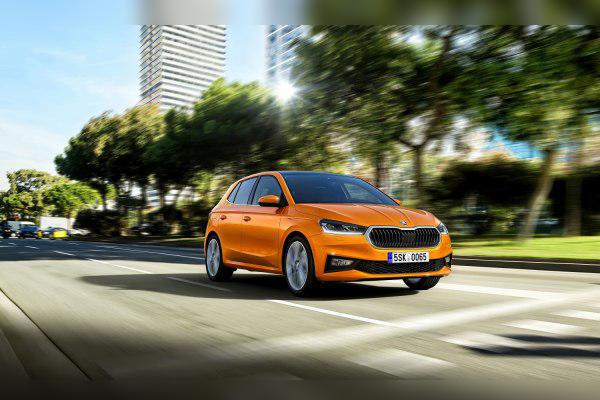
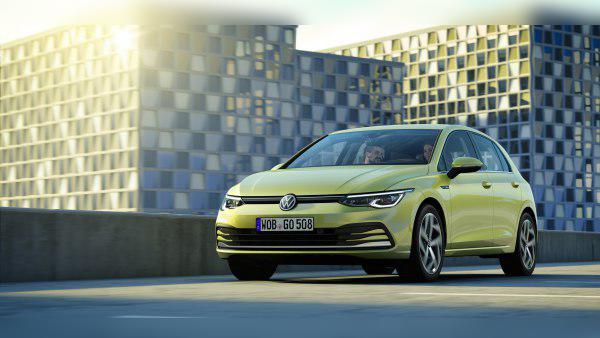

1.0 TSI EA211 evo (DLAA) – Experiences, issues, fuel consumption and used car buying guide
Key points (TL;DR)
- Timing drive: Uses a timing belt, not a chain, which solved the old VW engine problems. It is reliable.
- Technology: This is the “Evo” version with the Miller cycle and a variable geometry turbo (VTG), which is rare for petrol engines of this displacement.
- Performance: With 110 hp and 200 Nm, the engine is surprisingly lively and not “lazy”, even in the Golf VIII.
- Maintenance: Requires specific 0W-20 oil. Sensitive to poor fuel quality due to direct injection and the GPF filter.
- Dual-mass flywheel: Yes, this 110 hp version usually has it (unlike the lower-powered variants).
- Gearbox: Comes with a 6-speed manual or a 7-speed DSG (dry clutch).
- Recommendation: Excellent choice for city and highway, very economical, but check the condition of the turbo and cooling system before buying.
Contents
- Introduction and applications
- Technical specifications
- Reliability and maintenance
- Specific parts and costs
- Fuel consumption and performance
- Additional options and modifications
- Gearbox: Manual and DSG
- Buying used and conclusion
Introduction and applications
The 1.0 TSI EA211 evo engine (code DLAA) represents the peak of the Volkswagen Group’s downsizing philosophy. Although many drivers are still skeptical about one‑liter three‑cylinders, this unit has proven that small displacement does not have to mean a short lifespan. It is an evolution of the previous EA211 engine, upgraded to meet strict Euro 6d standards.
This engine is the heart of modern B and C segment models such as the Škoda Fabia IV, VW Taigo and VW Golf VIII. It is particularly interesting in the Golf where it comes in the “eTSI” mild hybrid variant, which further smooths out turbo lag and reduces fuel consumption.
Technical specifications
| Parameter | Data |
|---|---|
| Displacement | 999 cc (1.0 L) |
| Configuration | R3 (3 cylinders in line) |
| Power | 81 kW (110 hp) at 5500 rpm |
| Torque | 200 Nm at 2000–3000 rpm |
| Engine code | DLAA (EA211 evo family) |
| Injection type | TSI – Direct injection (up to 350 bar) |
| Charging | VTG turbocharger + intercooler |
| Valves | 12 valves (4 per cylinder), DOHC |
Reliability and maintenance
Does this engine have a timing belt or a chain?
The 1.0 TSI EA211 evo uses a timing belt. This is important because older VW engines (EA111 generation) had major issues with chains. Switching to a belt turned out to be a complete success. The belt is robust, reinforced with glass fibers and designed to last a long time.
At what mileage should the major service be done?
The factory recommendation is often very optimistic and usually mentions only an “inspection” after 240,000 km and then every 30,000 km. However, from an experienced editor’s perspective, you should not wait that long. Preventive replacement of the timing belt, tensioner and water pump should be done between 180,000 km and 210,000 km or at the latest after 10 years of vehicle age. A snapped belt leads to catastrophic engine damage, so the service cost is negligible compared to the risk.
What are the most common failures on this engine?
Although more reliable than its predecessor, the EA211 evo has its weak points:
- Coolant loss: The thermostat housing and water pump are integrated into a module that is prone to leaks. If you notice the coolant level dropping, this is the first suspect.
- Carbon buildup: Due to direct injection, the valves are not “washed” by fuel. Over time, carbon deposits build up on the intake valves, which can lead to rough running and power loss at higher mileage (over 150,000 km).
- GPF issues: The gasoline particulate filter can clog if the car is driven exclusively in the city on short trips, although this is less common than with diesel DPFs.
- Turbo actuator: The electronic actuator that controls the variable geometry turbo can stick, which triggers the check engine light and causes power loss.
How many liters of oil does this engine take and which grade is recommended?
The sump holds approximately 4.0 liters of oil. For EA211 evo engines, VW strictly specifies the VW 508.00 / 509.00 standard. This is 0W-20 oil. This “thin” oil is crucial for proper Miller cycle operation and lubrication under high pressure. Do not experiment with thicker oils (such as 5W-40) unless the manufacturer explicitly allows it for your climate, as this can damage the delicate variable turbo mechanism.
Does it consume oil between services?
In general, these engines are not known for high oil consumption if they are in good condition. Consumption up to 0.5 liters per 10,000 km is considered acceptable. If it uses more than that (e.g. 1 liter per 2,000 km), this points to an issue with the piston rings or turbo, which is not normal behavior but a fault.
At what mileage should the spark plugs be replaced?
The spark plugs are under heavy load in these engines. The recommended replacement interval is 60,000 km or 4 years. Use only high‑quality iridium plugs (NGK or Bosch according to factory spec), because a bad plug can damage the coil packs (mounted directly on the plug) or even the piston.
Specific parts (Costs)
Does the engine have a dual-mass flywheel?
Yes, it does. The 110 hp (200 Nm) variant is powerful enough and has enough vibration (being a three‑cylinder) to require a dual‑mass flywheel for driving comfort and gearbox protection. Lower‑powered versions (95 hp) often have a solid flywheel, but with the 110 hp DLAA you should be prepared for this expense. The price of replacing the clutch kit with flywheel is high (Very expensive) (Depends on market).
What kind of injection system does it have and are the injectors problematic?
The system is common rail direct injection with pressure up to 350 bar. The injectors are precise (5‑hole) and generally durable, but extremely sensitive to poor fuel quality. Failure of a single injector can be quite costly (Expensive) (Depends on market). Symptoms include jerking and increased fuel consumption.
Does the engine have a turbocharger and what is its lifespan?
It has a single turbocharger, but a special one. This is the first mass‑produced small petrol engine with a VTG turbo (variable geometry). This gives it excellent throttle response. Lifespan is long (over 200,000 km) with regular oil changes, but the turbo itself is more expensive to overhaul or replace than classic fixed‑geometry units. Its biggest enemy is switching off a very hot engine immediately after hard driving.
Does this model have a DPF filter or EGR valve?
It does not have a DPF (because it’s not a diesel), but it does have a GPF (Gasoline Particulate Filter) which does a similar job. It also has an EGR valve. The GPF rarely clogs if the car is occasionally driven on open roads so that it reaches operating temperature and burns off soot particles.
Fuel consumption and performance
What is the real fuel consumption in city driving?
Forget the factory figures. In real stop‑and‑go city driving, a Fabia or Taigo uses between 6.5 and 7.5 liters per 100 km. In heavy traffic or in the heavier Golf, this can go up to 8 liters. The mild hybrid (eTSI in the Golf) can reduce this by about 0.5 liters thanks to engine shut‑off during coasting.
Is this engine “lazy” for the weight of the car?
Absolutely not. With 200 Nm of torque (which used to be standard for 2.0 naturally aspirated engines), this engine pulls surprisingly well from low revs. In the Fabia it is very agile. In the Golf and Taigo it is perfectly adequate for normal and even dynamic driving. It’s not a sports engine, but overtaking on country roads is safe and easy.
How does the engine behave on the motorway and at what rpm does it cruise at 130 km/h?
Thanks to the 6‑speed manual or 7‑speed DSG, the engine is relaxed. At 130 km/h it runs at around 2,600 to 2,800 rpm (depending on gearbox). Cabin noise is minimal, and fuel consumption at that speed is around 5.5 to 6.5 liters. It has no problem maintaining cruising speeds of 140–150 km/h.
Additional options and modifications
Is this engine suitable for LPG conversion?
Not recommended. Due to direct injection (TSI), a standard sequential LPG system cannot be used. You need expensive systems that either inject liquid gas or use a petrol/LPG mix (e.g. 20% petrol, 80% LPG) to cool the petrol injectors. The installation cost is very high (Very expensive) (Depends on market) and the payback is questionable unless you drive huge mileages.
How far can this engine be safely tuned (Stage 1)?
The engine has potential. A safe Stage 1 remap can raise power to about 130–140 hp and torque to 230–240 Nm. However, you should be careful with the DSG gearbox (DQ200), whose torque limit is close to the stock values (rated at 250 Nm), so overdoing it can shorten clutch life.
Gearbox: Manual and DSG
Which gearboxes are fitted?
- Manual: 6‑speed gearbox (code MQ200).
- Automatic: 7‑speed DSG dual‑clutch (code DQ200 – dry clutch).
What are the most common failures?
The manual gearbox is very reliable. At higher mileage, oil leaks can occur at the driveshaft seals.
The DSG (DQ200) has a bad reputation, but in newer model years (after 2018/19) it has been significantly improved. Still, it is more sensitive than the “wet” DSG units. The most common issues are worn clutch packs (symptoms: shuddering when moving off) and mechatronic failure (symptoms: loss of gears, going into safe mode). Mechatronic repair is expensive (Very expensive) (Depends on market).
Cost of clutch and dual-mass flywheel replacement?
On the manual gearbox with a dual‑mass flywheel, the clutch kit + flywheel + release bearing is a serious expense (Expensive) (Depends on market). On the DSG, replacing the clutch pack is also costly and requires special tools and calibration.
Gearbox service?
For the manual gearbox, VW often claims “filled for life”, but I recommend changing the oil at 100,000 km. For the DSG DQ200, since it has a dry clutch, the oil in the clutch section is not changed, but the oil in the gear section and mechatronics is. The recommendation is inspection and possible replacement every 60,000–80,000 km to extend mechatronic life.
Buying used and conclusion
When buying a car with the 1.0 TSI EA211 evo engine, make sure to check:
- Cold start: Listen to the engine when cold. Rattling can indicate an issue with the turbo actuator or early dual‑mass flywheel problems.
- Coolant: Look at the coolant reservoir. If the level is low or you see traces of leaks around the engine (especially on the right‑hand side when viewed from the front), the water pump/thermostat module is probably leaking.
- DSG behavior: The car should move off smoothly when you release the brake. Any jerking, knocking or hesitation is a sign of worn clutches or mechatronic issues.
- Service history: Check whether the correct 0W-20 oil has been used. The wrong oil kills this engine.
Verdict
This engine is an excellent choice for drivers looking for balance. It is ideal for those who drive 70% city, 30% open road. It offers performance that is more than sufficient for an average family, while fuel costs are low. If you are coming from old naturally aspirated engines, you will be impressed by the power. If you are coming from a diesel, you will miss some torque on steep hills, but you will enjoy the quietness. Avoid cars with a dubious service history, because the technology in this engine does not forgive neglect.
Was this content useful to you?
Your opinion helps us to improve the quality of the content.