EA888 / DLBA, DKTB Engine
- Engine
- 1984 cm3
- Aspiration
- Turbocharger, Intercooler
- Fuel
- Petrol (Gasoline)
- Fuel injection system
- Direct injection
- Power
- 245 hp @ 5000-6200 rpm
- Torque
- 370 Nm @ 1600-4300 rpm
- Cylinders
- 4
- Valves
- 16, 4 per cylinder
- Cylinders position
- Inline
- Valvetrain
- DOHC
- Oil capacity
- 5.7 l
- Coolant
- 8.6 l
- Systems
- Start & Stop System
# Vehicles powered by this engine
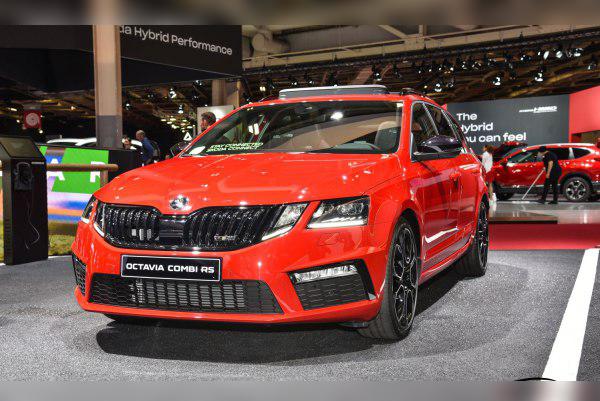
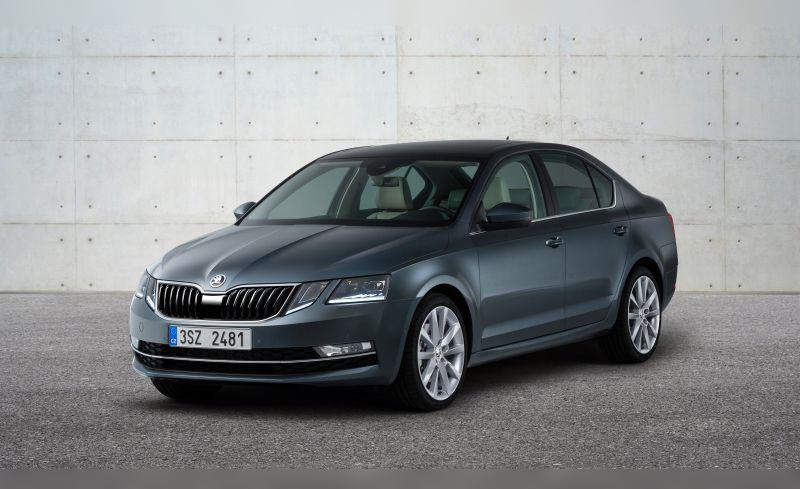
2.0 TSI EA888 (245 hp) – Experiences, issues, fuel consumption and used car buying guide
Key points (TL;DR)
- Performance: This is the top of the range for the Octavia III (RS245). The engine is bursting with power and in stock form offers serious sports performance.
- Timing drive: Uses a chain. Much more reliable than older generations (Gen 2), but not eternal.
- Main weakness: Thermostat and water pump housing. The plastic cracks, seals fail, and coolant leaks are a matter of "when", not "if".
- Gearbox: Comes with a reinforced 7-speed DSG (DQ381) or a manual gearbox. Both require regular maintenance, especially the DSG.
- VAQ Differential: A specific feature of this model (RS245) is the electronically controlled limited-slip differential (VAQ), which drastically improves handling but requires its own oil and servicing.
- Fuel consumption: Can be surprisingly economical on the highway, but in the city and with aggressive driving it "gulps" fuel.
- Recommendation: One of the best all-round engines on the market. An ideal blend of family comfort and racing ambitions.
Contents
- Introduction and applications
- Technical specifications
- Reliability and maintenance
- Specific parts and costs
- Fuel consumption and performance
- Additional options and modifications
- Gearbox and drivetrain
- Buying used and conclusion
Introduction and applications
The 2.0 TSI engine with codes DLBA and DKTB belongs to the third generation (Gen 3B) of the famous VAG engine family EA888. This is not a "regular" 2.0 engine; this is the heart of the Škoda Octavia RS245, the most powerful and most capable version of the third-generation Octavia (facelift). Unlike the standard RS version with 220 or 230 hp, the 245 hp variant brings not only more power, but also significant mechanical changes such as a different gearbox and an advanced differential.
This engine is important because it represents the sweet spot between everyday usability and serious performance. It is installed in practical body styles (estate/combi and sedan), making it a favourite choice for drivers who want one car for everything – from grocery runs to track days.
Technical specifications
| Specification | Data |
|---|---|
| Displacement | 1984 cc (2.0 L) |
| Power | 180 kW (245 hp) at 5000-6700 rpm |
| Torque | 370 Nm at 1600-4300 rpm |
| Engine codes | DLBA (without OPF, earlier models), DKTB (with OPF, later models) |
| Injection type | Combined (Direct TSI + Indirect MPI) *Depends on code |
| Forced induction | Turbocharger (IHI IS20), intercooler |
| Timing drive | Chain |
Reliability and maintenance
Does this engine have a timing belt or a chain?
The engine uses a timing chain. The third generation of EA888 engines has solved the catastrophic timing chain tensioner problems that plagued its predecessors. The chain is now robust and designed to last the life of the engine, but in practice it is recommended to check its condition (stretch) via diagnostics or visually (through the inspection opening) after about 150,000 km. If you hear rattling on cold start that lasts longer than 2–3 seconds, that is a sign for an urgent check.
What are the most common failures on this engine?
Although this is one of the most reliable modern turbo petrol engines, there are specific weak points:
- Thermostat module and water pump: This is issue number one. The housing is made of plastic that deforms over time due to heating and cooling cycles. Symptoms are loss of coolant without a visible puddle under the car (because it evaporates on the block) or engine overheating.
- PCV valve (oil separator): When the membrane tears, the engine can run rough, produce a whistling (vacuum) sound, or show increased oil consumption.
- Camshaft solenoid valves: They can leak or fail, which leads to dashboard error codes and loss of power.
At what mileage is the major service due?
Since the engine has a chain, a classic "major service" (timing belt replacement) does not exist in that sense. However, the serpentine belt and its tensioners should be replaced at around 120,000 km or every 5–6 years. The timing chain is replaced only if necessary (rattling, excessive stretch).
How many litres of oil does this engine take and which viscosity is recommended?
The engine takes approximately 5.7 litres of oil.
The recommended viscosity depends on whether the engine has a GPF/OPF filter (code DKTB):
- For engines with an OPF filter (2018+): Mandatory 0W-20 (VW 508.00 specification).
- For engines without an OPF filter (DLBA): You can use 5W-30 (VW 504.00).
Tip: For spirited driving and better engine protection, change the oil every 10,000–12,000 km at most, not at 30,000 km as the factory allows (LongLife interval).
Does it consume oil between services?
The EA888 Gen 3 is dramatically better than the notorious Gen 2 when it comes to oil consumption. Still, with hard driving (high revs), it is normal for the engine to consume 0.5–1.0 L of oil per 10,000 km. This is considered acceptable. If it uses a litre every 2,000 km, that points to a problem with piston rings or the turbo.
At what mileage should the spark plugs be replaced?
The factory often recommends 60,000 km, but for this engine (especially if driven sportily) it is better to replace the spark plugs every 30,000–40,000 km. Worn spark plugs can lead to overheating of the ignition coils (which are also consumable items on these engines) and poor combustion.
Specific parts (costs)
Does the engine have a dual-mass flywheel?
Yes, both the manual and DSG versions have a dual-mass flywheel. With the DSG it usually lasts longer, but when you hear a metallic knocking at idle that disappears when you rev the engine (or press the clutch on the manual), it is ready for replacement. Replacement cost is high (depends on the market).
What kind of injection system does it have and are the injectors problematic?
There is an important difference here. Most EA888 Gen 3 engines before the introduction of strict emission standards (DLBA) have combined injection (8 injectors: 4 direct + 4 port injectors in the intake manifold). This is great because the port injectors wash the valves and prevent carbon build-up. Newer DKTB engines with an OPF filter often rely only on high-pressure direct injection (200+ bar). The injectors are generally reliable, but expensive if they fail.
Does this engine have a turbocharger and what is its lifespan?
The engine uses a single turbocharger, model IHI IS20. This turbo is very responsive. Its lifespan is long (over 200,000 km) with regular oil changes and proper cool-down after fast driving. It is not as prone to shaft failure as the larger IS38 (on the Golf R), but it can happen that the wastegate actuator develops play, which causes rattling and loss of boost.
Does this model have a DPF filter or an EGR valve?
Petrol engines do not have a DPF like diesels, but engines with the code DKTB (from around 2018/2019 onwards) have an OPF/GPF (Gasoline Particulate Filter). It works similarly to a DPF, but regenerates much more easily (passively while driving) due to the higher exhaust gas temperatures of petrol engines. It rarely clogs, unless the wrong oil is used (not Low SAPS). A classic external EGR valve often does not exist; instead, exhaust gas recirculation is handled via variable valve timing (internal EGR), which is a more reliable solution.
Does this engine use AdBlue?
No. This is a petrol engine and does not have an AdBlue system. That is one less maintenance concern.
Fuel consumption and performance
What is the real-world fuel consumption in city driving?
Do not expect miracles. In heavy city traffic, real-world consumption is between 10 and 12 litres per 100 km. In winter or on short trips, it can easily go up to 13–14 litres.
Is this engine “lazy” for the weight of the car?
Absolutely not. With 370 Nm available from just 1600 rpm, this engine moves the Octavia RS body (around 1400–1500 kg) with incredible ease. 0–100 km/h takes about 6.6–6.7 seconds. The driving feel is explosive, and in-gear acceleration is excellent, especially in Sport mode.
How does the engine perform on the motorway?
This is the natural habitat of the RS245. Thanks to the 7th gear (on the DSG), at 130 km/h the engine spins at a low 2,000–2,200 rpm (depending on the gearbox). This allows quiet cruising and fuel consumption of around 7.0–8.0 litres on the open road. Top speed is electronically limited to 250 km/h, which it reaches without strain.
Additional options and modifications
Is this engine suitable for LPG conversion?
Technically it is possible, but it is neither financially worthwhile nor recommended for most owners. Due to direct injection, you need an expensive system (liquid phase or a system that also injects petrol to cool the injectors). Installation cost is high (very expensive), and the payback period is long. You also lose boot space, which is one of the main advantages of the Combi version.
How far can this engine be safely tuned (Stage 1)?
The EA888 Gen 3 is every tuner’s dream. With just a software remap (Stage 1), without any mechanical changes, power can be safely raised to 290–310 hp, and torque to over 450 Nm. The engine can handle this increase without issues, provided it has been regularly maintained. However, keep in mind that higher torque wears out the clutch faster (especially on the manual gearbox).
Gearbox
Which manual and automatic gearboxes are fitted?
This is the key difference between the RS245 and the less powerful RS230.
- Manual: 6-speed gearbox (code MQ350). Precise and robust.
- Automatic (DSG): The RS245 comes with the 7-speed DQ381 wet-clutch gearbox. This is a significant improvement over the older 6-speed DQ250 used in the standard RS.
What are the most common issues?
Manual: Failures of the gearbox itself are rare. The usual problem is the clutch, which cannot withstand repeated hard launches for long, especially if the car is tuned.
DSG (DQ381): A very reliable gearbox. Possible issues with the mechatronics at high mileage, but less common than on older models. Its biggest enemy is old oil.
Cost of clutch and flywheel replacement?
As mentioned, both gearboxes use a dual-mass flywheel. Replacing the clutch kit together with the flywheel is a costly job (depends on the market, but expect a serious expense). On the DSG, the clutch pack is also replaced if it is slipping, which is likewise a complex procedure.
At what mileage does the gearbox need servicing?
- DSG (DQ381): The factory sometimes states 120,000 km, but that is too much. The official recommendation from specialists and enthusiasts is to change the oil and filter in the gearbox every 60,000 km. This is critical for longevity.
- VAQ Differential: The RS245 has a limited-slip (VAQ) differential. It has its own oil as well! Be sure to change it every 3–4 years or at 45,000–60,000 km. If neglected, repairs are extremely expensive.
Buying used and conclusion
When buying a used Octavia RS245 with this engine, make sure to check the following:
- Coolant leaks: Check the level in the expansion tank and look for white traces of dried antifreeze around the thermostat housing (at the front of the engine).
- Service history of the DSG and VAQ differential: If the oil in the gearbox and differential has not been changed on time, walk away from that car.
- Timing chain noise: Listen to the engine on a cold start.
- Condition of tyres and suspension: These cars are often driven hard. Worn bushings and tyres can indicate a hard life.
Conclusion: The 2.0 TSI (245 hp) in the Octavia RS is probably the best buy in its class for enthusiasts with a family. It offers performance that can embarrass much more expensive sports cars, while retaining the practicality of an estate. Maintenance is not as cheap as on a 1.6 TDI, but for the smile it puts on your face every time you press the throttle – it is worth every cent.
Was this content useful to you?
Your opinion helps us to improve the quality of the content.