EA189 / CFFB Engine
- Engine
- 1968 cm3
- Aspiration
- Turbocharger, Intercooler
- Fuel
- Diesel
- Fuel injection system
- Diesel Commonrail
- Power
- 140 hp @ 4200 rpm
- Torque
- 320 Nm
- Cylinders
- 4
- Valves
- 16, 4 per cylinder
- Cylinders position
- Inline
- Valvetrain
- DOHC
- Oil capacity
- 4.3 l
- Coolant
- 8.4 l
- Systems
- Start & Stop System, Particulate filter
# Vehicles powered by this engine
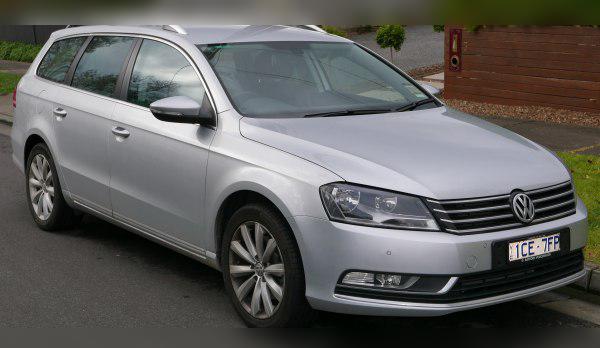
2.0 TDI CR (EA189 / CFFB) – The last “real” diesel before complications or a ticking time bomb?
Key points (TL;DR)
- Common Rail technology: Unlike the older PD (Pumpe-Düse) engines, this one runs quieter, smoother and delivers power more linearly.
- Reliability: Considered one of the best 2.0 TDI engines from the VW Group before the EA288 series, but it’s not immune to failures of peripheral components.
- Dual-mass flywheel: Standard equipment on both manual and DSG gearboxes. Count it as a regular maintenance expense.
- EGR valve: The Achilles’ heel of this engine, especially if the car is driven mostly in the city. Often requires cleaning or replacement.
- AdBlue: Most models (BMT) don’t have it, but BlueTDI versions come with an SCR system that brings additional costs and potential heater failures.
- Timing belt service: Driven by a timing belt, not a chain. Replacement intervals are predictable and not excessively expensive.
- Recommendation: Excellent balance of power and fuel consumption for heavy bodies such as the Passat and Superb.
Contents
- Introduction and engine context
- Technical specifications
- Reliability and maintenance
- Specific parts and costs
- Fuel consumption and performance
- Additional options and modifications
- Gearbox (Manual vs DSG)
- Used car buying guide and conclusion
Introduction and engine context
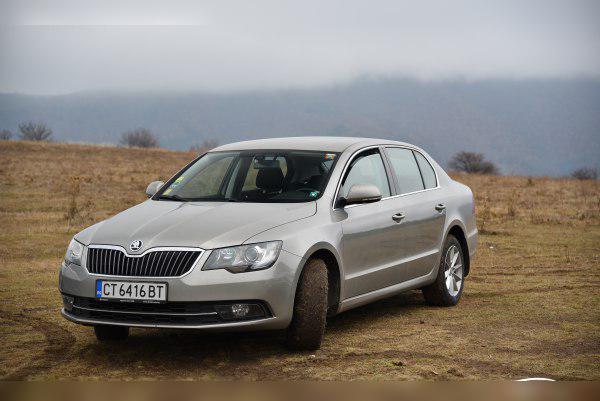
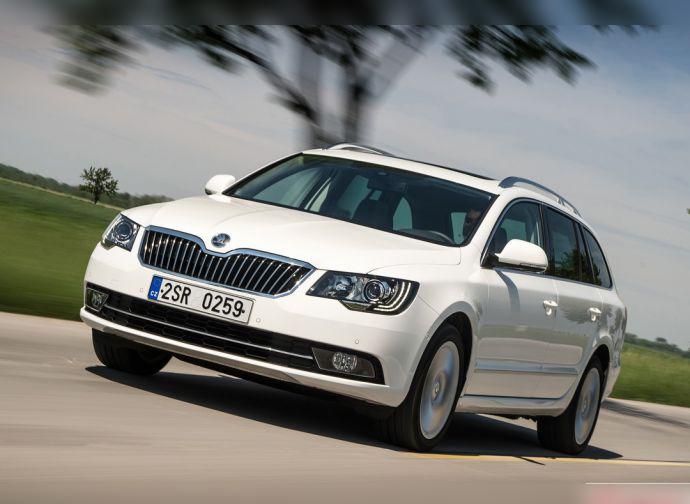
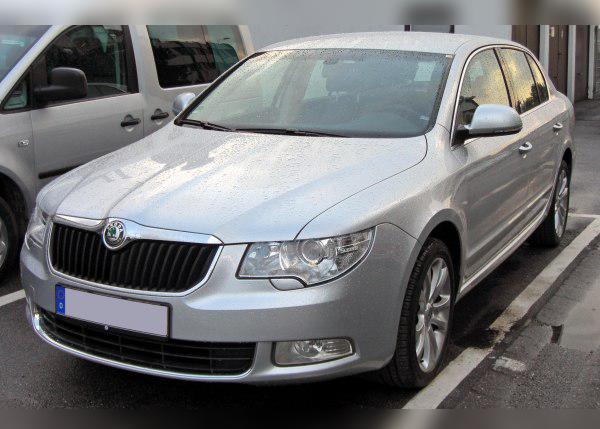
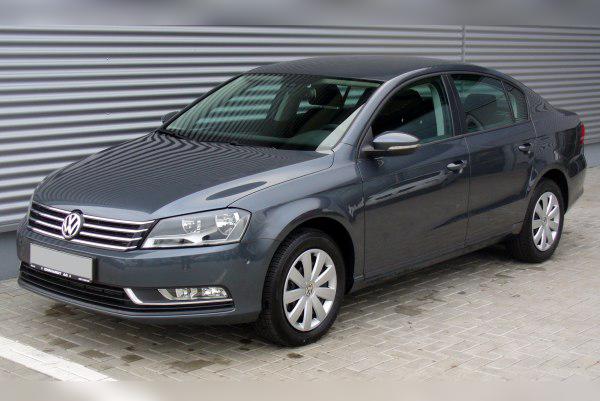
The engine with the code CFFB belongs to the EA189 family. This is a key generation for the Volkswagen Group because it represents a complete transition from the “raw” pump–nozzle (PD) injection systems to the more modern and refined Common Rail (CR) system. Installed in the facelifted Škoda Superb II and VW Passat B7, this engine was designed to devour highway kilometres.
Why is it important? Because it fixed many of the “childhood diseases” of the previous generation (such as the issues with Siemens injectors on PD engines), yet still kept relative simplicity before Euro 6 standards brought in too many sensors. However, this is also the engine that was at the centre of the “Dieselgate” scandal, so you should pay attention to software updates that were performed afterwards.
Technical specifications
| Characteristic | Data |
|---|---|
| Displacement | 1968 cc (2.0 L) |
| Power | 103 kW (140 hp) at 4200 rpm |
| Torque | 320 Nm at 1750–2500 rpm |
| Engine code | CFFB (EA189 family) |
| Injection system | Common Rail (Bosch) |
| Charging | Variable-geometry turbocharger (VGT) + intercooler |
| Engine block | Cast iron – extremely durable |
| Cylinder head | Aluminium, 16 valves (DOHC) |
Reliability and maintenance
Does this engine have a timing belt or a chain?
The 2.0 TDI CFFB engine uses a timing belt. This is good news for owners because the system is quieter and cheaper to maintain compared to the problematic chains on some BMW or older TSI engines. The timing belt kit also drives the water pump.
What are the most common failures on this engine?
Although the CFFB is one of the more reliable diesels, age and mileage take their toll. Here’s what most often fails:
- EGR valve and EGR cooler: A “classic” issue. Soot builds up in the valve and causes it to stick, and the EGR cooler is known to start leaking (coolant loss). Symptoms include the “Check Engine” light, loss of power (“safe mode”) and jerking under light throttle.
- Thermostat (especially on DSG models): These cars often struggle to reach the normal operating temperature of 90°C. On DSG models the culprit is often the second thermostat (regulator on the hose to the gearbox) that stays open, so the engine constantly runs too cool, which increases fuel consumption and wear.
- Turbo actuator (vacuum): The rubber diaphragm in the actuator can tear, preventing the turbo from changing its geometry. The result is a complete loss of power.
- Cracking of the plastic intake manifold: Less common, but over time the plastic becomes brittle and can crack, leading to boost leaks (hissing sound).
At what mileage should the major timing belt service be done?
The factory (VW/Škoda) optimistically specified an interval of 210,000 km. However, real-world experience and mechanics say otherwise. The recommendation is to do the major service at a maximum of 160,000–180,000 km or every 5 to 7 years (whichever comes first). The water pump is a weak point and if it seizes, the belt can snap and destroy the engine, so it should always be replaced as part of the kit.
How many litres of oil does this engine take and which grade is recommended?
The engine takes approximately 4.3 litres of oil. It is mandatory to use oil that meets the VW 507.00 specification. The most common grade is 5W-30. Using oil that does not meet this spec will permanently damage the DPF filter.
Does it consume oil between services?
A healthy CFFB engine should not consume a significant amount of oil. Consumption of up to 0.5 litres per 10,000 km is considered completely acceptable and normal, especially if the car is driven more aggressively on the motorway. If you have to top up a litre every 2–3 thousand kilometres, that points to a problem with the turbo (oil leaking past the shaft) or, less commonly, with the piston rings.
How long do the injectors last and how reliable are they?
Unlike the old PD elements, this engine uses Bosch Common Rail injectors (electromagnetic or piezo, depending on the series, but most often the more reliable variants). They have proven to be very durable and often last over 250,000–300,000 km without overhaul. They are sensitive to poor-quality fuel. The first symptoms of failure are hard cold starts, smoke on startup and uneven idle. Overhaul is possible and the cost is moderate (depends on the market).
Specific parts (costs)
Does the engine have a dual-mass flywheel?
Yes. Both manual and DSG versions are equipped with a dual-mass flywheel (DMF). Its lifespan is usually between 180,000 km and 250,000 km, depending on driving style. City driving and hard acceleration from low revs kill it faster. Replacement is expensive (one of the bigger investments on the car).
Does the engine have a turbocharger and what is its lifespan?
It has a single variable-geometry turbocharger. The turbo is generally robust. If the oil is changed regularly (every 10–15k km, not 30k as some “Long Life” services suggest) and the engine is not switched off immediately after fast driving, the turbo will easily last over 250,000 km. Turbo overhauls are now standard practice and fall into the mid-range cost category.
Does this model have a DPF filter or an EGR valve that often clogs up?
Yes, all CFFB engines (Euro 5) have a DPF filter and an EGR valve.
DPF: If you drive 80% on open roads, you’ll forget it’s even there. If you drive 90% in the city (stop–go), the DPF will clog up as early as 150–200 thousand km. Passive regeneration requires steady driving at over 2000 rpm.
EGR: As mentioned, the EGR is a consumable item on this engine. Cleaning helps temporarily; replacement is the permanent solution.
Does this engine have AdBlue?
This depends on the exact model designation.
Standard 2.0 TDI (BMT – BlueMotion Technology): Usually DOES NOT have an AdBlue system. It meets Euro 5 standards using only the DPF and EGR.
2.0 BlueTDI: These models DO have AdBlue (SCR catalyst) in order to meet stricter standards (often Euro 6 ready). If you have a BlueTDI (it says so on the boot lid), expect potential issues with the heater in the AdBlue tank and the urea pump. These are very expensive components to replace. Maintenance includes regularly topping up the fluid.
Fuel consumption and performance
What is the real fuel consumption in city driving?
The Passat B7 and Superb II are heavy cars (around 1.5–1.6 tonnes).
In real city rush-hour traffic, actual consumption is between 7.0 and 8.5 l/100 km. With a DSG gearbox it can be closer to the upper end of that range.
Is this engine “lazy” for the weight of the car?
Absolutely not. With 320 Nm of torque available from just 1750 rpm, the engine handles the body with ease. It’s not a sports car, but for a family saloon or estate, the power is perfectly judged. Overtaking is safe even when the car is fully loaded.
How does the engine perform on the motorway?
This is its natural habitat.
At a speed of 130 km/h in 6th gear, the engine spins at around 2200–2300 rpm (slightly less with DSG due to longer ratios). Fuel consumption at that point is between 4.8 and 5.8 l/100 km. The engine is quiet and cabin noise is minimal.
Additional options and modifications
How far can this engine be safely tuned (Stage 1)?
The CFFB engine responds very well to remapping (chipping).
A safe Stage 1 raises power from 140 hp to around 170–180 hp, and torque from 320 Nm to 380–400 Nm.
Note: Before remapping, always check the condition of the clutch and flywheel. The increased torque will instantly finish off an already worn dual-mass flywheel. The turbo must also be in perfect condition.
Gearbox
Which gearboxes are fitted?
- Manual: 6-speed. Precise and robust.
- Automatic: 6-speed DSG (code DQ250). This is a wet-clutch gearbox.
What are the most common failures?
Manual: Almost indestructible. The only real issue is the clutch kit and flywheel.
DSG (DQ250): Very reliable if maintained properly. The most common failure is the mechatronics unit (the gearbox “brain”), which can fail (expensive repair). Symptoms include harsh shifts, “thumps” when setting off, or delayed response. Also, on DSG the flywheel can be heard as a metallic knocking at idle (in P position).
At what mileage should the gearbox be serviced?
Manual: The oil is not scheduled for replacement according to the factory (“fill for life”), but it is advisable to change it every 100,000 km.
DSG: It is MANDATORY to change the gearbox oil and filter every 60,000 km. If you’re buying a used car without proof this has been done, be prepared for some risk.
Used car buying guide and conclusion
What exactly should be checked before buying?
- Cold start: Start the car when the engine is completely cold. Listen for any metallic noises (flywheel) and check whether the engine runs smoothly immediately after starting (injectors).
- Coolant and oil: Check for coolant loss (EGR cooler or water pump).
- Diagnostics: Check DPF load (anything over 50–60 g of ash means it’s near the end of its life) and injector corrections.
- DSG service history: If it’s an automatic, ask for invoices confirming gearbox oil changes.
Final verdict
The 2.0 TDI (CFFB) 140 hp engine is probably the smartest choice in the used Passat B7 and Superb II class. It’s not as overcomplicated as newer Euro 6 engines, and it’s far better than the old PD units. It offers an excellent balance of performance and fuel economy.
Who is it for? Drivers who cover more than 15,000 km per year, often drive on open roads and need a reliable “workhorse” for the family. If you drive only in the city, the DPF and EGR will give you headaches – in that case, look for a petrol engine.
Was this content useful to you?
Your opinion helps us to improve the quality of the content.