S58 Engine
- Engine
- 2993 cm3
- Aspiration
- Twin-power turbo, Intercooler
- Fuel
- Petrol (Gasoline)
- Fuel injection system
- Direct injection
- Power
- 480 hp @ 6250 rpm
- Torque
- 550 Nm
- Cylinders
- 6
- Valves
- 24, 4 per cylinder
- Cylinders position
- Inline
- Valvetrain
- VALVETRONIC, Double-VANOS
- Oil capacity
- 7 l
- Systems
- Start & Stop System, Particulate filter
# Vehicles powered by this engine
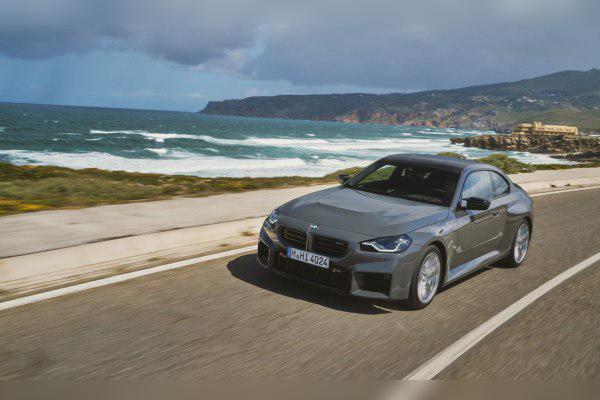
BMW S58 (3.0 Twin-Turbo) – Experiences, Problems, Fuel Consumption and Used-Buying Guide
Key points (TL;DR)
- Durability: The S58 is based on the modular B58 architecture, but with a closed-deck block and forged internals. It is extremely robust.
- Camshaft drive: Uses a chain located at the rear of the engine. So far it has proven to be very reliable, unlike some older BMW engines.
- Potential: This is one of the best inline-sixes of today. In the M2 it is “detuned” to 480 hp, which means the engine is working without being heavily stressed.
- Fuel consumption: Not for those with a “light wallet”. In city driving it easily exceeds 14–15 liters, although on the highway it can be surprisingly economical.
- Maintenance: Parts prices are in the M division range – very expensive (depends on the market). Discs, pads and specific engine parts cost significantly more than on a standard 2 Series.
- Gearbox: Comes with the ZF 8-speed automatic (perfection) or a 6-speed manual gearbox (for purists).
- Recommendation: An absolute recommendation for enthusiasts. This is probably the last purely petrol M engine without hybrid assistance in this class.
Contents
Introduction and Applications
BMW’s S58 engine is the heart of the modern M division. It replaced the famous but somewhat temperamental S55 engine. The S58 debuted in the X3 M and X4 M SUVs, but gained real fame in the M3 and M4, and now also in the compact BMW M2 (G87). Unlike its predecessor (N55/S55), this engine shares its architecture with the standard B58 engine, considered one of the most reliable modern BMW powerplants, but the S58 is significantly modified for track use.
In the M2 (G87), this engine produces 480 hp. Although that is less than in the M3/M4 Competition models, the hardware is almost identical, which means you are buying an engine that is factory “overbuilt” for the power it delivers in this car.
Technical Specifications
| Parameter | Value |
|---|---|
| Engine code | S58B30T0 |
| Displacement | 2993 cc (3.0 L) |
| Configuration | Inline 6-cylinder (I6) |
| Power | 353 kW (480 hp) @ 6250 rpm |
| Torque | 550 Nm @ 2650–5870 rpm |
| Induction | TwinPower Turbo (two mono-scroll turbochargers) |
| Fuel injection | Direct injection (High Precision Injection) |
| Camshaft drive | Chain |
Reliability and Maintenance
Does this engine have a timing belt or chain?
The S58 engine uses a timing chain. Unlike some older BMW diesels that had issues with chain failure, the system on the S58 (and the base B58) has so far proven to be very reliable. However, it should be noted that the chain is located at the rear of the engine (next to the gearbox), which makes any potential intervention extremely expensive, as it requires removal of the engine or gearbox. Fortunately, with regular maintenance, the chain should last as long as the engine itself.
What are the most common failures on this engine?
Given that the engine is relatively new, the list of catastrophic failures is short. However, owners should pay attention to:
- Coolant leaks: As with most modern BMWs, plastic housings, hoses and expansion tanks are prone to cracking due to thermal stress.
- Cooling system (intercooler): The S58 uses water-to-air charge cooling (air-to-water intercooler). Check the coolant level in the small turbo cooling reservoir; if it is dropping and there are no visible puddles, it may be leaking inside the engine.
- VANOS solenoids: Occasional issues with the variable valve timing system can cause rough running.
Note: The crank hub issue (crankshaft sprocket spinning) that was a nightmare for owners of the previous S55 engine has been solved on the S58 with an integrated sprocket design, so this is no longer a common problem on stock engines.
At what mileage is the major service done?
Since the engine has a chain, the classic “major service” (belt replacement) does not exist. The chain is designed to last “for life” (in practice 250,000+ km with good oil). However, the serpentine belt (accessory belt) that drives the alternator and A/C compressor, as well as the tensioners and pulleys, should be checked at every service and replaced preventively at around 100,000 km or every 6–8 years.
Oil: quantity, grade and consumption
The S58 engine takes approximately 6.5 to 7.0 liters of oil (always check the exact amount when filling). The recommended grade is usually 0W-30 or 5W-30 with BMW Longlife-01 FE or Longlife-12 FE specification (depending on the presence of a GPF/OPF filter).
Regarding oil consumption: the S58 is a high-performance engine. Consumption of 0.5 to 1 liter per 5,000 to 10,000 km can be considered acceptable, especially if the car is driven aggressively on track. If it uses a liter per 1,000 km, that indicates a problem (rings, valve stem seals or turbo).
Spark plug service interval
On M models such as the M2 G87, spark plugs are under heavy stress. BMW recommends replacement at every second oil service, which is roughly every 30,000 to 40,000 km. Do not wait longer, because a bad spark plug can cause detonation (“knocking”) that can destroy the pistons.
Specific Parts (Costs)
Fuel injection system and injectors
The S58 uses direct fuel injection at very high pressure (up to 350 bar). The injectors are precise and generally reliable, but very sensitive to poor fuel quality. Symptoms of failure include rough idle, smell of fuel and a check engine light. Replacing a full set of injectors is very expensive (depends on the market).
Turbochargers
The engine has two mono-scroll turbochargers (one for each bank of three cylinders). Their lifespan largely depends on the owner. If the engine is properly warmed up before hard driving and allowed to cool down before switching off, the turbos can last over 200,000 km. Failures manifest as whining noises (sirens), blue smoke from the exhaust or loss of power.
Emissions: GPF/OPF and EGR
European models (including the G87 M2) are equipped with a OPF filter (Gasoline Particulate Filter) to meet strict Euro standards. This is the petrol equivalent of a DPF on diesels. Although it rarely clogs if the car is driven on the open road, it significantly muffles the exhaust sound. OPF pressure sensors can cause issues. A classic EGR valve in the diesel sense is not a primary concern here, but the crankcase ventilation system (PCV) can be problematic if the membrane fails (whistling noise from the engine).
Fuel Consumption and Performance
Real-world consumption and city driving
Let’s be honest – nobody buys an M2 to save fuel.
- City driving: Expect between 13 and 16 l/100 km. In heavy traffic and with a “heavy right foot”, this easily goes to 20 l/100 km.
- Highway: At a cruising speed of 130 km/h, thanks to the long 8th gear (on the automatic), the engine runs at low revs (below 2,500 rpm) and uses a reasonable 8.5 to 10 l/100 km.
Performance and “laziness”
Is the engine lazy? Absolutely not. Although the G87 M2 is a fairly heavy car (over 1,700 kg), 480 hp and 550 Nm are more than enough to catapult it. Turbo lag is minimal. The engine pulls linearly all the way to the redline (7,200 rpm). The feeling of weight disappears as soon as you press the throttle.
Additional Options and Modifications
Is it suitable for LPG?
Theoretically – yes, there are systems for direct liquid LPG injection. Practically – it is not recommended. Installation is extremely expensive and complex, and you risk damaging the injectors and valves on an engine designed for high-octane petrol. You also drastically reduce the value of an M car.
Chip tuning (Stage 1)
The S58 is a “tuning king”. Since in the M2 the engine is mechanically almost identical to the more powerful M3/M4 versions, it is factory “detuned”. Stage 1 (software only) safely raises power to 540–580 hp and torque to over 650 Nm. The engine can handle this increase without any mechanical modifications, provided you maintain it regularly.
Gearbox
Types of gearboxes
- Manual (6-speed): For enthusiasts. It has a dual-mass flywheel. The clutch is a wear item and replacing the clutch kit with the flywheel is expensive (depends on the market). Its downside is that it can feel a bit “rubbery” when shifting compared to some competitors (e.g. Porsche).
- Automatic (8-speed M Steptronic): This is the ZF 8HP gearbox with a torque converter. It does not have a dual-mass flywheel in the classic sense like the manual (it has a converter), and it does not have clutches that wear out like on DCT gearboxes.
Gearbox maintenance
- Manual: Oil change every 60,000–80,000 km.
- Automatic (ZF): Although BMW claims the oil is “lifetime”, the gearbox manufacturer (ZF) strongly recommends changing the oil and the pan (which contains the filter) every 80,000 to 100,000 km. If you drive aggressively on track, halve this interval.
Buying Used and Conclusion
When buying a used M2 with the S58 engine, pay attention to the following:
- Running-in service: Check in the service history whether the initial service at 2,000 km was done. This is crucial for the warranty and the health of the engine (oil in the engine and differential is changed then).
- Engine sound: Cold start is loud (this is normal due to catalyst warm-up), but after a minute the engine should run smoothly. Chain rattle from the rear of the engine is a red flag.
- Signs of tuning: Check whether the ECU bolts have been tampered with or whether there are traces of piggyback modules. Tuning voids the factory warranty.
Conclusion: The BMW S58 in the M2 G87 is one of the last of its kind. The engine is brutally powerful, surprisingly reliable for its output and offers huge potential. If you can afford the fuel, tyres and registration, the maintenance of the engine itself will not unpleasantly surprise you with failures, only with the regular cost of consumables. This is a car you buy with your heart, but fortunately, reason (engineering) backs it up very well.
Was this content useful to you?
Your opinion helps us to improve the quality of the content.