S58B30T0 Engine
- Engine
- 2993 cm3
- Aspiration
- Twin-power turbo, Intercooler
- Fuel
- Petrol (Gasoline)
- Fuel injection system
- Direct injection
- Power
- 460 hp @ 6250 rpm
- Torque
- 550 Nm
- Cylinders
- 6
- Valves
- 24, 4 per cylinder
- Cylinders position
- Inline
- Valvetrain
- VALVETRONIC, Double-VANOS
- Oil capacity
- 7 l
- Systems
- Start & Stop System, Particulate filter
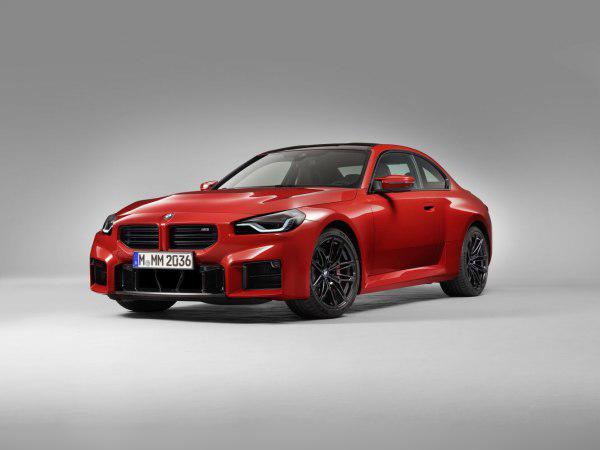
# Vehicles powered by this engine
Key takeaways (TL;DR)
- Beast in a small package: The S58 engine is a technical masterpiece from the M division, based on the B58 architecture but massively reinforced for high performance.
- Fixed predecessor’s flaws: The problematic crank hub on the old S55 engine has been redesigned here and is far more reliable.
- Fuel consumption isn’t for everyone: Expect double-digit consumption in the city, often over 18 l/100 km if you have a heavy right foot.
- Maintenance is expensive: This is not a standard BMW engine. Brakes, tires, specific oils and services cost significantly more (depends on the market).
- Tuning potential: The engine can handle huge power (over 600 hp) with minimal changes, but the ECU is often locked from factory.
- Gearbox of your choice: Available with a top-notch ZF 8-speed automatic or a 6-speed manual gearbox for purists.
Contents
S58B30T0: The last gasp of pure petrol power?
When we talk about the S58B30T0 engine, we’re not talking about an ordinary unit that just gets you from point A to point B. This is the engineering heart of BMW’s M division, the direct successor to the S55 engine, but with an architecture taken from the reliable “civilian” B58 engine. It’s installed in the latest generation of the BMW M2 (G87), as well as its bigger brothers, the M3 and M4. In the context of the M2, this engine is slightly “detuned” to 460 hp so it doesn’t overshadow the performance of the more expensive models, but hardware-wise it’s the same beast. For many enthusiasts, this is one of the last great pure internal combustion engines before full electrification.
Technical specifications
| Characteristic | Data |
|---|---|
| Engine code | S58B30T0 |
| Displacement | 2993 cc (3.0 litres) |
| Configuration | Inline six-cylinder (R6 / I6) |
| Power | 338 kW (460 hp) |
| Torque | 550 Nm |
| Forced induction | Twin-Power Turbo (bi-turbo, two mono-scroll turbochargers) |
| Injection system | High-pressure direct injection (up to 350 bar) |
| Camshaft drive | Chain |
Reliability and maintenance
Timing system: Chain or belt?
The S58B30T0 engine uses a timing chain. Unlike some older BMW engines (such as the N47), the chain here is much more robust. However, it’s important to note that the chain is located at the rear of the engine (towards the gearbox), which makes any potential intervention extremely expensive because the engine has to be removed from the car. Still, with regular maintenance, the chain on S58 engines shouldn’t cause issues before 200,000 km, which is an excellent result for a performance engine.
Most common failures and symptoms
Although the S58 has solved the main problem of its predecessor, the S55 (the notorious spinning crank hub), it isn’t immune to issues:
- Cooler leaks: The S58 has an extremely complex cooling system with multiple radiators. The front coolers are mounted low and exposed to stone chips. Damage from stone impact can lead to coolant leaks. Symptom: Puddles under the car or a warning on the dashboard.
- Fuel system: Problems sometimes occur with fuel pressure sensors or high-pressure pumps if poor-quality fuel is used.
- Coolant consumption: On some early production runs, slight coolant loss was noticed without visible leaks, which may indicate an issue with the intercooler (which is water-cooled).
Service intervals and oil
A “major service” in the classic sense (replacement of timing belts and tensioners) is not performed because the engine uses a chain. However, the serpentine belt (for the alternator and A/C compressor) should be inspected every 60,000 km and replaced as needed.
The engine takes approximately 7.0 litres of engine oil (the amount may vary slightly depending on whether the filter is changed; always check on the dipstick or digital gauge). The recommended viscosity is 0W-30 or 5W-30 with BMW Longlife-04 specification (or LL-01 FE in markets without a GPF filter, although in Europe GPF is standard). While BMW specifies a service interval of 30,000 km, that is far too long for this type of engine. The recommendation is to change the oil every 10,000 km at most, or once a year.
Oil consumption
Like every high-performance M engine, the S58 can consume oil. This is a consequence of looser internal tolerances to withstand high temperatures and revs. Consumption of 0.5 to 1 litre per 5,000 km can be considered acceptable if the car is driven aggressively. If you drive moderately, consumption should be minimal.
Spark plugs
On S58 engines, the spark plugs are under heavy stress due to high boost pressure. The factory interval is often around 50,000 km, but in practice they should be replaced every 30,000 km to ensure maximum performance and prevent misfires under full throttle.
Specific parts (costs)
Dual-mass flywheel
Yes, if you choose the version with a manual gearbox, this engine is paired with a dual-mass flywheel. It has to cope with huge torque, and if the car is frequently launched from a standstill or driven aggressively, the flywheel can fail earlier. Symptoms include rattling when switching the engine off or vibrations in the clutch pedal. Replacement cost is high (depends on the market).
Injection system
The engine uses high-pressure piezo injectors (350 bar). They are generally reliable, but extremely sensitive to fuel quality. Failure of a single injector can cause a cylinder to be “washed” with petrol, which destroys the oil film and can lead to engine seizure. A single injector is expensive.
Turbochargers
The S58 uses two mono-scroll turbochargers (one for cylinders 1–3, the other for 4–6). This is a twin-turbo system, not a twin-scroll on a single turbo. Their service life is designed to match that of the engine, but they are sensitive to shutting the engine off immediately after spirited driving (oil can carbonise in the turbo bearings). Overhauling or replacing both turbos is very expensive.
DPF / GPF / EGR / AdBlue
This is a petrol engine, so it does not have a DPF or AdBlue. However, for the European market it is equipped with a OPF/GPF filter (Gasoline Particulate Filter) to meet Euro 6d standards. These filters are quite reliable and rarely clog because petrol engines reach higher exhaust temperatures that passively clean the filter. The main downside of the GPF is that it muffles the engine sound.
Fuel consumption and performance
Real-world consumption
Let’s be honest – nobody buys an M2 to save fuel.
City driving: Expect 14 to 18 litres/100 km. In heavy traffic and with a heavy right foot, this easily goes over 20.
Open road: With calm driving on country roads, it’s possible to get down to 9–10 litres/100 km.
On the motorway at 130 km/h, consumption is around 10–11 litres.
Is the engine “lazy”?
Absolutely not. Even though the new M2 (G87) is a heavy car (over 1,700 kg), 460 hp and 550 Nm are more than enough to launch it to 100 km/h in about 4 seconds. The twin-turbo setup ensures there is no major turbo lag – power is delivered linearly, almost like a naturally aspirated engine, but with brutal mid-range punch.
Motorway and cruising
Thanks to the 8-speed automatic gearbox, the engine is very relaxed on the motorway. At 130 km/h in 8th gear, the engine spins at a low approximately 2,000 rpm, which reduces noise and fuel consumption. The manual version has slightly higher revs in 6th gear, but is still very comfortable.
Additional options and modifications
LPG conversion
In theory, it is possible to install a liquid direct injection LPG system (LDI) that uses the petrol injectors, but in practice – don’t do it. This is a complex, high-performance direct-injection engine. An LPG conversion would drastically increase the risk of valve overheating, electronic issues and would destroy the car’s value.
Remap (Stage 1)
The S58 is an over-engineered engine. The stock 460 hp is just the beginning.
Stage 1 (software only): You can safely extract 550 to 580 hp and around 700 Nm of torque. The engine can mechanically handle this without issues.
Important note: The ECU on newer models (built after June 2020) is factory-locked by Bosch. To perform a remap, the ECU often has to be physically sent to specialised companies (e.g. Femto in Finland) for unlocking before it can be tuned, which significantly increases the cost.
Gearbox: Manual or automatic?
Gearbox options
With the S58 in the M2 G87 you get two options:
- Manual gearbox (6-speed): ZF S6-53. Intended for enthusiasts.
- Automatic gearbox (8-speed): ZF 8HP76 M Steptronic. The standard option and technically superior.
Failures and maintenance
Manual gearbox: Relatively robust, but the clutch is a wear item. Replacing the clutch kit and dual-mass flywheel is a costly job. Some owners report that the shift lever feel can be “rubbery” (typical for BMW), but actual mechanical failures of the transmission itself are rare. The oil in the manual gearbox should be changed every 60,000 km.
Automatic gearbox (ZF 8HP): This is one of the best automatic gearboxes in the world. It is not a dual-clutch (DCT) like in the old M2, but a conventional automatic with a torque converter. That means it is much smoother when setting off and parking, yet still lightning-fast on the move.
Automatic transmission service: BMW claims the oil is “lifetime”. Do not believe that. The gearbox manufacturer (ZF) recommends changing the oil and the pan (which also serves as the filter) every 80,000 to 100,000 km, or earlier if the car is used on track. Failures are extremely rare if the oil is changed.
Buying used and conclusion
Before buying an M2 with the S58 engine, be sure to check:
- Break-in service: Was the mandatory 2,000 km service done (oil change in the engine and differential)? If not, that’s a big minus for warranty and long-term durability.
- Modifications: Has the car been remapped? This can be seen via diagnostics (flash counter). Tuned cars often lose the factory powertrain warranty.
- Track use signs: Check the sidewalls of the tyres, the brake discs (are they blue from overheating) and the condition of the front bumper (lots of stone chips).
- Sound: A cold start should be loud, but without metallic chain rattling.
Final conclusion
The S58B30T0 engine is one of the best engines BMW currently produces. It has solved most of the “childhood diseases” of its predecessor and offers supercar performance in a coupe body. It is intended for drivers who know what they want and are prepared to pay for very expensive maintenance (tyres, brakes, fuel). If you can afford the running costs, this engine will put a smile on your face every time you press the throttle. For daily driving, the automatic is the better choice, while the manual is reserved for purists who are willing to sacrifice a bit of performance for a stronger sense of connection with the machine.
Was this content useful to you?
Your opinion helps us to improve the quality of the content.