S58B30T0 Engine
- Engine
- 2993 cm3
- Aspiration
- Twin-power turbo, Intercooler
- Fuel
- Petrol (Gasoline)
- Fuel injection system
- Direct injection
- Power
- 510 hp @ 6250 rpm
- Torque
- 650 Nm
- Cylinders
- 6
- Valves
- 24, 4 per cylinder
- Cylinders position
- Inline
- Valvetrain
- VALVETRONIC, Double VANOS
- Oil capacity
- 7 l
- Systems
- Start & Stop System, Particulate filter
# Vehicles powered by this engine
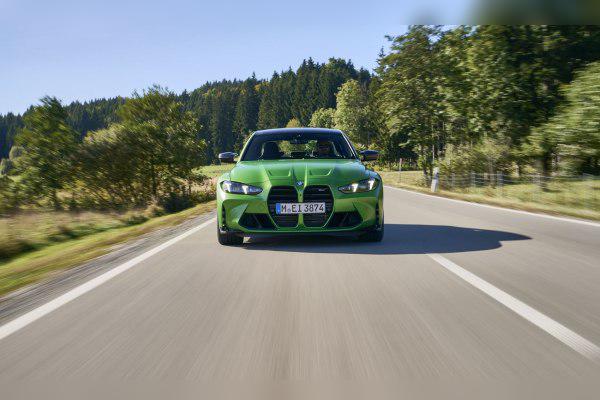
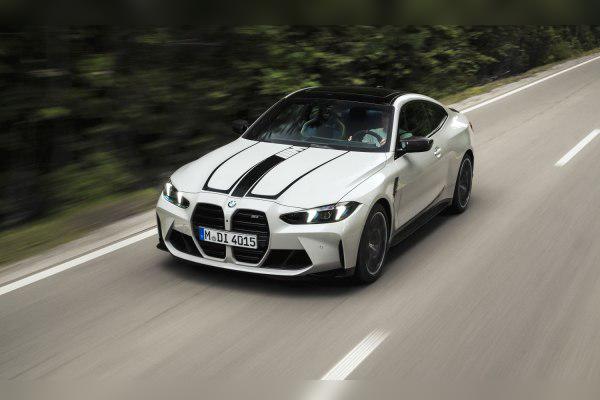


BMW S58B30T0 (510 hp) – Experiences, issues, fuel consumption and buying tips
Key points (TL;DR)
- Performance: Brutal 510 hp, the engine has no trouble moving heavy bodies (M3, X3 M).
- Reliability: Considered one of the most durable modern BMW engines, based on the B58 architecture but with forged internals.
- Transmission: Competition models (510 hp) come exclusively with the ZF 8-speed automatic, which is more reliable than the old DKG gearboxes.
- Fuel consumption: High. In the city expect double-digit numbers, often over 15 l/100 km.
- Maintenance: Very expensive (depends on the market). Requires specific oils, expensive brakes and tires, and more frequent servicing than standard models.
- Tuning potential: Huge. Stage 1 easily pushes it beyond 600 hp without opening the engine.
- Recommendation: If you can afford the maintenance and fuel, this is one of the best inline-sixes ever made.
Contents
- Technical specifications
- Reliability and maintenance
- Specific parts and costs
- Fuel consumption and performance
- Additional options and modifications
- Transmission: experiences and maintenance
- Buying used and conclusion
Introduction
The S58B30T0 engine is the heart of the modern BMW M division. It is the direct successor to the famous S55 engine, but technologically it is based on the modular B58 platform, which has already proven its robustness. However, the S58 is heavily modified: it has a forged crankshaft, beefier pistons, a different engine block (closed-deck design) and two turbochargers. In the Competition version we are discussing here, it produces an impressive 510 hp.
It is installed in some of today’s most desirable sports models such as the BMW M3 (G80), M4 (G82), as well as in high-performance SUV variants X3 M (F97) and X4 M (F98). This is not an engine for the average driver looking for economy, but a machine for enthusiasts that demands meticulous maintenance.
Technical specifications
| Characteristic | Value |
|---|---|
| Engine code | S58B30T0 |
| Displacement | 2993 cc (3.0L) |
| Configuration | Inline six-cylinder (R6) |
| Power | 375 kW (510 hp) |
| Torque | 650 Nm |
| Induction | TwinPower Turbo (Two mono-scroll turbochargers) |
| Injection | Direct injection (High Precision Injection) |
| Camshaft drive | Chain |
Reliability and maintenance
Timing system: chain or belt?
This engine uses a chain to drive the camshafts. However, it is important to note that on the S58 (as well as on the B58) the chain is located at the rear of the engine (towards the gearbox). Although the chain is designed to last the “entire service life of the vehicle”, in practice, if it needs to be replaced due to stretching or rattling (usually at high mileages over 200,000 km), the engine has to be removed from the car, which is a very expensive job (very expensive).
Most common issues
Although the S58 is robust, it is not without flaws:
- Coolant leaks: The cooling system is extremely complex (multiple radiators, electric pumps). It is quite common for a small stone to puncture the front radiator because the grille openings are large.
- Oil consumption: Under aggressive driving, oil consumption is to be expected.
- PCV valve (oil separator): As with most modern BMWs, the membrane can tear, which causes a whistling noise from the engine and rough idle.
- Injectors: On early production runs there were cases where injectors would stick “open”, which can wash oil off the cylinder walls and cause engine seizure (rare, but catastrophic).
Service intervals and oil
A “major service” in the classic sense (preventive replacement of belts and water pump) is not done at a fixed interval as on older cars; instead, condition is monitored. Still, the auxiliary belt and tensioners should be inspected at around 100,000 km.
Minor service: BMW recommends a variable interval (up to 30,000 km), but for this engine that is absolutely too long. Experienced mechanics recommend changing the oil every 8,000 to 10,000 km or once a year.
Oil quantity and type: The engine takes approximately 7.0 liters of oil. Recommended viscosity is 0W-30 or 5W-30 with BMW Longlife-01 FE specification or the corresponding “M” specification. Always check the exact spec in the owner’s manual because standards change with the introduction of GPF filters.
Oil consumption: Yes, this engine can consume oil. Consumption of up to 0.5 – 0.8 liters per 1,000 km is often stated in the manual for M models as “acceptable” under hard driving, but in normal use you should not be topping up more than 1 liter between services (over 10k km).
Spark plugs
Since this is a high-performance petrol engine, the spark plugs are under huge stress. They are replaced at every second oil service, i.e. at around 20,000 to 30,000 km (often coincides with the “Inspection I” service). Ignoring spark plug replacement can lead to misfires and coil damage.
Specific parts (costs)
Fuel injection system and turbochargers
The S58 uses direct injection with 350 bar pressure. The injectors are generally reliable, but sensitive to poor fuel quality. Symptoms of problems include rough running, black smoke or a smell of petrol in the oil.
The engine has two mono-scroll turbochargers. Their service life is long (over 150,000 km with regular oil changes), but they are sensitive to shutting the engine off immediately after hard driving while still very hot. Rebuilding or replacing them is very expensive (depends on the market).
GPF/OPF filter and emissions
All models for the European market have an OPF (Otto Particulate Filter), which is the petrol equivalent of a DPF. It rarely clogs because petrol exhaust gases heat up faster, but it does mute the engine sound. If you drive exclusively in the city (stop-and-go), it is advisable to occasionally take the car on an open road so the system can regenerate. The EGR valve is not problematic as it is on diesels.
AdBlue: This engine DOES NOT have an AdBlue system, as it is a petrol engine. AdBlue is used exclusively on diesel engines for NOx treatment.
Fuel consumption and performance
Real-world fuel consumption
Let’s be honest – nobody buys 510 hp to save fuel.
- City driving: Expect between 14 and 18 l/100 km. In heavy traffic and with a “heavy right foot”, this easily goes to 20+ liters.
- Country roads: It is possible to get it down to 8.5 – 9.5 l/100 km with very gentle driving.
- Motorway (130 km/h): Consumption is around 10 – 11 l/100 km. Thanks to the 8-speed gearbox, at 130 km/h the engine spins at a low 2,000 – 2,200 rpm, which makes the drive surprisingly quiet and comfortable.
Is the engine “lazy”?
Absolutely not. With 650 Nm available from low revs (around 2750 rpm) and a twin-turbo system, this engine launches the heavy X3 M or M3 body without any effort. Throttle response is instant and turbo lag is minimal.
Additional options and modifications
LPG conversion
Theoretically, it is possible to install a liquid-phase direct injection LPG system, but it is extremely expensive (depends on the market) and technically complicated. Given the complexity of the electronics and the sensitivity of the S58 engine, LPG installation is strongly not recommended on M models. It drastically lowers the vehicle’s value and can potentially cause costly failures.
Chip tuning (Stage 1)
The S58 is a tuning “beast”. Stage 1 (software only) safely raises power to 600 – 620 hp and torque to over 750 Nm. However, keep in mind that on models produced after June 2020 the ECU (engine control unit) is locked by Bosch, so to “unlock” it the ECU has to be sent to specialized tuners (often abroad), which increases the cost.
Transmission: experiences and maintenance
Type of transmission
Models with 510 hp (Competition) come exclusively with the 8-speed M Steptronic automatic gearbox with the Drivelogic system. This is essentially a modified ZF 8HP torque-converter automatic, not a dual-clutch gearbox (DCT/DKG) like in previous generations.
Note: A manual gearbox is fitted only to the “base” M3/M4 models with 480 hp, not to the Competition versions.
Reliability and issues
The ZF 8HP is regarded as the best automatic gearbox on the market. It is very reliable and durable, and can handle huge torque. It does not suffer from the typical clutch overheating issues in city driving like the older SMG or DKG gearboxes, because it uses a hydraulic torque converter.
Dual-mass flywheel: The automatic uses a flex-plate and torque converter, so it does not have a conventional dual-mass flywheel that wears out like on manual gearboxes. That’s one less thing for the owner to worry about.
Transmission service
Although BMW claims the transmission oil is “lifetime”, the gearbox manufacturer (ZF) recommends changing the oil and filter (transmission pan) every 80,000 to 100,000 km, or earlier if the car is used on track. This is crucial for long-term reliability.
Buying used and conclusion
When buying a used M3, M4 or X3/X4 M with this engine, pay attention to the following:
- Running-in service: Check the service history to see whether the initial running-in service was done at around 2,000 km. This is critical for warranty validity and for the health of the differential and engine.
- Timing chain noise: Listen to a cold start. Any rattling from the rear of the engine is a red flag.
- Signs of leaks: Check for oil leaks around the valve cover and for coolant leaks at the radiators (stone damage).
- Brakes: Carbon-ceramic brakes (gold calipers) last a long time, but when they need replacement, they cost as much as a small used car (very expensive). Steel discs (blue/red/black calipers) are cheaper to maintain.
Conclusion: The 510 hp S58 engine is a pinnacle of engineering. It is intended for drivers who want supercar performance in a sedan or SUV body. It is not cheap to maintain, it likes to drink, but it offers a level of reliability and power that few competitors can match. If the example has been well maintained, it is a highly recommended purchase.
Was this content useful to you?
Your opinion helps us to improve the quality of the content.