1AD-FTV Engine
- Engine
- 1998 cm3
- Aspiration
- Turbocharger, Intercooler
- Fuel
- Diesel
- Fuel injection system
- Diesel Commonrail
- Power
- 124 hp @ 3600 rpm
- Torque
- 310 Nm @ 1600-2400 rpm
- Cylinders
- 4
- Valves
- 16, 4 per cylinder
- Cylinders position
- Inline
- Valvetrain
- DOHC
- Oil capacity
- 6.3 l
- Coolant
- 7.4 l
- Systems
- Particulate filter
# Vehicles powered by this engine

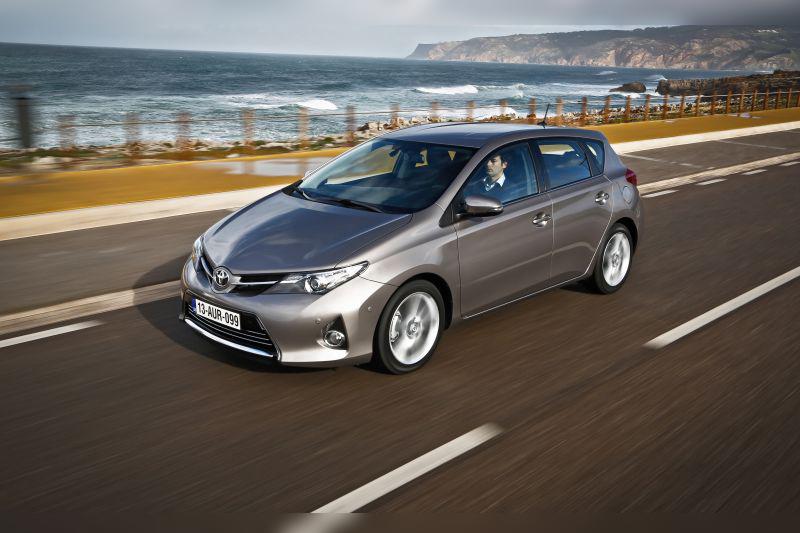

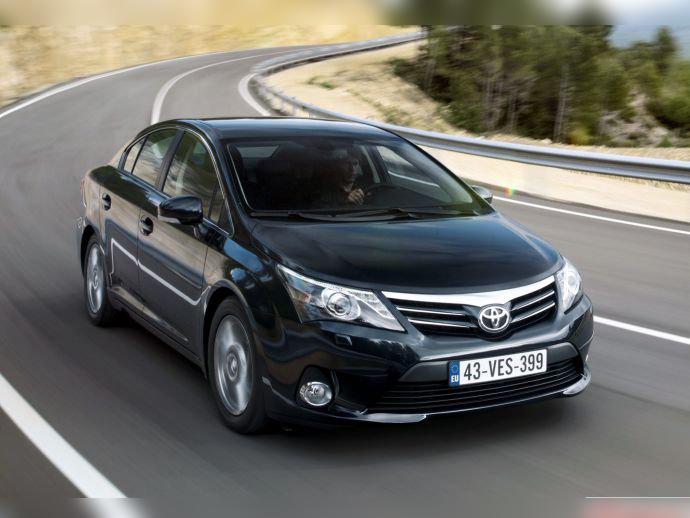
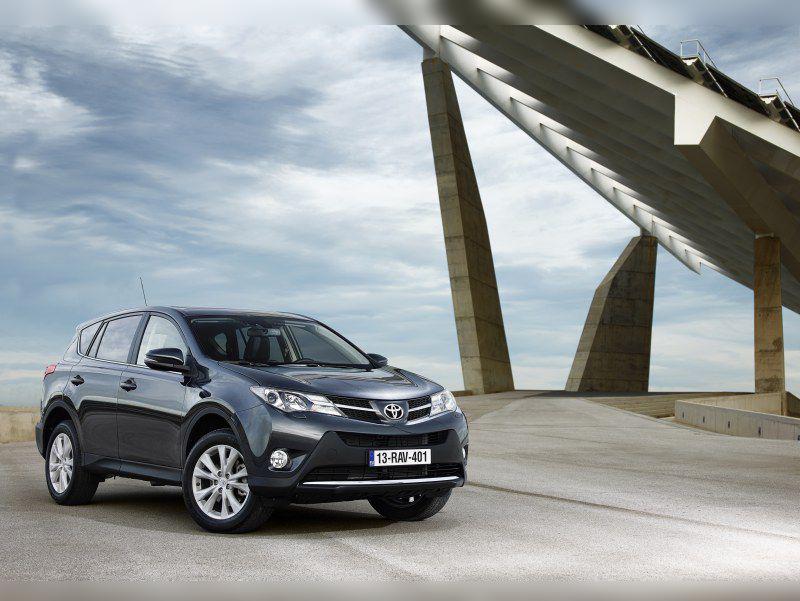
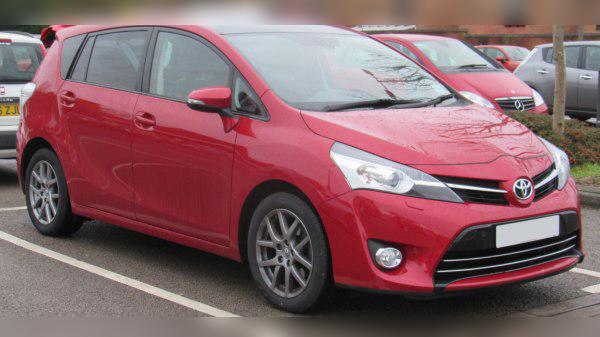
Toyota 2.0 D-4D (1AD-FTV) 124 HP – Experiences, problems, fuel consumption and buying used
Key points (TL;DR)
- Best version of the 2.0 D-4D engine: The 124 HP variant is a modernized version that solved most of the head gasket issues that plagued older Toyota diesels.
- Chain-driven timing: Uses a timing chain, which reduces regular maintenance costs, but requires inspection at high mileage.
- Sensitivity to fuel quality: The Denso injection system is top-notch, but expensive to repair if poor-quality diesel is used.
- DPF filter: Like any modern diesel, it does not tolerate exclusively city driving. Clogging is possible.
- Power vs. consumption: 310 Nm of torque provides excellent in-gear acceleration with low fuel consumption, especially in models such as the Auris.
- Recommendation: Ideal for open-road driving and for drivers who cover more than 15,000 km per year.
Contents
- Introduction and applications
- Technical specifications
- Reliability and maintenance
- Specific parts and costs
- Fuel consumption and performance
- Additional options and modifications
- Gearbox and drivetrain
- Buying used and conclusion
Introduction: The sweet spot in Toyota’s lineup
The engine with the code 1AD-FTV in the 124 HP version is a “facelift” or revision of Toyota’s well-known 2.0 diesel. This version appeared around 2011/2012 and is key because Toyota fixed the “childhood diseases” of its predecessor (oil consumption and head gasket issues). Compression was reduced, the turbocharger was improved for quicker response, and fuel consumption was lowered.
This unit was Toyota’s answer to stricter Euro 5 standards and the need for an engine capable of adequately powering everything from the compact Auris to the family RAV4, without being as “thirsty” as the larger 2.2 D-CAT engines.
Technical specifications
| Specification | Value |
|---|---|
| Engine code | 1AD-FTV |
| Displacement | 1998 cc (2.0 L) |
| Power | 91 kW (124 HP) at 3600 rpm |
| Torque | 310 Nm at 1600–2400 rpm |
| Injection system | Common Rail (Denso piezo-electric) |
| Induction | Variable-geometry turbocharger (VGT) + intercooler |
| Emission standard | Euro 5 |
Reliability and maintenance
Timing system: Chain or belt?
This engine uses a single-row timing chain. This is good news for owners because there is no fixed replacement interval like with a timing belt. In practice, the chain on 1AD-FTV engines is quite durable and rarely causes problems before 250,000 km, provided the oil has been changed on time.
Symptoms of problems: If you hear rattling or a metallic “scraping” noise on cold start that lasts longer than 3–5 seconds, it’s a sign that the chain has stretched or that the hydraulic tensioner is failing.
Most common failures
Although the 124 HP version is significantly more reliable than those produced before 2010, there are still some weak points:
- EGR valve: Often gets clogged with soot, which leads to loss of power and the “Check Engine” light coming on.
- Pressure control valves (SCV valves): Located on the high-pressure pump, they can cause rough idle.
- Injector washers: Copper washers can fail, allowing combustion gases to enter the crankcase and causing sludge (carbon build-up) in the oil, which can clog the oil pump strainer. This is a silent engine killer.
Major and minor service
Since the engine has a chain, the classic “major service” comes down to replacing the auxiliary (serpentine) belt, its tensioner and idler pulleys, as well as the water pump if it shows signs of leakage or play. This is usually checked every 100,000 km or 5–7 years.
Minor service: It is recommended every 10,000 to a maximum of 15,000 km, even though the manufacturer sometimes specifies longer intervals.
Oil: Quantity and grade
The sump of this engine holds a substantial amount of oil – about 5.9 to 6.3 liters (depending on the exact model and filter). The large oil volume is good for cooling and longevity.
Recommendation: Always use 0W-30 or 5W-30 with ACEA C2 (Low SAPS) specification. Using oils that are not Low SAPS (low ash content) will quickly destroy the DPF filter.
Oil consumption
This version (124 HP) generally does not consume oil to the extent older models did. Consumption up to 0.5 liters per 10,000 km is acceptable. However, a more common issue is rising oil level. If the DPF filter regenerates frequently (due to city driving), unburnt diesel can end up in the sump, diluting the oil and raising its level. This is dangerous for the engine and requires an immediate oil change.
Injectors
The engine uses Denso piezo-electric injectors. They are extremely precise and allow smooth operation, but are sensitive to poor-quality diesel.
Durability: They usually last over 200,000 km without issues.
Problem: Overhauling Denso piezo injectors is complicated and often impossible or not cost-effective, so owners usually have to opt for new or factory-refurbished units, which are expensive (depends on the market, but expect a serious cost per injector).
Specific parts (Costs)
Dual-mass flywheel
Yes, it has one. All models with this engine and a manual gearbox are equipped with a dual-mass flywheel (DMF). Its lifespan is usually between 150,000 and 200,000 km, depending on driving style. Replacing the clutch kit together with the flywheel is a very expensive job.
Turbocharger
The engine uses a single variable-geometry turbocharger. Its service life is long, often as long as the engine itself, provided the oil is changed regularly and the engine is not switched off immediately after hard driving (it should be left to idle for about a minute). Failures are less common than with many competitors, but overhauling is a standard procedure and the price is in the mid-range.
DPF filter and EGR valve
This engine has both DPF and EGR.
DPF: Toyota’s DPF system is relatively robust, but it does not tolerate short trips. Symptoms of clogging are loss of power and frequent regenerations (elevated idle speed).
EGR: Prone to fouling. Preventive cleaning every 50,000–60,000 km is recommended to avoid the valve sticking.
AdBlue
The 124 HP (Euro 5) version in the mentioned models (Auris II, RAV4 IV before 2015/16) most often does not have an AdBlue system. It relies on the DPF and catalytic converters to meet emission standards. This is a big advantage because there is no need to worry about the urea pump, AdBlue heaters and additional costs. Note: Always check near the fuel filler cap, but for the 1AD-FTV 124 HP the likelihood is minimal.
Fuel consumption and performance
City driving
Real-world city consumption varies significantly by model:
- Auris / Auris TS: 6.0–7.0 l/100 km. Thanks to its lower weight, the Auris is very economical.
- Avensis / Verso: 7.0–8.0 l/100 km.
- RAV4 (4WD): 7.5–9.0 l/100 km. Weight and all-wheel drive take their toll in city driving.
Is the engine “lazy”?
Absolutely not. With 310 Nm of torque available from just 1600 rpm, this engine pulls very strongly in mid-range acceleration.
In the Auris and Avensis it feels very lively.
In the RAV4, the engine is perfectly adequate, although under full load on steep climbs you may feel that the 2.2 would be a better choice, but for 95% of drivers the 2.0 is “just right”.
Motorway and cruising
This is the natural habitat of this engine. The gearbox is geared so that revs are low.
At 130 km/h in 6th gear, the engine spins at about 2000–2200 rpm (depending on the model). This results in a quiet cabin and fuel consumption on the open road between 4.5 and 6.0 l/100 km.
Additional options and modifications
Remapping (Stage 1)
The 1AD-FTV engine has some power in reserve. A “safe map” or Stage 1 remap usually raises power to around 145–150 HP and torque to 360–370 Nm.
Warning: Although the engine can handle this increase, the clutch and dual-mass flywheel will be subjected to higher loads and their lifespan will be reduced. If you decide to do this, have it done only at reputable tuners who know the limits of the Denso injection system.
Gearbox
Types of gearboxes
With this engine (124 HP variant) in Europe it was supplied almost exclusively with a 6-speed manual gearbox. Automatic gearboxes were usually reserved for the more powerful 2.2 engines (conventional automatic) or petrol engines (CVT), while the 2.0 D-4D in this generation rarely came with an automatic (possibly on specific markets, but that is rare).
Gearbox issues and maintenance
The manual gearbox is extremely robust and precise.
- Failures: Rare. You may experience difficult engagement of first gear or reverse when cold if the oil is old.
- Service: Although Toyota says the oil is “fill-for-life”, any experienced mechanic will recommend changing the gearbox oil every 90,000–120,000 km. The cost is negligible compared to the benefit.
- Clutch cost: As mentioned, a clutch kit with a dual-mass flywheel is expensive (often over 600–800 EUR including labour, depending on the market and the brand of parts – LUK, Aisin, Sachs).
Buying used and conclusion
When buying a used car with this engine, pay attention to the following:
- Cold start: The engine should start instantly. Listen to the chain – it must not rattle for more than a couple of seconds.
- Injector diagnostics: Check injector correction values with a diagnostic tool. Large deviations mean an expensive repair.
- Shutdown noise: If the engine shuts down with a strong thump or shudder, the dual-mass flywheel is probably at the end of its life.
- Oil traces: Check the joint between engine and gearbox, as well as around the turbo.
Conclusion
The Toyota 2.0 D-4D (124 HP) is an excellent choice. It is probably the most well-balanced diesel engine Toyota offered in that decade. They solved the head issues that ruined the reputation of its predecessor, while keeping low fuel consumption and excellent refinement. Although parts such as injectors and the flywheel are not cheap, they rarely fail if the car is regularly maintained.
It is ideal for drivers looking for a reliable family car for long trips, who also want to avoid the potentially more complex systems of newer Euro 6 engines with AdBlue.
Was this content useful to you?
Your opinion helps us to improve the quality of the content.