4ZZ-FE Engine
- Engine
- 1398 cm3
- Aspiration
- Naturally aspirated engine
- Fuel
- Petrol (Gasoline)
- Fuel injection system
- Multi-port manifold injection
- Power
- 97 hp @ 6000 rpm
- Torque
- 130 Nm @ 4400 rpm
- Cylinders
- 4
- Valves
- 16, 4 per cylinder
- Cylinders position
- Inline
- Valvetrain
- DOHC
- Oil capacity
- 4.2 l
- Coolant
- 6.5 l
# Vehicles powered by this engine


Toyota 1.4 VVT-i (4ZZ-FE): Experiences, problems, fuel consumption and used car buying tips
Key points (TL;DR)
- Timing: Uses a chain, which reduces regular maintenance costs, but requires high-quality oil.
- Oil consumption: The biggest downside of this engine. Due to the design of the piston rings, higher-mileage engines are prone to oil consumption.
- Performance: With 97 hp and only 130 Nm, this engine feels “lazy” in heavier bodies such as the Auris or Corolla wagon. It needs high revs.
- Costs: Overall maintenance is affordable. No dual-mass flywheel, no turbo, no DPF.
- LPG (Autogas): LPG can be installed, but the cylinder head is not the most durable. It requires a valve lubrication system (dripper) and regular valve clearance checks.
- Gearbox: Manual gearboxes are excellent. Avoid MMT automated gearboxes at all costs.
Contents
Introduction: A basic petrol engine for the masses
The engine with the code 4ZZ-FE belongs to the well-known Toyota ZZ engine family, which replaced the old cast-iron blocks with modern aluminium constructions. This is the smallest member of the family (alongside the more powerful 1.6 and 1.8 variants) and was designed as an economical solution for the European market.
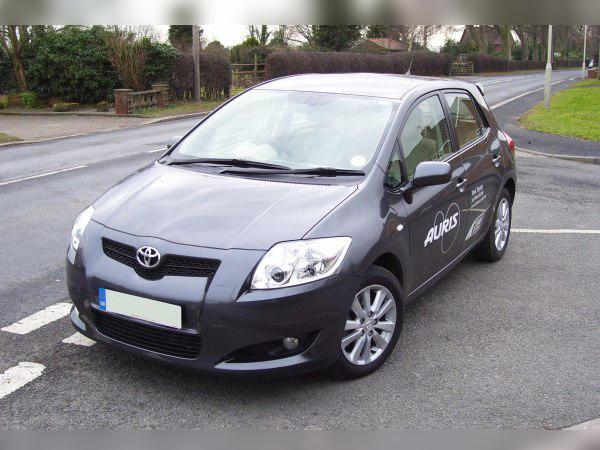
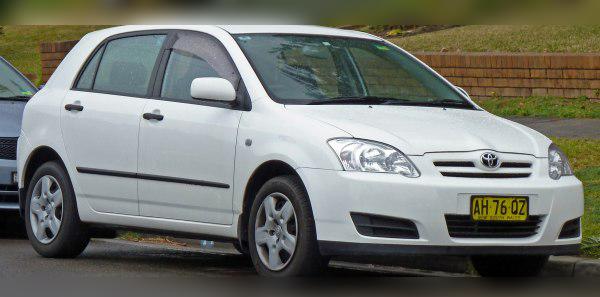
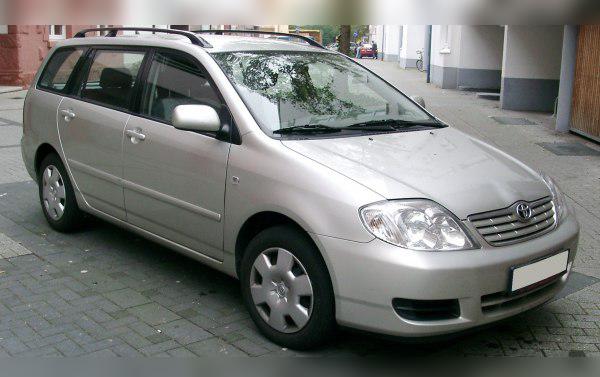
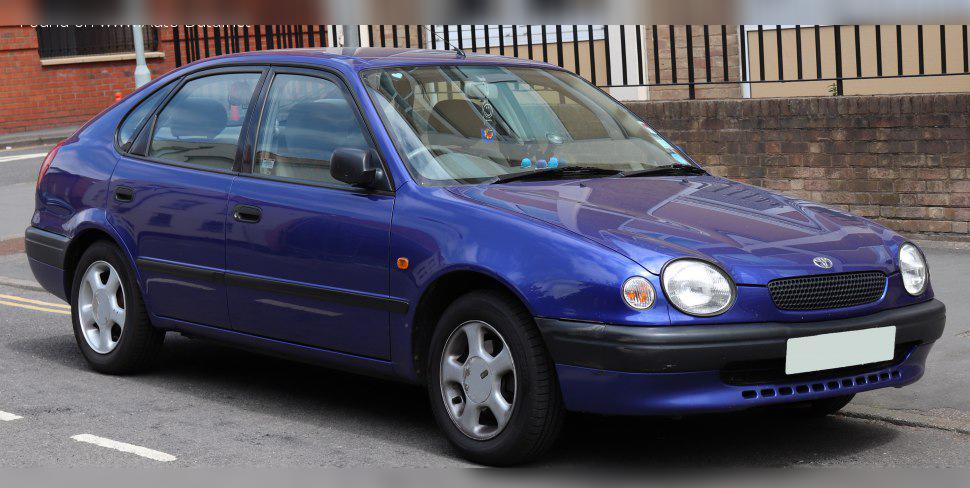
You will most often find it in the Corolla (E110, E120) and the first generation Auris. Although it has a reputation as an “indestructible Toyota”, this engine has several specific quirks you must know about before buying, especially since these cars are now getting old. Its philosophy is simplicity, but that simplicity sometimes comes at the expense of performance.
Technical specifications
| Parameter | Value |
|---|---|
| Engine code | 4ZZ-FE |
| Displacement | 1398 cc (1.4 L) |
| Power | 71 kW (97 hp) @ 6000 rpm |
| Torque | 130 Nm @ 4400 rpm |
| Configuration | I4 (inline 4-cylinder), 16 valves |
| Injection type | MPI (Multi-Point Injection) – indirect |
| Timing drive | Chain (VVT-i on intake) |
| Induction | Naturally aspirated (no turbo) |
| Engine block | Aluminium |
Reliability and maintenance
Does this engine have a timing belt or a chain?
The Toyota 4ZZ-FE uses a timing chain. This is good news for owners because there is no fixed replacement interval as with a belt. The chain is designed to last the “lifetime of the engine”, which in practice usually means over 200,000 or 250,000 km, provided the oil has been changed regularly. However, if you hear rattling (a metallic scraping noise) on a cold start, it is a sign that the chain has stretched or the chain tensioner has failed, which requires urgent attention.
What are the most common failures on this engine?
Although reliable, the 4ZZ-FE is not without flaws. These are the most common issues:
- Oil consumption: This is problem number one. Early ZZ-series engines had poorly designed oil control rings and pistons, which leads to stuck rings and cylinder ovality. Symptoms are bluish smoke from the exhaust and oil disappearing from the dipstick.
- Vibrations and low idle speed: Often caused by a dirty throttle body or an issue with the intake manifold.
- Plastic intake manifold: Cracks or poor sealing of the intake manifold can occur, leading to unmetered air (“false air”). Symptoms are rough running and increased fuel consumption.
- VVT-i actuator: The variable valve timing system can get clogged by poor-quality oil, causing rattling at first start-up.
At what mileage should the major service be done?
Since the engine has a chain, a classic “major service” (preventive replacement of belt, tensioners and water pump) is not done at a fixed mileage. However, the auxiliary (serpentine) belt (which drives the alternator and A/C) and the water pump should be inspected every 100,000 km. Spark plugs should be replaced every 40,000–60,000 km (standard) or up to 90,000 km (iridium, if fitted).
How many litres of oil does this engine take and which grade is recommended?
The engine takes approximately 3.7 to 4.2 litres of oil (depending on sump size and whether the filter is changed; always buy 4–5 litres). The recommended grade is 5W-30. 10W-40 can be used on older engines that already consume oil, but 5W-30 is best for the VVT-i system and the chain, especially in winter.
Does it consume oil between services and what amount is considered normal?
Yes, this engine is prone to oil consumption. In the manual, Toyota protects itself by stating that up to 1 L/1000 km is “within tolerance”, which in practice is unacceptable. Realistically: A healthy 4ZZ-FE should not consume more than 0.5 to 0.8 litres per 10,000 km (from service to service with no or minimal top-ups). If you are using a litre every 2,000 km, the engine is ready to be opened up (ring replacement) or replaced.
Specific parts (costs)
Does this engine have a dual-mass flywheel?
No. The 4ZZ-FE uses a solid (conventional) flywheel. This is a big advantage because clutch kit replacement is much cheaper than on diesels or more powerful petrol engines. Flywheel failures are practically non-existent.
What type of injection system does it have and are the injectors problematic?
The system is a classic MPI (Multi-Point Injection). The injectors are very durable and rarely fail. They are not as sensitive to average fuel quality as modern direct (GDI) injectors. Cleaning the injectors is cheap and straightforward if they become clogged.
Does this engine have a turbocharger?
No, this is a naturally aspirated engine. There is no turbo, no intercooler, and no expensive failures related to boost pressure. The theoretical engine lifespan is therefore longer, but performance is more modest.
Does this model have a DPF filter or EGR valve?
It does not have a DPF filter (only diesels do). It has a catalytic converter, which can fail if the engine burns a lot of oil (oil clogs the catalyst honeycomb). An EGR function exists (or exhaust gas recirculation is achieved via VVT-i valve overlap, depending on year and model), but it rarely clogs badly enough to cause major issues as on diesels. Even if it does get dirty, cleaning is simple.
Fuel consumption and performance
What is the real fuel consumption in city driving?
Do not trust the factory figures of 6–7 litres. In real city driving, especially in the heavier Auris, this engine uses between 8.5 and 10 litres per 100 km. In winter and on short trips, it can go up to 11 litres. In the lighter Corolla (E110/E120), expect around 8–9 litres.
Is this engine “lazy” for the weight of the car?
Yes. The torque of only 130 Nm is available only at a high 4400 rpm. This means that in town you will have to shift often and keep the engine at higher revs for the car to pull properly. In the Auris (which is a heavy car), it feels breathless, especially on hills or with the A/C on. In the older and lighter Corolla E110, the engine feels more lively.
What is it like on the motorway?
Due to the 5-speed gearbox with short ratios, at 130 km/h the engine spins at around 4000 rpm (or even slightly above). This results in more noise in the cabin and fuel consumption on the open road that rarely drops below 7–7.5 litres at that speed. It really needs a 6th gear for cruising. Overtaking requires dropping to 4th or even 3rd gear.
Additional options and modifications
Is this engine suitable for LPG (autogas) conversion?
Conditionally YES, but with caution. Toyota VVT-i engines have valves and valve seats that are more sensitive than average. Long-term LPG use without protection can lead to valve seat recession.
Recommendation: Mandatory installation of a valve lubrication system (“flashlube” dripper or electronic doser) and regular valve clearance checks every 30,000–40,000 km. Note: Adjusting the valves on this engine is complicated (buckets/shims are replaced; there is no simple adjustment screw), so LPG maintenance is more expensive.
How much can this engine be safely “chipped” (Stage 1)?
There is no point. This is a small-displacement naturally aspirated petrol engine. A “chip tune” (remap) might give you 3 to 5 hp, which you will not feel in real driving. Your money is better spent on quality tyres or regular maintenance.
Gearbox
Which gearboxes are fitted to this engine?
The 4ZZ-FE is most commonly paired with:
- 5-speed manual gearbox: Standard, precise and reliable.
- MMT (MultiMode) gearbox: Robotised manual gearbox (no clutch pedal, but inside it is a regular clutch operated by a computer and electric motors).
What are the most common failures of the manual and the automatic gearbox?
- Manual: Very reliable. At high mileages (over 250k km) you may hear gearbox bearings (whining), but this is not widespread.
- MMT (robotised): Avoid! This is one of the weakest points. The drive is jerky (“lurch” when shifting), and the clutch actuators and gearbox ECU often fail. Repairs are expensive (the actuator can cost as much as half a used car), and recalibration often solves the problem only temporarily.
How much does clutch replacement cost?
For the manual gearbox, the clutch kit (pressure plate, disc, release bearing) is very affordable (falls into the “not expensive” category). Replacement is routine. On MMT gearboxes, the clutch kit itself is similar in price, but the actuators are what send the total cost through the roof.
At what mileage should the gearbox be serviced and the oil changed?
The oil in the manual gearbox should be changed every 60,000 to 90,000 km (75W-90 GL-4 or GL-5, check the exact specification for the specific model year). Many people neglect this because the manufacturer says “fill for life”, but changing it extends the life of the bearings and synchros.
Buying used and conclusion
Before buying a Toyota with the 4ZZ-FE engine, do the following:
- Cold start: Insist that the engine is completely cold. Listen for chain rattling in the first 3 seconds.
- Exhaust smoke: Rev the warmed-up engine at a standstill up to 4000 rpm. If it blows blue smoke, the engine is burning oil – do not buy.
- Dipstick check: If the oil level is at minimum or below, the owner probably does not top up regularly, which is deadly for this engine.
- Idle speed: When warm, the revs must be stable (around 650–750 rpm). Fluctuation indicates issues with sensors or the intake system.
Final verdict
The Toyota 4ZZ-FE is an engine for calm drivers who cover moderate mileage, mostly in town and on secondary roads. It is ideal in the Corolla E120 (“Bug-eye”). In the heavier Auris it feels somewhat anaemic.
If you find an example that does not consume oil and has a manual gearbox, you will have a car that rarely breaks down and is cheap to maintain. If you come across a neglected example or an MMT gearbox, it can become a money pit. Recommendation: manual gearbox and mandatory compression/oil check before purchase.
Was this content useful to you?
Your opinion helps us to improve the quality of the content.