A25D-FXS Engine
- Engine
- 2487 cm3
- Aspiration
- Naturally aspirated engine
- Fuel
- Petrol (Gasoline)
- Fuel injection system
- Direct injection and Multi-port manifold injection
- Power
- 185 hp @ 6000 rpm
- Torque
- 221 Nm
- Cylinders
- 4
- Valves
- 16, 4 per cylinder
- Cylinders position
- Inline
- Valvetrain
- DOHC
- Oil capacity
- 4.3 l
- Coolant
- 6.1 l
# Vehicles powered by this engine
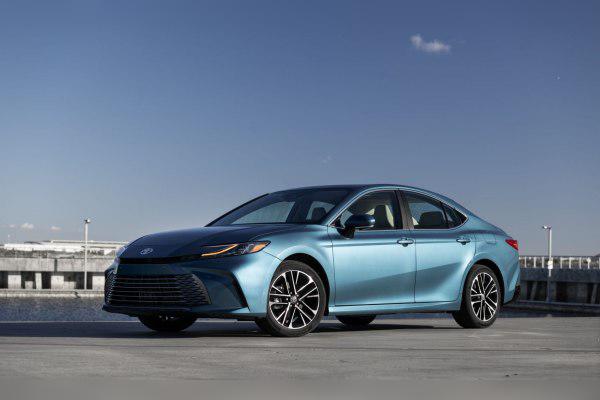
Toyota A25D-FXS (2.5 Hybrid): Experiences, Issues, Fuel Consumption and Maintenance
If you’re looking for the “heart” of a modern Toyota, especially when it comes to the Camry IX (XV80), you’re looking at probably one of the most technologically advanced and at the same time most reliable engines on the market today. The A25D-FXS is not just an engine; it’s part of the Dynamic Force family paired with the fifth generation of Toyota’s hybrid system (THS). This is not a racer, this is a machine built to cover half a million kilometers with minimal maintenance – provided you understand how it works.
Key points in short (TL;DR)
- Exceptional reliability: Naturally aspirated engine without turbo, chain-driven, designed to last.
- D-4S Injection: Combination of direct and port injection solves the issue of carbon buildup on valves.
- Fuel consumption: Ridiculously low for this displacement and power, especially in the city (often below 5 l/100 km).
- e-CVT transmission: No belts, no slipping, virtually indestructible planetary gearset.
- Noise: Due to the e-CVT, under full throttle the engine holds high revs (“scooter effect”), which some drivers find annoying.
- Maintenance: Requires specific low-viscosity oils (0W-16), but has no expensive parts like a dual-mass flywheel or conventional clutch.
- Recommendation: An absolute recommendation for taxi drivers, fleet use and drivers who cover high mileage.
Contents
- Technical Specifications
- Reliability and Maintenance
- Specific Parts and Costs
- Fuel Consumption and Performance
- Additional Options and Modifications
- Transmission (e-CVT)
- Buying Used and Conclusion
Technical Specifications
| Parameter | Data |
|---|---|
| Engine code | A25D-FXS (Dynamic Force) |
| Displacement | 2487 cc |
| Power (Petrol engine) | 136 kW (185 hp) @ 6000 rpm |
| Total system power (Hybrid) | Approx. 169 kW (230 hp) – varies by market |
| Torque (Petrol) | 221 Nm @ 3200–5200 rpm |
| Fuel type | Petrol / Hybrid |
| Aspiration | Naturally aspirated |
| Injection type | D-4S (Direct + Port) |
| Camshaft drive | Chain |
Reliability and Maintenance
Timing system: Chain or belt?
The A25D-FXS engine uses a single-row timing chain for valve timing. This is great news because the chain on Toyota’s Dynamic Force engines is designed to last the entire service life of the vehicle. There is no scheduled replacement interval. However, at high mileage (over 300,000 km) a visual inspection of chain stretch is recommended if you notice a characteristic metallic “rattling” noise on cold start.
Most common issues
Let’s be realistic – this is one of the most reliable engines on the market, but it’s not completely immune to minor issues:
- Electric water pump: This engine doesn’t have a conventional belt-driven pump, but an electric one. That’s good because it reduces engine load, but if it fails (usually after 150,000+ km), the engine can overheat. Symptoms are a warning on the dashboard or a sudden rise in temperature.
- EGR valve and cooler: Although less common than on diesels, the EGR system can get clogged, especially if the engine often runs cold (short trips in winter). Symptoms include rougher engine operation or a “Check Engine” light.
- Hybrid battery filter: This is not an engine failure, but it’s crucial for the system. The air filter for battery cooling (usually under the rear seat) gets clogged with dust. If it’s not cleaned, the battery overheats and its lifespan is drastically reduced.
Service intervals and oil
A “major service” in the classic sense (belt replacement) doesn’t exist here in the same way as on older cars. The auxiliary belt (serpentine belt) is replaced as needed, usually around 100,000 km or 6 years. Spark plugs (iridium) are replaced at 90,000–100,000 km.
Minor service: Recommended every 10,000 km or once a year.
Oil: This is critical. Toyota strictly recommends ultra-low-viscosity oil for this engine – 0W-16 (API SP / ILSAC GF-6B standard). If that’s not available, you can use 0W-20, but you should return to 0W-16 at the next change. Sump capacity is about 4.5 liters (with filter).
Oil consumption
Thanks to precise machining (“laser-clad” valve seats and specific cylinder surface treatment), these engines do not consume oil in noticeable amounts between services. If the engine uses more than 0.5 liters per 10,000 km, it usually indicates the use of incorrect oil grade or extremely aggressive driving while the engine is cold.
Specific Parts (Costs)
Dual-mass flywheel and clutch
Good news: In its hybrid configuration with the e-CVT transmission, this engine DOES NOT have a dual-mass flywheel or a conventional clutch kit (pressure plate, disc, release bearing). There is a damper plate (torsion damper) between the engine and transmission, but it fails extremely rarely and costs significantly less than a flywheel. This makes maintenance drastically cheaper compared to diesels.
Injection system
The engine uses the D-4S system. This means it has two sets of injectors: one set injects fuel directly into the cylinder (high pressure), and the other into the intake manifold (low pressure).
Why does this matter? Port injection “washes” the intake valves with petrol, preventing carbon buildup – something that is a death sentence for many modern engines with only direct injection. The injectors are very reliable, but they are expensive (very expensive) if they fail.
Turbocharger and DPF/GPF
The engine is naturally aspirated, so there is no turbocharger, no intercooler, and no “turbo oil leak” issues.
However, European models (due to Euro emission standards) are equipped with a GPF (Gasoline Particulate Filter). It’s similar to a diesel DPF, but regenerates much more easily thanks to the high exhaust gas temperatures of petrol engines. Clogging is extremely rare unless the car is driven almost exclusively on electric power in stop-and-go traffic for months.
Fuel Consumption and Performance
City driving: King of the asphalt
This is where the A25D-FXS shines. In the XV80 Camry, real-world city consumption ranges between 4.5 and 5.5 l/100 km. How? The engine operates on the Atkinson cycle (very efficient, but with lower torque), and the electric motor covers all the accelerations where a petrol engine would consume the most. In traffic jams, the engine is often off.
Is it “lazy”?
With a system output of around 230 hp (petrol + electric), this car is not lazy. 0–100 km/h is usually under 8 seconds. What confuses drivers is the linearity. There is no “kick in the back” like with a turbo diesel, but rather constant, smooth acceleration. The electric motor provides instant throttle response, so in-gear acceleration is excellent.
Highway
On the highway, the hybrid loses its primary advantage because the petrol engine runs continuously. At 130 km/h, fuel consumption rises to about 6.0–7.0 l/100 km, which is still excellent for a 2.5-liter engine. The engine is quiet and cruises at relatively low revs, but during sudden overtakes at 140 km/h, the transmission will raise the revs high, which creates noise in the cabin.
Additional Options and Modifications
LPG installation
Is it possible? Yes. Is it cost-effective? Debatable. Due to the D-4S system (8 injectors), a sophisticated LPG system is required, which is expensive (over €1000). The system must also use a bit of petrol to cool the petrol injectors. Considering that the hybrid already uses about 5 liters, the return on investment is very slow. You also lose trunk space because the batteries already take up room.
Chiptuning (Stage 1)
Forget about it. This is a naturally aspirated engine tuned for maximum efficiency. With remapping you might gain 5–8 hp, which is unnoticeable. You also risk upsetting the fine calibration between the petrol and electric drive.
Transmission: e-CVT
How does it work and does it fail?
Toyota uses the e-CVT designation, but this is NOT a conventional CVT with a belt and pulleys (which are known for issues). This is a planetary gearset (Power Split Device). It’s a brilliant, simple mechanical assembly of gears that connects the petrol engine and two electric motors (MG1 and MG2).
Failures: Virtually none. This is the most reliable type of automatic transmission in the world. There are no clutches that wear out, no mechatronics that fail like in a DSG.
Transmission maintenance
Toyota often claims that the transmission oil is “lifetime”. From a technical standpoint, you should ignore that. Change the transmission oil (Toyota ATF WS specification) every 60,000 to 90,000 km. It’s an inexpensive procedure (simple drain and fill, about 4–5 liters) that ensures the bearings and gears stay like new.
Buying Used and Conclusion
What to check before buying?
When buying a used Camry with this engine, your focus shouldn’t be on the engine itself, but on the peripherals:
- Hybrid Health Check: Have the battery cell condition checked at an authorized service center or using the “Dr. Prius” app and an OBD2 adapter. Battery replacement is expensive (very expensive, €2000+).
- Accident history: Hybrid components (inverters, high-voltage cables) are at the front. Even a minor crash can damage them, and repairs are dangerous and costly.
- Noise on cold start: Listen for chain rattling during the first 2–3 seconds.
- Signs of water in the trunk: Check that the area around the battery is dry.
Final verdict
The Toyota A25D-FXS in the Camry IX is a champion of rationality. If you love turbo sound, gear “shifts” and sporty driving, this engine will feel boring and noisy to you (“howls” at full throttle).
However, if you’re looking for a comfortable cruiser that sips fuel, almost never breaks down, and holds its value – buy without hesitation. This is the engine that buried diesel units in the taxi and fleet world, and with very good reason.
Was this content useful to you?
Your opinion helps us to improve the quality of the content.