S58B30T0 Engine
- Engine
- 2993 cm3
- Aspiration
- Twin-power turbo, Intercooler
- Fuel
- Petrol (Gasoline)
- Fuel injection system
- Direct injection
- Power
- 550 hp @ 6250 rpm
- Torque
- 650 Nm
- Cylinders
- 6
- Valves
- 24, 4 per cylinder
- Cylinders position
- Inline
- Max engine speed
- 7200 rpm
- Valvetrain
- VALVETRONIC
- Oil capacity
- 7 l
- Systems
- Start & Stop System, Particulate filter
# Vehicles powered by this engine
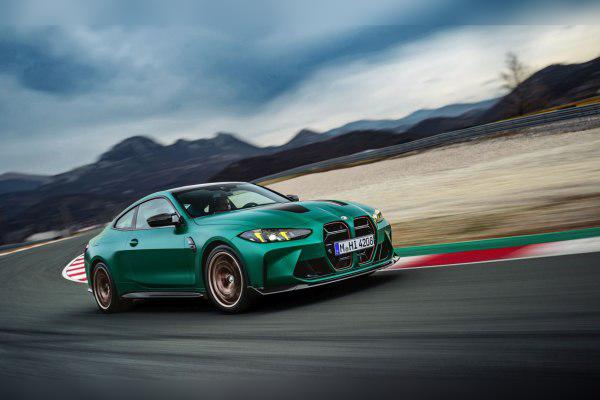
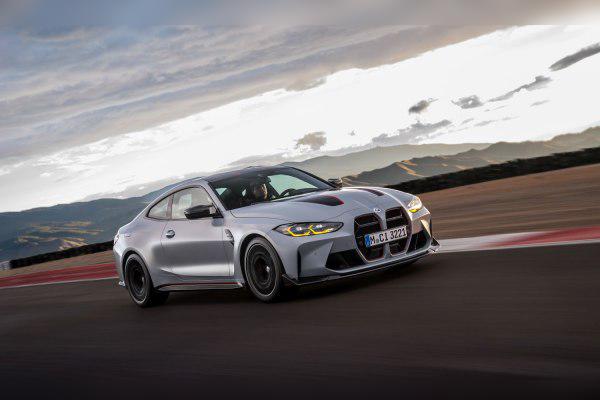
BMW S58B30T0 (M4 CSL/CS): Experiences, Issues, Fuel Consumption and Buying Guide
Key points (TL;DR)
- Top-tier performance: With 550 hp, this is one of the most powerful production inline-sixes ever made.
- Mechanics: Based on the modular B58 architecture, but with forged internals and a closed-deck block. Extremely robust.
- Timing drive: Uses a chain mounted at the rear of the engine. Generally more reliable than on its predecessor.
- Transmission: The M4 CSL and CS come exclusively with the ZF 8-speed automatic (M Steptronic), which is more durable than the old DCT gearboxes, but less “raw”.
- Fuel consumption: Expect high figures in city driving (over 15 l/100 km). This is not an engine for saving fuel.
- Maintenance: Very expensive. Ceramic brakes (common on these models), tires and specific oils require deep pockets.
- Recommendation: An absolute recommendation for enthusiasts, provided the car hasn’t been “killed” on track without proper maintenance.
Contents
Introduction and applications
The S58B30T0 engine represents the pinnacle of engineering from BMW’s M division in the realm of inline six-cylinders. While the standard S58 debuted in the X3 M and X4 M models, the variant we’re talking about – with 550 hp – is reserved for the crème de la crème of the lineup: the lightweight, track-focused BMW M4 CSL (G82) and the new M4 CS.
This powerplant is the direct successor to the legendary S55 unit, but mechanically it is closer to the modern and ultra-reliable B58 engine, with almost all vital components (crankshaft, pistons, cylinder head) modified or completely redesigned to withstand extreme track abuse. This is not just a “chipped” 340i engine, but a genuine racing machine adapted for (legal) road use.
Technical specifications
| Parameter | Value |
|---|---|
| Engine code | S58B30T0 |
| Displacement | 2993 cc (3.0 L) |
| Configuration | Inline six-cylinder (I6) |
| Power | 405 kW / 550 hp |
| Torque | 650 Nm |
| Forced induction | TwinPower Turbo (two mono-scroll turbochargers) |
| Fuel injection | Direct injection (High Precision Injection) – up to 350 bar |
| Stroke and bore | 90.0 mm x 84.0 mm |
Reliability and maintenance
Does this engine use a timing belt or chain?
The S58 engine uses a timing chain. Unlike some older BMW engines where the chain was the Achilles’ heel, here the system is significantly more robust. However, it’s important to note that the chain is located at the rear of the engine (towards the transmission), which makes any potential replacement complicated and expensive, as it requires removal of the engine or gearbox. Still, with regular oil changes, the chain should not cause issues before 200,000 km.
What are the most common issues with this engine?
Although the S58 is a relatively new engine, based on service experience the following points stand out:
- Coolant leaks: Due to the extremely complex cooling system (multiple radiators for high performance), small stones from the road can damage the front radiators. Symptoms are low coolant level and overheating.
- PCV valve (crankcase ventilation): As with the B58, the diaphragm can tear, causing strange noises (whistling) and increased oil consumption.
- High-pressure fuel pumps (HPFP): Early tuned cars showed some issues, but on stock CSL/CS maps they are stable.
- Crank hub: This was the main problem of the predecessor (S55). On the S58, BMW redesigned this part (it is integrated with the sprocket). While it’s not completely “indestructible” under extreme tuning (over 800 hp), at the stock 550 hp it is completely safe and does not slip like before.
Service intervals and oil
Although BMW often specifies “Long Life” intervals of 30,000 km, for an engine of this performance level (M4 CSL/CS) that is absolutely unacceptable if you want longevity.
Major service: The chain is considered a lifetime component, but inspection and possible replacement of the tensioner is recommended around 150,000 – 200,000 km. Auxiliary belts and the water pump are replaced as needed or preventively at around 100,000 km.
Oil: The engine takes approximately 6.5 to 7 liters of oil (depending on the exact track sump variant). The recommended grade is 0W-30 or 5W-30 with BMW Longlife-01 FE or Longlife-04 specification (particularly important because of the GPF filter in Europe). Perform an oil service every 8,000 to 10,000 km at most, or once a year.
Oil consumption and spark plugs
Given that this is a high-revving turbo engine with forged pistons (which have larger clearances when cold), some oil consumption is to be expected. An amount of 0.5 to 0.8 liters per 2,000 – 3,000 km can be considered normal under aggressive driving. If you drive calmly, it shouldn’t consume much.
Spark plugs: On M models, spark plugs are exposed to enormous thermal stress. They are replaced at every second oil service, i.e. at 20,000 to 30,000 km. Symptoms of worn plugs are rough idle and hesitation/misfire under full throttle.
Specific components (costs)
Dual-mass flywheel and clutch
Since the M4 CSL and CS come exclusively with an automatic transmission (ZF 8HP), they don’t have a classic clutch kit like manuals. However, there is a torque converter and a specific flexplate/flywheel for the automatic. It is very durable, but if it fails, repairs are expensive (converter replacement). Fortunately, this rarely happens before very high mileage.
Fuel injection system and turbochargers
The engine uses two mono-scroll turbochargers. They are less complex than variable-geometry turbos, which is good for reliability, while still providing excellent response. Their lifespan is long, typically over 200,000 km with proper cooldown before shutting the engine off. Rebuild or replacement is very expensive (market-dependent) due to difficult access and the price of the parts themselves.
The injectors are piezo-electric and operate at pressures up to 350 bar. They are generally reliable but sensitive to poor fuel quality.
Emissions: GPF (OPF) filter
Yes, all models for the European market (G82 CSL/CS) are equipped with a OPF/GPF filter (gasoline particulate filter). It does not clog as easily as a diesel DPF because exhaust gas temperatures on petrol engines are much higher, allowing for passive regeneration. Problems can arise only if the car is driven exclusively in stop-and-go city traffic for years, which is rather unlikely for an M4 CSL.
AdBlue: No, this is a petrol engine and does not use AdBlue fluid.
Fuel consumption and performance
City driving: Let’s be honest – buying an M4 CSL to save fuel makes no sense. In the city, real-world consumption ranges from 14 to 20 liters per 100 km, depending on how heavy your right foot is.
Highway: This is where the 8-speed ZF gearbox shows its magic. At 130 km/h, the engine spins at relatively low revs (around 2,000 rpm), so consumption can drop to 9 to 11 liters. Still, as soon as you start “attacking” the fast lane, the average shoots up.
Is the engine lazy? Absolutely not. With 550 hp and 650 Nm available from low revs (thanks to the bi-turbo setup), this engine catapults the car forward. The sensation of acceleration is brutal and immediate. The M4 CSL reaches 100 km/h in about 3.7 seconds (in reality even quicker on good tarmac).
Additional options and modifications
LPG conversion
Technically, it is possible to install a direct-injection LPG system, but this is absolutely not recommended for this type of engine. First, you lose the warranty and the car’s value (the CSL is a collector’s item). Second, the high combustion temperatures of LPG can damage the turbochargers and valves on an engine that is already factory-tuned close to its limits.
Remapping (Stage 1)
The S58 is the “king of tuning”. The factory forged internals can handle far more than 550 hp.
Stage 1: With just a software remap, this engine safely reaches 620 – 650 hp and over 750 Nm of torque.
Note: On newer models (produced after June 2020), the ECU is locked by Bosch. For tuning, the ECU has to be sent in for “unlocking” (currently only a company in Finland, FEMTO, does this successfully), which significantly increases the cost of the process.
Transmission: M Steptronic (ZF 8HP)
Unlike the previous generation which used a DCT (dual-clutch transmission), the G82 M4 CSL and CS use a conventional automatic with a torque converter – the ZF 8HP76. This is arguably the best automatic gearbox in the world at the moment.
Reliability and issues
This transmission is extremely reliable. It can handle a huge amount of torque (far beyond the stock 650 Nm). Failures are rare and most often come down to oil leaks from the transmission pan (which is plastic and contains the filter) after 100,000 km. The electronics (mechatronics) are stable.
Transmission service: Although BMW claims the oil is “lifetime fill”, the gearbox manufacturer (ZF) recommends changing the oil and filter (pan) every 60,000 to 80,000 km or 8 years. For an M car that is driven aggressively, do it at 60,000 km.
There is no clutch replacement cost because there is no classic clutch pack, but torque converter overhauls or mechatronics replacement are very expensive (market-dependent, often over 1,500 EUR).
Buying used and conclusion
Buying an M4 CSL or CS with the S58 engine is a ticket into the world of supercars in a coupe “suit”. The engine is a mechanical gem.
What to check before buying?
- Track history: The CSL and CS are built for the track. Check the color of the brake calipers (if they’ve changed color from heat), the condition of the carbon-ceramic discs (replacement costs as much as a small new car) and play in the suspension components.
- Modifications: If the car is remapped, check who did the tune. A bad map can melt pistons. Also check whether the “warranty has been voided” in the official dealer system.
- Cold start: The engine should run smoothly after a few seconds of warm-up. Any chain rattling or whistling (PCV) is a red flag.
- Differential: Check for oil leaks from the rear M differential.
Conclusion: In its CSL/CS guise, the S58B30T0 is probably the best engine in its class. Mechanically it is more reliable than the Italian competition and more robust than previous M engines. If you have the budget for regular (expensive) maintenance, tires and fuel, this is an engine that will put a smile on your face every single time. It’s not for beginners, but it is for true hedonists.
Was this content useful to you?
Your opinion helps us to improve the quality of the content.