B58B30M2 Engine
- Engine
- 2998 cm3
- Aspiration
- Twin-power turbo, Intercooler
- Fuel
- Petrol (Gasoline)
- Fuel injection system
- Direct injection and Multi-port manifold injection
- Power
- 381 hp
- Torque
- 540 Nm
- Cylinders
- 6
- Valves
- 24, 4 per cylinder
- Cylinders position
- Inline
- Valvetrain
- VALVETRONIC, Double-VANOS
- Oil capacity
- 6.75 l
- Systems
- Start & Stop System, Particulate filter
# Vehicles powered by this engine
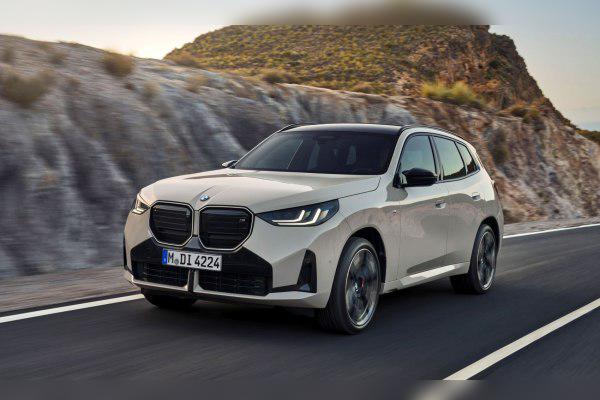
BMW B58B30M2 (3.0 R6) – Experiences, Issues, Fuel Consumption and Maintenance
Key points in short (TL;DR)
- One of the best modern engines: The B58 series is considered the "new 2JZ" thanks to its exceptionally durable block and huge power potential.
- Timing chain drive: The chain is located at the rear of the engine (towards the cabin), which makes any replacement extremely expensive (engine removal required), but the system itself is very long-lasting.
- Mild-hybrid technology: The version in the G45 X3 M50 uses a 48V system integrated into the gearbox, which improves the start-stop system and “fills in the gaps” in power delivery, but adds complexity.
- Cooling is crucial: The cooling system is complex; coolant leaks are one of the few weaknesses you really need to watch out for.
- Not for saving fuel in the city: Although efficient on the open road, in the heavy X3 body it consumes significantly more in city driving.
- ZF gearbox: Paired with the excellent ZF 8-speed automatic which requires regular maintenance (despite BMW claiming otherwise).
- Recommendation: Definitely a “buy”, but only with a verifiable service history and a budget for premium maintenance.
Contents
- Technical specifications
- Reliability and maintenance
- Specific parts and systems
- Fuel consumption and performance
- Additional options and tuning
- Gearbox
- Buying tips and conclusion
Introduction
The B58B30M2 engine represents the pinnacle of engineering from the Bavarian manufacturer in the class of inline six-cylinder engines. It is an evolution of the legendary B58 platform, which replaced the N55 engines. The specific variant we are talking about is found in the new BMW X3 (G45) in the M50 xDrive version. This is not a true “M” engine (that would be the S58), but an “M Performance” variant that offers an optimal balance between everyday usability and sporty performance. It is important because it proves that internal combustion engines can still be refined, powerful and relatively reliable, even under strict emissions regulations.
Technical specifications
| Specification | Value |
|---|---|
| Engine code | B58B30M2 |
| Displacement | 2998 cc (3.0 L) |
| Configuration | Inline, 6 cylinders (R6) |
| Power | 280 kW (381 hp) + mild-hybrid boost |
| Torque | 540 Nm |
| Forced induction | TwinPower Turbo (single turbo with twin-scroll technology) |
| Injection system | Direct injection (High Precision Injection) |
| Emissions technology | Mild-hybrid 48V (integrated starter-generator) |
Reliability and maintenance
Timing belt or chain?
The B58 engine uses a timing chain. On this engine (unlike older generations), BMW has moved the chain to the rear of the engine, towards the gearbox (firewall side). Although the chain is extremely robust and rarely fails, if it needs to be replaced due to stretching or noise, it is a very expensive job because the engine has to be removed from the car. Fortunately, with regular oil changes, the chain often lasts well over 250,000 km.
Most common issues
Although more reliable than its predecessors (N54/N55), the B58 has its weaknesses:
- Coolant loss: Leaks often occur at the thermostat housing, water pump or the expansion tank itself. This should be checked regularly because overheating an inline-six can lead to a warped cylinder head.
- PCV valve (crankcase ventilation): It is integrated into the valve cover. When the membrane fails, the engine starts to “whistle”, consumes oil and runs roughly. Unfortunately, the solution is to replace the entire valve cover.
- Oil leaks at the filter housing: A classic BMW problem. The oil filter housing gasket hardens over time and starts to leak oil, which can drip onto the accessory belt and cause serious damage.
- VANOS solenoids: The variable valve timing system itself is reliable, but the solenoids can fail if oil is changed at overly long intervals, which leads to loss of power.
Service intervals and oil
Major service: With chain-driven engines there is no fixed interval like with a timing belt. Chain condition is checked acoustically (rattling at cold start) at around 150,000–200,000 km. Other components (serpentine belt, tensioners, water pump) are replaced as needed or preventively at around 120,000 km.
Engine oil: The engine takes approximately 6.5 liters of oil. The recommended viscosity is usually 0W-20 or 0W-30 (BMW Longlife-17 FE+ specification due to the OPF filter). Although the manufacturer recommends 30,000 km intervals, for long engine life it is strongly advised to change the oil every 10,000 to 12,000 km.
Oil consumption: The B58 is much “tighter” than older BMW engines. Consumption of up to 0.5 L per 5,000 km is considered acceptable, especially if driven aggressively. If it uses a liter per 2,000 km, there is a problem (piston rings or PCV valve).
Spark plugs: On this turbocharged, direct-injection engine, spark plugs should be replaced every 50,000 to 60,000 km. If the engine is tuned (remapped), the interval should be shortened to about 30,000 km.
Specific parts (costs)
Dual-mass flywheel
Yes, this model uses a dual-mass flywheel, even with the automatic gearbox, in order to eliminate six-cylinder vibrations before they reach the transmission. It is durable, but replacement is expensive (depends on the market, but it falls into the “expensive” category).
Injection system and injectors
It uses high-pressure direct injection (HPI). The injectors have proven to be very reliable, much more so than the piezo injectors in the older N53/N54 engines. Injector failures are rare and usually caused by poor fuel quality. Symptoms include fuel leaking into a cylinder overnight (hard first start, smell of gasoline).
Turbocharger
The engine has a single turbocharger with twin-scroll technology (two exhaust gas channels feeding the turbine). The turbo is very robust and, with proper cooling (not switching off the engine immediately after hard driving), it will last over 200,000 km. Rebuilding is possible, but a new unit is expensive.
EGR, DPF and OPF
As a petrol engine, it has no DPF or AdBlue. However, for the European market it is equipped with an OPF (Otto Particulate Filter), which is the petrol equivalent of a DPF, and an EGR valve. The OPF rarely clogs unless the car is driven exclusively on very short trips for years. There is no AdBlue system, which makes maintenance cheaper compared to a diesel.
Fuel consumption and performance
Real-world fuel consumption
- City driving: Expect between 11 and 14 l/100 km. The X3 is a heavy car and the xDrive system adds drag. The mild-hybrid system helps, but it cannot work miracles in stop-and-go traffic.
- Motorway: This is where the engine shines. At normal cruising speeds it uses around 8 to 9.5 l/100 km.
- Combined: A realistic average for most drivers is around 10.5–11 l/100 km.
Is the engine sluggish?
Absolutely not. With 381 hp and 540 Nm of torque available from low revs (thanks to the twin-scroll turbo and electric assistance), the X3 M50 behaves like a sports car. Acceleration is linear and forceful.
Motorway driving
This is the natural habitat of this engine. At 130 km/h, thanks to the 8th gear, the engine spins at a low 1,800 to 2,000 rpm. The cabin is quiet, and there is instant power reserve for overtaking without excessive downshifting.
Additional options and modifications
LPG conversion
Technically possible, but financially and technically not worthwhile. Due to direct injection, an expensive system is required (liquid injection or a system that uses both petrol and LPG at the same time to cool the injectors). You also lose boot space (the mild-hybrid battery is already there). Not recommended.
Chiptuning (Stage 1)
The B58 is a tuning king. A Stage 1 remap (software only) safely raises power on this engine to 420–440 hp and torque to nearly 600 Nm. The engine can handle this increase without any mechanical modifications, provided it has been regularly maintained. However, keep in mind that tuning voids the factory warranty.
Gearbox
Type of gearbox
In the X3 G45, the B58 comes exclusively with the ZF 8HP (Steptronic Sport) 8-speed automatic gearbox. A manual gearbox is not an option. In newer models, the electric motor of the mild-hybrid system is integrated into this transmission housing.
Reliability and issues
The ZF 8HP is considered the best automatic gearbox in the world in this class. Failures are extremely rare. Possible problems at high mileage (over 200,000 km) include oil leaks from the transmission pan (which is plastic) or worn mechatronic solenoids.
Gearbox service
This is crucial: BMW says the gearbox oil is “lifetime”. The gearbox manufacturer (ZF) says: Change the oil and pan (which contains the filter) every 80,000 to 100,000 km. If you want the gearbox to last, always follow ZF’s recommendation. The cost of this service falls into the “moderately expensive” category (depending on the market).
Used car purchase and conclusion
What to check before buying?
- Cold start: Insist that the engine is completely cold. Listen carefully for the first 3–5 seconds. If you hear metallic rattling or knocking, the chain may be worn.
- Coolant traces: Look around the expansion tank and hoses in the engine bay. White residue from dried coolant indicates a leak.
- Diagnostics: Always check for “shadow codes”. Sometimes faults related to VANOS or the electric water pump do not immediately trigger a “Check Engine” light, but are stored in the ECU.
- Gearbox service history: If the car has over 100,000 km and the gearbox oil has never been changed, that is a risk.
Conclusion
The B58B30M2 engine in the BMW X3 is probably the best choice for those who want strong performance but are not willing to pay the extreme maintenance costs of true “M” models. It is robust, powerful and refined. Its biggest downside is not a mechanical weakness, but the complexity of the modern systems around it (mild-hybrid, sensors, cooling).
Recommendation: Ideal for drivers who cover a lot of kilometres on open roads and want power in reserve at any moment. Avoid cars with questionable service history, because a neglected B58 quickly turns into a money pit.
Was this content useful to you?
Your opinion helps us to improve the quality of the content.