S68 Engine
- Engine
- 4395 cm3
- Aspiration
- Twin-power turbo, Intercooler
- Fuel
- Petrol (Gasoline)
- Fuel injection system
- Direct injection
- Power
- 530 hp
- Torque
- 750 Nm
- Cylinders
- 8
- Valves
- 32, 4 per cylinder
- Cylinders position
- V-engine
- Valvetrain
- Double-VANOS, VALVETRONIC
- Systems
- Start & Stop System, Particulate filter
# Vehicles powered by this engine

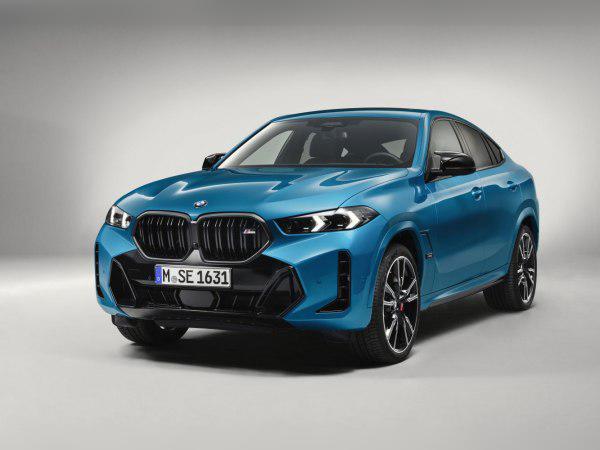
BMW S68 4.4 V8 M60i: Experiences, Problems, Fuel Consumption and Buying Tips
Key points in short (TL;DR)
- A true M engine in “civilian” clothes: The S68 is not just a refreshed N63, but a completely new power unit developed by the M division, featuring 48V mild-hybrid technology.
- Supercar performance: With 530 hp and 750 Nm, this engine makes heavy SUVs (X5, X6) extremely quick off the line.
- Complexity: The “hot-V” turbo configuration and the integrated electric motor in the gearbox mean that maintenance is very expensive and requires top-level specialists.
- Fuel consumption: Expect high fuel consumption in the city (often over 18 l/100 km). This is not an engine for saving money.
- Reliability: Although this is a new engine that has solved many of its predecessor’s (N63) issues, the complex electronics and cooling system require preventive maintenance.
- Recommendation: Only buy examples with impeccable service history and change the oil at a maximum of 10,000 km, regardless of factory recommendations.
Contents
Introduction: Heir to a legend or a new beginning?
The S68 engine represents the latest generation of BMW’s V8 engines, introduced with the 2023 facelift (LCI) of the X5 (G05) and X6 (G06) models, under the M60i badge. Unlike its predecessor (N63), the S68 was developed directly by the BMW M division. This means it shares its architecture with engines found in the most powerful M models, but it is adapted for everyday use with the addition of 48‑volt mild-hybrid technology. This is an engine for enthusiasts who want the brutal power of a V8, but in a package that offers comfort and cutting-edge technology.
Technical Specifications
| Characteristic | Value |
|---|---|
| Engine code | S68 (S68B44T0) |
| Displacement | 4395 cc (4.4 L) |
| Configuration | V8, twin-turbo (hot-V) |
| Power | 390 kW (530 hp) @ 5500–6000 rpm |
| Torque | 750 Nm @ 1800–4600 rpm |
| Fuel | Petrol (recommended 98+ octane) |
| Injection type | Direct injection (High Precision Injection) |
| Hybrid system | 48V mild hybrid (integrated into the gearbox) |
Reliability and Maintenance
Timing chain or belt?
The S68 engine uses a timing chain. BMW applied a new chain design on this engine to avoid the stretching issues known from older N63 engines. Although the chain is designed to last the life of the engine, the reality with powerful V8s is that the first inspection and possible replacement can be expected at around 150,000 to 200,000 km, depending on driving style and oil change intervals. Replacement is very expensive because the engine often has to be removed due to the chain’s position.
Most common faults and issues
Since the S68 is relatively new on the market, long-term data is limited, but based on its design and early user experience, several critical points can be highlighted:
- Cooling system: Due to the “hot-V” configuration (with turbochargers placed between the cylinder banks), temperatures are extremely high. Plastic hoses and connectors in the cooling system are prone to cracking after a few years of use, which leads to coolant leaks.
- Oil consumption: Like most BMW V8 engines, the S68 tends to “drink” some oil. This is often the result of valve stem seals hardening (due to heat) or issues with the CCV (Crankcase Ventilation) system.
- 48V hybrid system: While it improves performance, it adds another layer of complexity. Failures of the inverter or the 48V battery itself can cause the car to refuse to start, even if the petrol engine is mechanically sound.
- Oil leaks: The valve cover gasket and oil pan gasket are typical leak points on BMW V8 engines.
Minor and major service
Minor service (oil and filters) is, according to BMW, scheduled every 30,000 km or 2 years. This interval is too long for such an engine. Any experienced mechanic will recommend changing the oil every 10,000 to 12,000 km or once a year.
Major service (timing chain replacement) is not strictly tied to mileage but is done as needed (when rattling is heard on cold start), usually after 150,000 km.
Oil: capacity, grade and consumption
This engine holds a large amount of oil, approximately 10.5 to 11 liters (always check by VIN, as the oil pan may differ). Only fully synthetic oil with BMW Longlife-17 FE+ or newer specification is recommended, most commonly in 0W-20 or 0W-30 grades.
As for oil consumption, BMW considers up to 0.7 liters per 1,000 km “normal”, although in practice anything over 1 liter per 3,000–4,000 km is a sign that the oil separators or turbochargers should be checked. Always keep a liter of oil in the trunk.
Spark plugs and ignition coils
As a high-performance turbocharged petrol engine with direct injection, the S68 puts a lot of stress on spark plugs. It is recommended to replace them every 40,000 to 50,000 km (often at every second or third minor service). Symptoms of worn spark plugs include rough idle (misfires) and loss of power under hard acceleration.
Specific Components and Costs
Turbochargers and service life
The S68 has two turbochargers located in the “V” of the engine. This allows for quicker throttle response (less turbo lag), but exposes the turbos to enormous heat. Their lifespan depends directly on oil quality and proper cooldown after driving. You can expect them to last over 150,000 km with proper maintenance, but overhauling or replacing them is very expensive (depending on the market, we are talking about several thousand euros).
Fuel injection
The engine uses piezo-electric direct injection at 350 bar. Injectors are sensitive to poor fuel quality. If an injector “sticks open”, it can wash oil off the cylinder walls and cause engine seizure. Symptoms include a smell of petrol in the oil and black smoke. A single injector is very expensive.
DPF, GPF and EGR
Since this is a petrol engine, it does not have a DPF filter, but European models (due to Euro 6 standards) are equipped with a GPF (Gasoline Particulate Filter). The GPF rarely clogs if the car is regularly driven on open roads, but constant city driving can cause it to clog and trigger a warning light. The engine also has catalytic converters, which are very expensive to replace.
Note on AdBlue: This engine DOES NOT have an AdBlue system, as it is a petrol engine. AdBlue is used exclusively on diesel engines.
Dual-mass flywheel
Yes, this setup uses a dual-mass flywheel, but it is specific due to its integration with the 48V mild-hybrid system inside the gearbox housing. Its role is to reduce vibrations from the V8 engine. Its service life is long, usually over 200,000 km, unless the car is driven very aggressively (frequent launch-control starts).
Fuel Consumption and Performance
Is the engine “lazy”?
Absolutely not. With 530 hp and 750 Nm available from just 1800 rpm, the S68 plays with the heavy X5 and X6 bodies. The 0–100 km/h sprint takes about 4.3 seconds. The engine pulls linearly and violently in every gear. The electric motor (mild hybrid) further fills in the “hole” when starting from a standstill, making throttle response almost instantaneous.
Real-world fuel consumption
- City driving: Expect a realistic 16 to 22 liters/100 km. In heavy traffic (“stop-and-go”) and with a heavy right foot, the figure easily exceeds 20 liters.
- Highway / Motorway: At a cruising speed of 130 km/h, the gearbox keeps the engine at low revs (below 2000 rpm), so consumption can drop to 10 to 12 liters/100 km, which is excellent for this power level.
Additional Options and Modifications
LPG conversion
Not recommended. Although there are technically systems for direct injection (liquid phase), installing LPG on the S68 is extremely complicated, expensive and risky. The complex electronics, sensitive injectors and high temperatures make LPG a poor investment that can lead to serious engine damage. If you can afford an X5 M60i, you can afford the petrol.
Chiptuning (Stage 1)
The engine has huge potential. With a Stage 1 remap, power can safely be raised to 600–620 hp and torque to over 850 Nm. However, new BMW models have locked ECUs (Bosch), so “unlocking” often requires sending the unit to specialized companies (e.g. FEMto), which significantly increases the cost and voids the factory warranty.
Gearbox
The S68 engine is paired exclusively with the latest-generation ZF 8-speed automatic gearbox (Steptronic Sport), which houses an integrated electric motor (ISG) for the 48V system. A manual gearbox is not available.
- Reliability: The ZF 8HP is arguably the best automatic gearbox in the world. It is very reliable and very quick.
- Maintenance: BMW often claims that the gearbox oil is “lifetime”, but the gearbox manufacturer (ZF) recommends changing the oil and filter (integrated into the gearbox pan) every 80,000 to 100,000 km. Ignoring this leads to harsh shifting and mechatronic failure.
- Failures: Rare, mostly related to oil leaks at the connector or gearbox pan. Replacing the clutch/torque converter is expensive, but rarely needed before very high mileage.
Buying Used and Conclusion
When buying a used BMW with the S68 engine, pay attention to the following:
- Cold start: Listen to the engine when it is completely cold. Any rattling in the first 3–5 seconds may indicate a problem with the timing chain or VANOS.
- Exhaust smoke: Let the car idle for 5–10 minutes, then suddenly rev it. Bluish smoke is a clear sign that the engine is burning oil (valve stem seals or turbo).
- Signs of leaks: Inspect the engine from below and around the valve covers. The smell of burning oil in the cabin means oil is dripping onto hot exhaust components.
- Diagnostics: A full check of the cooling system and the condition of the 48V battery is mandatory.
Conclusion: The BMW S68 in the X5 and X6 M60i models is a technological masterpiece that offers true sports car performance in an SUV package. It is aimed at drivers who want top-tier performance and prestige and who are prepared to pay the high costs of maintenance and fuel. It is not for those seeking economy. If you maintain it regularly (halve the official service intervals), it will reward you with an unforgettable driving experience.
Was this content useful to you?
Your opinion helps us to improve the quality of the content.