DDXE Engine
- Engine
- 2970 cm3
- Aspiration
- Turbocharger, Intercooler
- Fuel
- Diesel
- Fuel injection system
- Diesel Commonrail
- Power
- 258 hp
- Torque
- 580 Nm
- Cylinders
- 6
- Valves
- 24, 4 per cylinder
- Cylinders position
- V-engine
- Oil capacity
- 8 l
- Systems
- Particulate filter
# Vehicles powered by this engine
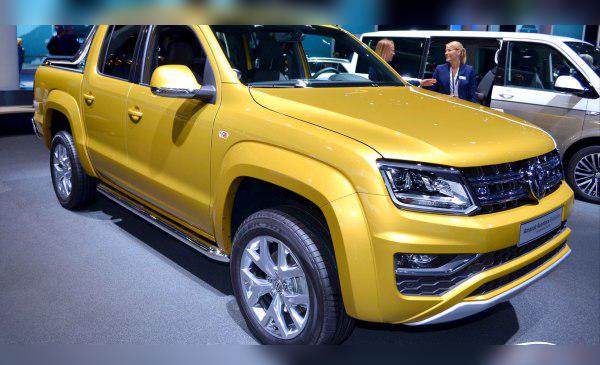
VW Amarok 3.0 V6 TDI (DDXE): Experiences, issues, fuel consumption and buying tips
Key points (TL;DR)
- Unmatched performance: With 258 hp (plus overboost) and 580 Nm, this is one of the most powerful stock engines in its pickup class for that model year. It is anything but “lazy”.
- Timing chain drive: Uses a complex chain system mounted on the rear side of the engine. Replacement is complicated and expensive (requires engine removal).
- Gearbox: Paired with the excellent ZF 8-speed automatic, not a DSG, which is great for towing and reliability.
- Fuel consumption: Expect high fuel consumption in city driving. This is not an economical engine, but one built for enjoyment and power.
- AdBlue system: A frequent source of headaches (pumps, heaters, sensors).
- Recommendation: Ideal for those who want SUV-like performance in a work truck body, and are prepared for higher maintenance costs.
Contents
Introduction: DDXE code and application
When Volkswagen decided to put the 3.0 V6 TDI engine into the Amarok (facelift of the first generation), it was a move that completely changed the character of this vehicle. Previously known for its 2.0 BiTDI engines (which had their own issues), the Amarok with the V6 unit became a true “lifestyle” pickup.
The specific engine code DDXE refers to the most powerful variant installed towards the end of the first generation’s production (from 2018/2019 onwards). This engine originates from Audi (EA897 evo series) and was adapted for harsher operating conditions in the Amarok (different oil pan, oil pump, etc.). With 258 hp (which temporarily rises to around 272 hp thanks to the Overboost function), this is an engine that offers serious torque and a level of refinement that four-cylinder units lack.
Technical specifications
| Parameter | Value |
|---|---|
| Engine code | DDXE |
| Configuration | V6 (cylinders at a 90-degree angle) |
| Displacement | 2967 cc (often rounded to 2970 cc) |
| Power | 190 kW / 258 hp (Overboost up to 200 kW / 272 hp) |
| Torque | 580 Nm at 1400–3000 rpm |
| Injection system | Common Rail (piezo injectors) |
| Charging | Single variable-geometry turbocharger (VGT) |
Reliability and maintenance
Does this engine have a timing belt or a chain?
The DDXE engine uses a chain system for valve timing. This is important to note because the system is complex. The timing assembly is located on the rear side of the engine (towards the gearbox/cabin). There are two main chains for the camshafts and auxiliary chains for the oil pump and other ancillaries. Although designed to last a long time, replacement is extremely expensive and labor-intensive (often requires removal of the engine or gearbox), so the condition of the chain must be checked by listening to a “cold start” (rattling in the first 3–5 seconds).
What are the most common failures on this engine?
Although robust, the engine is not without flaws:
- Oil leaks: Oil often leaks into the “V” space (between the cylinder heads), usually due to seals on the oil cooler or oil filter housing.
- Chain tensioners: Can weaken at higher mileage, leading to chain rattle.
- Camshafts: Older versions of the 3.0 TDI engine had issues with cam lobe wear, but on the DDXE version (Evo generation) this was largely resolved by using better materials.
- Cooling system: Coolant leaks from plastic junctions or the EGR cooler.
At what mileage is the major service done?
On this engine, a “major service” in the classic sense (as with a belt) does not exist. Chains are replaced as needed, usually when they become noisy, which can be at 200,000 km, but also at 400,000 km, depending on how regularly the oil has been changed. However, the serpentine belt, tensioners and water pump should be regularly inspected and replaced at around 100,000–120,000 km or every 5–6 years.
How many liters of oil does it take and which grade is recommended?
This engine has a large oil pan, which is good for cooling and lubrication. It takes about 8.0 liters of oil (check precisely by VIN, it can vary by +/- 0.5 L due to the cooler). Only fully synthetic 5W-30 oil that meets the VW 507.00 specification is recommended (because of the DPF filter). Tip: Change the oil at a maximum of 15,000 km or once a year, and if you do a lot of city driving or tow a trailer, shorten it to 10,000 km.
Does it consume oil and how long do the injectors last?
Oil consumption: Modern V6 TDI engines can consume a small amount of oil (e.g. 0.5 L per 5,000 km), which is considered normal. However, a sudden increase in consumption indicates a problem with the turbocharger or piston rings.
Injectors: High-pressure piezo injectors are used. They have generally proven to be durable and often exceed 250,000 km without issues, provided quality fuel is used. Symptoms of failure include rough idle, increased smoke or difficult starting. Refurbishment is possible, but replacement with new parts is very expensive (depends on the market).
Specific parts (costs)
Does the engine have a dual-mass flywheel?
Yes, this engine is paired with a dual-mass flywheel, even in versions with the automatic gearbox. Its role is to reduce the vibrations of the powerful diesel engine transmitted to the gearbox. In automatics it lasts longer than in manuals, but it is still a wear item.
Turbocharger, DPF, EGR and AdBlue
Turbo: The engine uses a large single turbocharger with variable geometry (VGT). Service life is long with regular oil changes and proper cooldown after driving under load. The turbo actuator (electronic part) can sometimes fail before the mechanical part itself.
DPF and EGR: Like any Euro 6 diesel, it has both DPF and EGR. The EGR valve is prone to soot build-up if the vehicle is used exclusively for city driving. The DPF filter regenerates automatically but requires open-road driving. A clogged DPF can lead to an increase in oil level (fuel mixing with oil).
AdBlue: Yes, the DDXE engine necessarily uses AdBlue fluid. The system is complex (tank, heaters, pump, injector). This is a common weak point. Problems include failure of the AdBlue fluid heater (often in winter), pump failure or crystallization of urea that clogs the injector. Repairs to the exhaust aftertreatment system are expensive (depends on the market).
Fuel consumption and performance
What is the real fuel consumption in city driving?
Be prepared for reality: the Amarok with this engine and permanent 4MOTION drive is not frugal. In pure city driving, real-world consumption is between 11 and 14 l/100 km. In winter or heavy traffic it can go even higher. The start-stop system helps a little, but the mass of over 2 tons has the final say.
Is this engine “lazy” and how does it behave on the motorway?
It is absolutely not lazy. With 580 Nm of torque, the Amarok V6 accelerates like a hot hatch (0–100 km/h in about 7.4 seconds). Overtaking is lightning-fast, even under load.
On the motorway this engine is in its element. Cruising at 130 km/h is extremely quiet and comfortable, and the engine spins at a low ~1800–2000 rpm (thanks to the 8th gear). Fuel consumption on the open road at 130 km/h is around 9.0–10.5 l/100 km, depending on wind and tyres.
Additional options and modifications
How far can this engine be safely tuned (Stage 1)?
The DDXE engine is software “detuned” from the factory, as it is mechanically almost identical to more powerful Audi versions. Because of this, it has huge tuning potential. A safe Stage 1 remap can raise power to 300–310 hp and torque to over 650 Nm.
However, keep in mind: although the engine can handle it, the power increase puts additional stress on the DPF filter and drivetrain components. It is recommended to do this only with reputable tuners.
Gearbox: ZF 8HP automatic
Which gearboxes are fitted?
With the 258 hp DDXE engine, Volkswagen fitted exclusively the 8-speed automatic gearbox. It is important to emphasize: this is NOT a DSG (dual-clutch) gearbox, but a conventional automatic with a torque converter, made by ZF (model ZF 8HP).
Most common issues and gearbox maintenance
Reliability: The ZF 8HP is considered one of the best automatic gearboxes in the world. It is very reliable and robust, perfect for towing and off-road driving (since it does not have clutches that can overheat when setting off, as in DSG gearboxes).
Failures: They are rare. Sometimes oil can leak from the gearbox pan (which is plastic) or from a seal. If the gearbox “jerks” when shifting, the problem is usually old oil or the need for software adaptation.
Service: Although VW often states that the oil is “lifetime”, the gearbox manufacturer ZF strictly recommends changing the oil and filter (pan) every 80,000 to 100,000 km (or earlier if heavy towing is frequent). The change is expensive (depends on the market) because special ZF oil is used and the entire lower pan with filter is replaced, but it is crucial for longevity.
Buying used and conclusion
When buying an Amarok with the DDXE engine, pay attention to the following:
- Cold start: The engine must be completely cold. Listen for chain rattle in the first 3 seconds after starting. If it rattles longer, you are looking at a potential bill of several thousand euros.
- Oil leaks: Remove the plastic engine cover and use a flashlight to inspect the “V” space between the cylinders. It must be dry. Also check the joint between the gearbox and engine.
- AdBlue history: Use diagnostics to check for any fault codes related to the “Reductant system” or NOx sensors.
- Noise when switching off: If you hear knocking when switching off the engine, this may indicate a worn dual-mass flywheel.
Conclusion: The VW Amarok 3.0 V6 TDI (258 hp) is probably the best-powered pickup of its generation on the European market. It offers performance that leaves the competition in the dust and the comfort of an SUV. However, maintenance is at a premium level (Audi Q7/VW Touareg), not at the level of a basic workhorse. If you are not bothered by consumption of 12+ liters and higher service costs, you will get a vehicle that puts a smile on your face every time you press the accelerator.
Was this content useful to you?
Your opinion helps us to improve the quality of the content.