CNFB Engine
- Engine
- 1968 cm3
- Aspiration
- Turbocharger, Intercooler
- Fuel
- Diesel
- Fuel injection system
- Diesel Commonrail
- Power
- 140 hp @ 3500 rpm
- Torque
- 340 Nm
- Cylinders
- 4
- Valves
- 16, 4 per cylinder
- Cylinders position
- Inline
- Valvetrain
- DOHC
- Oil capacity
- 7 l
- Systems
- Particulate filter
# Vehicles powered by this engine
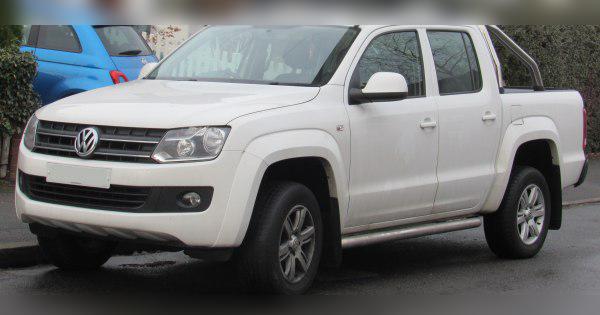
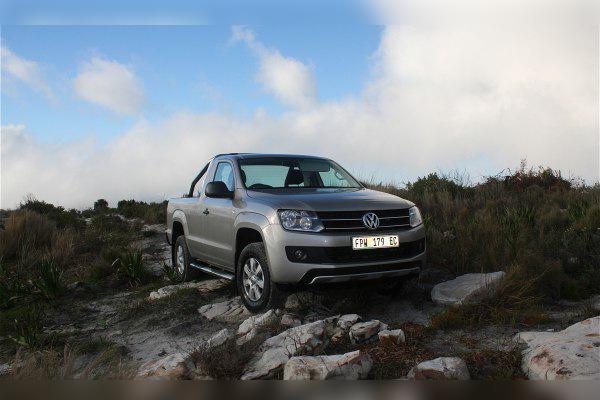
VW 2.0 TDI (CNFB) – Experiences, problems, fuel consumption and used-buying tips
Key points (TL;DR)
- More reliable option: CNFB is the single-turbo version, which makes it simpler and generally more durable than the notorious BiTDI (bi-turbo) versions in the Amarok.
- Performance: With 140 hp and 340 Nm, this engine is "adequate" for work, but sluggish for overtaking on open roads considering the Amarok’s weight.
- Timing service: It has a timing belt. It’s recommended to shorten the replacement interval compared to factory specifications.
- EGR valve: As with most 2.0 TDI engines of this generation, the EGR valve and EGR cooler are common failure points.
- Fuel consumption: Due to its “brick” aerodynamics and high weight, don’t expect Passat-like consumption. City and highway driving easily push the average up.
- Dual-mass flywheel: It’s present and represents a significant cost when replacing the clutch kit.
Contents
- Introduction and applications
- Technical specifications
- Reliability and maintenance
- Specific parts and costs
- Fuel consumption and performance
- Gearbox and drivetrain
- Additional options and modifications
- Buying used and conclusion
Introduction and applications
The engine with the code CNFB belongs to Volkswagen’s EA189 diesel family, but is specifically adapted for light commercial vehicles (LCV). It was primarily installed in the first-generation Volkswagen Amarok. Unlike in passenger cars (Golf, Passat), this engine is mounted longitudinally and tuned to withstand higher loads when towing and hauling, with a focus on durability rather than high performance.
This is the “weaker” 140 hp single-turbo version. Although many buyers look for the more powerful BiTDI versions (163 or 180 hp), in practice the CNFB has proven to be a less risky purchase because it lacks the complexity (and issues) of the twin-turbo setup that plagued the more powerful models.
Technical specifications
| Specification | Data |
|---|---|
| Engine displacement | 1968 cc (2.0 L) |
| Power | 103 kW / 140 hp |
| Torque | 340 Nm at 1600–2250 rpm |
| Engine code | CNFB |
| Injection type | Common Rail (direct injection) |
| Configuration | Inline 4-cylinder, 16 valves |
| Charging | Turbocharger (VGT) + intercooler |
Reliability and maintenance
Timing belt or chain?
The CNFB engine uses a timing belt to drive the camshafts. This is important to know because a snapped belt leads to catastrophic engine damage (pistons hitting valves). The factory replacement recommendation is often optimistic (sometimes up to 210,000 km in Western markets), but in real-world use and given the age of these vehicles, the full timing service should be done at a maximum of 150,000 km or every 5–6 years, whichever comes first. The water pump must also be replaced at the same time.
Oil consumption and service intervals
This engine holds a considerable amount of oil due to a large sump designed for commercial use – usually around 7 liters (always check the exact quantity when filling). Only fully synthetic 5W-30 oil that meets the VW 507.00 specification is recommended.
As for oil consumption, TDI engines are known to “drink” a bit of oil, especially when driven under load. Consumption of up to 0.5 liters per 10,000 km is considered acceptable. If it uses more than that (e.g. a liter every few thousand km), this may indicate issues with piston rings or the turbocharger.
Most common failures
In addition to standard issues, CNFB engines in the Amarok can suffer from coolant leaks, most commonly at the EGR valve housing or the water pump. The auxiliary (serpentine) belt can also cause problems if the tensioner weakens, and pieces of the belt can get under the timing belt and cause catastrophic damage – which is why the serpentine belt kit should be replaced regularly along with the timing service.
Specific parts (costs)
Injectors and fuel system
It uses a Bosch Common Rail system. The injectors are generally durable and can last over 250,000 km with good-quality fuel. Symptoms of bad injectors include smoke on cold start, rough idle, or increased “diesel knock”. Reconditioning is possible, but a new genuine injector is expensive (it depends on the market, but it’s a major cost item).
Turbocharger
Unlike the more powerful versions, the CNFB has a single turbocharger with variable geometry. This is good news. Its lifespan is long, often over 250,000 km with regular oil changes. Failure symptoms include whistling noises, loss of power (safe mode), or blue smoke from the exhaust.
Dual-mass flywheel
Yes, in combination with the manual gearbox this engine uses a dual-mass flywheel. Since the Amarok is heavy and often used for towing, the flywheel is subjected to high loads. Replacing the clutch kit together with the flywheel is a costly job.
DPF, EGR and AdBlue
The model has a DPF filter and an EGR valve. Clogged EGR valves are a common issue, manifested by the “Check Engine” light and loss of power. The DPF suffers from frequent short city trips.
As for the AdBlue system: Most CNFB engines (Euro 5) do not have AdBlue, which is a big advantage compared to newer models as it eliminates problems with AdBlue pump heaters and crystallization. Still, check the specific vehicle, because BMT (BlueMotion Technology) badges on later model years may imply additional eco systems.
Fuel consumption and performance
Real-world fuel consumption
Don’t trust the official figures. The Amarok is heavy (around 2 tons empty) and has the aerodynamics of a kiosk.
- City driving: Expect between 9 and 11 l/100 km, depending on traffic and driving style.
- Open road: It can go down to about 7.5–8.5 l/100 km if you drive up to 90 km/h.
Is the engine “lazy”?
Honestly – yes, a bit. 140 hp is the lower limit for a vehicle of this weight. In the city it’s perfectly acceptable thanks to 340 Nm of torque available low down, so it feels reasonably lively off the line. However, at speeds above 100 km/h, overtaking requires planning. If you often tow a heavy trailer uphill, you will feel the lack of power.
Behavior on the highway
At 130 km/h, the engine revs relatively high (depending on gearing, often around 2400–2600 rpm with the 6-speed gearbox), which increases noise and fuel consumption. This is not a vehicle for racing on the autobahn, but for cruising at 110–120 km/h.
Gearbox and drivetrain
With the CNFB engine (140 hp) you most commonly get a 6-speed manual gearbox. An automatic is less common with this power level (the ZF 8HP automatic is usually reserved for the 180 hp or V6 models).
- Manual gearbox: Robust, with precise shift action. The main issue is not the gearbox itself, but the clutch and dual-mass flywheel that suffer due to the vehicle’s weight and towing. Changing the gearbox oil is recommended every 60,000 to 80,000 km, even though VW often claims it is “lifetime fill”.
- Drivetrain (4MOTION): There are two versions: permanent 4x4 (Torsen differential) and selectable 4x4 (part-time, without a center differential). The selectable system (often with low-range) MUST NOT be used in 4x4 mode on dry tarmac, as this will lead to drivetrain damage (the “wind-up” effect). Make sure you know which system the vehicle has!
Additional options and modifications
Remapping (Stage 1)
This engine is very suitable for a remap. Since it is robust in terms of hardware, a Stage 1 map can safely increase power to around 170–175 hp and torque to nearly 400 Nm.
Recommendation: This is highly recommended for an Amarok with this engine. The power gain drastically improves driving characteristics, makes overtaking easier and can even slightly reduce fuel consumption in normal driving because the engine doesn’t have to “work as hard”.
Buying used and conclusion
What to check before buying?
- Flywheel noise: When switching the engine off there should be no metallic knocking (“clack-clack”). When taking off, there should be no shuddering.
- Differential and driveshaft: Look under the vehicle. Is there any oil leaking from the rear differential? Do the driveshaft U-joints have any play?
- Coolant leaks: Check the coolant level. If it’s low, suspect the EGR cooler or water pump.
- Service history: When was the timing belt last changed? If there is no proof, factor the cost of a full timing service into the purchase price.
Conclusion
The VW Amarok with the 2.0 TDI CNFB (140 hp) engine is a rational choice for those who need a work vehicle but are afraid of the high maintenance costs of the bi-turbo models. Although it’s not fast, it is simpler and cheaper to maintain than its more powerful siblings. It is ideal for hunters, construction workers or people who live off the beaten path and don’t plan on setting speed records on the highway.
Was this content useful to you?
Your opinion helps us to improve the quality of the content.