EA888evo4 / DNFE Engine
- Engine
- 1984 cm3
- Aspiration
- Turbocharger, Intercooler
- Fuel
- Petrol (Gasoline)
- Fuel injection system
- Direct injection
- Power
- 280 hp
- Torque
- 400 Nm
- Cylinders
- 4
- Valves
- 16, 4 per cylinder
- Cylinders position
- Inline
- Valvetrain
- DOHC
- Oil capacity
- 5.7 l
- Systems
- Start & Stop System, Particulate filter
# Vehicles powered by this engine
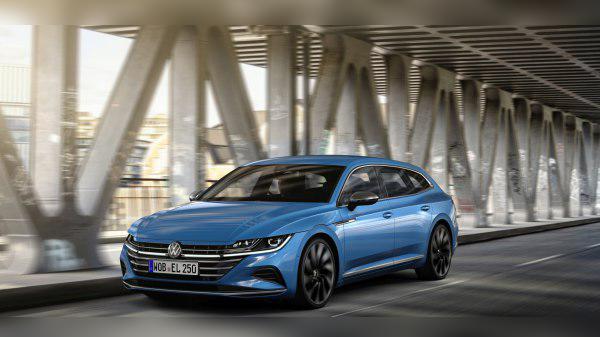
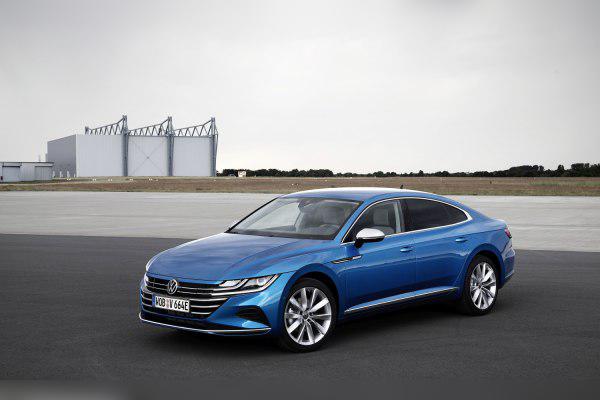
2.0 TSI EA888 evo4 (DNFE): Experiences, issues, fuel consumption and used car buying guide
Volkswagen’s 2.0 TSI engine from the EA888 family is probably one of the most famous four‑cylinder turbo petrol engines in the world. Here we’re talking about its latest iteration – Generation 4 (evo4), specifically the DNFE code, which delivers a serious 280 hp (206 kW) and 400 Nm of torque. This engine is the heart of prestigious models such as the facelifted VW Arteon and Arteon Shooting Brake.
This is not an engine for those who just want to get from point A to point B with minimal costs. This is a machine that offers performance on the level of hot hatch sports cars, but wrapped in an elegant, business‑class body. However, high technology also comes with specific maintenance requirements.
Key points in short (TL;DR)
- Performance: Explosive power and throttle response, 400 Nm available at low revs.
- Drivetrain: In this 280 hp variant it comes exclusively with 4MOTION all‑wheel drive and a DSG gearbox.
- Timing: Chain‑driven, and in the evo4 generation the chain is much more reliable, but still requires high‑quality oil.
- Fuel consumption: In the city it can be high (double‑digit), while on the open road it is surprisingly economical.
- Emissions: Equipped with a GPF (OPF) particulate filter, which means it doesn’t like short urban trips (similar to a diesel with a DPF).
- Cooling: The thermostat and water pump are still a weak point of this engine family.
- Recommendation: An excellent choice for drivers who want diesel‑like speed on the motorway, but the quietness and power of a petrol engine, with somewhat higher maintenance costs.
Contents
- Technical Specifications
- Reliability and Maintenance
- Specific Parts and Costs
- Fuel Consumption and Performance
- Additional Options and Tuning
- Gearbox and Drivetrain
- Buying Used and Conclusion
Technical Specifications
| Engine displacement | 1984 cc (2.0 L) |
| Power | 206 kW (280 hp) |
| Torque | 400 Nm |
| Engine code | DNFE (EA888 Gen 4) |
| Injection type | Direct injection (up to 350 bar) |
| Induction | Turbocharger + intercooler |
| Emissions standard | Euro 6d (with GPF filter) |
Reliability and Maintenance
The EA888 evo4 is a mature engineering product that has corrected many of the “childhood diseases” of previous generations (such as excessive oil consumption on Gen 2 engines). Still, high performance requires meticulous maintenance.
Does this engine have a timing belt or a chain?
This engine uses a timing chain. In the past, VW had issues with chain stretch, but on the evo4 generation the system has been significantly reinforced. With regular oil changes, the chain should last over 200,000 km. However, a rattling noise on cold start is a signal that the chain or tensioner must be checked urgently.
What are the most common failures on this engine?
The most common problem is the thermostat and water pump module. The housing is plastic and over time it deforms due to heat cycles, which leads to coolant leaks. Another frequent issue is the build‑up of carbon deposits on the intake valves due to direct injection, which can cause rough running. Also, the oil pressure sensor electronics are known to trigger false warnings.
At what mileage is the major service done?
Since the engine has a chain, a classic “major service” (timing belt replacement) does not exist at a fixed interval. However, the serpentine belt (which drives the alternator and A/C compressor) and its tensioners should be replaced at around 100,000–120,000 km. Chain condition is checked via diagnostics or “by ear”.
Oil: quantity, grade and consumption
The DNFE engine takes approximately 5.7 litres of oil. Due to the GPF filter and tight tolerances, VW recommends 0W‑20 (VW 508.00 standard) for maximum efficiency, but many experts recommend switching to 5W‑30 (VW 504.00) if you live in warmer regions and drive more aggressively, as it provides a better oil film at high temperatures.
As for oil consumption: all modern turbo engines use some oil. For this engine, consumption of about 0.5 litres per 3,000–4,000 km is acceptable if driven hard. If it uses a litre per 1,000 km, you have a problem (usually the PCV valve or piston rings, although this is rarer on this generation).
Spark plugs and ignition coils
On such a powerful petrol engine, the spark plugs are under heavy stress. The factory interval is every 60,000 km, but for optimal operation and to protect the coils, it’s advisable to replace them every 40,000 km. Use only NGK or Bosch plugs specified for this engine (iridium).
Specific Parts (Costs)
Does the engine have a dual‑mass flywheel?
Yes. Although it’s paired with an automatic (DSG), it does have a dual‑mass flywheel to dampen engine vibrations before they reach the gearbox. When you hear knocking at idle that disappears when you rev the engine, or feel vibrations when switching the engine off, the flywheel is due for replacement. It’s not cheap (falls into the “expensive” category).
Fuel injection system and injectors
The engine uses advanced direct injection with pressure up to 350 bar. The injectors are very precise but sensitive to poor‑quality fuel. Symptoms of failure are rough idle, harder starting and increased fuel consumption. Replacing a full set of injectors is very expensive (it depends on the market, but expect a serious bill).
Turbocharger and service life
It uses a Continental or IHI turbocharger (depending on the production batch). They are very efficient and spool up quickly. Service life is long (over 200,000 km) if you follow the rules: don’t push a cold engine hard, and let the engine idle for 30–60 seconds before switching off after fast driving so the oil in the turbo can cool down.
GPF filter (petrol DPF)
This engine is equipped with a GPF (Gasoline Particulate Filter), the petrol counterpart to a diesel DPF. Although petrol engines warm up faster and regenerate this filter more easily in passive mode, frequent short city trips can clog it. Symptoms are a warning light on the dash and the engine “choking”. The solution is to get on the motorway and drive at around 3,000 rpm for about 15 minutes.
The engine does not have an AdBlue system, as it is a petrol unit.
Fuel Consumption and Performance
Real‑world city consumption
Do not trust the factory figures. In the heavy Arteon body, with 4MOTION all‑wheel drive, this engine in pure urban stop‑and‑go traffic uses between 11 and 14 litres per 100 km. If you have a heavy right foot, that figure can go over 15 litres. This is not an engine for saving fuel in the city.
Is the engine “lazy”?
Absolutely not. With 280 hp and all‑wheel drive, this car launches off the line. It reaches 100 km/h in about 5.5 seconds, which is serious sports‑car territory. The weight of the body is felt only in sudden direction changes, but there is never a lack of power.
Motorway and cruising
This is the natural habitat of this engine. At 130 km/h in 7th gear, the engine spins at a low 2,200–2,400 rpm. Fuel consumption is then very reasonable, at around 7.5 to 8.5 litres. The engine is extremely quiet and flexible when overtaking.
Additional Options and Modifications
LPG conversion
Theoretically possible, but in practice not recommended nor cost‑effective. Due to direct injection, you need a “direct liquid” system which is very expensive (over 1,000 EUR), or a system that still uses 20–30% petrol to cool the injectors. Given the complexity of the engine and its sensors, the risk of issues is high.
Chiptuning (Stage 1)
EA888 engines are kings of tuning. A Stage 1 remap (software only, no hardware changes) can safely raise power to 320–340 hp and torque to 450+ Nm. The engine and gearbox can handle this without problems, provided that oil change intervals are shortened to 8,000–10,000 km.
Gearbox
Which gearbox is fitted?
The 280 hp DNFE engine always comes with a DSG dual‑clutch automatic gearbox. Most commonly it is the DQ381 model (7 speeds, wet clutches), which is an evolution of the older DQ380/DQ250 and is designed to withstand higher torque and reduce CO2 emissions.
Gearbox maintenance and failures
The oil in the DQ381 gearbox MUST be changed. Although the factory sometimes states 120,000 km, any experienced mechanic will tell you: change the gearbox oil and filter every 60,000 km. This is crucial for mechatronics longevity.
- Most common failure: Mechatronics (the “brain” of the gearbox). If the gearbox “kicks” when changing gears, or is slow to engage R or D, that’s a sign of trouble. Repair is expensive.
- Clutches: The clutch pack lasts a long time (over 200,000 km) unless the car is constantly “launched” (Launch Control) or driven aggressively when cold.
Buying Used and Conclusion
Before buying an Arteon with this engine, pay attention to the following:
- Cold start: Listen to the engine when it is completely cold. Any rattling lasting longer than 2–3 seconds indicates a timing chain issue.
- Signs of leaks: Look under the intake manifold for traces of reddish crust (dried coolant) – a sign that the water pump is starting to fail.
- DSG test: The gearbox must shift smoothly, both in slow city driving and under full throttle. Any jerk can mean a potential cost of 1,000+ EUR.
- 4MOTION service history: Check whether the oil in the Haldex coupling (all‑wheel drive system) has been changed. It is often forgotten, but should be done every 45–60 thousand km.
Conclusion: The VW 2.0 TSI (DNFE) in the Arteon is a fantastic powertrain. It offers performance that will embarrass many “weekend racers”, while retaining the civility of a saloon. It is not cheap to maintain and it “likes a drink” in the city, but in return it puts a smile on your face every time you press the throttle. It is ideal for those who cover 15–25 thousand km per year, mostly on open roads, and want a powerful machine without the sound of a diesel.
Was this content useful to you?
Your opinion helps us to improve the quality of the content.