EA888 / DLRB Engine
- Engine
- 1984 cm3
- Aspiration
- Turbocharger, Intercooler
- Fuel
- Petrol (Gasoline)
- Fuel injection system
- Direct injection
- Power
- 268 hp
- Torque
- 350 Nm
- Cylinders
- 4
- Valves
- 16, 4 per cylinder
- Cylinders position
- Inline
- Valvetrain
- DOHC
- Oil capacity
- 5.7 l
- Coolant
- 10 l
- Systems
- Start & Stop System
# Vehicles powered by this engine
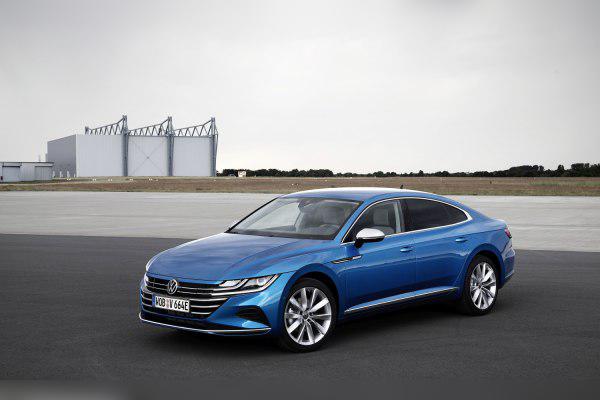
VW 2.0 TSI (EA888 / DLRB) in the Arteon: Experiences, issues, fuel consumption and buying used
Key points (TL;DR)
- Powerful and flexible: With 268 hp, this engine offers an excellent balance between performance and everyday usability.
- Chain, not belt: It has a timing chain which is much more reliable than on older generations, but still needs to be checked.
- Coolant leaks: The most common issue is the thermostat housing and water pump.
- Oil consumption: Expect mild oil consumption, which is typical for TSI engines, but sudden increases are a red flag.
- Transmission (variations): Although DSG is most common in Europe, the 268 hp rating and “Tiptronic” label often indicate a model with a traditional 8-speed automatic transmission for specific markets (e.g. North America), while Europe uses a 7-speed DSG.
- Recommendation: An excellent choice for those who want petrol performance in a sedan body, provided it is regularly maintained.
Contents
Introduction
The engine with the internal code EA888 is the backbone of the Volkswagen Group when it comes to powerful four-cylinder petrol engines. The variant we’re talking about today, specific for its output of 268 hp (DLRB), is most commonly associated with the facelifted Volkswagen Arteon from 2020. This is an engine that tries to reconcile two worlds: relaxed cruising in a luxurious fastback and a sporty character when you press the accelerator pedal.
It’s important to note that this specification (268 hp with a Tiptronic transmission) is often characteristic of markets outside the strictest EU regulations (such as North America), while in Europe you more often see 272 hp or 280 hp variants paired exclusively with a DSG gearbox. However, the core of the engine is identical, and the issues and maintenance are almost universal across the EA888 Gen 3B/Gen 4 family.
Technical specifications
| Characteristic | Data |
|---|---|
| Engine displacement | 1984 cc (2.0 L) |
| Power | 197–200 kW (268 hp) |
| Torque | 350 Nm |
| Engine code | DLRB (EA888 Gen 3B/Gen 4) |
| Fuel injection system | Direct injection (TSI/FSI) + multi-point (depending on market) |
| Induction | Turbocharger + intercooler |
Reliability and maintenance
Timing system: chain or belt?
This engine uses a timing chain. Unlike the notorious early TSI versions (EA888 Gen 1 and 2), this engine (Gen 3B/Gen 4) has a significantly revised and reinforced chain and tensioner system. Still, the chain is not “lifetime”. A detailed check of chain stretch via diagnostics or visually is recommended at around 120,000–150,000 km. If you hear rattling on a cold start that lasts longer than 2–3 seconds, that’s a sign you need urgent service.
Most common failures
The biggest weak point of this engine is the thermostat module and water pump. The housing is made of plastic which deforms due to repeated heating and cooling cycles, leading to coolant leaks. The symptom is a dropping coolant level without visible puddles under the car (because the fluid evaporates on the hot block) or a “sweet” smell from the engine bay.
Another frequent issue is the PCV valve (oil vapor separator). When it fails, the engine may start consuming oil, idling roughly, or blowing out the crankshaft seal due to excessive crankcase pressure.
Service intervals and oil
This engine takes approximately 5.7 liters of oil. Factory intervals are often set at 30,000 km (Long Life), but as an experienced editor I advise you to forget that. Due to the high operating temperature of the turbo and direct injection, change the oil and filter every 10,000 to 15,000 km at most, or once a year.
The recommended viscosity is usually 0W-20 (VW 508.00 standard) for fuel economy, although many owners in warmer regions switch to 5W-30 (VW 504.00) for better protection under high loads (check your owner’s manual).
Oil consumption
Yes, EA888 engines do consume some oil, but not like they used to. Consumption of 0.5 to 1 liter per 8,000–10,000 km is considered completely normal and acceptable. Anything above that (e.g. a liter per 2,000 km) points to an issue with the piston rings, turbocharger or PCV valve.
Spark plugs
As this is a high-performance turbo petrol engine, the spark plugs are exposed to significant thermal stress. The recommended replacement interval is every 60,000 km. If the car is tuned, the interval should be halved to 30,000 km. Use only iridium plugs to factory specification (NGK or Bosch).
Specific parts (costs)
Dual-mass flywheel
Yes, this engine in the Arteon, regardless of whether it is paired with a DSG or a traditional automatic, has a dual-mass flywheel. Its role is to dampen engine vibrations before they reach the transmission. Failure symptoms include a metallic knocking noise at idle that disappears when you rev the engine or shut it off. Replacement is expensive (varies by market).
Injection system and injectors
This engine uses a high-pressure direct injection system. The injectors themselves are generally reliable but sensitive to poor fuel quality. The main side effect of direct injection is carbon buildup on the intake valves, because fuel does not wash the valves. This manifests as power loss and rough running after 100,000+ km. The solution is mechanical cleaning of the intake ports (walnut shell blasting).
Turbocharger
The engine uses a single turbocharger (usually an IHI IS20 or a similar variant for this power level). With proper maintenance, the turbo’s lifespan is usually equal to that of the engine. Its biggest enemies are hard acceleration on a cold engine and shutting off a very hot engine immediately after fast driving.
GPF/OPF and EGR
This model (especially from 2018/2019 onwards) has a GPF (Gasoline Particulate Filter), which is the petrol equivalent of a DPF, in order to meet Euro 6 standards. Unlike diesels, GPFs rarely clog because exhaust gas temperatures in petrol engines are much higher, which facilitates passive regeneration. An EGR valve is present but integrated, and causes fewer problems than on diesels.
There is no AdBlue system on this engine; that is reserved exclusively for diesel units.
Fuel consumption and performance
City driving: Don’t be fooled by brochure figures. In a heavy Arteon with 4MOTION and 268 hp, real-world city consumption is between 11 and 14 liters per 100 km, depending on traffic and how heavy your right foot is.
Is the engine “lazy”? Absolutely not. With 350 Nm of torque available from low revs (around 1,600 rpm), this engine moves the Arteon’s body with ease. Overtaking is safe and quick.
Highway: This is the natural habitat of this car. At 130 km/h the engine spins at a low 2,000–2,200 rpm (depending on the gearbox). Fuel consumption is then reasonable, at around 7.5 to 8.5 liters per 100 km. Sound insulation is excellent and the engine is barely audible.
Additional options and modifications
LPG conversion
Although technically possible, converting this engine to LPG is expensive and complicated. Due to direct injection, you need a system that either injects liquid gas directly through the petrol injectors or a system that uses a mixture of petrol and gas (to cool the injectors). The investment is large (often over 1,000 EUR), and the payback is questionable unless you cover huge mileages. Not recommended.
Chiptuning (Stage 1)
EA888 engines are known for their huge tuning potential. A safe Stage 1 remap can raise power from the stock 268 hp to around 300–310 hp, and torque to over 420 Nm. However, keep in mind that this puts additional stress on the turbo, spark plugs and transmission. Before tuning, always check the condition of the chain and turbo.
Transmission: failures and maintenance
Type of transmission
We need to be precise here. The initial data mentions “Tiptronic”.
1. North American models (US spec): Use a traditional 8-speed automatic transmission (Aisin). It is robust and comfortable (“slushbox”), but slower than a DSG.
2. European models: Although the word Tiptronic is sometimes used colloquially for manual shifting, 99% of Arteons with this engine in Europe have a 7-speed DSG (DQ381) dual-clutch gearbox.
Maintenance and failures
For the 8-speed Aisin automatic: Although manufacturers often claim the oil is “lifetime”, it isn’t. Change the oil every 80,000–100,000 km to avoid harsh shifts (“kicking”) and slipping.
For the 7-speed DSG (DQ381): Maintenance is critical. The gearbox oil and filter must be changed every 60,000 km (or 120,000 km depending on the exact sub-variant and oil type, but 60k is the safe zone). The most common failures are the mechatronics unit, which fails due to overheating or old oil, and the clutch pack, which wears out. Repairing a DSG can be very expensive (often in the 1,000–2,000 EUR range).
Buying used and conclusion
When buying a used Arteon with this engine, be sure to pay attention to the following:
- Cold start: Listen to the engine when it is completely cold. Chain rattle? Rough idle?
- Coolant leaks: Look under the intake manifold for traces of dried coolant (white/pink crust) on the engine block – a sign that the water pump is leaking.
- Transmission service history: If there is no proof that the transmission oil was changed on time, skip that car.
- Exhaust smoke: Bluish smoke under hard acceleration or after idling indicates oil consumption.
Conclusion: The VW Arteon 2.0 TSI (268 hp) is a fantastic car for long-distance driving. It offers a premium feel, serious power and an attractive design. The engine is technologically advanced and more reliable than its predecessors, but it requires a meticulous owner who won’t skimp on quality oil and regular maintenance of the cooling system and transmission. If you’re looking for cheap running costs in city traffic, this is not the car for you. If you’re looking for a powerful cruiser, this is the right choice.
Was this content useful to you?
Your opinion helps us to improve the quality of the content.