EA390 / CDVC Engine
- Engine
- 3597 cm3
- Aspiration
- Naturally aspirated engine
- Fuel
- Petrol (Gasoline)
- Fuel injection system
- Direct injection
- Power
- 276 hp @ 6200 rpm
- Torque
- 361 Nm @ 2750 rpm
- Cylinders
- 6
- Valves
- 24, 4 per cylinder
- Cylinders position
- V-engine
- Valvetrain
- DOHC
- Oil capacity
- 5.5 l
- Coolant
- 20 l
- Systems
- Start & Stop System
# Vehicles powered by this engine
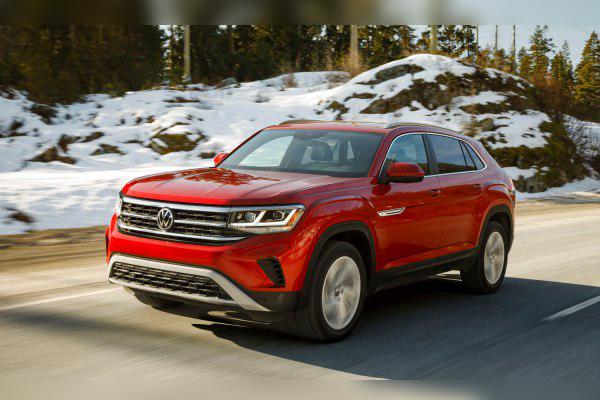

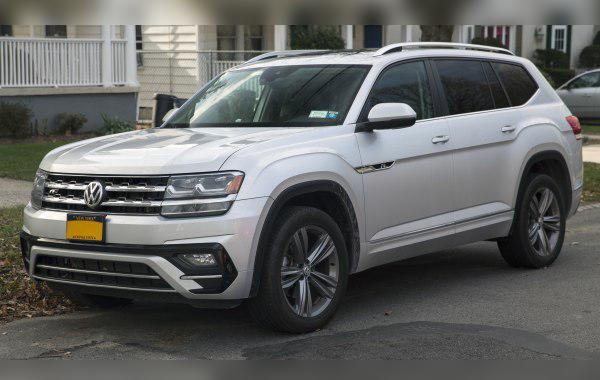
VW 3.6 FSI VR6 (EA390 / CDVC) – Experiences, issues, fuel consumption and maintenance
Volkswagen’s 3.6‑liter VR6 engine, known under the internal designation EA390 (engine code CDVC in Atlas models), represents the “last of the Mohicans” when it comes to large naturally aspirated engines in the modern VW lineup. While Europe has turned to smaller turbocharged engines (downsizing), this powerplant has continued to live primarily on the North American market in the VW Atlas (and Atlas Cross Sport) model. This is an old-school engine: large displacement, linear power delivery and a sound that no four‑cylinder can imitate.
However, is this massive gasoline engine really the right choice for you, considering fuel prices and maintenance costs? Below is a detailed technical analysis.
Key points (TL;DR)
- Durability: Extremely robust engine that easily covers high mileage with regular maintenance.
- Fuel consumption: High. This is a large naturally aspirated engine in a heavy vehicle; expect double‑digit fuel consumption in liters per 100 km.
- Timing drive: Uses a chain. Although better than on older VR6 engines, it still requires attention at higher mileage and is located on the hard‑to‑reach side (towards the transmission).
- Direct injection: FSI technology means potential issues with carbon buildup on intake valves.
- Transmission: In the Atlas it is paired with a conventional Aisin 8‑speed automatic (not DSG), which is excellent for comfort and towing, but a bit slower in sporty driving.
- Recommendation: Ideal for those who want simplicity without a turbo, often drive on the open road or tow a trailer, and are not primarily concerned with fuel consumption.
Contents
- Technical specifications
- Reliability and maintenance
- Specific components and systems
- Fuel consumption and performance
- Additional options and modifications
- Transmission and drivetrain
- Buying used and conclusion
Technical specifications
| Specification | Value |
|---|---|
| Engine displacement | 3597 cc (3.6 liters) |
| Configuration | VR6 (narrow V angle of 10.6 degrees) |
| Power | 206 kW (276 hp) |
| Torque | 361 Nm at 2750 rpm |
| Engine code | CDVC (EA390 family) |
| Injection system | FSI (Fuel Stratified Injection) – Direct injection |
| Induction | Naturally aspirated – No turbo |
Reliability and maintenance
Does this engine have a timing belt or a chain?
The EA390 engine uses a timing chain. Specifically, the system consists of two chains (upper and lower) located at the rear of the engine, towards the transmission (flywheel side). This is an engineering challenge because if the chain or guides need to be replaced, the transmission has to be removed, and often the entire engine has to come out. Although the chains on this generation of VR6 engines are significantly more durable than on the old R32 models, they are still prone to stretching if the oil is not changed regularly. Rattling at cold start is the first warning sign.
What are the most common failures on this engine?
Although mechanically very strong, there are peripheral components that tend to cause problems:
- PCV valve (oil vapor separator): The membrane integrated into the valve cover often fails. Symptoms include a whistling noise from the engine, rough idle and increased oil consumption. The entire valve cover often has to be replaced.
- Thermostat and thermostat housing: Made of plastic and prone to cracking and coolant leaks. If you smell coolant, this is the first place to check.
- Carbon buildup: Due to direct injection (FSI), fuel does not “wash” the intake valves. Over time, carbon deposits build up, which can reduce power and cause hesitation at cold start. Cleaning (walnut shell blasting) is needed every 100,000 – 120,000 km.
- Ignition coils: They can fail, causing the engine to run on fewer cylinders (misfire). It’s not an expensive repair, but it is annoying.
At what mileage is the “major service” done?
On this engine there is no classic “major service” (as with a belt) at a fixed interval. The chain is designed to last “for life” (in practice 200,000 – 300,000 km). However, the serpentine belt (accessory belt) that drives the alternator and A/C, together with the tensioners and water pump, should be inspected and replaced at around 100,000 – 120,000 km or every 5–7 years.
How many liters of oil does this engine take and which grade is recommended?
The engine takes approximately 5.5 to 6.0 liters of engine oil (always check the dipstick). The recommended grade is usually 5W‑40 or 0W‑40, and the oil must meet the VW specification (most often VW 502.00 or 504.00, check the owner’s manual). It is recommended to change the oil at a maximum of 10,000 km to 12,000 km, and not at extended “Long Life” intervals, in order to preserve the chain.
Does it consume oil between services?
Yes, large‑displacement FSI engines tend to consume oil. Consumption of 0.5 liter to 1 liter per 5,000 – 7,000 km is considered acceptable and “normal” for this engine, especially if driven more aggressively. If consumption suddenly jumps (e.g. 1 liter per 1,000 km), the problem is likely in the PCV valve or piston rings, which requires immediate attention.
At what mileage should the spark plugs be replaced?
Since this is a gasoline engine with direct injection, the spark plugs are under higher stress. Replacement is recommended every 60,000 km to 90,000 km (or every 4–6 years). Use only iridium or platinum spark plugs according to factory specification.
Specific components (costs)
Does the engine have a dual‑mass flywheel?
This is a trick question that depends on the transmission. In the VW Atlas, this engine is paired with a conventional automatic transmission (with a torque converter). Such transmissions use a flexplate and torque converter, not a classic dual‑mass flywheel (DMF) that fails on DSG or manual transmissions. So you do not have the cost of replacing a dual‑mass flywheel as with diesels or DSG models.
What kind of injection system does it have and are the injectors problematic?
The system is high‑pressure direct injection (FSI/TSI system without turbo). The injectors are generally reliable, but sensitive to poor fuel quality. Injector failure manifests as fuel leaking into the cylinder (oil dilution with gasoline) or poor spray pattern. Replacing injectors is expensive (depends on the market, but think “expensive”), but fortunately it is not a common failure.
Does this engine have a turbocharger?
No. This is a naturally aspirated engine. There is no turbocharger, no intercooler, no high‑pressure boost hoses that can burst. This is one of the biggest advantages of this engine – the simplicity of the intake system significantly reduces potential long‑term maintenance costs.
Does this model have a DPF filter or EGR valve?
As a gasoline engine, it does not have a DPF filter (which is intended for diesels). Newer versions (Euro 6d‑TEMP in Europe) may have a GPF (Gasoline Particulate Filter), but the Atlas is primarily a vehicle for the North American market where GPF was not mandatory in the early production years (check by VIN). EGR function is often achieved via variable valve timing (internal recirculation), so there is no classic EGR valve that clogs with soot like on older diesels.
Does this engine use AdBlue?
No, this engine does not use AdBlue. AdBlue is used exclusively on diesel engines (SCR catalysts). Exhaust system maintenance comes down to checking the catalytic converters and oxygen sensors.
Fuel consumption and performance
What is the real‑world fuel consumption in city driving?
Be prepared for high numbers. The VW Atlas is a heavy SUV (over 2 tons). In pure city driving, real‑world consumption ranges from 13 to 17 l/100 km, depending on traffic and how heavy your right foot is. In winter and on short trips it can be even higher.
Is this engine “lazy” for the weight of the vehicle?
The engine is not “lazy”, but it has a different character compared to modern turbo engines. With 276 hp and 361 Nm, it has enough power, but the torque is delivered linearly. There is no sudden “kick in the back” at 1,500 rpm like with 2.0 TSI or 3.0 TDI engines. To get the most out of it, you need to rev it above 3,500–4,000 rpm. For normal driving it is perfectly adequate, but overtaking requires a more decisive push on the accelerator (kickdown).
How does the engine behave on the highway and at what rpm does it cruise?
This is the engine’s natural habitat. On the highway it is extremely smooth and quiet. Thanks to the 8‑speed automatic transmission, at a speed of 130 km/h the engine runs at about 2,200 – 2,400 rpm (depending on gradient and load). Fuel consumption on the open road drops to a more acceptable 9 – 11 l/100 km.
Additional options and modifications
Is this engine suitable for LPG conversion?
It is possible, but expensive and complicated. Due to direct injection (FSI), a regular sequential LPG system cannot be installed. You need a system specifically designed for FSI engines that either injects liquid gas directly through the gasoline injectors (the best but most expensive solution, e.g. Vialle or Prins) or a system that runs on a mixture of gas and gasoline (e.g. 80% LPG, 20% gasoline) to cool the gasoline injectors. The installation cost is high (very expensive), so the cost‑effectiveness must be carefully calculated.
How much can this engine be safely tuned (Stage 1)?
On naturally aspirated engines, “chipping” (remap) does not bring dramatic gains as on turbo engines. Realistically, you can expect an increase of 10 to 15 hp and about 15–20 Nm of torque. However, a remap can significantly improve throttle response and “smooth out” the power curve, making the driving experience more pleasant, but do not expect the car to turn into a race car.
Transmission
Which transmissions are used?
In VW Atlas and Atlas Cross Sport models with the 3.6 VR6 engine, a Japanese‑made Aisin 8‑speed automatic transmission (code 09P / AQ450) comes as standard. This is not a DSG dual‑clutch transmission. A manual gearbox is not an option with this engine in these models.
What are the most common issues with the automatic transmission?
The Aisin 8‑speed is generally more reliable and robust than DSG for heavy vehicles and towing. It does not have a mechatronic unit that often fails. Problems are rare, but you may experience harsher shifts (“thumping”) if the oil overheats or is old. Software updates (transmission reflash) at an authorized service center often solve issues with indecisive shifting.
Clutch replacement cost and maintenance?
As mentioned, there is no conventional clutch or dual‑mass flywheel that wears out as a consumable. Torque converter overhaul is done only in case of serious failure at high mileage.
At what mileage should the transmission be serviced and the oil changed?
Although VW often states that the transmission oil is “fill for life”, Aisin (the transmission manufacturer) and experienced mechanics recommend changing the oil every 60,000 km to 80,000 km. Regular oil changes are key to the longevity of this transmission, especially if you tow a trailer or drive in heavy city traffic.
Buying used and conclusion
When buying a used VW Atlas with the 3.6 engine, pay attention to the following:
- Cold start: Listen to the engine when it is completely cold. Chain rattling lasting longer than 2–3 seconds after startup is a sign that the chain or tensioners are due for replacement (a very expensive repair).
- Coolant leaks: Look for white or pink traces of dried coolant around the thermostat housing and water pump.
- Diagnostics: Check for fault codes related to misfires or the catalytic converter (P0420), which may indicate bad injectors or a clogged catalyst.
Conclusion: The EA390 3.6 VR6 engine is an excellent choice for drivers who value reliability and simplicity over low fuel consumption. If you do not mind fuel consumption of around 15 liters per 100 km in the city and higher registration costs (due to displacement), you will get an engine that, with regular oil changes, is mechanically “indestructible” and sounds fantastic. For those who cover a lot of city miles, the 2.0 TSI may be a more economical option, but for towing and long‑distance driving, the VR6 is king.
Was this content useful to you?
Your opinion helps us to improve the quality of the content.