DCGA Engine
- Engine
- 1984 cm3
- Aspiration
- Turbocharger, Intercooler
- Fuel
- Petrol (Gasoline)
- Fuel injection system
- Direct injection
- Power
- 235 hp @ 4500 rpm
- Torque
- 350 Nm @ 1600 rpm
- Cylinders
- 4
- Valves
- 16, 4 per cylinder
- Cylinders position
- Inline
- Valvetrain
- DOHC
- Oil capacity
- 4.7 l
- Coolant
- 20 l
- Systems
- Start & Stop System
# Vehicles powered by this engine
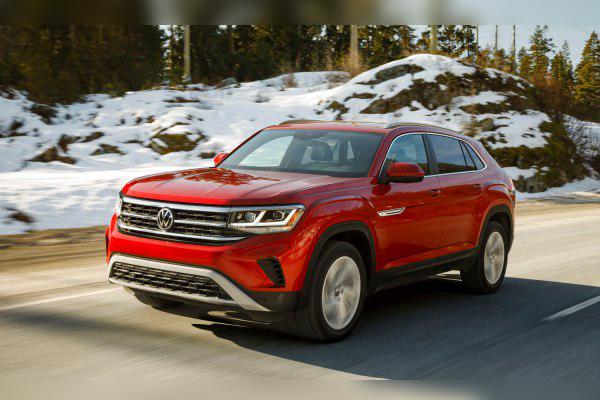


Volkswagen 2.0 TSI (DCGA) – Experiences, problems, fuel consumption and used car buying guide
Key points (TL;DR)
- Powerful but stressed: With 235 hp and 350 Nm, this engine is a “sweet spot”, but in the heavy Atlas it works under more load than in a Golf GTI.
- Timing chain: Uses a timing chain. Although more reliable than older generations, it still needs to be checked after 150,000 km.
- Water pump: The “Achilles’ heel” of this engine. The thermostat housing is plastic and prone to coolant leaks.
- Direct injection: Prone to carbon buildup on intake valves, which requires cleaning at higher mileage.
- Transmission: Mostly paired with an 8-speed automatic (Aisin), which is smoother but slower than DSG.
- Recommendation: An excellent choice if you want to avoid diesel, but it requires strict regular maintenance and high-quality oil.
Contents
Introduction and applications
The engine with the code DCGA belongs to the modern EA888 Gen 3B (B-cycle) family from the Volkswagen Group. This is a 2.0-liter turbocharged gasoline engine designed to replace larger six-cylinder units, offering similar torque with lower fuel consumption. What’s specific about this engine code is that it is primarily installed in heavy SUVs such as the Volkswagen Atlas and Atlas Cross Sport.
Unlike classic GTI engines, the DCGA uses the so-called “Budack cycle” (a variation of the Miller cycle), where the intake valves close earlier to improve fuel efficiency at cruising speeds. This is an engine that has to reconcile two opposites: it has to pull a body weighing over 2 tons while still meeting strict emissions standards.
Technical specifications
| Parameter | Value |
|---|---|
| Displacement | 1984 cc (2.0 l) |
| Power | 173 kW (235 hp) @ 4500-6200 rpm |
| Torque | 350 Nm @ 1600-4400 rpm |
| Engine code | DCGA |
| Injection type | TSI (Turbo Stratified Injection) – Direct injection |
| Charging system | Turbocharger + intercooler |
| Number of cylinders/valves | 4 / 16 |
Reliability and maintenance
Does this engine have a timing belt or a chain?
The DCGA engine uses a timing chain. This is the third generation (Gen 3B) of EA888 engines, where the chain-stretch issues that plagued older models (up to 2012/2013) have largely been resolved. The chain is designed to last the life of the engine, but in practice, especially in heavy vehicles such as the Atlas, it is recommended to check the condition of the chain and tensioner after 150,000 km. A rattling noise on cold start is the first sign that the chain needs replacement.
What are the most common failures on this engine?
The biggest issue with this engine is the water pump and thermostat module. The housing is made of plastic, which deforms over time due to heating and cooling cycles, leading to coolant leaks. If you smell coolant or see puddles under the car, this is the first suspect.
Another common problem is the PCV valve (crankcase ventilation/oil separator). When it fails, the engine may start consuming oil, run rough at idle, or even blow out the crankshaft seal due to excessive crankcase pressure.
At what mileage is the major service done?
Since it has a chain, a classic “major service” (timing belt replacement) does not exist in that sense. However, the serpentine belt, tensioners and water pump are usually inspected and replaced between 100,000 and 120,000 km. If the chain becomes noisy, a timing chain kit replacement is done as needed, which can be any time after 150,000 km.
How many liters of oil does this engine take and which grade is recommended?
This engine takes approximately 5.7 to 6.0 liters of engine oil (depending on the exact oil pan variant). For DCGA (B-cycle) engines, Volkswagen often recommends a specific, “thinner” oil for fuel economy, usually 0W-20 with the specification VW 508.00 / 509.00. This oil is often greenish in color. Alternatively, 5W-30 (VW 504.00) can be used, but only if the owner’s manual for your specific market allows it.
Does it consume oil between services?
EA888 Gen 3B engines are much better than their predecessors in this regard. Still, consumption of 0.5 to 1 liter per 10,000 km is considered acceptable and normal, especially if driven aggressively or in heavy city traffic. A sudden increase in consumption indicates a problem with the PCV valve or piston rings.
At what mileage should the spark plugs be replaced?
On turbocharged direct-injection gasoline engines, spark plugs are under heavy stress. The recommended replacement interval is 60,000 km or 4 years. Using worn spark plugs can lead to coil pack failure (coils are also a consumable item on these engines).
Specific parts and costs
Does this engine have a dual-mass flywheel?
This case is specific. Since this engine in the Atlas is paired with a traditional automatic transmission (with a torque converter), it does not have a dual-mass flywheel in the sense that manual or DSG gearboxes do. Instead, it has a flex plate (automatic transmission flywheel), which is much simpler and rarely fails. This is good news for your wallet.
What kind of injection system does it have and are the injectors problematic?
The engine uses direct fuel injection at high pressure. The injectors are generally reliable but sensitive to poor fuel quality. The main side effect of this system is carbon buildup on the intake valves. Symptoms include rough idle, loss of power and hesitation under acceleration. Cleaning the intake valves by walnut blasting is often needed around 100,000–120,000 km.
Does this engine have a turbocharger and what is its lifespan?
It has a single turbocharger (usually IHI or similar). Its lifespan is good and often exceeds 200,000 km with regular oil changes. The turbo is water-cooled, which helps durability. Still, after hard driving on the highway, it is recommended to let the engine idle for a minute or two before switching it off.
Does this model have a DPF filter or an EGR valve?
Being a gasoline engine, it has no DPF. However, newer models (depending on the market, e.g. EU models after 2018/2019) may have a GPF (Gasoline Particulate Filter). DCGA in US-spec Atlas versions often does not have a GPF, which simplifies maintenance. EGR function is often handled via variable valve timing (internal EGR), so there is no classic EGR valve that clogs up like on diesels.
Does this engine use AdBlue?
No, this is a gasoline engine and does not use AdBlue fluid.
Fuel consumption and performance
What is the real-world fuel consumption in city driving?
Expect higher numbers. The VW Atlas is a heavy and large vehicle. Real-world city consumption is between 11 and 14 liters per 100 km. In stop-and-go traffic, this figure can easily exceed 15 liters. The start-stop system helps, but physics is unforgiving.
Is this engine “lazy” for the weight of the car?
On paper, 2.0 liters seems small for such a big car, but in practice the engine is not lazy. With 350 Nm of torque available from just 1600 rpm, the car pulls well from a standstill. However, at higher speeds (overtaking above 100 km/h) you can feel the lack of displacement compared to the VR6 engine. For normal family driving it is perfectly adequate, but don’t expect sports-car performance.
How does the engine behave on the highway and at what rpm does it cruise at 130 km/h?
Thanks to the 8-speed automatic transmission, the engine is relaxed. At 130 km/h, the revs are usually around 2,000–2,200 rpm. This contributes to cabin quietness and brings highway fuel consumption down to about 8.5–9.5 liters.
Additional options and modifications
Is this engine suitable for LPG conversion?
Since the engine has direct injection (TSI/FSI), LPG conversion is complicated and expensive (very expensive). A special system is required that either injects a small amount of gasoline together with LPG (to cool the gasoline injectors) or uses a liquid-phase LPG injection system. Considering the cost of installation (often over 1000 EUR) and the complexity, it rarely pays off unless you cover very high annual mileage.
How far can this engine be safely tuned (Stage 1)?
The EA888 platform is known for its strong tuning potential. With a Stage 1 remap, this engine can safely be taken to around 280–300 hp and 420–440 Nm of torque. However, keep in mind that the higher torque further stresses the automatic transmission and drivetrain components in a heavy vehicle like the Atlas.
Transmission
Which manual and automatic gearboxes are paired with this engine?
With the DCGA engine in the VW Atlas, you almost exclusively get an 8-speed automatic transmission from the Japanese manufacturer Aisin (codes AQ450 / 09P). This is NOT a DSG dual-clutch gearbox. A manual transmission is not offered with this configuration.
What are the most common automatic transmission issues?
The Aisin 8-speed is a robust, traditional automatic. It is not as quick as a DSG, but it is more reliable for towing and light off-road use. The most common issues are related to oil overheating under heavy use (towing a trailer) and sometimes harsher shifts at low speeds (a “thump” when coming to a stop). Regular oil changes prevent most potential problems with solenoids.
How much does clutch replacement cost?
Since this is a torque-converter automatic, it does not have clutch discs that wear out like in a manual gearbox. There are clutch packs inside the transmission, but they are only serviced during a full transmission overhaul (very expensive), which typically does not occur before 250,000–300,000 km with proper maintenance.
At what mileage should the transmission be serviced and the oil changed?
Although the manufacturer often claims the oil is “lifetime fill”, do not believe that. The automatic transmission fluid should be changed every 60,000 to 80,000 km. This is crucial for the longevity of the transmission, especially in a heavy vehicle.
Used car buying tips and conclusion
Before buying a used VW Atlas with the DCGA engine, pay attention to the following:
- Visual inspection: Remove the plastic engine cover and use a flashlight to inspect the water pump housing (at the front of the engine, under the intake manifold). Traces of white or pink residue are a sign of leakage.
- Cold start: Start the engine when it is completely cold. Listen for chain rattle in the first few seconds. If the rattle does not disappear immediately, the chain is stretched.
- Diagnostics: Check for any fault codes related to “misfire”, which may indicate dirty intake valves (carbon buildup) or bad injectors/spark plugs.
Final conclusion
The 2.0 TSI (DCGA) engine is an excellent compromise between performance and registration/tax costs. It offers enough power for everyday driving but requires a meticulous owner. If you are willing to change the oil preventively every 10,000 km and are aware of the potential cost of the water pump, this engine will serve you better and more quietly than diesel equivalents. It is ideal for those who want comfortable driving and do not cover hundreds of thousands of highway kilometers per year (where a diesel would be more economical).
Was this content useful to you?
Your opinion helps us to improve the quality of the content.