CUAA Engine
- Engine
- 1968 cm3
- Aspiration
- Turbocharger, Intercooler
- Fuel
- Diesel
- Fuel injection system
- Diesel Commonrail
- Power
- 110 hp @ 3500 rpm
- Torque
- 250 Nm
- Cylinders
- 4
- Valves
- 16, 4 per cylinder
- Cylinders position
- Inline
- Oil capacity
- 4.6 l
- Systems
- Particulate filter
# Vehicles powered by this engine

2.0 TDI (110 HP) CUAA / CUUA: Ownership impressions, issues, fuel consumption and used-buying guide
Key points (TL;DR)
- Longevity: This is a “de‑stressed” engine (2.0 displacement with only 110 HP), which gives it a long service life with regular maintenance.
- Fuel consumption: Extremely economical, especially on open roads, where it easily drops below 5 l/100 km.
- AdBlue system: As a Euro 6 engine, it has an SCR catalyst and AdBlue system, which can be expensive to repair (heaters, pumps).
- Water pump: A common issue with this EA288 generation is leaking or sticking of the variable water pump before the scheduled timing belt service interval.
- Performance: It’s not a racer. 110 HP is enough for relaxed cruising in a convertible, but for overtaking you’ll need to downshift.
- Recommendation: An ideal choice for drivers who cover a lot of mileage and want the reliability of the 2.0 block with low registration and fuel costs.
Contents
- Introduction and applications
- Technical specifications
- Reliability and maintenance
- Specific components and costs
- Fuel consumption and performance
- Options and modifications
- Gearbox (manual and DSG)
- Buying used and conclusion
Introduction and applications
The engine in question belongs to the EA288 family of Volkswagen diesels. Although you mentioned the code CUAA (which is sometimes associated with more powerful BiTDI versions, but also with specific 110 HP variants depending on market and model year, more often under codes CUUA or CUUB for this power output), here we focus on the 110 HP (81 kW) version.
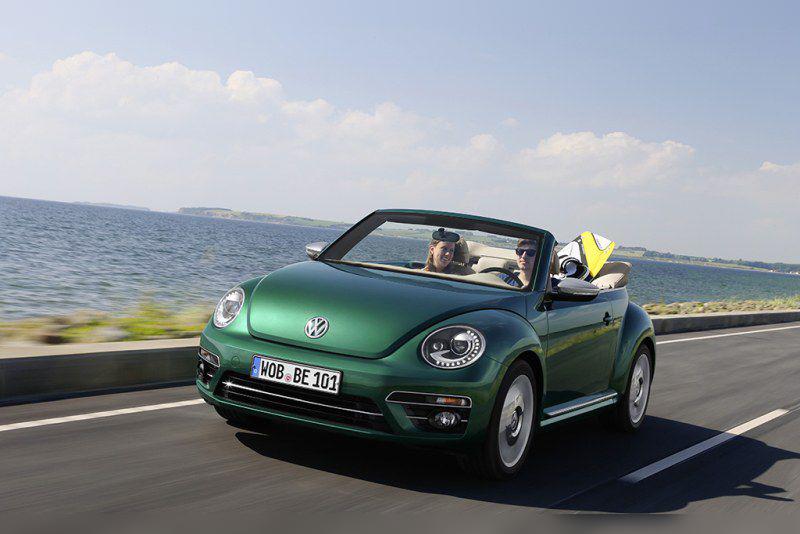
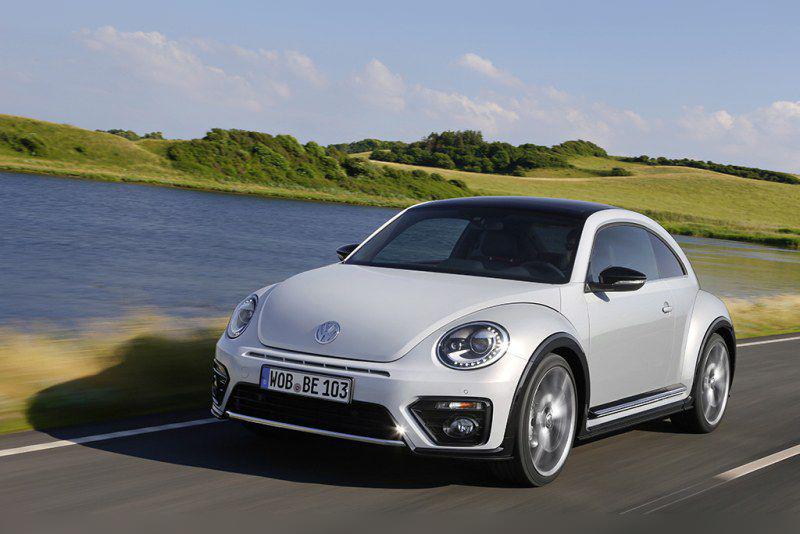
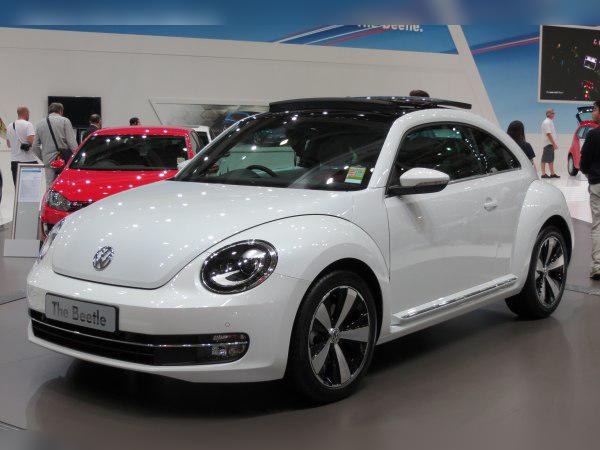
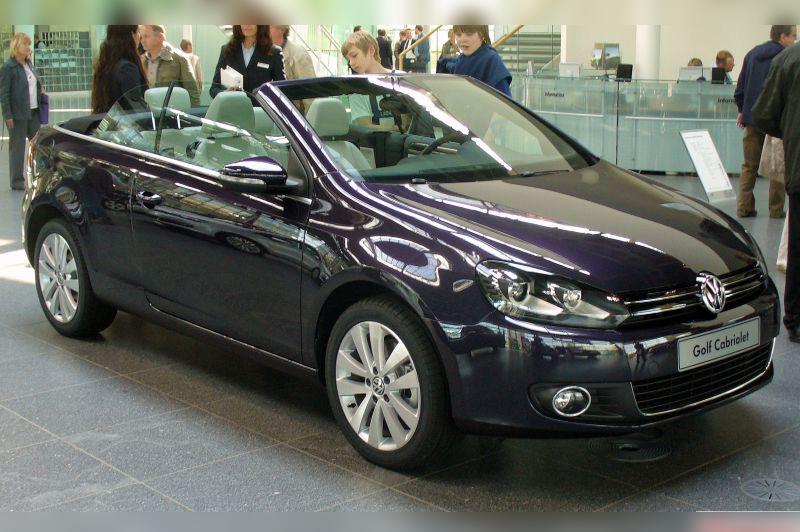
Installed in “lifestyle” models such as the VW Beetle and Golf VI Cabriolet, this engine is a rational choice. Instead of the smaller 1.6 TDI, which often struggles with heavier bodies, VW offered a “detuned” version of the 2.0 TDI here. That means you get the robustness of the larger block, but with power tailored to relaxed, roof‑down driving. This is an engine for enjoying the scenery, not for drag racing at traffic lights.
Technical specifications
| Specification | Value |
|---|---|
| Engine displacement | 1968 cc (2.0 l) |
| Power | 81 kW / 110 HP |
| Torque | 250 Nm (typically at 1500–3000 rpm) |
| Engine codes | CUAA / CUUA / CUUB (EA288 family) |
| Fuel type | Diesel (Euro 6 standard) |
| Induction | Turbocharger (VGT) + intercooler |
| Injection | Common rail (direct) |
Reliability and maintenance
Timing belt or chain?
This engine uses a timing belt to drive the camshafts. That’s good news because the system is quieter and generally cheaper to maintain than the problematic chains from older generations. However, if the belt snaps, it will destroy the engine, so timely replacement is crucial.
Most common issues
Although the engine is reliable, owners should pay attention to:
- Water pump: EA288 engines use a variable water pump (with a sleeve that moves over the impeller). This sleeve often gets stuck, which leads to overheating, or the pump simply starts leaking before the major service interval.
- Coolant leaks: Besides the pump, the thermostat housing and EGR cooler are known spots where coolant can be lost.
- Exhaust gas temperature sensors: They often fail, which triggers the Check Engine light and prevents DPF regeneration.
Major service (timing belt)
The factory interval for timing belt replacement is often optimistic (210,000 km), but in real‑world use, due to driving conditions and material aging, a major service is recommended at 160,000–180,000 km or every 5 to 7 years, whichever comes first. Always replace the water pump together with the belt.
Oil and oil consumption
The engine takes approximately 4.6 to 5.0 liters of oil (depending on filter and sump size for the specific code). You must use 5W‑30 or 0W‑30 oil that meets the strict VW 507.00 specification (because of the DPF).
As for oil consumption, these engines are much better than the older pump‑duse units. Consumption of about 0.5 liters per 10,000 km is perfectly acceptable and normal. If it uses more than 1 liter per 2–3 thousand kilometers, that points to an issue with piston rings or the turbo.
Injectors (durability)
The system uses Bosch or piezoelectric injectors. They have proven to be very durable and often last over 250,000 km without overhaul, provided you use good‑quality fuel. First symptoms of failure are rough idle (the rev needle “wanders”) and increased smoke under hard acceleration.
Specific components (costs)
Dual‑mass flywheel
Yes, this engine has a dual‑mass flywheel, regardless of whether it is paired with a manual or DSG gearbox. Its role is to dampen diesel vibrations. Symptoms of failure are metallic rattling when starting/stopping the engine and vibrations in the clutch pedal. Replacement is expensive (exact amount depends on the market, but think in terms of “very expensive” as standard).
Turbocharger
The engine uses a single turbocharger with variable geometry. Its lifespan is long (often as long as the engine itself), provided the oil is changed regularly (every 15,000 km at most, not 30,000 km as the factory sometimes claims). Whistling from the turbo when cold is an early warning sign.
DPF, EGR and AdBlue
Since this engine was fitted to models from 2015/2016 onwards (Euro 6), the after‑treatment system is complex:
- DPF filter: Standard equipment. If the car is driven only in the city (quite common for convertibles), the DPF can clog up. The symptom is a warning light and the car going into “safe mode” (reduced power).
- EGR valve: Prone to soot build‑up. A clogged EGR causes jerking while driving and higher fuel consumption.
- AdBlue (SCR): Yes, this engine almost certainly has an AdBlue system. This is a weak point. The heater in the AdBlue tank often burns out, and the pump can fail due to urea crystallisation. AdBlue repairs are expensive because the whole tank module is often replaced. Proper maintenance means regularly topping up good‑quality fluid so the pump doesn’t run “dry”.
Fuel consumption and performance
Real‑world fuel consumption
- City driving: Expect between 6.5 and 8.0 l/100 km. The Beetle and Golf Cabrio are heavy cars (over 1400 kg), so stop‑and‑go traffic pushes consumption up.
- Open road: This is where the engine shines. Consumption drops to 4.2 to 5.0 l/100 km with relaxed driving.
Is the engine “sluggish”?
With 250 Nm of torque, the engine is not “sluggish” in the sense that it struggles to move the car, but it’s not sporty either. The acceleration feels linear. For overtaking on country roads you need to plan ahead, especially if the car is fully loaded and the roof is down (worse aerodynamics). For relaxed driving it is more than adequate.
On the motorway
This is an excellent engine for cruising. At 130 km/h, in top gear (depending on the gearbox), it spins at around 2,000 to 2,200 rpm. The cabin is relatively quiet (as much as a fabric roof allows), and fuel consumption is around 5.5–6.0 l/100 km.
Options and modifications
Remap (Stage 1)
This engine is an excellent candidate for a remap. Why? Because mechanically it is almost identical to the 150 HP version (with possibly minor differences in turbo or injectors depending on the exact sub‑code), but it is “detuned” in software.
A safe Stage 1 remap can raise power to 145–150 HP and torque to 320–340 Nm. This drastically changes the character of the car, overtakes become easier, and with normal driving fuel consumption can even drop slightly.
Gearbox
Types of gearboxes
The following gearboxes are most commonly paired with this engine:
- Manual gearbox: Usually 5‑speed (to differentiate it from more powerful models) or, more rarely, 6‑speed.
- DSG automatic: Usually 6‑speed (DQ250) with wet clutch or 7‑speed (DQ200) with dry clutch. Note: Because the 250 Nm torque is on the limit, you should check by VIN which DSG you actually have.
Failures and maintenance
Manual gearbox: Very reliable. The most common expense is a clutch kit and dual‑mass flywheel. It’s a good idea to change the gearbox oil preventively at 150,000 km, even though the factory calls it “lifetime”.
DSG gearbox: Requires strict maintenance.
- If it is a DQ250 (6‑speed, wet clutch): Oil and filter MUST be changed every 60,000 km. If not, the mechatronic unit (the “brain” of the gearbox) can fail, and that repair is in the “very expensive” category.
- If it is a DQ200 (7‑speed, dry clutch): There is no scheduled oil change interval, but the clutch pack is more sensitive to city driving and wears out faster.
Buying used and conclusion
Before buying a used Beetle or Golf Cabrio with this engine, pay attention to:
- Cold start: Listen for metallic knocking while the gearbox is in neutral (flywheel).
- Coolant: Check the coolant reservoir. If the fluid is brown or has oil in it, walk away from that car. Also check whether the coolant level is stable.
- Diagnostics: Always check DPF status (ash loading) and AdBlue system status.
- Test drive: The engine should pull smoothly, without flat spots or jerking (EGR valve).
Conclusion: The VW 2.0 TDI with 110 HP in these models is the voice of reason. It offers enough power to enjoy driving, laughably low fuel consumption for the vehicle’s weight, and the proven reliability of the EA288 series. Although the AdBlue system and flywheel are potential cost items, with proper maintenance this engine easily covers half a million kilometres. It is ideal for those who want convertible style but also drive serious mileage.
Was this content useful to you?
Your opinion helps us to improve the quality of the content.