EA211 / CZCB Engine
- Engine
- 1395 cm3
- Aspiration
- Turbocharger, Intercooler
- Fuel
- Petrol (Gasoline)
- Fuel injection system
- Direct injection
- Power
- 125 hp
- Torque
- 220 Nm
- Cylinders
- 4
- Valves
- 16, 4 per cylinder
- Cylinders position
- Inline
- Valvetrain
- DOHC
- Oil capacity
- 4 l
- Coolant
- 5.6 l
- Systems
- Start & Stop System
# Vehicles powered by this engine
Key points in short (TL;DR)
- Major improvement: This is an engine from the EA211 family, which means it has a timing belt, not the problematic chain like the older 1.4 TSI engines. It is much more reliable.
- Performance in the Caddy: 125 hp is the “golden middle ground”. It’s not a sports car, but it’s much livelier than the base diesels. However, when the Caddy Maxi is fully loaded, the lack of torque on uphill sections can be felt.
- Achilles’ heel: The water pump and thermostat housing often crack and leak. This is the most common failure that requires urgent attention.
- Fuel consumption: The Caddy is an aerodynamic “brick”. On the motorway above 120 km/h, fuel consumption rises dramatically. In the city it’s more economical than the old naturally aspirated petrol engines.
- Gearbox: If you choose an automatic, it’s a 7-speed DSG (DQ200) with dry clutches. It requires caution and a mechatronics check before purchase.
- Direct injection: Great for power, bad for cheap LPG conversions and can potentially cause carbon buildup on the valves.
Contents
Volkswagen 1.4 TSI (EA211 / CZCB) – Petrol engine in work clothes? Real-world Experience and Issues
When someone mentions the VW Caddy, most of us immediately think of the indestructible TDI engine. However, times are changing, emission standards are tightening, and city bans on diesels are becoming a reality. This is where the 1.4 TSI engine (code CZCB) with 125 horsepower comes into play.
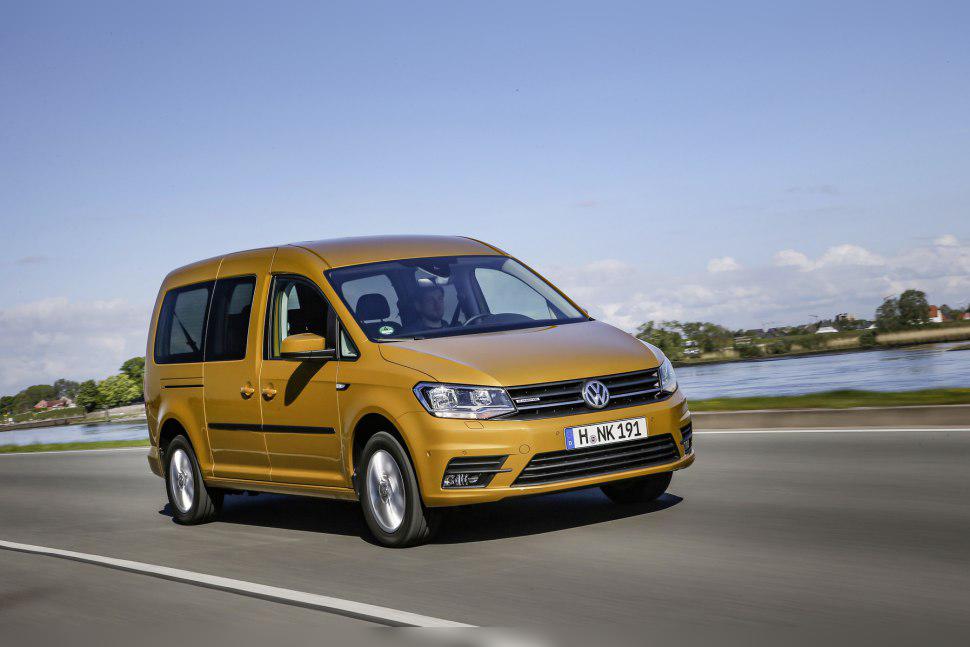
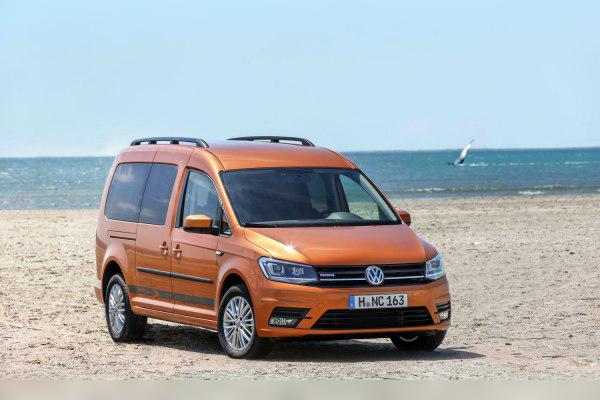
This engine belongs to the modern EA211 family, developed to fix the disastrous flaws of the previous generation (EA111 with a chain). It was installed in the VW Caddy IV and Caddy Maxi IV, offering an alternative for those who use the vehicle for short city deliveries or as a family MPV, where DPF filters on diesels cause problems. Is this small turbo petrol engine up to the task of hauling the heavy Caddy body? Let’s take a look under the bonnet.
Technical Specifications
| Parameter | Data |
|---|---|
| Engine displacement | 1395 cc (1.4 litres) |
| Power | 92 kW (125 hp) at 5000–6000 rpm |
| Torque | 220 Nm at 1500–3500 rpm |
| Engine code | CZCB (EA211 family) |
| Injection system | TSI – Direct petrol injection |
| Induction | Turbocharger + intercooler (water-to-air) |
| Number of cylinders / valves | 4 / 16 |
Reliability and Maintenance
Belt or chain? Problem solved
The most important piece of information for any potential buyer: This engine (EA211) uses a timing belt. Volkswagen learned its lesson from the chain failures on the old 1.4 TSI engines and went back to a reliable belt. This is very good news. The belt is durable and quieter in operation.
Most common issues
Although it is much better than its predecessor, the CZCB engine is not without flaws:
- Water pump and thermostat housing: This is a “classic” issue for EA211 engines. The housing is plastic and contains the pump and two thermostats. Over time, the plastic weakens from heat cycles and starts leaking coolant. Symptom: Coolant level dropping without a visible puddle under the car (because it evaporates on the block) or a “sweet” smell from the engine bay.
- Turbocharger actuator (wastegate): The electric actuator can seize up. Symptom: EPC light on the dashboard and loss of power. Sometimes it can be freed up, but often it needs to be replaced.
- Carbon buildup: As with any direct-injection engine, the valves are not “washed” by fuel. At higher mileages (over 150,000 km), carbon deposits can build up on the intake valves, causing rough idle and a slight loss of power.
Service intervals and oil
Major service: The manufacturer states an optimistic 210,000 km for belt inspection/replacement. Experienced mechanics recommend replacing the timing kit (belt, tensioners, water pump) at 160,000 km to a maximum of 180,000 km or after 6–7 years, whichever comes first.
Oil: The engine takes about 4.0 litres of oil. The recommended grade is usually 5W-30 (VW 504.00/507.00), although newer variants may use thinner 0W-20 (VW 508.00). Check the sticker in the engine bay.
Oil consumption: Unlike the notorious EA888 Gen 2 engines, this 1.4 TSI is quite “tight”. Consumption of 0.5 litre per 5,000–7,000 km is considered acceptable, especially if the car is driven mostly on the motorway. If it uses a litre per 2,000 km, that points to an issue with piston rings or the turbo, which is not typical for the CZCB.
Spark plugs
Since this is a turbocharged direct-injection petrol engine, the spark plugs are under higher stress. It’s recommended to replace them every 60,000 km. Don’t skimp on them, because bad plugs can quickly damage the ignition coils, which are individual for each cylinder.
Specific Components (Costs)
Dual-mass flywheel:
Yes, this engine in the Caddy does have a dual-mass flywheel. For comfort and to reduce four-cylinder vibrations at low revs, VW fits one. Its lifespan is usually 150,000–200,000 km, depending on driving style. Replacement is expensive (varies by market), but necessary if you hear metallic rattling when switching off the engine or knocking at idle.
Injection system:
It uses a high-pressure system with injectors directly in the cylinder. The injectors are generally reliable but sensitive to poor fuel quality. Replacing a single injector is quite expensive. They’re not as problematic as on old diesels, but they’re not cheap either.
Turbocharger:
The engine has a single turbocharger. It’s a small turbo with a wastegate valve (not variable geometry like on diesels, which is a plus for maintenance costs). It is water-cooled. Its lifespan is usually equal to the engine’s lifespan with regular oil changes. A specific feature is the intercooler integrated into the intake manifold (water-cooled), which means there is no classic large front-mounted air-to-air cooler.
Emissions (DPF/EGR/AdBlue):
This is a petrol engine, so it does not use AdBlue.
However, the situation with filters depends on the model year:
- Models up to 2017/2018 (Euro 6b) usually do not have a GPF/OPF (gasoline particulate filter).
- Newer models (Euro 6d-TEMP and up) do have a GPF filter. It rarely clogs because exhaust gas temperatures on petrol engines are higher than on diesels, so passive regeneration happens all the time.
- The EGR valve is present, but causes far fewer issues than on diesels because petrol engines produce less soot.
Fuel Consumption and Performance
Real-world fuel consumption
The Caddy is heavy and has the aerodynamics of a kiosk. That shows in the fuel consumption.
- City driving: Expect between 8.5 and 10.5 l/100 km. The start-stop system helps, but the vehicle’s mass takes its toll every time you pull away.
- Motorway (130 km/h): Here the engine has to work harder to push through the air. Consumption is around 7.5 to 9.0 l/100 km, depending on whether the Caddy is empty or loaded.
- Country roads: The most economical scenario, where you can get down to about 6.0–6.5 l/100 km.
Is the engine “lazy”?
For the Caddy IV (shorter version), the engine is perfectly adequate. The 220 Nm of torque is available from a low 1500 rpm, so city driving is pleasant and responsive.
For the Caddy Maxi (long wheelbase), it’s a different story. When empty, it goes well. However, if you load 500–600 kg of cargo or 7 passengers and turn on the air conditioning, the engine will struggle on hills and during overtakes. You’ll have to downshift often to get the power out. It’s not “dead”, but don’t expect miracles under heavy load.
On the motorway: At 130 km/h the engine spins at about 2800–3000 rpm (in 6th gear or 7th on the DSG). That’s acceptable for cruising; engine noise isn’t excessive, but wind noise dominates.
Additional Options and Modifications
LPG (autogas):
Due to direct injection (TSI), LPG installation is complex and expensive.
There are two solutions:
1. A system that uses 15–20% petrol to cool the injectors while running on gas. Cheaper, but still uses petrol.
2. A liquid LPG injection system through the petrol injectors (the best solution, but very expensive – varies by market).
Given the installation cost, it’s only really worthwhile if you cover very high annual mileage (over 30–40k km per year).
Chiptuning (Stage 1):
This engine is software “detuned” in some modes for longevity.
A safe Stage 1 can raise power to about 145–150 hp and torque to 250–260 Nm.
WARNING: If you have a DSG gearbox (DQ200), be careful. This gearbox is rated for a maximum of 250 Nm. Aggressive remapping can drastically shorten the life of the clutches and mechatronics on DSG models. With the manual gearbox there is more tolerance.
Gearbox
Manual gearbox:
A 6-speed manual gearbox is fitted. It is very precise, easy to use and reliable. The most common issues are related to the clutch kit and flywheel, not the gearbox itself. It’s advisable to change the gearbox oil at 150,000 km, even though the manufacturer calls it “lifetime”.
Automatic gearbox (DSG):
Here you get a 7-speed DSG with dry clutches (code DQ200).
This is the area that deserves the most attention:
- Problems: The DQ200 is known for its sensitive mechatronics (the gearbox brain) and faster clutch wear in stop-and-go city driving. Symptoms include juddering when pulling away, hesitation when changing gears, or grinding-like noises.
- Maintenance: Although VW claims it is “sealed for life”, it is strongly recommended to change the oil in the mechatronics and gear section.
- Cost: Mechatronics repair or clutch replacement is a very expensive job.
Used-Buying Tips and Conclusion
What to check before buying?
- Cold start: Listen to the engine when it’s cold. It may be a bit noisier for the first few seconds, but afterwards it should run smoothly. Any rattling or uneven running may point to injector or flywheel issues.
- Signs of coolant leaks: With a flashlight, inspect the area around the belt and under the intake manifold. Whitish or pinkish traces are a sign that the thermostat housing is leaking.
- DSG test drive: If it’s an automatic, warm up the car and try starting uphill without using the throttle (just releasing the brake). The car should not shake or jerk.
- Diagnostics: Check for “misfire” counts on cylinders, which may indicate carbon buildup on the valves.
Conclusion: Who is it for?
The VW Caddy 1.4 TSI (CZCB) is an excellent choice for private users and small business owners who mostly drive in the city and on shorter routes. In such conditions it is better than a diesel (warms up faster, no DPF issues, quieter).
If your Caddy is used to haul heavy loads on long motorway runs every day, the 2.0 TDI is still the better choice thanks to its torque and lower fuel consumption at high speeds. For everyone else, the 1.4 TSI is a modern, refined and (with regular maintenance) sufficiently reliable partner.
Was this content useful to you?
Your opinion helps us to improve the quality of the content.