CAYE Engine
- Engine
- 1598 cm3
- Aspiration
- Turbocharger, Intercooler
- Fuel
- Diesel
- Fuel injection system
- Diesel Commonrail
- Power
- 75 hp
- Torque
- 225 Nm
- Cylinders
- 4
- Valves
- 16, 4 per cylinder
- Cylinders position
- Inline
- Oil capacity
- 4.3 l
- Systems
- Particulate filter
# Vehicles powered by this engine
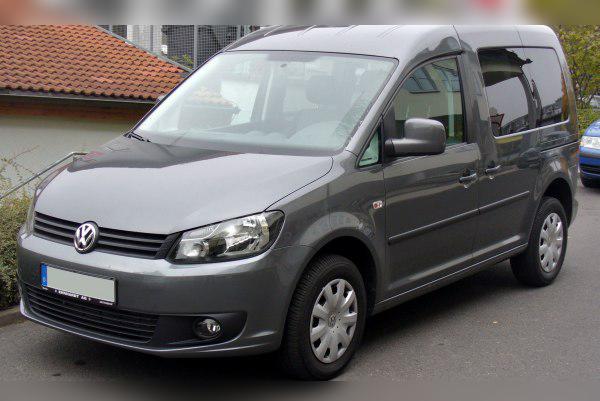
1.6 TDI (CAYE) – Experiences, problems, fuel consumption and used car buying guide
Key points (TL;DR)
- Durability: The engine’s core is robust, but supporting components (injectors, EGR) can cause issues.
- Power: With 75 hp, this is an extremely slow engine for a Caddy body, especially under load.
- Injectors: Piezo injectors on 1.6 TDI engines of this generation are sensitive to poor-quality fuel and expensive to refurbish.
- Big plus: This 75 hp version usually comes from the factory with a solid flywheel (no dual-mass), which drastically reduces maintenance costs.
- Potential: The engine is software “detuned”, so it’s an ideal candidate for a Stage 1 remap, bringing it up to the power of the stronger 102/105 hp versions.
- Purpose: Strictly for city deliveries and short trips; it struggles on the highway.
Contents
- Introduction and use case
- Technical specifications
- Reliability and maintenance
- Specific parts and costs
- Fuel consumption and performance
- Additional options and tuning
- Gearbox and drivetrain
- Used-buying tips and conclusion
Introduction and use case
The engine code CAYE belongs to Volkswagen’s EA189 diesel family and represents the entry-level, weakest version of the 1.6 TDI unit installed in the VW Caddy III (facelift) from 2010 to 2015. Its main role is fuel efficiency and use in light commercial vehicles.
This engine is the direct successor to the legendary 1.9 TDI (in lower-output versions), but it brings a more modern common-rail injection system that provides quieter operation and lower fuel consumption. However, many drivers consider it too weak for a vehicle with the aerodynamics of a “brick” like the Caddy, unless it’s used strictly in city traffic.
Technical specifications
| Specification | Data |
|---|---|
| Engine code | CAYE |
| Displacement | 1598 cc |
| Power | 55 kW (75 hp) at 3000–4000 rpm |
| Torque | 225 Nm at 1500–2250 rpm |
| Injection type | Common rail (piezo injectors) |
| Induction | Turbocharger + intercooler |
| Emission standard | Euro 5 |
Reliability and maintenance
Timing belt or chain?
The CAYE engine uses a timing belt to drive the camshafts. This is good news, as timing chains on some VW engines from that period proved problematic. The drive is reliable, but it requires regular replacement.
Major service – intervals
The factory recommendation for timing belt replacement is often an optimistic 210,000 km. However, real-world experience and mechanics’ advice suggest doing the major service at a maximum of 160,000–180,000 km or every 5 to 7 years (whichever comes first). The water pump is a weak point and must be replaced together with the belt, tensioners and rollers, because leakage or seizure can lead to overheating or catastrophic engine failure.
Engine oil: capacity and consumption
The sump of this engine holds approximately 4.3 litres of oil. It is essential to use oil that meets the VW 507.00 specification, most commonly in 5W-30 grade. This is particularly important because of the DPF filter, as unsuitable oil produces ash that permanently clogs it.
As for oil consumption, 1.6 TDI engines are generally “tight”. Consumption of 0.5 to 1 litre per 10,000 km is considered acceptable, especially if the vehicle is driven under load or on the motorway. If it uses more than that, the turbocharger or oil leaks at the seals should be checked.
Most common failures
Besides standard wear items, the CAYE engine suffers from several specific issues:
- EGR cooler: It often cracks or gets clogged. Symptoms include loss of coolant (entering the engine) or a check engine light accompanied by loss of power.
- Injectors: Piezo injectors (Siemens/Continental) are sensitive. Failure manifests as rough idle (fluctuating revs), hard starting or a knocking sound from the engine.
- Exhaust gas pressure sensor (G450): A common failure that falsely reports a full DPF. It’s a cheap part, but can cause confusion in engine operation.
Injector lifespan
Injectors on 1.6 TDI engines of this generation are a “soft spot”. They can last over 250,000 km with top-quality fuel, but often fail already at 150,000–200,000 km. Refurbishing these piezo injectors is complicated and not always successful, so buying new or factory-refurbished ones is often recommended, which is a significant expense (depending on the market).
Specific parts (costs)
Dual-mass flywheel
This is one of the rare advantages of the 75 hp (CAYE) version. Due to the lower torque and power, this model in the VW Caddy most often comes with a solid (single-mass) flywheel. This means that when replacing the clutch kit you don’t have the extra cost of a dual-mass flywheel, which can be several hundred euros. Still, always check by VIN before buying parts, as there were variations.
Turbocharger
The engine uses a variable-geometry turbocharger. Turbo lifespan is directly linked to regular oil changes and driving style. With proper maintenance, the turbo easily exceeds 250,000+ km. Early signs of failure include a louder whistle, bluish exhaust smoke, or the engine going into limp mode at higher speeds.
DPF and EGR
Yes, this model has both a DPF (diesel particulate filter) and an EGR valve. Since the 75 hp Caddy is often used in city driving (deliveries, stop-and-go), the DPF is prone to clogging. Passive regeneration is hard to trigger in heavy city traffic. If the DPF warning light comes on, you need to get onto an open road and drive at higher revs (above 2500 rpm) for at least 15–20 minutes.
AdBlue system
The CAYE engine (Euro 5) in the Caddy III generation does not have an AdBlue system. It relies only on EGR and DPF for emission control. This is a relief for owners, as it avoids the common issues with urea pumps and heaters found on newer Caddy IV (Euro 6) models.
Fuel consumption and performance
City driving
Despite the low power output, the Caddy is not light (around 1.5 tonnes empty). In city driving, real-world fuel consumption is around 6.5 to 8.0 l/100 km, depending on whether the vehicle is empty or loaded. The start-stop system (if fitted on BMT versions) can slightly reduce this figure.
Is the engine “sluggish”?
To be honest: Yes, this engine is sluggish. With 75 hp and 0–100 km/h taking almost 17–18 seconds, overtaking on country roads requires serious planning. Uphill with a loaded vehicle demands frequent downshifts and driving at full throttle.
Motorway and cruising
On the motorway, the lack of a 6th gear is noticeable. At 130 km/h the engine spins at around 2800–3000 rpm (depending on the gearbox), which increases noise and fuel consumption. At this speed, consumption rises to about 7.5–8.5 l/100 km due to high aerodynamic drag. It is not designed for long high-speed journeys.
Additional options and modifications
Remap (Stage 1) – recommended?
This is where the CAYE engine shines. Since it is mechanically almost identical to the stronger 102 hp version (CAYD), it is only limited by software. With a safe Stage 1 remap, power can be raised to 100–105 hp and torque to over 250 Nm. This drastically changes the character of the vehicle, makes overtaking easier and can even reduce fuel consumption in normal driving because the engine doesn’t have to work as hard.
Gearbox
Types of gearbox
The CAYE engine in the Caddy was almost exclusively paired with a 5-speed manual gearbox. It is robust and precise.
Gearbox failures and maintenance
Manual gearboxes are very reliable. Failures are rare and usually the result of extremely high mileage (worn 2nd and 3rd gear synchros). Although the manufacturer often states that the gearbox oil is “lifetime filled”, it is recommended to change the gearbox oil every 80,000–100,000 km to preserve the bearings and make shifting easier in winter.
The cost of replacing the clutch kit is relatively affordable, since, as mentioned, there is usually no dual-mass flywheel.
Used-buying guide and conclusion
What to check before buying?
- Cold start: The engine should start immediately. Any prolonged cranking or uneven running in the first few seconds points to injector problems.
- Injector diagnostics: Always check injector correction values with diagnostics. Deviations greater than +/- 1.0 mg/str indicate wear.
- Whistling noise: Listen to the turbo when applying and lifting off the throttle.
- Clutch: A high biting point or heavy pedal usually means the clutch kit is nearing the end of its life (common on delivery vehicles).
Conclusion
The Volkswagen Caddy with the 1.6 TDI (CAYE) 75 hp engine is a workhorse in the truest sense of the word. Buy it if you need a reliable city delivery vehicle, want lower maintenance costs (thanks to the solid flywheel), and plan to drive calmly. Avoid it if you often drive on the motorway, carry heavy loads on open roads, or don’t have the budget for potential injector replacement, which is the main financial risk with this engine.
Was this content useful to you?
Your opinion helps us to improve the quality of the content.