EA188 / BJB Engine
- Engine
- 1896 cm3
- Aspiration
- Turbocharger, Intercooler
- Fuel
- Diesel
- Fuel injection system
- Pump-nozzle (Unit Injector)
- Power
- 105 hp @ 4000 rpm
- Torque
- 250 Nm @ 1900 rpm
- Cylinders
- 4
- Valves
- 8, 2 per cylinder
- Cylinders position
- Inline
- Valvetrain
- OHC
- Oil capacity
- 4.3 l
- Coolant
- 8 l
# Vehicles powered by this engine
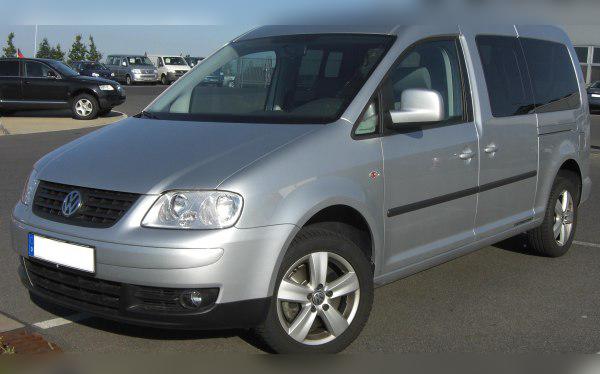
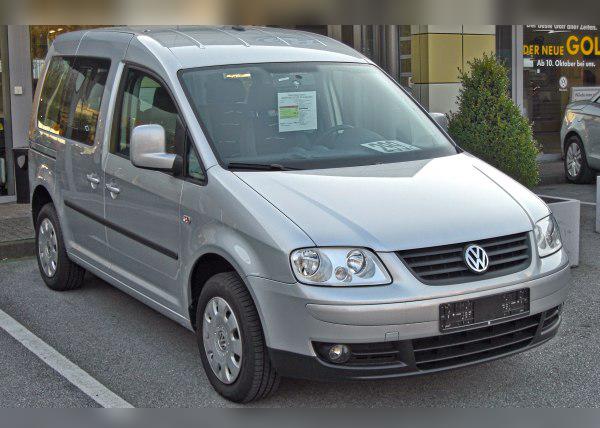
1.9 TDI (EA188 / BJB) – Experiences, problems, fuel consumption and used car buying guide
Key points (TL;DR)
- Legendary reliability: The BJB is one of the last “true” 1.9 TDI engines (Pumpe-Düse) without overly complex emissions systems, which makes it highly valued on the used market.
- Oil consumption: These engines are known for using some oil between services, which is normal for them.
- Dual-mass flywheel: It is present and is one of the more expensive wear items, especially on vehicles that have been driven mostly in the city (delivery vans).
- Turbo issues: The variable-geometry turbo often gets clogged with soot from city driving, which leads to loss of power.
- Performance in the Caddy: 105 hp is “just right” for an empty vehicle, but in the Maxi version under full load it can feel sluggish.
- Emissions systems: A major advantage of the BJB code is that it usually does not have a DPF filter from factory, which significantly reduces maintenance costs.
Contents
- Introduction and applications
- Technical specifications
- Reliability and maintenance
- Specific parts (Costs)
- Fuel consumption and performance
- Gearbox (Manual and DSG)
- Additional options and modifications
- Buying used and conclusion
Introduction and applications
The engine with the code BJB belongs to the famous EA188 series of Volkswagen diesels. This is a 1.9 TDI engine with a Pumpe-Düse (PD) injection system. It was primarily installed in the Volkswagen Caddy (Life and Maxi versions), but also in the Golf 5, Octavia and Seat models from that period. Why is this engine important? Because it represents the “golden middle ground” – modern enough to offer good performance and decent refinement, yet old enough not to suffer from factory issues like cracking blocks or overly sensitive DPF systems that plagued later 1.6 TDI and 2.0 TDI engines. In the world of delivery vehicles such as the Caddy, this engine is considered a workhorse that, with proper maintenance, can easily cover half a million kilometers without being opened.
Technical specifications
| Parameter | Value |
|---|---|
| Displacement | 1896 cc (1.9 L) |
| Power | 77 kW (105 hp) |
| Torque | 250 Nm at 1900 rpm |
| Engine code | EA188 / BJB |
| Injection system | Pumpe-Düse (PD) – unit injector |
| Charging | Turbocharger with variable geometry (VGT) + intercooler |
| Number of valves | 8 (2 per cylinder) |
Reliability and maintenance
When talking about the BJB engine, we’re talking about one of the most robust units in its class, but age and mileage inevitably take their toll.
Timing belt or chain?
This engine uses a timing belt. This is a key maintenance item. The recommended replacement interval was originally set at 120,000 km, but in practice, and given the age of these vehicles, the major service should be done every 90,000 to 100,000 km or every 5 years, whichever comes first. A snapped belt leads to piston-to-valve contact, which is a catastrophic failure that is often not economically viable to repair.
Most common failures
Although robust, the BJB has its weak points:
- Camshaft: On PD engines, the camshaft is heavily loaded because it drives both the valves and the unit injectors. Using the wrong oil leads to premature wear. Symptoms include a dull engine sound (as if it’s running on three cylinders) and loss of power.
- Tandem pump: The vacuum/fuel pump can start leaking, mixing fuel with the engine oil or letting oil leak out.
- Injector wiring (loom in the cylinder head): A common issue where the engine starts to misfire, run roughly or lose contact on one injector. Fortunately, replacing the loom is not very expensive.
Oil: The lifeblood of PD engines
This engine takes approximately 4.3 liters of oil (with filter). The most important thing to remember: you MUST use oil that meets the VW 505.01 specification. This is usually a 5W-40 or 5W-30 grade. Regular 10W-40 or fully synthetic oil that does not carry the “505.01” approval will destroy the camshaft and lifters very quickly.
As for oil consumption, 1.9 TDI PD engines are known to use oil. Consumption of 0.5 to 0.8 liters per 10,000 km is considered completely normal and acceptable. If it uses a liter per 1,000 km, then you likely have a problem with the turbo or piston rings.
Injector longevity
The BJB uses Bosch electromagnetic PD injectors. They are extremely durable and much more tolerant of poor-quality fuel than modern piezo injectors or common-rail systems. They often last well over 300,000 – 400,000 km without overhaul. More common issues are the injector seals which can fail, allowing fuel to enter the oil (oil level rises on the dipstick) or causing hard starting when the vehicle is parked nose-down on a slope.
Specific parts (Costs)
Dual-mass flywheel
Yes, this engine, in combination with both the manual gearbox and DSG, uses a dual-mass flywheel. Since the Caddy is often used for hauling loads, the flywheel is under heavy stress. Symptoms of failure include metallic rattling noises when starting and switching off the engine, as well as vibrations in the clutch pedal. Replacing the clutch and flywheel set is expensive (it falls into the “costly” category for the average driver), and the price depends on the market and the brand of parts (LuK or Sachs).
Turbocharger and EGR
The engine has a single turbocharger with variable geometry. Its lifespan directly depends on driving style and regular oil changes. City driving “chokes” the turbo with soot, causing the vanes of the variable geometry to stick. Symptom: the car goes into “safe mode” (loses power) under hard acceleration, and after switching the engine off and on again it works normally. Cleaning is possible, but a full rebuild is a more durable solution.
The EGR valve often gets clogged with soot. Symptoms include black smoke and poor throttle response. It is often resolved by cleaning, and on older models owners sometimes blank and delete it in software (which can be an issue at inspection/MOT depending on the country).
DPF and AdBlue
This is where the biggest advantage of the BJB engine lies. It is Euro 3 / early Euro 4 and usually does NOT have a DPF filter from factory. This should be checked via the VIN, as some later engines (especially with the BLS code) did have a DPF. If it’s a BJB, you can relax regarding particulate filter clogging. Also, this engine does NOT have an AdBlue system, which means one tank and one worry less.
Fuel consumption and performance
City driving
The Volkswagen Caddy is not a small vehicle, and the Caddy Maxi is quite heavy and aerodynamically unfavorable (like a “brick”). In real-world city driving, you can expect consumption between 7.5 and 9 liters/100 km, depending on how loaded it is and how bad the traffic is. In winter, this figure goes slightly higher.
Performance: Is it “lazy”?
With 250 Nm of torque, the Caddy pulls reasonably well. For a standard Caddy, 105 hp is perfectly adequate for smooth everyday driving. However, a Caddy Maxi loaded with cargo or passengers (7 seats) will struggle on uphill sections and during overtaking. It’s not dangerously slow, but it requires planning your overtakes and more frequent gear changes. It’s not a racer, it’s a work tool.
Motorway
This is not the ideal environment for a Caddy with a 5-speed gearbox. Due to the “short” gearing, at 130 km/h the engine spins at around 2,800 to 3,000 rpm (depending on the gearbox). This means the cabin is noisy and motorway fuel consumption rises to around 6.5 – 7.5 liters. If it had a sixth gear, it would be a much more economical and quieter cruiser.
Additional options and modifications
Remapping (Stage 1)
1.9 TDI engines are legendary for their tuning potential. The 105 hp BJB can safely be taken to 135 – 140 hp and around 300–320 Nm of torque with just a software remap (Stage 1). This drastically changes the character of the vehicle, especially the Caddy Maxi, making overtaking much easier. However, keep in mind that the higher torque will wear out the dual-mass flywheel and clutch faster if you drive aggressively.
Gearbox: Manual and DSG
Options
- 5-speed manual: The most common option.
- 6-speed DSG (DQ250): Dual-clutch automatic gearbox.
Failures and maintenance
Manual gearbox: Generally reliable, but on Caddys that have covered high city mileage, the synchronizers for second and third gear can wear out (grinding when shifting). VW says the oil in the manual gearbox is “lifetime fill”, but it is recommended to replace it every 150,000 km to keep shifting smooth.
DSG gearbox: This is a gearbox with “wet” clutches. It offers great comfort and fast shifts. However, it requires strict maintenance. The oil and filter in the DSG must be changed every 60,000 km. If this is neglected, the mechatronic unit (the gearbox’s brain) can fail, and repairs are very expensive (often a quarter of the vehicle’s value). Also, the DSG setup uses a dual-mass flywheel which can fail as well.
Buying used and conclusion
When buying a Caddy with the BJB engine, pay attention to the following:
- Cold start: The engine should fire up instantly. If it cranks for a long time or emits a cloud of blue smoke, walk away (possible compression issues or injector seal problems).
- Hot start: If a hot engine is hard to start, this is a common issue on TDI engines (weak starter or software issue in the start map). It is relatively cheap to fix.
- Flywheel noise: Listen for knocking at idle that disappears when you press the clutch pedal.
- Diagnostics: Check injector correction values. They should be close to 0. If there are large deviations (over +/- 2.0), the injector or that cylinder may have a problem.
Conclusion: A VW Caddy with the 1.9 TDI (BJB) engine is a workhorse par excellence. It is aimed at tradespeople, small business owners and families who need huge space but don’t want complicated modern diesels with AdBlue systems. If you find an example that has been regularly serviced (especially with the correct oil) and whose flywheel is not rattling, it is a purchase that will serve you for years with minimal unexpected costs. Expect a rough, noisy, but faithful machine.
Was this content useful to you?
Your opinion helps us to improve the quality of the content.