CAVD Engine
- Engine
- 1390 cm3
- Aspiration
- Turbocharging and Supercharger, Intercooler
- Fuel
- Petrol (Gasoline)
- Fuel injection system
- Direct injection
- Power
- 160 hp @ 5800 rpm
- Torque
- 240 Nm
- Cylinders
- 4
- Valves
- 16, 4 per cylinder
- Cylinders position
- Inline
- Valvetrain
- DOHC
- Oil capacity
- 4 l
- Coolant
- 5.6 l
- Systems
- Start & Stop System
# Vehicles powered by this engine
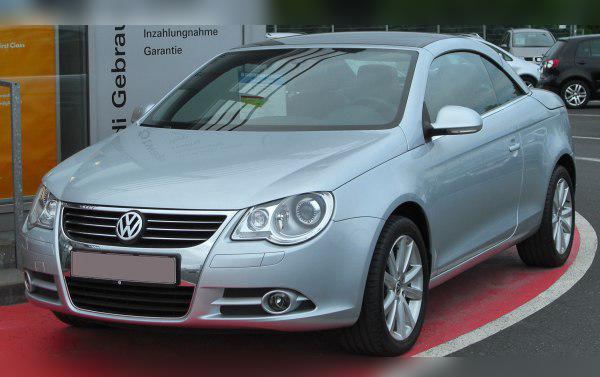
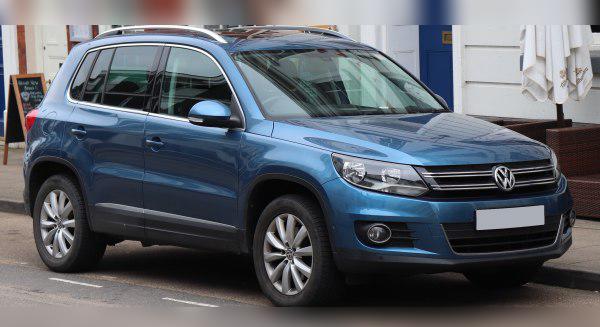
1.4 TSI Twincharger (CAVD) – Experiences, problems, fuel consumption and buying used
The engine with the code CAVD belongs to the famous but also controversial EA111 family of Volkswagen engines. This power unit once won "Engine of the Year" awards thanks to its innovative "Twincharger" technology (a combination of supercharger and turbocharger), extracting 160 hp from just 1.4 liters of displacement. However, in practice it turned out to be a double-edged sword. On one hand it offers fantastic performance for its displacement, and on the other it carries the risk of very expensive failures if not maintained meticulously.
It was installed in heavier bodies such as the Volkswagen Eos and Volkswagen Tiguan, where it had to show all its strength in order to provide the dynamics customers expect.
Key points (TL;DR)
- Performance: Excellent throttle response thanks to the supercharger (low revs) and turbo (high revs).
- Biggest issue: Piston and ring failure due to detonation (LSPI) or poor-quality fuel.
- Timing: Uses a chain that is prone to premature stretching.
- Oil consumption: Common, especially at higher mileage.
- Complexity: The twin-charger system and magnetic clutch on the water pump require a skilled specialist.
- Recommendation: Buy only with verified service history and ideally with a compression test before purchase.
Contents
- Technical specifications
- Reliability and maintenance
- Specific parts and costs
- Fuel consumption and performance
- Additional options and modifications
- Gearbox (Manual and DSG)
- Buying used and conclusion
Technical specifications
| Parameter | Data |
|---|---|
| Engine displacement | 1390 ccm (1.4 l) |
| Power | 118 kW (160 hp) |
| Torque | 240 Nm at 1500–4500 rpm |
| Engine code | CAVD |
| Injection type | Direct injection (TSI / FSI) |
| Charging system | Twincharger (Mechanical supercharger + Turbocharger) |
| Number of cylinders / valves | 4 / 16 |
Reliability and maintenance
Timing system: Chain or belt?
The CAVD engine uses a timing chain. Unfortunately, this is one of the weaker points of this engine. The factory chain is prone to stretching already at mileages from 60,000 to 100,000 km. Symptoms are a metallic rattling sound (like small stones rolling) during cold start that lasts a few seconds. If this is ignored, the chain can jump a tooth and pistons can hit the valves, which means complete engine failure. The recommendation is preventive replacement of the complete chain set, guides and tensioner as soon as the first suspicious noise is heard.
Most common failures and the "Achilles' heel"
The most serious problem with CAVD engines is piston and ring cracking. This happens due to high thermal load and detonation (knocking) or LSPI (Low Speed Pre-Ignition). Symptoms are loss of power, rough idle (running on 3 cylinders) and blue smoke from the exhaust. This is an expensive failure that requires opening the engine and replacing the pistons (often with reinforced forged pistons).
Another frequent issue is the magnetic clutch on the water pump. This clutch engages and disengages the supercharger. When it fails, the car loses power at low revs and squealing noises can appear from the belt area.
Service intervals and oil
Although the manufacturer specifies "Long Life" intervals (up to 30,000 km), for this engine that is absolutely disastrous. An oil service should be done at a maximum of 10,000 to 12,000 km or once a year.
- Oil quantity: The engine takes approximately 3.6 liters of oil.
- Viscosity: Recommended are 5W-30 or 5W-40 oils that meet the VW 504.00 / 507.00 specification. Due to high temperatures, high-quality oil is crucial.
Oil consumption
Yes, this engine is known to consume oil. Consumption of 0.3 to 0.5 liters per 1,000 km is often considered "acceptable" by factory standards, but in practice it means you must regularly check the dipstick. If consumption exceeds 1 liter per 1,000 km, it indicates a problem with the rings, valve stem seals or turbo.
Spark plugs and ignition
Due to the specific operation of the Twincharger system, the spark plugs are under heavy stress. It is recommended to replace them more often than the factory interval – ideally every 30,000 to 40,000 km. It is essential to use only the catalog-specified plugs (iridium), because incorrect plugs can lead to electrode melting and piston damage.
Specific parts (Costs)
Dual-mass flywheel
Yes, models with a manual gearbox, as well as some with a DSG gearbox, are equipped with a dual-mass flywheel. Its lifespan depends on driving style, but on heavier cars such as the Tiguan and Eos it often fails between 150,000 and 200,000 km. Replacement cost is relatively high (depends on the market).
Fuel injection system
The engine uses direct fuel injection at high pressure. The injectors are generally precise but sensitive to poor fuel quality. The main problem is not so much injector failure as carbon build-up on the intake valves, because the fuel does not wash the valves. This leads to reduced performance and the need for mechanical cleaning (walnut shell blasting or chemical cleaning).
Turbo and supercharger (Twincharger)
This is the heart of the system. The engine has a mechanical supercharger (Roots type) that operates at low revs (from idle up to around 2400 rpm) and a conventional turbocharger that takes over at higher revs.
The turbo’s lifespan is average (around 200,000 km with good maintenance), but the control system (flaps, pressure sensors, N75 valve) can be problematic and difficult to diagnose. Failures manifest as "flat spots" in acceleration.
EGR and emissions
This petrol engine has an EGR valve to reduce NOx emissions. It can become clogged with soot, which triggers the "Check Engine" light. Fortunately, cleaning is often possible. There is no DPF filter (that’s for diesels); instead it has a conventional catalytic converter. This engine does not have an AdBlue system.
Fuel consumption and performance
City driving
Do not expect miracles. Although the engine has a small displacement (1.4), it powers heavy bodies (the Tiguan and Eos weigh around 1.5 tons).
Real-world city consumption ranges from 9 to 11 liters per 100 km. In heavy stop-and-go traffic in a Tiguan it can go up to 12 l/100 km.
Is the engine "lazy"?
Absolutely not. Thanks to the supercharger which delivers torque instantly from the start, this engine behaves like a 2.5-liter. There is no "turbo lag". The Tiguan and Eos with this engine are very agile and lively, which pleasantly surprises many drivers.
Open road and motorway
On the motorway the engine is in its element. Cruising at 130 km/h is comfortable, and the revs (thanks to 6th gear or 7th on the DSG) are usually around 2,800 – 3,000 rpm. Fuel consumption on the open road drops to about 6.5 – 8 liters, depending on speed and vehicle aerodynamics (the Tiguan consumes more due to air resistance).
Additional options and modifications
LPG conversion
Installing LPG on the 1.4 TSI CAVD engine is possible, but expensive and complicated. Due to direct injection, a specific system is required. There are two options:
1. A system that injects gas but also a small amount of petrol to cool the injectors (cheaper option, but you also use petrol while driving).
2. A liquid gas injection system through the petrol injectors (very expensive, but the best solution).
Given the sensitivity of this engine, many experts advise caution when considering conversion.
Chiptuning (Stage 1)
Although this engine can easily be tuned via software to 200 hp, this is NOT recommended unless you are prepared to take the risk. The pistons are already at the limit of their strength from the factory. Further increasing boost and temperature drastically raises the chance of piston failure. If it is done, it must be done by a top specialist and you must use 98 or 100 octane fuel.
Gearbox
Gearbox options
The CAVD engine most commonly comes with:
- Manual gearbox (6-speed): Precise and robust. The most common failures are related to the clutch kit and dual-mass flywheel. An oil change in the gearbox is recommended every 60,000 km, even though VW often claims it is "lifetime".
- DSG (7-speed, DQ200 model): This is a gearbox with "dry" clutches.
Problems with the DSG gearbox (DQ200)
This gearbox is known for issues with the mechatronics unit (the gearbox "brain") and premature clutch wear, especially in city driving. Symptoms are jerking when setting off, hesitation when changing gears or slipping. Repairs are expensive. It requires regular calibration and checks, and the oil in the mechatronics and gears should be changed, although the procedure is specific.
Buying used and conclusion
When buying a used Eos or Tiguan with the 1.4 TSI (160 hp) engine, you must be extremely cautious. This is not a "fill up and drive" engine if you do not know its history.
What you must check:
- Cold start: Insist on starting the car when the engine is completely cold. Listen for chain rattle lasting longer than 2–3 seconds.
- Compression: If the seller agrees, a compression test is the best way to determine piston condition. Uneven compression is a sign to walk away from that car.
- Diagnostics: Check for "misfire" errors on the cylinders.
- Test drive: Accelerate hard from low revs. There should be no jerking or hesitation, nor strange whistling noises (apart from a slight supercharger sound, which is normal).
Conclusion:
The CAVD engine is intended for enthusiasts who want excellent performance from a small engine and are willing to pay for it through meticulous and more expensive maintenance. If you are looking for maximum reliability and low running costs for everyday city driving, simpler engines (such as the 2.0 TDI or lower-powered petrol units without a supercharger) are a better choice. However, a healthy 1.4 TSI with 160 hp offers one of the most enjoyable driving experiences in its class.
Was this content useful to you?
Your opinion helps us to improve the quality of the content.