CNXA Engine
- Engine
- 1598 cm3
- Aspiration
- Naturally aspirated engine
- Fuel
- Petrol / Ethanol - E85
- Fuel injection system
- Multi-port manifold injection
- Power
- 120 hp @ 5750 rpm
- Torque
- 165 Nm @ 4000 rpm
- Cylinders
- 4
- Cylinders position
- Inline
- Oil capacity
- 4.5 l
# Vehicles powered by this engine

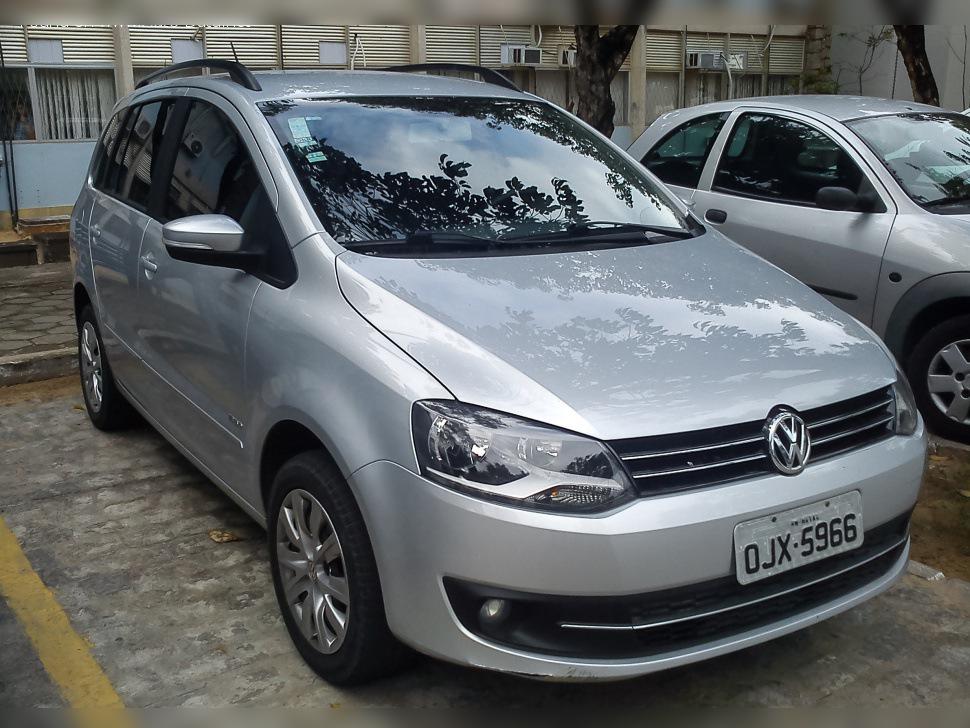

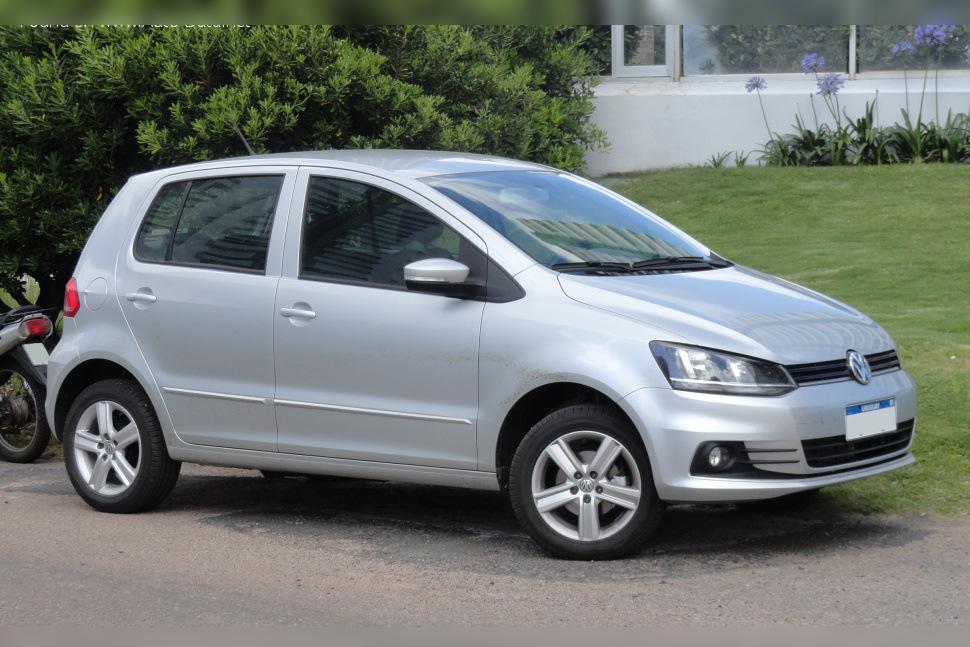
VW 1.6 MSI 16V (CNXA) – Experiences, issues, fuel consumption and maintenance of the specific "Flex" engine
Key points (TL;DR)
- Atmospheric simplicity: The engine has no turbocharger, which significantly reduces the risk of expensive failures and makes maintenance cheaper.
- Timing belt: Unlike older TSI engines with problematic chains, this one uses a reliable timing belt.
- Flex Fuel nature: Primarily designed for the Latin American market (E85 ethanol/petrol), which means it has a reinforced fuel system and specific injection maps.
- Ideal power for the body: With 120 hp (sometimes more on ethanol), this is a very lively engine for models such as the Fox and SpaceCross.
- Oil consumption: Like most modern 16V engines from the VW Group, it can consume oil if driven aggressively, but this is usually within normal limits.
- LPG-friendly: Thanks to its indirect injection (MPI), it is an ideal candidate for LPG installation.
- Gearboxes: It comes with an excellent 6-speed manual gearbox or a "robotized" I-Motion gearbox (which requires caution).
Contents
Introduction and engine applications
The engine with the code CNXA belongs to the more modern EA211 engine family of the Volkswagen Group. Although Europeans most often associate this block with 1.2 or 1.4 TSI engines, the CNXA is "old school" in a new package – a naturally aspirated 1.6-litre petrol engine with 16 valves. It is specific because it was developed primarily for South American markets (Brazil, Argentina), where it was installed in popular models such as the VW Fox, CrossFox and SpaceFox (facelift versions from 2014/2015 onwards).
This is a Flex Fuel engine, which means it is factory-designed to run on petrol or ethanol (E85), or any mixture of the two. For drivers in Europe this means that the fuel system components are more robust (more resistant to the corrosion caused by alcohol), which is good news for longevity, even if you run it exclusively on petrol.
Technical specifications
| Specification | Data |
|---|---|
| Engine code | CNXA (EA211 family) |
| Displacement | 1598 cc (1.6 litres) |
| Power | 88 kW (120 hp) at 5750 rpm |
| Torque | 165 Nm at 4000 rpm |
| Induction type | Naturally aspirated |
| Number of valves | 16V (4 per cylinder) |
| Injection system | MPI (multi-point indirect injection) |
| Camshaft drive | Timing belt |
Reliability and maintenance
Does this engine have a timing belt or a chain?
The CNXA engine uses a timing belt. This is a big step forward compared to older EA111 engines that had problematic chains. The belt on EA211 engines is reinforced and designed to last long, and the engine runs quieter and smoother.
What are the most common failures on this engine?
Although very reliable, there are some typical weak points:
1. Thermostat housing and water pump: They are often made of plastic which becomes brittle over time and starts leaking. The symptom is loss of coolant.
2. Coil packs (ignition coils): They can fail, causing rough running and the "Check Engine" light to come on.
3. Deposits on valves: Although it is an MPI engine, poor fuel quality or frequent short trips can cause intake fouling, though less often than on direct injection engines.
4. Oil level sensor: Sometimes gives false readings.
At what mileage should the major service (timing belt) be done?
The factory recommendation for checking the timing belt is often at very high mileage (e.g. 210,000 km), but in practice and from mechanics’ experience, that is too risky. It is recommended to replace the complete timing kit (belt, tensioners, water pump) at 120,000 to 150,000 km or at the latest after 5 to 6 years of age, whichever comes first.
How many litres of oil does this engine take and which grade is recommended?
The sump holds approximately 4.0 to 4.5 litres of oil (always buy 5 litres). The recommended grade is usually 5W-40 or 5W-30, meeting VW standards (VW 502 00 or VW 508 88 for the Latin American market). It is important to use quality synthetic oil.
Does it consume oil between services and what amount is considered normal?
EA211 engines are "tighter" than the old ones, but oil consumption is not excluded, especially if the engine is often revved high (which this 16V engine likes). Consumption of up to 0.5 litres per 1,000 km is considered "normal" according to factory manuals, but in real-world use a healthy engine should not consume more than 0.5 to 1 litre per 10,000 km (from service to service). If it consumes more, check the piston rings or valve stem seals.
At what mileage should the spark plugs be replaced?
As this is a petrol/ethanol engine, spark plugs are crucial. Replacement is recommended every 40,000 to 60,000 km. If you run LPG, halve this interval to 25,000–30,000 km to protect the coils.
Specific parts (costs)
Does the engine have a dual-mass flywheel?
Most often NO. Petrol engines with this level of power and torque (165 Nm) in models such as the Fox usually use a solid flywheel and a conventional clutch kit. This significantly reduces maintenance costs compared to diesel engines. Still, check by VIN, as some specific variants with the 6-speed gearbox may have a simpler dual-mass flywheel, but this is rare in this class.
What kind of injection system does it have and are the injectors problematic?
The system is MPI (Multi Point Injection), which means that fuel is injected into the intake manifold, before the valves. This is an older but extremely reliable system. Injectors are simple, cheap to clean and rarely cause problems. They are not as sensitive as piezo injectors on diesels or direct injectors on TSI engines.
Does this engine have a turbocharger and what is its lifespan?
There is no turbocharger. This is a naturally aspirated engine. That means: no turbo rebuilds, no intercooler issues, no oil overheating due to a turbo. For city driving and a 10-year-old used car, this is a huge advantage.
Does this model have a DPF filter or an EGR valve?
It has no DPF filter (that’s for diesels). Instead, it has a catalytic converter. As for the EGR, on these engines it is often not a separate, problematic valve as on diesels; exhaust gas recirculation is often handled via variable valve timing (VVT). If there is an external EGR valve, it is less prone to clogging than on diesels because petrol burns cleaner.
Does this engine use AdBlue?
No. AdBlue is used exclusively on newer generation diesel engines. This engine does not use any additional additives for exhaust gas treatment.
Fuel consumption and performance
What is the real fuel consumption in city driving?
Considering the 1.6-litre displacement and the lack of a turbo, the engine needs revs to pull properly.
City: Expect between 8.5 and 10.5 litres/100 km of petrol, depending on traffic. If you run ethanol (where available), consumption increases by about 30%.
Highway/extra-urban: It can go down to around 6.0–7.0 litres.
Is this engine “lazy” for the weight of the car?
With 120 hp in the body of a VW Fox or SpaceCross, this engine is not lazy. On the contrary, it is considered very capable for this class. However, as it is a 16-valve naturally aspirated engine, it is "dead" at low revs (below 2500 rpm). To feel the power, you have to keep it above 3500–4000 rpm. That requires more frequent gear changes.
What is it like on the motorway and at what revs does it cruise at 130 km/h?
On the motorway it is stable, but can be noisy. If paired with the 6-speed manual gearbox, at 130 km/h it will sit at a comfortable 3200–3500 rpm. If you have the 5-speed version, revs will be higher (close to 4000 rpm), which increases noise and fuel consumption.
Additional options and modifications
Is this engine suitable for LPG conversion?
Absolutely YES. This is one of the best modern engines for LPG conversion. Because it has indirect (MPI) injection, standard, more affordable sequential systems can be used. The intake manifold is plastic, so a quality system is needed, but the investment pays off quickly because the engine handles LPG very well.
How much can this engine be safely “chipped” (Stage 1)?
On naturally aspirated engines, "chipping" (remap) brings very small gains. Realistically you can expect an increase of 5 to 8 hp and maybe around 10 Nm of torque. The main benefit of a remap on this engine is not peak power, but better throttle response (reducing the "hole" at low revs). Don’t waste money on expensive promises of +20 hp from software alone – that is physically impossible without mechanical changes.
Gearbox
Which manual and automatic gearboxes are fitted to this engine?
In Fox/SpaceCross models this engine comes with two main transmission options:
1. Manual gearbox (6-speed): Known as MQ200-6F. An excellent, precise gearbox.
2. Robotized gearbox (I-Motion): This is NOT a conventional automatic, nor a DSG. It is a manual gearbox with a robot that operates the clutch for you (ASG – Automated Shift Gearbox).
What are the most common issues with the manual and with the automatic gearbox?
Manual: Very reliable. Possible issues with 2nd gear synchros if driven aggressively.
I-Motion (robotized): Caution! This gearbox is known for jerky take-offs, slow shifting and failures of the electro-hydraulic actuator (robot). Repairs of the robot can be expensive (depending on the market, often not cost-effective). If you are buying an automatic, carefully check that it pulls away smoothly without jerks.
Does this model have a dual-mass flywheel and what is the cost of clutch replacement?
As mentioned, it mostly has a solid flywheel. The cost of replacing the clutch kit is in the "not expensive" category. On I-Motion gearboxes, the clutch kit is similar, but diagnostic calibration is required after replacement, which increases labour cost.
At what mileage should the gearbox be serviced and the oil changed?
Manual: VW says the oil is "lifetime", but in practice: change the oil every 80,000–100,000 km (it takes about 2 litres of 75W-80 or 75W-90).
I-Motion: Also change the oil in the gearbox section, and regularly check the level of hydraulic fluid in the robot.
Buying used and conclusion
When buying a car with the 1.6 MSI (CNXA) engine, check the following:
- Noise on cold start: Can you hear tappet noise for more than a few seconds?
- Coolant leaks: Check the area around the thermostat (on the right side of the engine when viewed from the front). Pink traces are a sign of leakage.
- Oil filler cap: If there is "mayonnaise" (white emulsion) and the car is used for short trips (especially on ethanol), it may be condensation, but also check for coolant loss.
- Gearbox (if I-Motion): It must pull away smoothly. Any strong jerking is a sign to avoid that particular car.
Conclusion
The CNXA 1.6 16V engine is an excellent choice for those who want a more modern car but are wary of the complexity of TSI turbo petrol engines. It offers a good balance between performance and simple maintenance. It is ideal for drivers who plan to install LPG or cover moderate annual mileage. If you are choosing a gearbox, the 6-speed manual is by far a better and safer option than the I-Motion automatic.
Was this content useful to you?
Your opinion helps us to improve the quality of the content.