EA288 evo / DTRB Engine
- Engine
- 1968 cm3
- Aspiration
- Turbocharger, Intercooler
- Fuel
- Diesel
- Fuel injection system
- Diesel Commonrail
- Power
- 115 hp @ 3250 rpm
- Torque
- 250 Nm
- Cylinders
- 4
- Valves
- 16, 4 per cylinder
- Cylinders position
- Inline
- Valvetrain
- DOHC
- Oil capacity
- 5.5 l
- Systems
- Start & Stop System, Particulate filter
# Vehicles powered by this engine
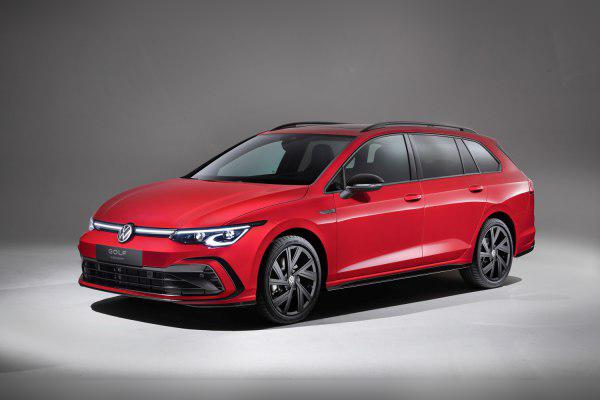
2.0 TDI (EA288 evo / DTRB) 115 HP – Experiences, problems, fuel consumption and maintenance
Key points (TL;DR)
- Biggest advantage: This is a “detuned” 2.0 engine that replaced the old 1.6 TDI. Since it has a larger displacement and lower power output, the engine is extremely unstressed and long‑lasting.
- AdBlue system: Uses the new Twin Dosing technology (two catalytic converters). It’s effective, but adds complexity and potential for expensive urea system failures.
- Fuel consumption: Extremely low. One of the most economical engines in its class, especially on the open road.
- Oil: Requires specific 0W-20 oil (VW 508.00/509.00). Do not experiment with thicker oils because of the DPF and warranty.
- Gearbox: In combination with DSG it offers top comfort, but requires regular maintenance (oil changes).
- Recommendation: An ideal choice for those who drive high mileage and want the reliability of a 2.0 block with the fuel costs of a small engine.
Contents
- Introduction: Successor to the legendary 1.6 TDI
- Technical specifications
- Reliability and maintenance
- Specific parts and costs
- Fuel consumption and performance
- Additional options and modifications
- Gearbox (DSG and manual)
- Used‑car tips and conclusion
Introduction: Successor to the legendary 1.6 TDI
The engine designated EA288 evo (engine code DTRB for this variant) is Volkswagen’s answer to increasingly strict emission standards (Euro 6d). The most important thing you need to know is that VW discontinued the old 1.6 TDI and replaced it with this 2.0 TDI engine detuned to 115 HP.
This is excellent news for used‑car buyers. You get a robust engine block, pistons and crankshaft designed to handle 150 or 200 horsepower, but here they work with only 115. In theory, that means less thermal and mechanical stress and a longer service life, provided that the emission systems are kept in good condition. It is primarily installed in the Golf 8 and related models within the group.
Technical specifications
| Parameter | Value |
|---|---|
| Engine displacement | 1968 cc |
| Power | 85 kW (115 HP) |
| Torque | 250 Nm (Often 300 Nm depending on map/market) |
| Engine code | DTRB (EA288 evo family) |
| Injection type | Common Rail (up to 2200 bar) |
| Charging | Variable geometry turbocharger (VGT) + intercooler |
Reliability and maintenance
Timing belt or chain?
This engine uses a timing belt to drive the camshafts. This is a traditional and quieter solution than a chain. The belt also drives the high‑pressure fuel pump and the water pump (on most variants of this engine). A snapped belt leads to piston‑to‑valve contact, which is a catastrophic failure.
Most common failures
Although mechanically “bulletproof”, the EA288 evo has its weak points related to peripheral components:
- Variable‑flow water pump: A common issue where the electronically controlled ring gets stuck, causing engine overheating or coolant leaks. Symptoms include a sudden temperature spike or loss of coolant.
- Software issues: In the Golf 8, problems often aren’t in the engine itself, but in the electronics that report false engine faults.
- Exhaust gas temperature sensors: Due to the complex after‑treatment system, these sensors are under heavy stress and can fail.
- Oil leaks at the crankshaft seal: Observed on some higher‑mileage examples.
Major service and intervals
The factory recommendation for timing belt replacement is often an optimistic 210,000 km. However, workshop experience suggests this is too long. The recommendation is to do the major service (timing kit + water pump + auxiliary belt) at 160,000 to 180,000 km or after 5 to 7 years of age, whichever comes first. The cost is around average (not cheap, but not the very cheapest either, due to the electronic water pump).
Engine oil: capacity and grade
The engine takes about 5.5 to 5.7 liters of oil (depending on the filter and exact sump design). You need to be very careful here. EA288 evo engines are designed for low‑viscosity oil, most commonly 0W-20 with specification VW 508.00 / 509.00 (LongLife IV). This oil has a green‑bluish color.
Does it consume oil? Yes, due to the extremely thin oil (0W-20), consumption of 0.5 to 0.8 liters per 10,000 km is considered completely normal, especially if driven more aggressively on the motorway. Always keep a liter of oil in the trunk. Don’t worry if you have to top up; this is not a sign of a fault on this engine.
Injector longevity
The injection system is a high‑pressure Common Rail. The injectors are generally reliable and can last over 250,000 km with good‑quality fuel. They are sensitive to water in the fuel and poor‑quality diesel. Symptoms of bad injectors include rough idle (“rocking”), hard starting or increased smoke when accelerating.
Specific parts and costs
Dual‑mass flywheel
Yes, this engine has a dual‑mass flywheel (DMF). Regardless of whether it’s paired with a manual gearbox or DSG, the DMF is there to reduce diesel vibrations. Its typical lifespan is around 200,000 km, but city stop‑and‑go driving can “kill” it earlier. Symptoms include metallic noises when starting/stopping the engine and vibrations in the clutch pedal or in the cabin at idle. Replacement is expensive (depends on the market).
Turbocharger
The engine uses a single variable‑geometry turbocharger. It is not heavily stressed because the engine runs at reduced power. With regular oil changes and allowing the turbo to cool after fast driving (idling for a minute before switching off), the turbo can last as long as the engine. It is not prone to sudden failures.
DPF, EGR and AdBlue (Twin Dosing)
This is the most complex part of the engine. The EA288 evo uses a Twin Dosing system, which means it has two SCR catalytic converters and two AdBlue injectors in order to meet Euro 6d standards.
Yes, it has a DPF and EGR. The low‑pressure EGR valve is integrated and tends to get clogged if the car is driven only in the city (“choking the engine”).
AdBlue issues: The AdBlue system is sensitive. Common failures include heaters in the AdBlue tank or urea crystallization on the injectors if the car sits for a long time. Maintenance means topping up only good‑quality AdBlue and occasionally driving on the open road so the DPF can regenerate passively.
Fuel consumption and performance
City driving and “sluggishness”
Real‑world city consumption is between 5.5 and 6.5 l/100 km, which is an excellent result for an estate car like the Golf Variant. Is the engine “sluggish”? No. Although on paper it has 115 HP (same as the old 1.6), the driving feel is much better because the 2.0 engine has bigger “lungs” and the torque is available earlier and more linearly. For normal driving, there is more than enough power.
Motorway
This engine really shines on the motorway. Thanks to the 7‑speed DSG gearbox, at 130 km/h the engine spins at a low 2,000 rpm (or even lower, depending on the final drive). This results in consumption of about 4.5 to 5.0 l/100 km. The engine is quiet and refined, and overtaking is safe, though not sporty.
Additional options and modifications
Remapping (Stage 1)
This is one of the best engines for “unlocking” power. Since the hardware (block, pistons, often the turbo) is almost identical to the 150 HP version, it can safely be raised to 150–160 HP and over 340 Nm just by changing the software (Stage 1). That way you get the performance of the more powerful model for less money, while keeping low fuel consumption. However, keep in mind that higher torque wears the clutch and dual‑mass flywheel faster.
Gearbox: DSG vs manual
Which gearboxes are fitted?
With this engine in the Golf 8 you most commonly get:
1. Manual gearbox (6‑speed): Code MQ281. Robust, precise.
2. DSG automatic gearbox (7‑speed): Here you need to be careful. More powerful versions (150 HP) use the DQ381 (wet clutch). The 115 HP and 250 Nm version is on the limit. A more robust gearbox is often fitted because of the 2.0 block, but check by VIN. If it is the DQ381 (which is standard for the EA288 evo in the Golf 8), it is an excellent gearbox with a wet clutch.
Most common issues and maintenance
Manual: Failures are rare, mostly clutch kit and flywheel. An oil change in the gearbox is not prescribed (“fill for life”), but is recommended at 150,000 km.
DSG: If it is the wet‑clutch gearbox (DQ381), oil and filter changes are mandatory every 60,000 to 120,000 km (earlier, at 60k, is recommended). If the oil is not changed, the mechatronics unit, which is very expensive (depends on the market), can fail. Symptoms include jerking when moving off or delayed gear changes.
Buying used and conclusion
Before buying a Golf 8 with this engine, make sure to check:
- Bonnet sound insulation: Is the engine excessively noisy (a sign of bad injectors or flywheel)?
- Coolant leak traces: Around the water pump and expansion tank.
- AdBlue system diagnostics: Any fault codes related to reagent level or pump?
- Gearbox service history: If it’s a DSG and has over 100k km, there must be proof of an oil change.
Conclusion: The 2.0 TDI with 115 HP is a “hidden gem” in the lineup. It offers the reliability and longevity of a two‑liter engine with registration costs (in some countries) and fuel consumption of a small diesel. It is aimed at drivers who cover a lot of miles, want comfort on the motorway, and don’t put performance first – although that can easily be fixed with a remap. It is a better buy than the old 1.6 TDI in every respect.
Was this content useful to you?
Your opinion helps us to improve the quality of the content.