EA888 evo4 / DNNF Engine
- Engine
- 1984 cm3
- Aspiration
- Turbocharger, Intercooler
- Fuel
- Petrol (Gasoline)
- Fuel injection system
- Direct injection
- Power
- 333 hp
- Torque
- 420 Nm
- Cylinders
- 4
- Valves
- 16, 4 per cylinder
- Cylinders position
- Inline
- Valvetrain
- DOHC
- Oil capacity
- 5.7 l
- Systems
- Start & Stop System, Particulate filter
# Vehicles powered by this engine
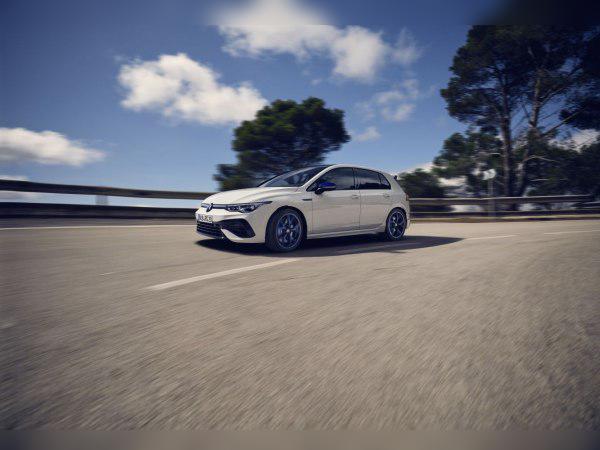
VW 2.0 TSI EA888 evo4 (DNNF) – Experiences, issues, fuel consumption and used-car buying tips
Key points in short (TL;DR)
- Top-notch performance: With 333 hp, this is the most “wound up” factory Golf version so far, delivering incredible acceleration.
- More reliable timing chain: The timing chain stretching issues from earlier generations are largely resolved here.
- Demanding maintenance: Forget about “LongLife” intervals; the oil must be changed every 10,000 km if you want the engine to last.
- GPF filter: It has a gasoline particulate filter (OPF/GPF), which muffles the sound and requires high-quality fuel.
- Cooling system: The thermostat module and water pump are the most common weak points of this engine.
- Fuel consumption: Not for those counting every liter; in the city it easily exceeds 12–13 liters.
- Recommendation: An ideal machine for enthusiasts who want supercar performance in a practical package.
Contents
- Introduction: What is the EA888 evo4 (DNNF)?
- Technical specifications
- Reliability and maintenance
- Specific components and injection system
- Fuel consumption and performance
- Additional options and tuning
- Gearbox (DSG) and drivetrain
- Buying used and conclusion
Introduction: What is the EA888 evo4 (DNNF)?
The engine code DNNF belongs to the fourth evolution (evo4) of Volkswagen’s legendary EA888 series. This is not the “regular” 2.0 TSI you’ll find in a Passat or Škoda Superb. It is the pinnacle of engineering designed specifically for the VW Golf VIII R “20 Years” edition. With 333 hp (245 kW), this was the most powerful production Golf ever built at the time of its release.
Unlike the standard versions, this engine has a modified turbocharger, an optimized cooling system and software that allows a more aggressive throttle response (including “Emotion Start” which raises the revs at startup). It represents a bridge between classic hot hatches and serious sports cars.
Technical specifications
| Feature | Data |
|---|---|
| Engine code | DNNF (EA888 evo4) |
| Displacement | 1984 cc (2.0 L) |
| Power | 245 kW (333 hp) at 5600–6500 rpm |
| Torque | 420 Nm at 2100–5500 rpm |
| Injection type | Direct injection (TSI/FSI) – up to 350 bar |
| Charging | Turbocharger (Continental) + intercooler |
| Camshaft drive | Chain |
| Emissions standard | Euro 6d-ISC-FCM |
Reliability and maintenance
Timing system: Chain or belt?
This engine uses a chain to drive the camshafts. Unlike the notorious earlier EA888 generations (where chain failure was common), the evo4 generation has a significantly reinforced and more reliable chain drive. Still, regular oil changes are crucial for the longevity of the chain and hydraulic tensioners. If you hear rattling on a cold start that lasts longer than 2–3 seconds, that’s a sign the chain needs to be checked urgently.
Most common failures
Although the engine is robust, owners may encounter the following issues:
- Thermostat module and water pump: The housing is plastic and exposed to high thermal stress. Coolant leaks are the most common problem. Symptoms include dropping coolant level or engine overheating.
- PCV valve (oil separator): If the membrane tears, the engine may start consuming oil, smoking, or idling roughly due to unmetered (“false”) air.
- Carbon buildup: Although evo4 has improved injection, as a direct-injection gasoline engine it is still prone to deposits on intake valves, which gradually reduce power.
Service intervals and oil
The major service (chain replacement) is not time-specified; it is done as needed (often only after 150,000–200,000 km with good maintenance). The auxiliary (serpentine) belt and tensioners should be inspected every 60,000 km.
Oil: This engine takes approximately 5.7 liters of engine oil. The recommended grade is 0W-30 (VW 504.00/507.00) or the newer 0W-20 (VW 508.00/509.00), depending on the market and the service book recommendation. Due to the extreme temperatures generated by the turbo, change the oil every 10,000–12,000 km at most, or once a year. Ignore extended 30,000 km intervals.
Oil consumption
Modern TSI engines consume significantly less oil than before, but under sporty driving (high revs), consumption of around 0.5 liters per 5,000 km is considered acceptable. If the engine uses a liter per 1,000 km, that points to an issue with piston rings or the turbo.
Spark plugs
Given the high specific output, the spark plugs are under heavy load. It is recommended to replace them every 30,000 to 40,000 km (more often than on standard models) to prevent misfires and damage to the ignition coils.
Specific components (costs)
Dual-mass flywheel: Yes, in combination with the DSG gearbox this engine uses a dual-mass flywheel. It is necessary to absorb vibrations and protect the gearbox from sudden torque spikes. Its lifespan depends on driving style (frequent “Launch Control” starts will destroy it quickly). Replacement is expensive (varies by market).
Injection system: It uses high-pressure direct injection operating at up to 350 bar. The injectors are generally reliable but extremely sensitive to poor fuel quality. Using petrol with less than 98 RON can lead to detonation and long-term damage.
Turbocharger: The engine uses a single but large Continental turbocharger. It is very durable, provided the engine is not switched off immediately after hard driving (it should be left idling for a minute or two so the oil in the turbo can cool down).
DPF/GPF and EGR: Petrol engines do not have a diesel-style DPF, but they do have a GPF/OPF (Gasoline Particulate Filter). It rarely clogs because exhaust gas temperatures on petrol engines are higher, so passive regeneration happens constantly. There is no traditional EGR valve (variable valve timing is used for internal recirculation instead), which is one less thing to worry about. AdBlue is not used.
Fuel consumption and performance
City driving: Let’s be realistic – this is a 333 hp engine. In stop-and-go urban conditions, expect 11 to 14 l/100 km. If you have a heavy right foot, that figure will go even higher.
Is the engine lazy? Absolutely not. With 420 Nm available from just 2100 rpm, the Golf R “20 Years” launches itself forward. Thanks to the turbocharger pre-loading function in certain drive modes, turbo lag is minimal.
Highway driving: On the motorway at 130 km/h the engine cruises relaxed, usually below 3,000 rpm in 7th gear. In that scenario, consumption can drop to 8 to 9 l/100 km. This makes it surprisingly usable for long trips.
Additional options and modifications
LPG conversion: Although technically possible (liquid direct-injection LPG systems), it is not recommended. The installation is very expensive, complex, and robs this kind of car of its performance. You also lose boot space, which is already reduced due to the 4MOTION drivetrain.
Chiptuning (Stage 1): The EA888 evo4 is a tuner’s dream. With just a software remap (Stage 1), without mechanical changes, power can safely be raised to 370–380 hp and torque to nearly 500 Nm. However, keep in mind that the components are already heavily loaded in the 333 hp factory version, so any further increase shortens the lifespan of the turbo and gearbox.
Gearbox
This engine (especially in the R version) comes exclusively with a 7-speed DSG automatic gearbox (code DQ381, wet clutch). A manual gearbox is generally not an option for the “20 Years” version in most markets.
Gearbox maintenance: The oil and filter in the DSG gearbox must be changed every 60,000 km (or 120,000 km under some newer specs, but experts advise earlier). Failures are rare if maintained properly, but neglect leads to failure of the mechatronics unit (the gearbox “brain”), whose repair is very expensive (varies by market, but expect it to be costly).
Clutch pack: The clutch pack in the gearbox wears out. Replacement is complex and expensive, but it usually lasts over 200,000 km unless the car is used on track.
Buying used and conclusion
Buying a used car with this engine requires caution, because such cars are rarely driven “gently” or like a pensioner’s car.
What to check:
- Number of Launch Control starts: A good diagnostician can read how many times Launch Control has been used. If the number is high, the condition of the gearbox and drivetrain is questionable.
- Rear differential: This model features advanced “R-Performance Torque Vectoring”. Listen for noises, whining or knocking from the rear of the car during sharper cornering.
- Coolant leaks: Visually inspect the area around the water pump.
- Service history: If there is no documented servicing at a maximum of 15,000 km intervals, walk away from the car.
Conclusion: The VW 2.0 TSI (DNNF) with 333 hp is a phenomenal engineering achievement. It offers supercar-level performance in a package you can drive every day. However, it is not a cheap toy. Maintenance is expensive, fuel consumption is high, and the parts are specialized. It is intended for enthusiasts who know what they are buying and are willing to pay for a top-tier driving experience.
Was this content useful to you?
Your opinion helps us to improve the quality of the content.