CZDA, CHPB Engine
- Engine
- 1395 cm3
- Aspiration
- Turbocharger, Intercooler
- Fuel
- Petrol (Gasoline)
- Fuel injection system
- Direct injection
- Power
- 150 hp
- Torque
- 250 Nm
- Cylinders
- 4
- Valves
- 16, 4 per cylinder
- Cylinders position
- Inline
- Oil capacity
- 4 l
- Systems
- Cylinder deactivation system
# Vehicles powered by this engine
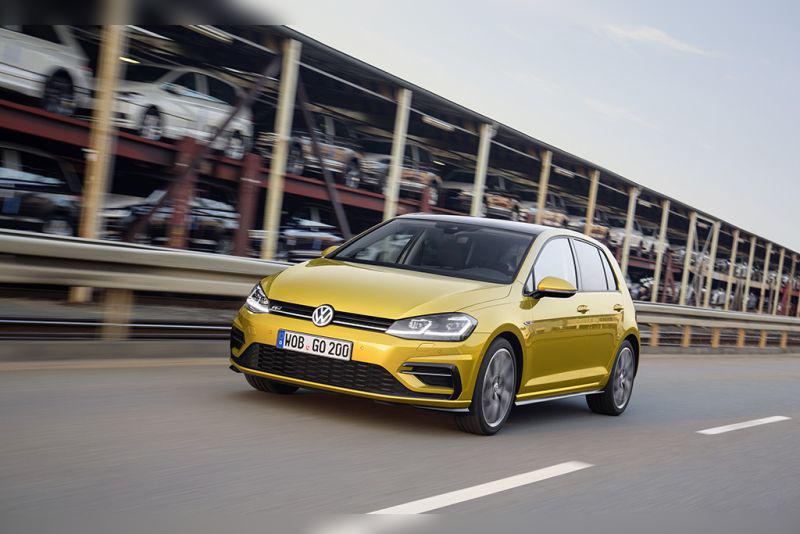
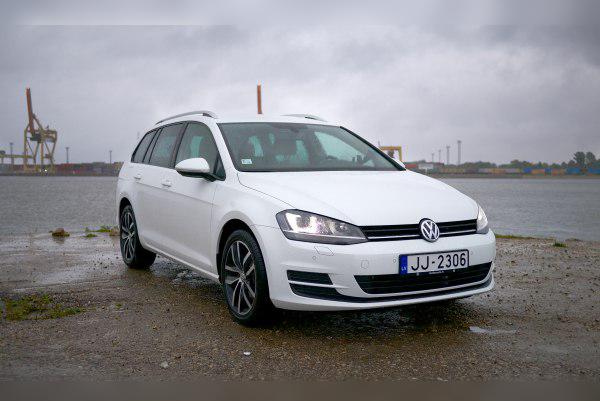
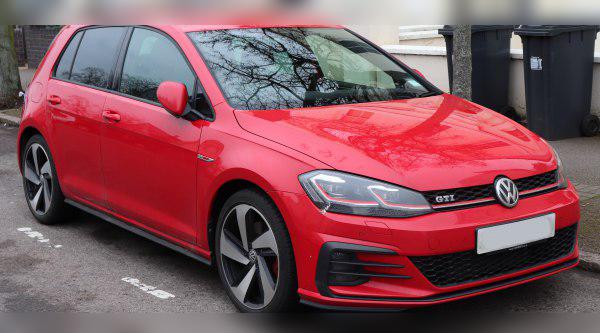
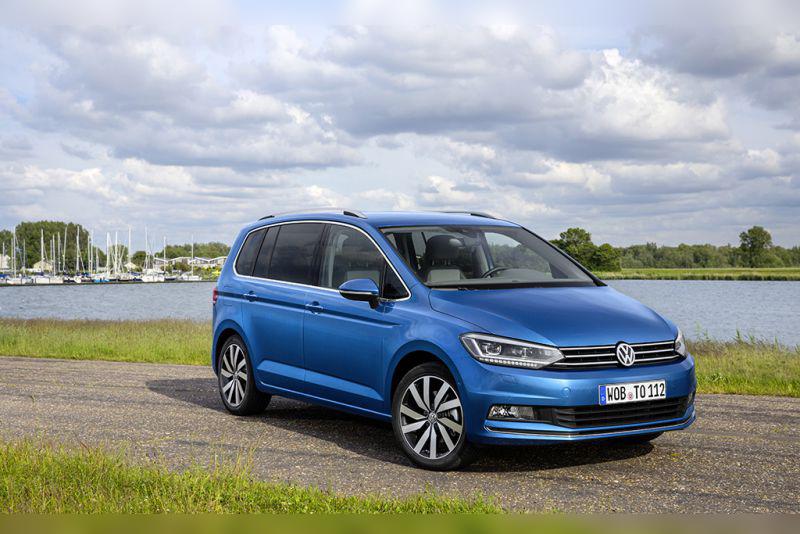
1.4 TSI (CZDA, CHPB) 150 HP – Experiences, problems, fuel consumption and buying used
1. The most important in short (TL;DR)
- Timing belt drive: Unlike older 1.4 TSI engines (which had problematic chains), this generation (EA211) uses a timing belt that is very reliable.
- ACT Technology: Many versions (especially Golf VII) come with a system that deactivates two cylinders to save fuel – it works seamlessly and efficiently.
- Coolant leaks: The most common failure is the thermostat housing with the water pump, which tends to start leaking.
- DSG Gearbox (DQ200): If you choose an automatic, pay attention to the condition of the clutch and mechatronics, because this is a “dry” clutch gearbox that is more sensitive to city driving.
- Excellent balance: With 150 HP and 250 Nm, this is probably the best “civilian” engine option for the Golf 7 and Touran – it goes very well and uses little fuel.
- Direct injection: Potential carbon buildup on intake valves at higher mileage.
Contents
- Introduction and applications
- Technical specifications
- Reliability and maintenance
- Specific parts (costs)
- Fuel consumption and performance
- Additional options and modifications
- Gearbox: Manual vs DSG
- Buying used and conclusion
Introduction and applications
The engine we are talking about belongs to the EA211 family of Volkswagen engines. This is a key piece of information because it marks the transition from the problematic engines (EA111 with chain) to a modern, aluminum construction with a timing belt. Versions with engine codes CZDA and CHPB with 150 horsepower represent the top of the standard petrol range in the Golf VII (before the GTI models) and the ideal choice for the family Touran.
This engine was designed to offer the performance of the old 2.0 naturally aspirated engines, but with drastically lower fuel consumption and higher torque available at low revs. It often comes with the ACT (Active Cylinder Technology) label, which means that under low load it deactivates the second and third cylinders to save fuel.
Technical specifications
| Specification | Data |
|---|---|
| Displacement | 1395 cc (1.4 litres) |
| Power | 110 kW (150 HP) at 5000–6000 rpm |
| Torque | 250 Nm at 1500–3500 rpm |
| Engine codes | CZDA, CHPB |
| Injection system | TSI – Direct petrol injection |
| Charging | Turbocharger (single-scroll) + water-cooled intercooler |
| Valve timing drive | Timing belt |
Reliability and maintenance
Does this engine have a timing belt or a chain?
This engine (EA211 generation) uses a timing belt. This was a big change compared to its predecessor and turned out to be a complete success. The belt is extremely durable and quiet, and the risk of catastrophic chain failure that plagued the older 1.4 TSI engines is eliminated here.
What are the most common failures on this engine?
Although it is reliable, the CZDA/CHPB engine has a few weak points:
- Water pump and thermostat housing: This is issue number one. The module is made of plastic and often develops coolant leaks or a sticking thermostat. If you notice the coolant level dropping, this is the first place to check.
- Turbo actuator (wastegate): The actuator rod can start sticking, which results in the “EPC” light coming on and a loss of power. The assembly often has to be replaced or refurbished.
- Oil consumption (to a lesser extent): It is not as dramatic as it used to be, but due to stuck piston rings at higher mileage, oil consumption can increase, especially if the engine has been run on “long-life” service intervals.
- Carbon buildup on intake valves: Because of direct injection, fuel does not “wash” the valves, so over time carbon deposits build up and can slightly choke the engine.
At what mileage should the major service (timing belt) be done?
The factory recommendation for the first timing belt inspection is often at an incredible 240,000 km, which is far too optimistic for real-world conditions. Experienced mechanics recommend replacing the timing set (belt, tensioners, water pump) at intervals between 160,000 km and 180,000 km, or after 7 to 8 years, whichever comes first. Better safe than sorry.
How many litres of oil does this engine take and which grade is recommended?
The sump holds approximately 4.0 to 4.5 litres of oil (including the filter). The most commonly recommended grade is 5W-30 (VW 504.00/507.00 standard) or the newer 0W-20 (VW 508.00) for the latest variants for better fuel economy. Always check the sticker under the bonnet or the owner’s manual, because using the wrong oil can damage the turbo or the DPF/GPF on newer vehicles.
Does it consume oil between services and what amount is considered normal?
A healthy 1.4 TSI (CZDA) should not consume significant amounts of oil. Consumption of 0.5 to 0.8 litres per 10,000 km is considered completely acceptable and normal, especially if the car is driven on the motorway at higher revs. If you have to top up a litre every 2,000–3,000 km, that points to a problem with the piston rings or the turbo.
At what mileage should the spark plugs be replaced?
Since this is a turbocharged petrol engine with direct injection, the spark plugs are under higher stress. The recommendation is to replace them every 60,000 km. Use only high-quality iridium spark plugs (NGK or Bosch) specified for this engine, because a bad plug can lead to coil (ignition coil) failure.
Specific parts (costs)
Does the engine have a dual-mass flywheel?
Yes. The 150 HP and 250 Nm version in the Golf VII and Touran is equipped with a dual-mass flywheel, regardless of whether it has a manual or DSG gearbox. Its role is to dampen engine vibrations. Failure symptoms are knocking when switching the engine off or rattling at idle.
What kind of injection system does it have and are the injectors problematic?
The system is direct injection (TSI/FSI) with high pressure. The injectors themselves are generally reliable and rarely fail before 200,000 km. However, they are sensitive to poor fuel quality. Injector failure manifests itself as rough running, jerking or fuel leaking into a cylinder (which can dilute the oil).
Does this engine have a turbocharger and what is its lifespan like?
It has a single turbocharger integrated into the exhaust manifold (fewer parts, faster warm-up). The turbo’s lifespan is usually equal to the engine’s lifespan with regular oil changes and proper cooldown after hard driving. It does not have a supercharger like the old Twincharger engines, which makes it significantly more reliable.
Does this model have a DPF filter or an EGR valve?
Being a petrol engine, it does not have a classic DPF like diesels. However, models produced from late 2017 and during 2018 (Euro 6d-TEMP standards) may have a OPF/GPF (Gasoline Particulate Filter). Check by VIN. As for EGR, this engine does not have a classic external EGR valve that gets clogged with soot; exhaust gas recirculation is done internally via variable valve timing (VVT), which is a great solution because there is no physical part that can get blocked.
Does this engine use AdBlue?
No. AdBlue is used exclusively on diesel engines (TDI) to reduce NOx emissions. This 1.4 TSI petrol engine has no AdBlue system, which means lower costs and fewer potential failures (AdBlue heaters, injectors, pumps) compared to a diesel.
Fuel consumption and performance
What is the real fuel consumption in city driving?
Thanks to fast warm-up and the Start-Stop system (as well as the ACT system on some models), city fuel consumption is very reasonable. For the Golf VII you can expect 7.0 to 8.5 l/100 km depending on traffic. The heavier Touran will use around 8.5 to 9.5 l/100 km in the city. If you have a heavy right foot, the figure easily goes above 10 litres.
Is this engine “lazy” for the weight of the car?
Absolutely not. With 250 Nm available from just 1500 rpm, this engine pulls surprisingly well. In the Golf VII, 0–100 km/h takes under 8.5 seconds, which in practice is quicker than most 2.0 TDI (150 HP) diesels because of the lighter front end. Even in the Touran, the engine copes quite well with a fully loaded car, although you will feel the need to shift more often on uphill stretches if the car is overloaded.
What is it like on the motorway and at what revs does it cruise at 130 km/h?
It is an excellent motorway cruiser. At 130 km/h in top gear (6th with the manual or 7th with the DSG), the engine spins at around 2,200–2,400 rpm. This results in a quiet cabin and fuel consumption of about 6.0 to 6.5 l/100 km on the open road.
Additional options and modifications
Is this engine suitable for LPG conversion?
Conditionally yes, but it is expensive. Due to direct injection, a regular sequential LPG system cannot be installed. You need a system for direct liquid gas injection or a system that uses a mixture of petrol and gas (to cool the petrol injectors). Installation is very expensive (often over 1000 EUR, depending on the market) and the cost-effectiveness is questionable unless you cover very high mileage (over 30,000 km per year).
How far can this engine be safely tuned (Stage 1)?
The engine has potential. A Stage 1 remap usually raises power to 175–185 HP and torque to 300–320 Nm.
WARNING FOR DSG: If you have a DSG gearbox (DQ200), be careful. That gearbox is factory rated for 250 Nm. Increasing torque can drastically shorten the life of the DSG clutch pack. With the manual gearbox, the clutch handles this increase better, but the flywheel lifespan is also reduced.
Gearbox: Manual vs DSG
Which gearboxes are fitted?
- Manual: 6-speed gearbox. Precise, easy to operate.
- Automatic: 7-speed DSG, model DQ200. This is a dual-clutch gearbox with “dry” clutches.
Most common failures?
Manual: Very reliable. The main expense is the clutch kit and dual-mass flywheel. Actual gearbox failures are rare.
DSG (DQ200): This is a sensitive point. It is known for juddering when setting off or harsh shifting from 1st to 2nd gear. The most common failure is the mechatronics unit (control unit) and premature clutch wear due to stop–go city driving. In the Golf 7 (facelift) this gearbox was improved, but it still requires caution.
Cost of clutch and flywheel replacement?
The costs are high (depending on the market). Replacing the dual-mass flywheel and clutch kit on the manual gearbox is a standard expense for modern cars. On the DSG, the clutch pack is also a wear item, and replacement requires special tools and calibration, which increases labour costs. Expect this to be one of the more expensive services on the car.
Gearbox servicing?
Manual: Volkswagen often says the oil is “lifetime”, but it is recommended to change it every 100,000–150,000 km.
DSG DQ200: Although it has “dry” clutches, there is oil inside the gearbox for the gears and a separate fluid for the mechatronics. It is not on a strict service interval like the “wet” DSG (DQ250), but it is recommended to have the oil in the mechatronics checked and possibly replaced by a specialist if problems occur.
Buying used and conclusion
What should you check before buying?
- Cold start: Listen to the engine at first start-up. Although it does not have a chain, rattling can indicate a problem with the cam phaser or hydraulic lifters.
- Coolant traces: Look in the engine bay around the water pump (on the passenger side of the engine). Whitish or pink traces mean that the thermostat housing is leaking.
- ACT system: While driving, when the display shows “2-cylinder mode” (or ECO), you should not feel any strong vibrations or jerking.
- DSG test: If it is an automatic, warm the car up and try setting off uphill without throttle (to see if it holds or shudders) and then do a hard acceleration. Any hesitation, thump or flaring of revs is a sign of an expensive fault.
Conclusion: Who is it for?
The 1.4 TSI (150 HP) engine is an outright recommendation. It is the “golden middle ground” – it goes almost like a GTI, yet uses fuel like a diesel on the open road, with a much quieter and more refined operation. It is ideal for drivers who cover up to 20,000–25,000 km per year and want the refinement that a diesel cannot offer.
If you are buying a Golf 7 or Touran and are worried about diesel restrictions or expensive DPF and injector failures, this petrol engine is the best choice you can make, provided it has been regularly maintained and you check the condition of the water pump.
Was this content useful to you?
Your opinion helps us to improve the quality of the content.