CHZK, DKLB Engine
- Engine
- 999 cm3
- Aspiration
- Turbocharger, Intercooler
- Fuel
- Petrol (Gasoline)
- Fuel injection system
- Direct injection
- Power
- 85 hp
- Torque
- 175 Nm
- Cylinders
- 3
- Valves
- 12, 4 per cylinder
- Cylinders position
- Inline
- Oil capacity
- 4 l
# Vehicles powered by this engine
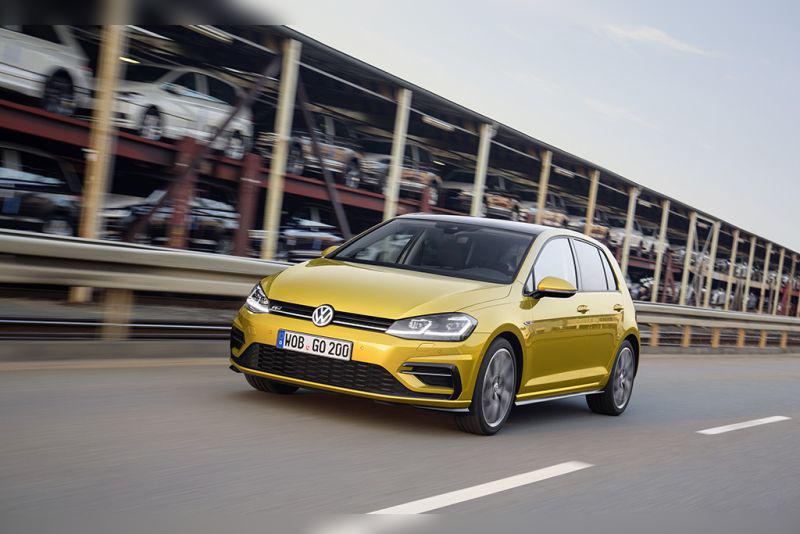
1.0 TSI (85 HP) CHZK / DKLB – Experiences, Problems, Fuel Consumption and Buying Tips
Key points in short (TL;DR)
- Engine: Modern three-cylinder from the EA211 family that replaces the older 1.2 TSI engines. Surprisingly refined operation.
- Timing drive: Uses a timing belt, not a chain, which solved many problems of previous TSI generations.
- Power: With 85 HP (63 kW) and 175 Nm, this is the base engine. Quite sufficient for city driving, but requires patience on the motorway.
- Efficiency: Extremely low fuel consumption if driven moderately.
- Big plus: This 85 HP version most often comes with a solid (single-mass) flywheel, which makes maintenance cheaper.
- Main drawbacks: Sensitive to poor fuel quality (injectors), potential issues with the water pump and carbon buildup on the valves.
- Recommendation: An excellent choice for drivers who spend most of their time in the city and on regional roads, and want cheaper maintenance than with a diesel.
Contents
- Technical Specifications
- Reliability and Maintenance
- Specific Parts and Costs
- Fuel Consumption and Performance
- Additional Options and Modifications
- Gearbox
- Buying Used and Conclusion
The Volkswagen Golf VII (facelift model from 2017) brought a new engine generation under the hood. The legendary, but sometimes problematic 1.2 TSI engines were replaced by smaller, lighter and more efficient 1.0 TSI three-cylinders. Although on paper a displacement of 999 cc in a C-segment car (Golf class) sounds unserious, in practice this Volkswagen engineering project turned out to be a hit, especially for the average European buyer. The focus of this text is on the versions with engine codes CHZK and DKLB which deliver 85 horsepower.
Technical Specifications
| Engine displacement | 999 cc (1.0 L) |
| Configuration | Inline 3-cylinder, 12 valves |
| Power | 63 kW / 85 HP @ 5000-5500 rpm |
| Torque | 175 Nm @ 2000-3000 rpm |
| Engine codes | CHZK, DKLB |
| Injection type | Direct injection (TSI) |
| Charging | Turbocharger + intercooler (water-air) |
| Camshaft drive | Timing belt (belt-in-oil for the oil pump) |
Reliability and Maintenance
Does this engine have a timing belt or a chain?
This engine belongs to the EA211 family and uses a timing belt to drive the camshafts. This is important to emphasize because older TSI engines (EA111) had problems with chain stretching. The belt on the 1.0 TSI is reinforced and designed to last a long time, but an engineering curiosity is the oil pump drive, which is realized via a special belt that is "immersed in oil" (belt-in-oil). Although it sounds complicated, the system has proven to be reliable.
What are the most common failures on this engine?
Although the engine is generally robust, there are some specific failure points:
- Water pump and thermostat housing: This is the most common “weak spot”. The housing is plastic and complex (it contains the thermostat and pump in one module). Over time, coolant leaks or thermostat sticking may occur. Symptoms are coolant loss or incorrect engine temperature.
- Carbon buildup: As with any direct injection engine, the intake valves are not “washed” by fuel. Over time, soot deposits form which can reduce performance and cause rough idle.
- Engine mounts vibrations: Since this is a three-cylinder, it naturally has more imbalance. The hydraulic engine mounts are under greater stress to hide these vibrations from the driver, so they can fail earlier than on four-cylinder engines.
- Turbocharger actuator: Sometimes the electric actuator that controls the turbo can fail or “stick”, leading to loss of power and the “Check Engine” light (EPC fault) coming on.
At what mileage should the major service (timing belt) be done?
The factory recommendation for timing belt replacement is often optimistic (up to 210,000 km or 10 years in some manuals). However, workshop experience calls for caution. A first detailed inspection is recommended at 150,000 km, and replacement no later than between 160,000 km and 180,000 km or after 7 to 8 years of age. A snapped belt leads to catastrophic engine damage, so it’s “better safe than sorry”.
How many liters of oil does this engine take and which viscosity is recommended?
The sump holds approximately 4.0 liters of oil (with filter). As for viscosity, VW is specific here. For newer models (DKLB) they often recommend thin 0W-20 oil (VW 508.00/509.00 specification) for ecological reasons and lower consumption. However, many mechanics and owners, especially in warmer climates or on higher mileage engines, switch to 5W-30 (VW 504.00/507.00), which provides better protection at high temperatures. Check the sticker under the hood or the vehicle manual.
Does it consume oil between services?
Oil consumption on a healthy 1.0 TSI engine is minimal. It is considered normal if the engine uses 0.3 to 0.5 liters per 10,000 km, which often means no top-up is needed between services. If consumption exceeds 1 liter over a few thousand kilometers, this indicates a problem with piston rings or the turbo, which is not typical for this engine unless it has been poorly maintained (overly long oil change intervals).
At what mileage should the spark plugs be replaced?
On TSI engines, spark plugs are under high thermal load. Replacement is recommended every 60,000 km or 4 years. Use only quality iridium spark plugs (NGK or Bosch) according to factory specification. Bad plugs can lead to coil failure (there is a separate coil for each cylinder).
Specific Parts (Costs)
Does the engine have a dual-mass flywheel?
This is one of the best pieces of news for potential owners. The 85 HP (63 kW) version in the Golf VII most often comes with a solid (single-mass) flywheel. Given the lower torque (175 Nm), a dual-mass flywheel is not necessary to absorb vibrations as on more powerful versions (110/115 HP). This significantly reduces clutch replacement costs. (Note: Always check by VIN, as there are rare exceptions depending on the market).
What kind of injection system does it have and are the injectors problematic?
The engine uses direct fuel injection at high pressure (up to 250 bar). The injectors are precise and generally durable, but extremely sensitive to poor fuel quality. A clogged injector can lead to “washing” of the cylinder with fuel and piston damage (“piston melting”). It is recommended to occasionally use a fuel system cleaner additive or higher-quality petrol.
Does this engine have a turbocharger and what is its lifespan?
It has a single turbocharger integrated with the exhaust manifold. The turbo is small, responds very quickly (no significant “turbo lag”) and is water-cooled. Its lifespan is closely linked to regular oil changes. If the oil is changed every 10–15,000 km, the turbo can easily last over 200,000 km. The cost of a rebuild is moderate (depends on the market) and not excessively expensive compared to diesel variants.
Does this model have a DPF filter or EGR valve?
Petrol engines do not have a DPF in the diesel sense, but newer versions (especially with the DKLB code and Euro 6d-TEMP standard) have a OPF/GPF (Gasoline Particulate Filter). It clogs less frequently than a diesel DPF because petrol engines run at higher exhaust gas temperatures, but constant city driving can still “choke” it. An EGR valve is present and can get dirty from soot, but this is not as common a failure as on TDI engines.
Does this engine use AdBlue?
No. AdBlue is used exclusively on diesel engines (SCR catalysts). This petrol engine does not require any additional fluids besides fuel, oil and coolant.
Fuel Consumption and Performance
What is the real-world fuel consumption in city driving?
In real-world city stop-and-go driving, the Golf 1.0 TSI (85 HP) uses between 6.0 and 7.5 liters per 100 km. This heavily depends on driving style – if you “floor it” to make it pull, consumption rises. If you drive smoothly, it can be very economical.
Is this engine “sluggish” for the weight of the body?
The Golf VII is not a light car (around 1200–1300 kg). However, the torque of 175 Nm is available from as low as 2000 rpm, which makes it surprisingly lively in the city up to speeds of 60–80 km/h. You won’t feel that the engine is “dead”. However, when the car is loaded with passengers and luggage, the lack of power is noticeable, especially on uphill sections where you will need to shift gears more often.
How does the engine perform on the motorway and at what rpm does it cruise at 130 km/h?
On the motorway the engine shows its limitations. Up to 120–130 km/h it behaves decently. At 130 km/h in top gear (usually 5th on this version), the engine spins at around 3000 rpm (depending on the gearbox). Noise is acceptable. Motorway consumption is around 5.5 to 6.5 liters. Overtaking at speeds above 110 km/h requires planning and a mandatory downshift.
Additional Options and Modifications
Is this engine suitable for LPG (autogas) conversion?
It is not an ideal candidate. Due to direct injection (TSI), a regular sequential LPG system cannot be installed. Expensive systems must be used that either utilize liquid-phase LPG (using the petrol injectors) or systems that inject a mixture of gas and petrol (to cool the petrol injectors). Installation is expensive (often over 800–1000 EUR), and given the low petrol consumption, the payback period is very long. Most owners give up on this idea.
How far can this engine be safely tuned (“Stage 1”)?
This engine is software “detuned”. Hardware-wise it is very similar to the more powerful 110/115 HP version. With a “Stage 1” remap, power can safely be raised to 110 to 115 HP, and torque to 200+ Nm. This drastically changes the character of the car and makes it much more pleasant to drive. Of course, any tuning carries the risk of faster clutch and turbo wear, but on this engine there is a significant safety margin.
Gearbox
Which gearboxes are fitted?
With the 85 HP version in the Golf VII Facelift, you most commonly get a 5-speed manual gearbox (MQ200 family). In some rare variants you can also find a 7-speed DSG automatic (DQ200), but it is more common with more powerful engines.
Most common gearbox issues?
- 5-speed manual: Very reliable. Problems are rare, possibly oil leaks at the driveshaft seals at high mileage.
- DSG (DQ200): If you come across an automatic, this is a gearbox with “dry” clutches. It is known for a sensitive mechatronic unit and faster clutch wear in city driving. Mechatronic repairs are expensive.
What is the cost of clutch replacement?
For the manual gearbox, the clutch kit (pressure plate, disc, release bearing) is relatively affordable because, as mentioned, it likely does not have a dual-mass flywheel. The price of the kit with labor is in the range of “acceptable” to “not expensive” (depends on the market and workshop).
Gearbox service?
VW often claims that the oil in the manual gearbox is “lifetime”. Experienced mechanics recommend changing the oil at 150,000 km or 10 years to preserve bearings and synchros. On DSG gearboxes (DQ200), the oil in the mechatronic unit and gear section is also not scheduled for replacement in the official maintenance plan, but it is advisable to do it at a similar interval.
Buying Used and Conclusion
When buying a used Golf 1.0 TSI (85 HP), pay attention to the following:
- Cold start: The engine should start immediately and quickly settle down. If you hear rattling (even though it has a belt, sometimes lifters or the cam phaser can be noisy) or irregular running, be cautious.
- Coolant level: If the expansion tank is empty or below minimum, suspect a water pump leak. Look for traces of coolant on the left side of the engine (viewed from the front).
- Turbo noise: There should be no loud whistling (“police siren”) when you press the accelerator.
- Service history: It is crucial that the oil has been changed at a maximum of every 15,000 km. If the car has been driven on “Long Life” intervals (30,000 km), the risk of carbon buildup and oil consumption is higher.
Conclusion
VW Golf VII 1.0 TSI (85 HP) is a rational choice. It is not a racer, but it is modern, quiet and cheap to run. It is ideal for: young drivers (cheap insurance), families using the car as a second city vehicle, or relaxed drivers who value low fuel consumption and cheaper maintenance (no dual-mass flywheel, cheaper registration in some markets). If you often travel on the motorway with a full load, look for the 110 HP version or a 1.6/2.0 TDI.
Was this content useful to you?
Your opinion helps us to improve the quality of the content.