EA888 / DLBA Engine
- Engine
- 1984 cm3
- Aspiration
- Turbocharger, Intercooler
- Fuel
- Petrol (Gasoline)
- Fuel injection system
- Direct injection
- Power
- 245 hp
- Torque
- 370 Nm
- Cylinders
- 4
- Valves
- 16, 4 per cylinder
- Cylinders position
- Inline
- Valvetrain
- DOHC
- Oil capacity
- 5.7 l
- Systems
- Start & Stop System
# Vehicles powered by this engine
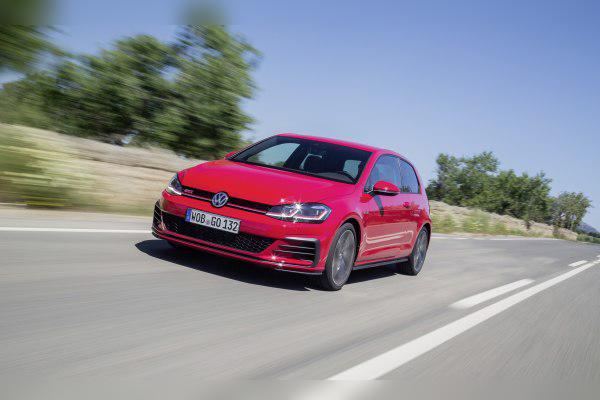
2.0 TSI EA888 (DLBA) – Experiences, issues, fuel consumption and used-buying guide for Golf 7.5 GTI Performance
Key points (TL;DR)
- Performance: This is one of the best 2.0‑liter turbo petrol engines on the market. With 245 hp in the GTI Performance version, it offers a perfect balance between power and everyday usability.
- Timing drive: It uses a timing chain, which on this generation (Gen 3) is much more reliable than on older TSI engines, but it still requires stretch checks at higher mileage.
- Thermostat and water pump: The “Achilles’ heel” of this engine. The thermostat module is made of plastic and often cracks, which leads to coolant leaks.
- Oil consumption: Significantly reduced compared to the notorious second generation of EA888 engines, but regular level checks are mandatory.
- VAQ differential: The GTI Performance (DLBA) comes with a front limited‑slip differential (VAQ) that requires specific maintenance (oil changes).
- Recommendation: Highly recommended, provided the previous owner regularly changed the oil in the engine and DSG gearbox.
Contents
- Introduction and applications
- Technical specifications
- Reliability and maintenance
- Specific parts and costs
- Fuel consumption and performance
- Additional options and modifications
- Gearbox and drivetrain
- Buying used and conclusion
Introduction
The engine code DLBA belongs to the third generation (Gen 3) of Volkswagen’s famous EA888 engine family. Specifically, this is the unit that powers the facelifted version of the Golf 7, better known as the Golf 7.5 GTI Performance. Unlike the standard GTI of that time, which had 230 hp, the DLBA delivers 245 hp and, more importantly, comes with better brakes and an electronically controlled mechanical limited‑slip differential.
This engine is important because it represents the peak of “pure” petrol technology before the widespread introduction of GPF (OPF) filters, which slightly muted the sound and response of later models. For enthusiasts, the DLBA is often the “golden middle ground” – modern and reliable, yet still full of character.
Technical specifications
| Parameter | Data |
|---|---|
| Engine code | EA888 Gen 3 / DLBA |
| Displacement | 1984 cc (2.0 L) |
| Power | 180 kW (245 hp) at 4700–6200 rpm |
| Torque | 370 Nm at 1600–4300 rpm |
| Injection type | Combined (Direct FSI + Indirect MPI) *Depends on market |
| Charging | Turbocharger (IHI IS20) + intercooler |
| Timing drive | Chain |
Reliability and maintenance
Timing system: belt or chain?
The EA888 DLBA engine uses a timing chain. This used to be a weak point of older VW engines, but in the Gen 3 version, the tensioners and chain design were significantly improved. Chain failure is now rare. Still, the chain is not eternal. It is recommended to check its condition (stretch) via diagnostics or visually (through the inspection port) at around 150,000 km. If you hear rattling at cold start that lasts longer than 2–3 seconds, that’s a red flag and you should visit a workshop immediately.
Most common issues
Although reliable, this engine has a few characteristic problems:
- Thermostat module and water pump: This is issue number one. The housing is plastic and deforms over time from heat, which leads to coolant leaks. Symptoms include a dropping coolant level without a visible puddle under the car (because the fluid evaporates on the hot block) or a “sweet” smell in the cabin.
- PCV valve (oil separator): When the membrane in this valve tears, the engine can run roughly, you may hear a whistling noise, or oil consumption may increase. It is relatively cheap and easy to replace.
- Oil leaks from the plastic oil pan: To save weight, VW uses a plastic oil pan. It does not tolerate impacts and can start leaking at the joint with the block.
Service intervals and oil
There is no major service in the classic sense (no timing belt replacement); instead, the auxiliary belt (for alternator/AC) is replaced and the chain is checked. Official “Long Life” service intervals are 30,000 km, which I, as a technical editor, strongly advise against.
The oil should be changed every 10,000 to 15,000 km at most, or once a year. This engine takes approximately 5.7 liters of oil. The most common recommended grade is 5W‑30 (VW 504.00) or the newer 0W‑20 (VW 508.00) for newer model years, but for spirited driving and engine protection, a quality 5W‑30 or 5W‑40 (with the correct specification) is often a better choice in warmer climates.
Oil consumption and spark plugs
Gen 3 engines solved the piston ring issue that ruined Gen 2 engines. The DLBA should not consume excessive oil. Consumption up to 0.5 liters per 5,000 km is acceptable if the car is driven aggressively. If it uses a liter per 1,000 km, the engine is due for a rebuild.
The spark plugs on this turbo petrol engine are replaced every 60,000 km. However, if the car is “chipped” (tuned), the interval must be halved to 30,000 km, and colder plugs should be used.
Specific parts (costs)
Dual‑mass flywheel
Yes, this engine, combined with both the DSG and manual gearbox, uses a dual‑mass flywheel. On DSG models it usually lasts longer than on manuals, often over 200,000 km, but once you start hearing it (metallic knocking at idle that disappears when you rev the engine), replacement is inevitable. The price is high (depends on market).
Injection system and turbo
The DLBA uses an advanced injection system. Depending on the market, it may have dual injection (MPI + FSI). This is great because the MPI injectors (in the intake manifold) wash the valves from deposits, so carbon buildup is less of an issue than on pure FSI engines. The injectors are generally reliable.
The turbocharger is an IHI IS20. It is very capable and spools quickly. Its lifespan is long and it usually outlasts the engine itself if you follow the rule of cooling the turbo after fast driving and don’t switch the engine off immediately.
Emissions: DPF, GPF, EGR, AdBlue
Since this is a petrol engine, there is no DPF filter or AdBlue fluid. However, models produced from late 2017 and throughout 2018 (depending on the EU market) may have a GPF (OPF) filter – the petrol equivalent of a DPF. The DLBA is often a transitional variant. If it has an OPF, you must use oil that supports those standards (low ash). There is an EGR valve, but on petrol engines it rarely clogs compared to diesels.
Fuel consumption and performance
Real‑world fuel consumption
Do not trust the factory figures. In practice it looks like this:
- City driving: Expect between 9 and 11 l/100 km. In heavy traffic and with a heavy right foot, this easily goes to 13+ liters.
- Country roads: It is possible to get it down to 6.5–7.5 liters.
- Motorway (130 km/h): Consumption is around 7.5–8.5 liters.
Driving impressions
Is the engine sluggish? Absolutely not. With 370 Nm of torque available from just 1,600 rpm, the Golf GTI Performance feels like a slingshot. The Golf’s body is not too heavy for this engine. In‑gear acceleration is fantastic, and overtaking is effortless, without the need to downshift if you are in “S” mode.
On the motorway at 130 km/h, thanks to the 7th gear (on DSG models), the engine spins at a relaxed 2300–2500 rpm, which makes the drive quiet and economical for a sporty car.
Additional options and modifications
LPG
Installing LPG on 2.0 TSI engines is possible, but complicated and expensive (very expensive). It requires a system for direct injection of liquid gas or a system that uses a mixture of petrol and gas to cool the petrol injectors. Considering the sporty character of the car and potential complications, LPG installation is not recommended unless you cover huge mileage.
Chiptuning (Stage 1)
This is the favorite part for EA888 owners. The engine is extremely “tuning‑friendly”. With just a software remap (Stage 1), power can be safely raised to 300–310 hp and over 450 Nm of torque. The engine and turbo can handle this without issues, but keep in mind that the clutch (on manuals) or the flywheel will be under greater stress.
Gearbox
Gearbox options
With the DLBA engine in the Golf 7.5 GTI Performance, there were two options:
- 6‑speed manual gearbox: Precise, but the clutch is factory‑dimensioned “on the limit” for this torque. If you plan to remap the engine, be prepared to replace the clutch kit with a reinforced one (Sachs Performance, etc.).
- 7‑speed DSG (DQ381): This is the key difference compared to older models that used the DQ250 (6‑speed). The DQ381 is a “wet” DSG gearbox, extremely fast and robust. It can handle higher torque and reduces fuel consumption on the motorway.
Gearbox maintenance and failures
On the manual gearbox, the main cost is the clutch kit and flywheel (expensive). On the DSG, the most important thing is regular oil changes. Although VW sometimes specifies longer intervals, it is recommended to change the oil in the DSG every 60,000 km. Mechatronic failures are possible, but on the DQ381 they are rarer than on older dry DSG units. If the gearbox “jerks” when setting off or hesitates, that’s a sign of clutch or mechatronic issues.
Important note for the GTI Performance: This model has a VAQ differential (front limited‑slip). It also uses oil and has its own service interval (usually done together with the Haldex service on R models, or every 3 years/45–60k km). Do not forget this service because repairing the differential is extremely expensive.
Buying used and conclusion
When buying a Golf GTI with the DLBA engine, pay attention to the following:
- Cold start: The engine must be completely cold. Listen to the chain. Any rattling is a bad sign.
- Coolant smell: After the test drive, open the bonnet. If you smell a sweet odor, the thermostat is probably leaking.
- Service history of the DSG and VAQ: If there is no proof that the oil in the gearbox and differential has been changed, be cautious or negotiate a big discount.
Conclusion: The VW Golf 7.5 GTI Performance with the 2.0 TSI (DLBA) engine is probably the best all‑rounder of its generation. It is comfortable enough for family use, yet brutally fast for weekend drives. The issues are known and solvable, and the driving pleasure is guaranteed. It is not the cheapest car to maintain, but it offers a lot for the money.
Was this content useful to you?
Your opinion helps us to improve the quality of the content.