CHZF, CHZK Engine
- Engine
- 999 cm3
- Aspiration
- Turbocharger, Intercooler
- Fuel
- Petrol (Gasoline)
- Fuel injection system
- Direct injection
- Power
- 85 hp
- Torque
- 175 Nm
- Cylinders position
- Inline
- Oil capacity
- 4 l
# Vehicles powered by this engine
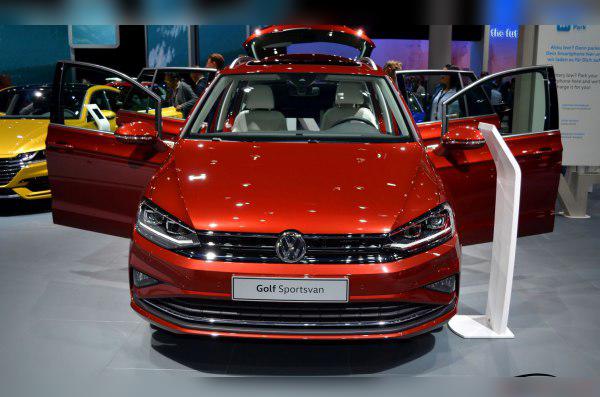
1.0 TSI (85 HP) CHZF / CHZK – Experiences, issues, fuel consumption and maintenance
Key points in short (TL;DR)
- Reliability: Significantly more reliable than the old 1.2 and 1.4 TSI chain-driven engines. Belongs to the EA211 family.
- Timing drive: Uses a belt instead of a chain, which solved many of the predecessor’s issues.
- Performance: 85 HP is the “lower limit” for the Golf Sportsvan. Quite sufficient for city driving, but requires patience on the motorway when the car is fully loaded.
- Maintenance: No dual-mass flywheel (in the version with the 5-speed gearbox), which drastically reduces maintenance costs.
- Typical failures: Water pump module (thermostat) and carbon buildup on the valves.
- Recommendation: An excellent choice for drivers who spend 80% of their time in city and suburban driving.
Contents
- Introduction and applications
- Technical specifications
- Reliability and maintenance
- Specific components and costs
- Fuel consumption and performance
- Additional options and modifications
- Gearbox and drivetrain
- Used car buying tips and conclusion
Introduction and applications
The engines with codes CHZF and CHZK are the entry point into the world of Volkswagen petrol engines for the post-facelift 2017 Golf VII Sportsvan. This is a three-cylinder turbo petrol engine from the EA211 series, which replaced the older four-cylinder 1.2 TSI units. Although many people are skeptical about a displacement of just 999 cc in a tall vehicle like the Sportsvan, this engine is technologically very advanced. Its goal is clear fuel savings and reduced emissions, while maintaining everyday usability in normal traffic.
Technical specifications
| Parameter | Value |
|---|---|
| Engine displacement | 999 cc (1.0 L) |
| Configuration | Inline, 3 cylinders |
| Power | 63 kW / 85 HP |
| Torque | 175 Nm at 2000–3000 rpm |
| Engine codes | CHZF, CHZK |
| Injection type | Direct injection (TSI) |
| Charging | Turbocharger with water-cooled intercooler |
| Camshaft drive | Timing belt |
Reliability and maintenance
This is the section that interests used-car buyers the most. Unlike the notorious EA111 engines, this generation (EA211) has proven to be very robust, but it does require disciplined maintenance.
Timing belt or chain?
The 1.0 TSI engine uses a timing belt. This is very good news because the chains on older TSI engines were prone to stretching and breaking. Volkswagen states that the belt is designed to last a very long time (theoretically “lifetime” or up to 210,000 km in some regions), but practice and mechanics’ recommendations say it should be checked regularly and that the major service should be done between 150,000 km and 180,000 km, or at the latest after 7 to 10 years of vehicle age, whichever comes first. Rubber ages regardless of mileage.
Most common issues
Although reliable, the CHZF/CHZK is not immune to problems:
- Water pump and thermostat housing: This is the most common “weak spot”. The housing is plastic and over time it can warp or the pump can seize. Symptoms include coolant loss or engine overheating. The entire module is often replaced.
- Carbon buildup: Like every direct-injection engine, the valves are prone to soot deposits because fuel does not wash them. This can lead to rough running and power loss at higher mileages.
- Turbo actuator: Sometimes there is rattling or an issue with the electronic actuator that controls turbo pressure (wastegate).
Oil and spark plugs
This engine takes approximately 4.0 liters of engine oil. The factory recommendation for these newer models is often 0W-20 (VW 508.00 standard) for better fuel economy, but in warmer climates and for better protection, 5W-30 (VW 504.00 standard) is often used. Check the sticker under the bonnet or the service booklet.
Oil consumption: These engines are not known as heavy oil consumers like the old 1.8 or 2.0 TSI units. Still, consumption of 0.3 to 0.5 liters per 10,000 km is considered completely normal. If it uses a liter per 1000 km, the engine is due for an overhaul (piston rings).
Spark plugs: Due to direct injection and the turbocharger, the spark plugs are heavily stressed. It is recommended to replace them every 60,000 km or 4 years. Do not skimp on them; use only iridium or the exact type specified by the manufacturer.
Specific components and costs
Dual-mass flywheel and clutch
This is a major advantage of the 85 HP version. In the Golf Sportsvan it is almost always paired with a 5-speed manual gearbox that uses a solid (conventional) flywheel. So there is no dual-mass flywheel that would cost you a fortune. The clutch kit is relatively affordable (depends on the market, but falls into the “not expensive” category).
Turbocharger and injection system
The engine has a small single turbocharger that spools up quickly (low inertia). Its service life is long and it usually lasts over 200,000 km with regular oil changes. Failures are less common than on diesels.
The injection system uses high-pressure piezo injectors. They are generally reliable but sensitive to poor fuel quality. If one fails, replacement can be expensive (category: expensive), but it is not a frequent failure.
GPF/OPF filter and EGR
Since this is a 2017 facelift model, it is very likely that the engine is equipped with an OPF (Otto Particulate Filter), which is the petrol equivalent of a DPF. However, petrol exhaust gases are hotter, so this filter regenerates passively more easily and rarely causes problems like on diesels. There is an EGR valve, but thanks to the engine’s design it clogs less often than on TDI engines. AdBlue is NOT used – this is a petrol engine.
Fuel consumption and performance
Real-world fuel consumption
- City driving: Expect between 6.0 and 7.5 l/100 km. The Sportsvan is heavier than a regular Golf, and stop‑and‑go traffic raises the average.
- Country roads: This is where the engine shines and can use around 4.5 to 5.0 l/100 km.
- Motorway (130 km/h): Consumption rises to about 6.0 to 7.0 l/100 km due to the monovolume aerodynamics and the lack of a sixth gear (on the manual).
Is the engine “sluggish”?
With 175 Nm of torque available from just 2000 rpm, the car is surprisingly lively in the city. You won’t feel like it’s underpowered from traffic light to traffic light. However, on the motorway and when overtaking at speeds above 100 km/h, the lack of power becomes noticeable. The Sportsvan has a large frontal area. If you load it with family and luggage, you will often have to shift down and use full throttle to get decent acceleration. Cruising at 130 km/h is comfortable, but the engine revs somewhat higher (around 3000 rpm) because of the 5-speed gearbox.
Additional options and modifications
LPG conversion
Is it worth it? Probably not. Since this is a direct-injection engine, it requires a specific and expensive LPG system (which also uses a bit of petrol while running on gas to cool the injectors, or a very expensive liquid gas injection system). Considering that the engine already uses little petrol, the payback period for the installation would be very long (tens of thousands of kilometres).
Chiptuning (Stage 1)
This engine is an ideal candidate for mild software tuning. The 85 HP version is hardware-wise very similar (often identical) to the more powerful 110/115 HP version. By “unlocking” the software (Stage 1) you can safely get around 110–115 HP and about 200+ Nm of torque. This drastically changes the character of the vehicle, especially when overtaking. Of course, only have this done by reputable tuners.
Gearbox
With the 85 HP engine (CHZF/CHZK) in the Golf Sportsvan you will most commonly find:
- Manual gearbox (5-speed): Very precise and easy to operate. The gearbox code is usually from the MQ200 series.
- Failures: Rare. Sometimes the gearbox bearings may start to whine at high mileage, but overall they are long-lasting.
- Maintenance: Although VW says the oil is “lifetime”, it is recommended to change the gearbox oil every 100,000 km.
- Automatic DSG (7-speed): Less commonly paired with this weakest engine version (usually comes with the 110 HP), but if you find it, it is the DQ200 with dry clutches.
- Issues: Mechatronics and the clutch pack are known weak points of the DQ200 gearbox, although they were significantly improved on 2017+ models. Repairs are expensive.
Buying used and conclusion
Before buying, be sure to check:
- Engine sound on cold start: A three-cylinder naturally has a specific “thrum”, but there should be no metallic rattling or knocking.
- Coolant leaks: Check the coolant level and look for white traces around the thermostat housing on the right-hand side of the engine.
- Vibrations: The engine should idle smoothly when warm. Excessive vibrations may indicate an issue with the engine mounts or flywheel/clutch.
Conclusion:
The VW Golf VII Sportsvan with the 1.0 TSI (85 HP) engine is a rational choice for pragmatic buyers. If you need a car for taking kids to school, commuting to work and occasional trips, this is a great package. It is cheaper to maintain than a diesel, has no dual-mass flywheel, and uses little fuel. However, if you often drive on the motorway with a fully loaded car or enjoy a more dynamic driving style, look for the 110 HP version or a 1.5 TSI/1.6 TDI engine. For 85 HP you can say it is “adequate”, but not “powerful”.
Was this content useful to you?
Your opinion helps us to improve the quality of the content.