CYVA Engine
- Engine
- 1197 cm3
- Aspiration
- Turbocharger, Intercooler
- Fuel
- Petrol (Gasoline)
- Fuel injection system
- Direct injection
- Power
- 85 hp
- Torque
- 160 Nm
- Cylinders
- 4
- Valves
- 16, 4 per cylinder
- Cylinders position
- Inline
- Oil capacity
- 4 l
# Vehicles powered by this engine
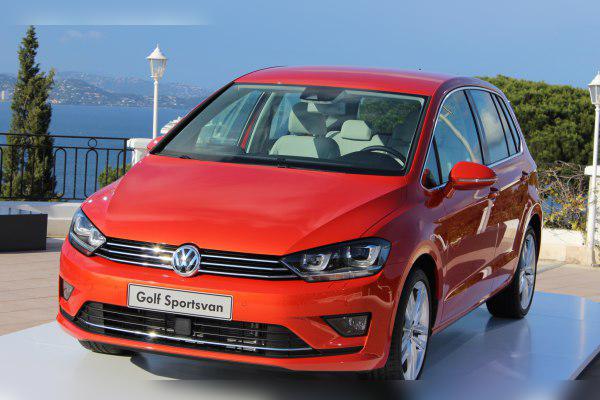
1.2 TSI (CYVA) – Experiences, issues, fuel consumption and used-car buying tips
Key points (TL;DR)
- Major improvement: This is an EA211-series engine (timing belt), which has solved most of the notorious problems of the older EA111 series (timing chain).
- Reliability: It is among the most reliable small turbo petrol engines on the market today.
- City driving: Ideal for urban use, reaches operating temperature quickly, quiet and flexible.
- Performance in the Sportsvan: With 86 hp, this is the base engine. In the heavier Sportsvan body it can feel “sleepy” on open roads with a full boot.
- Maintenance: Not expensive. Most versions with a manual gearbox do not have a dual-mass flywheel.
- Oil consumption: Significantly lower than its predecessor, but possible at higher mileage.
- Recommendation: An excellent choice for drivers who spend 80% of their time in the city and on regional roads.
Contents
- Technical specifications
- Reliability and maintenance
- Specific parts and costs
- Fuel consumption and performance
- Additional options and modifications
- Gearbox: manual and automatic
- Buying used and conclusion
The engine with the code CYVA belongs to VW’s EA211 engine family. Why does this matter? Because the previous 1.2 TSI engines (EA111 with a chain) were known for catastrophic failures. CYVA is a completely redesigned unit that is installed in the VW Golf VII (including the Sportsvan), Škoda Octavia and Seat Leon. Specifically in the Golf Sportsvan, this is the entry-level engine aimed at calm drivers who are looking for economy and cheaper registration.
Technical specifications
| Characteristic | Data |
|---|---|
| Engine code | CYVA (EA211 family) |
| Displacement | 1197 cc (1.2 litres) |
| Power | 63 kW (86 hp) |
| Torque | 160 Nm at 1400–3500 rpm |
| Injection type | Direct injection (TSI) |
| Forced induction | Turbocharger + intercooler (water–air) |
| Number of valves | 16V (DOHC) |
Reliability and maintenance
Does this engine have a timing belt or a chain?
This is the most important question and the good news is: The CYVA engine has a timing belt. Volkswagen learned its lesson from the chain failures on the old 1.2 engines and went back to a belt on this series. The system is very reliable, quiet and cheaper to maintain compared to complicated chains.
What are the most common failures on this engine?
Although it is very reliable, pay attention to the following:
- Turbo pressure regulator (wastegate actuator): The electric actuator on the turbo can stick or fail. Symptoms are loss of power and the EPC light coming on in the instrument cluster.
- Coolant leaks: The thermostat housing and water pump are integrated into one (often plastic) module. Over time the plastic gives way and coolant starts to leak. This is a standard weak point of modern VW petrol engines.
- Carbon buildup: As with any direct-injection engine, the intake valves are not “washed” by fuel, so carbon deposits build up over time and can cause rough idling.
At what mileage should the major service (timing belt) be done?
The factory recommendation is often very optimistic (up to 210,000 km just for inspection/replacement of the belt). However, experienced mechanics recommend replacing the timing kit and water pump at 150,000 to 180,000 km, or every 5 to 7 years, whichever comes first. Rubber ages regardless of mileage.
How many litres of oil does this engine take and which grade is recommended?
The sump holds about 4.0 litres of oil. Fully synthetic oil of grade 5W-30 or 0W-20 that meets strict VW standards (specification VW 504.00 / 507.00) is recommended. High-quality oil is crucial for turbocharger longevity.
Does it consume oil between services?
EA211 engines (like this CYVA) are dramatically better in terms of oil consumption than the old TSI engines. Consumption of up to 0.5 litres per 10,000 km is considered perfectly normal and acceptable. If it uses more than 1 litre over a service interval, this may indicate stuck piston rings or a turbo issue, but this is not common before 200,000 km.
At what mileage should the spark plugs be replaced?
Because of direct injection and the turbocharger, the spark plugs are under higher load. It is recommended to replace them every 60,000 km or 4 years. Use only iridium/platinum plugs recommended by the manufacturer (e.g. NGK or Bosch) to avoid misfires.
Specific parts (costs)
Does this engine have a dual-mass flywheel?
In most cases, the 1.2 TSI with 86 hp (CYVA) paired with the 5-speed manual gearbox does NOT have a dual-mass flywheel, but uses a solid flywheel instead. This is a huge advantage because a clutch kit is significantly cheaper (depends on the market, but it is generally “affordable”). Models with a DSG gearbox have a different flywheel system.
What kind of injection system does it have and are the injectors problematic?
The system is high-pressure direct injection. Injectors are generally long-lasting, but sensitive to poor fuel quality. A faulty injector manifests itself as jerking while driving or hard starting. It is not a widespread issue, but replacing a single injector can be expensive.
Does this engine have a turbocharger and what is its lifespan?
It has a small turbocharger integrated with the exhaust manifold. The turbo is “light” and spools up quickly, which reduces turbo lag. Its lifespan is usually equal to the engine’s lifespan with regular oil changes. The most common problem is not the turbo itself, but the electronic actuator that controls it.
Does this model have a DPF filter or an EGR valve?
Since it is a petrol engine, it does not have a DPF (which is for diesels). However, newer TSI engines may have a GPF (Gasoline Particulate Filter), depending on model year and market (especially after 2017/2018). In a Golf 7 Sportsvan, the CYVA most likely does not have a GPF if it is an older model (Euro 6b), but you should always check by VIN. An EGR valve is present and can get dirty from city driving, but fails less often than on diesels.
Does this engine use AdBlue?
No. AdBlue is used only on diesel engines (TDI) to reduce NOx emissions. This petrol engine does not require any additional fluids besides fuel, oil, coolant and screenwash.
Fuel consumption and performance
What is the real-world fuel consumption in city driving?
The Golf Sportsvan is taller and heavier than the regular Golf. In real urban traffic, you can expect consumption between 6.5 and 8.0 litres per 100 km. If you drive gently, it can drop to around 6 litres, but in winter and on short trips it will go up towards 8.
Is this engine “lazy” for the weight of the body it is installed in?
To be realistic: 86 hp and 160 Nm in an MPV (Sportsvan) is not a recipe for sporty performance. For city driving the engine is perfectly adequate – the turbo gives it liveliness at low revs (from about 1400 rpm). However, when you load up the family and luggage and go on a trip, you will feel the lack of power when overtaking or on uphill sections. You have to plan overtakes in advance.
What is it like on the motorway and at what revs does it cruise at 130 km/h?
This is its weaker point, mainly because of the 5-speed gearbox. At 130 km/h the engine runs at about 3,000 to 3,200 rpm. This means there is a certain amount of noise in the cabin, and fuel consumption at that speed increases (around 7.0–7.5 l/100 km) due to the poorer aerodynamics of the Sportsvan. It is not an ideal long-distance motorway cruiser, but it will do the job.
Additional options and modifications
Is this engine suitable for LPG conversion?
Due to direct injection, LPG conversion is complex and expensive (very expensive). A special system is required (“Direct Liquid Management” or a system that mixes petrol and LPG to cool the injectors). Given the low petrol consumption, fitting LPG to a 1.2 TSI is questionable in terms of cost-effectiveness unless you drive more than 25,000 km per year.
How far can this engine be safely tuned (Stage 1)?
This is the hidden trump card of this engine. The CYVA (86 hp) is almost identical in hardware to the more powerful version (105/110 hp), it is just detuned in software. With a Stage 1 remap it can safely be raised to about 105–115 hp and around 200 Nm of torque. This modification drastically changes the character of the vehicle and makes the Sportsvan much more pleasant to drive, without significantly affecting durability if driven sensibly.
Gearbox
Which gearboxes are fitted to this engine?
The 1.2 TSI CYVA most commonly comes with a 5-speed manual gearbox (code MQ200). There is also an option with a 7-speed DSG automatic gearbox (code DQ200 with dry clutches).
What are the most common issues with the manual and with the automatic gearbox?
- Manual (5-speed): Very reliable. Rare bearing issues if the car has very high mileage. The gearbox oil is “fill for life”, but it is recommended to change it at 150,000 km.
- DSG (7-speed): The DQ200 is a “dry” DSG. It is known for a sensitive mechatronic unit and faster clutch wear in stop-and-go city traffic. DSG repairs can be very expensive (depends on the market, but often exceed 1000 EUR).
Clutch replacement cost (manual)?
Since there is no dual-mass flywheel, replacing the clutch kit (pressure plate, disc, release bearing) is relatively affordable. It falls into the “not expensive” maintenance category.
Buying used and conclusion
When buying a Golf Sportsvan with this engine, pay attention to:
- Noise on cold start: Although it has a belt, the camshaft phase variator can rattle for a couple of seconds. If the knocking does not stop immediately, that is a problem.
- Coolant traces: Look at the left side of the engine (near the belt) for whitish or pink traces of coolant leaking from the water pump.
- Test drive: Does the car pull smoothly without hesitation? Hesitation indicates an ignition issue (leads/plugs) or injector problems.
CONCLUSION:
The Volkswagen Golf Sportsvan 1.2 TSI (CYVA) is a rational choice. It is not for racers, nor for those who drive 500 km of motorway every day. It is intended for families who need a spacious car for the city and occasional trips, and who want low running costs and the reliability that previous generations of TSI engines did not offer. The manual gearbox is the safer option when buying used.
Was this content useful to you?
Your opinion helps us to improve the quality of the content.