EA888 / CXBB, CNSB Engine
- Engine
- 1798 cm3
- Aspiration
- Turbocharger, Intercooler
- Fuel
- Petrol (Gasoline)
- Fuel injection system
- Direct injection
- Power
- 170 hp @ 4500 rpm
- Torque
- 270 Nm @ 1600 rpm
- Cylinders
- 4
- Valves
- 16, 4 per cylinder
- Cylinders position
- Inline
- Valvetrain
- DOHC
- Oil capacity
- 5.7 l
- Systems
- Start & Stop System
# Vehicles powered by this engine
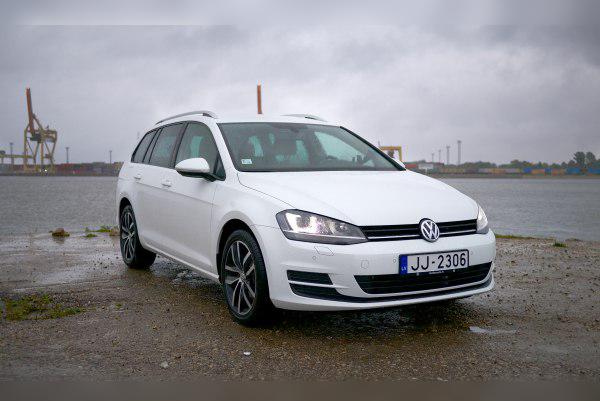
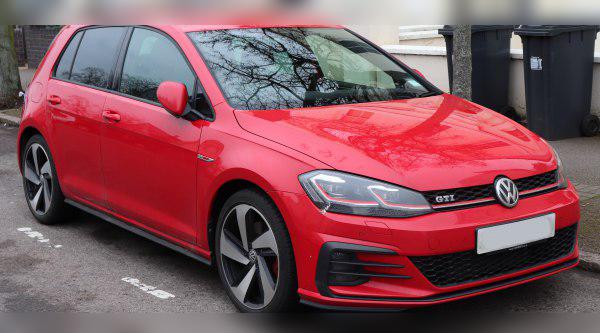
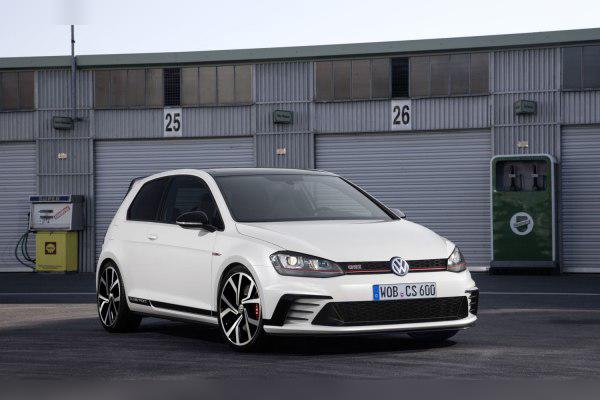
1.8 TSI (EA888 Gen 3) CXBB / CNSB – Experiences, issues, fuel consumption and maintenance
The 1.8 TSI engine from the EA888 (Generation 3) family is the golden middle in the Volkswagen Golf VII lineup. While in Europe it was often overshadowed by the smaller 1.4 TSI or the more powerful 2.0 TSI (GTI), on many world markets (such as North America) this was the standard engine. In variants such as the Golf VII Variant 4MOTION or the standard hatchback with a Tiptronic gearbox, this powerplant offers sophistication and torque that smaller engines simply cannot match. However, like any complex turbocharged petrol engine, it requires specific maintenance and attention.
Key points (TL;DR)
- Performance: The engine is a "sleeper beast". With 170 hp and 270 Nm, it offers excellent in-gear acceleration and easily carries the Golf’s body, with huge tuning potential.
- Biggest weakness: Thermostat and water pump housing. This is the Achilles’ heel of this engine; the plastic housing often cracks and leaks.
- Oil consumption: Significantly improved compared to the notorious Generation 2 (2008–2012), but it can still consume moderate amounts of oil at higher mileages.
- Timing drive: Uses a timing chain. The system is more robust than before, but chain stretch should be checked after 150,000 km.
- Gearbox: It’s important to distinguish between DSG (wet clutch, fast shifts, more expensive maintenance) and Tiptronic (traditional automatic, more comfortable, slower, durable).
- Recommendation: An excellent choice for drivers who want GTI-like performance, but with a more discreet appearance and more comfortable ride.
Contents
- Technical specifications
- Reliability and maintenance
- Specific parts and costs
- Fuel consumption and performance
- Additional options and modifications
- Gearbox (DSG vs Tiptronic)
- Buying used and conclusion
Technical specifications
| Parameter | Data |
|---|---|
| Engine displacement | 1798 cc (1.8 litres) |
| Configuration | Inline 4-cylinder, 16 valves |
| Power | 125 kW (170 hp) at 4800–6200 rpm |
| Torque | 270 Nm at 1600–4200 rpm |
| Engine codes | CXBB, CNSB (EA888 Gen 3) |
| Injection type | Direct (FSI) + Indirect (MPI) – depending on market |
| Forced induction | Turbocharger (IHI IS12) + intercooler |
| Camshaft drive | Chain (Timing chain) |
Reliability and maintenance
Does this engine have a timing belt or a chain?
The 1.8 TSI (EA888 Gen 3) uses a timing chain to drive the camshafts. Unlike the previous generation (Gen 2), which had catastrophic issues with chain tensioners, this system has been significantly improved. However, the chain is not eternal. A preventive check of chain “stretch” via diagnostics or inspection port is recommended at around 150,000 km. If you hear rattling on cold start that lasts longer than 2–3 seconds, that’s a sign that replacement is urgently needed.
What are the most common failures on this engine?
The biggest problem with this engine is not inside the block, but on the outside:
- Thermostat and water pump: The housing is made of plastic that deforms over time due to heat cycles. This leads to coolant leaks. Symptoms are coolant loss or engine overheating. This is a failure that will happen to almost every owner sooner or later.
- PCV valve (oil separator): When the membrane in this valve tears, the engine may start consuming oil, run rough at idle or produce a whistling noise. Fortunately, replacement is not too expensive (depends on market).
- Carbon buildup: Although some models have dual injection which cleans the valves, many versions (especially for the US market, from where some CXBB engines come) use only direct injection. This leads to carbon deposits on the intake valves, causing power loss and rough running. Walnut blasting is usually needed at around 100,000–120,000 km.
At what mileage is the “major service” done?
Since the engine has a chain, there is no classic “major service” at a fixed interval as with a belt. However, the serpentine belt (auxiliary belt) and its tensioners should be replaced at around 100,000 to 120,000 km. The water pump is usually replaced when it starts leaking, which often coincides with this mileage.
How many litres of oil does this engine take and which grade is recommended?
The sump holds approximately 5.7 litres of engine oil. The recommended grade is usually 5W-30 or 0W-30 with specification VW 504.00 / 507.00. For newer models and specific markets, 0W-20 (VW 508.00) may be required, but 5W-30 has proven to be the best for protecting the turbocharger and chain in European operating conditions.
Does it consume oil between services?
The third generation of EA888 engines solved the piston ring issue that destroyed the previous engines. Still, consumption of 0.5 to 1 litre per 10,000 km is considered completely normal and acceptable, especially with more spirited driving. If the engine consumes more than 0.5 litre per 1,000 km, this indicates a problem (often the turbo or PCV valve, less often the piston rings).
At what mileage should the spark plugs be replaced?
Since this is a turbocharged petrol engine with direct injection, the spark plugs are under heavy load. It is recommended to replace them every 60,000 km or 4 years. Always use high-quality iridium spark plugs (NGK or Bosch) specific to this engine, as poor-quality plugs can damage the ignition coils.
Specific parts (costs)
Does the engine have a dual-mass flywheel?
Yes. Models with a manual gearbox and models with a DSG gearbox (such as the Golf Variant 4MOTION) have a dual-mass flywheel. Its lifespan is usually between 150,000 and 200,000 km, depending on driving style. Models with the classic “Tiptronic” (automatic gearbox with torque converter) do not have a typical dual-mass flywheel prone to failure as in DSG or manuals, but use a different system (flexplate) which is significantly more durable.
What kind of injection system does it have and are the injectors problematic?
The system operates at high pressure (up to 200 bar). The injectors are generally reliable, but sensitive to poor fuel quality. Injector failure manifests as fuel “leaking” into the cylinder, which can wash oil off the cylinder walls and cause catastrophic engine damage. It is recommended to use a fuel system cleaner additive once a year.
Does this engine have a turbocharger and what is its lifespan?
It uses a single IHI IS12 turbocharger. This is a smaller turbo designed for quick response (fast spool) at low revs. Its lifespan is long (over 200,000 km with regular oil changes). The most common issue is not the turbo itself, but the electronic wastegate actuator. If a boost pressure-related fault appears (the “EPC” light), it is often enough to adjust or replace just the actuator, not the entire turbo.
Does this model have a DPF filter or EGR valve?
This is a petrol engine, so it does not have a DPF (Diesel Particulate Filter). However, models produced after 2018 (Euro 6d-TEMP) may have a GPF (Gasoline Particulate Filter), which rarely clogs because petrol burns cleaner. EGR function on this engine is performed “internally” via variable valve timing (VVT), so there is no classic EGR valve that gets sooted up and stuck as in diesels.
Does this engine use AdBlue?
No, petrol engines do not use AdBlue fluid.
Fuel consumption and performance
What is the real-world fuel consumption in city driving?
Don’t expect miracles. A 1.8-litre displacement, turbocharger and the weight of the Golf (especially the estate with 4MOTION) mean fuel consumption. In pure city driving, real-world consumption is between 9 and 11 litres per 100 km. In winter and heavy traffic it can go up to 12 l/100 km.
Is this engine “lazy” for the weight of the car?
Absolutely not. With 170 hp and, more importantly, 270 Nm available from just 1600 rpm, this engine makes the Golf very agile. It is often called a “sleeper” because it looks ordinary but goes much better than average. 0–100 km/h acceleration is in the 7.5 to 8 second range, which is very respectable.
How does the engine behave on the motorway and at what revs does it cruise at 130 km/h?
This is the engine’s natural habitat. At 130 km/h in top gear, the engine spins at around 2,200–2,400 rpm (depending on gearbox). This means a quiet cabin and moderate fuel consumption (around 6.5–7.5 l/100 km). There is always enough power for overtaking without frequent downshifts.
Additional options and modifications
Is this engine suitable for LPG conversion?
Due to direct fuel injection, LPG conversion is complex and expensive. You must install a system designed for FSI/TSI engines that either uses “split-fuel” (for example, 15% petrol and 85% LPG to cool the petrol injectors) or a liquid-phase LPG injection system. The price of such systems is high (very expensive) and the payback is questionable unless you drive more than 20–30,000 km per year.
How far can this engine be safely tuned (Stage 1)?
The 1.8 TSI is one of the best engines for tuning. From the factory it is “detuned” so as not to cannibalise Golf GTI sales. With just a remap (Stage 1), power can be safely raised to 210–230 hp, and torque to over 350 Nm. The engine can handle this increase without issues, but keep in mind that it will shorten the lifespan of the clutch or DSG gearbox if driven aggressively all the time.
Gearbox: manual, Tiptronic and DSG
Which gearboxes are fitted and what are the differences?
Attention is needed here because there are two types of automatics with this engine:
- DSG (DQ250): 6-speed dual-clutch gearbox. Most commonly paired with 4MOTION models in Europe. Fast, sporty, direct.
- Tiptronic (Aisin 09G): 6-speed traditional automatic gearbox with torque converter. Most often found in North American models (imported to Europe) or specific FWD versions. It is slower than DSG, but smoother when setting off and “softer”.
What are the most common failures?
- Manual gearbox: Very reliable. The only cost is the clutch kit.
- DSG: The mechatronics unit can cause problems (jerks when shifting), and the flywheel can be heard as a metallic knocking at idle.
- Tiptronic: Very reliable if maintained. Rarely fails, but if it does, repairs are expensive. It can develop harsher shifts if the oil has never been changed.
Cost of clutch replacement and gearbox service?
For the DSG gearbox, oil and filter changes are mandatory every 60,000 km. This is not cheap, but it is crucial for longevity. Replacing the clutch pack on a DSG is an expensive job (depends on market, but counts as a high-cost repair).
For Tiptronic (traditional automatic), VW often claims the oil is “lifetime”, but in practice: change it every 60,000–80,000 km for long gearbox life.
For the manual gearbox, the clutch kit with dual-mass flywheel is a standard wear item (medium-cost repair).
Buying used and conclusion
What exactly should be checked before purchase?
- Coolant leaks: Look under the intake manifold for traces of dried coolant (white or pink marks). This is a sign that the water pump/thermostat housing is failing.
- Cold start: The engine must be completely cold. Listen carefully for the first 3–5 seconds. If you hear a loud metallic rattle (like a chain hitting metal), the chain tensioner may be at the end of its life.
- Gearbox service history: If it’s DSG or Tiptronic, ask for proof of oil changes at 60,000 km intervals. Without that, you risk a failure costing several thousand euros.
- Exhaust smoke: Bluish smoke when you press the throttle or after idling indicates oil consumption (turbo or piston rings).
Conclusion:
The Volkswagen Golf VII with the 1.8 TSI engine is a fantastic car for those who know what they are buying. It offers refinement and power that far surpass the 1.4 TSI or 1.6 TDI, without the “racing” maintenance costs of a Golf GTI or R. It is ideal for long journeys and for drivers who appreciate having a power reserve under their right foot. If you find a car with a well-documented service history (especially for the gearbox) and you are ready to proactively replace the thermostat housing, this engine will serve you very well.
Was this content useful to you?
Your opinion helps us to improve the quality of the content.