CJZB, CYVA Engine
- Engine
- 1197 cm3
- Aspiration
- Turbocharger, Intercooler
- Fuel
- Petrol (Gasoline)
- Fuel injection system
- Direct injection
- Power
- 85 hp
- Torque
- 160 Nm
- Cylinders
- 4
- Valves
- 8, 2 per cylinder
- Cylinders position
- Inline
- Valvetrain
- SOHC
- Oil capacity
- 4 l
- Systems
- Start & Stop System
# Vehicles powered by this engine
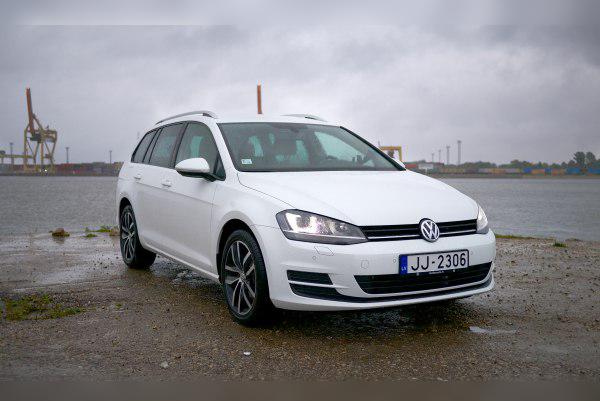
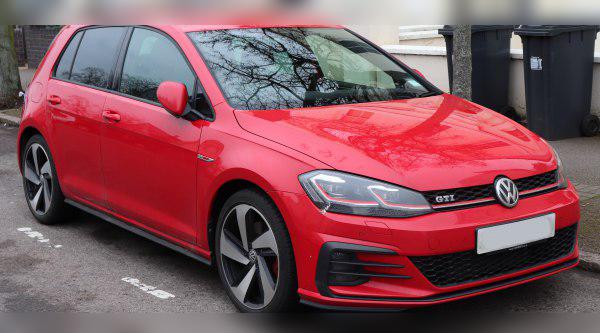
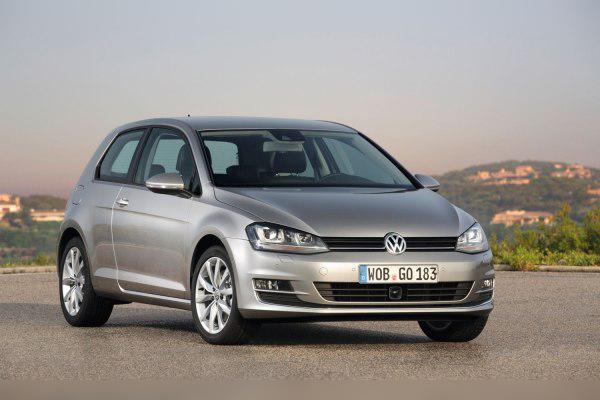
1.2 TSI (CJZB, CYVA) in the VW Golf VII: Experiences, problems, fuel consumption and buying tips
1. Most important in short (TL;DR)
- Biggest advantage: This engine (EA211 series) uses a timing belt, which solves the catastrophic timing chain issues from the previous generation.
- Performance: 85 hp is enough for city driving (“from point A to point B”), but the engine runs out of breath on open roads under load.
- Main failure point: Thermostat housing and water pump are prone to coolant leaks.
- Economy: Very low fuel consumption if driven moderately.
- Maintenance: Cheaper than diesel – usually no dual-mass flywheel, no expensive DPF issues (on older model years).
- Recommendation: Ideal for drivers who spend 80% of their time in the city and don’t carry heavy loads.
Contents
- Introduction
- Technical specifications
- Reliability and maintenance
- Specific parts (costs)
- Fuel consumption and performance
- Additional options and modifications
- Gearbox
- Buying used and conclusion
Introduction
The seventh-generation Volkswagen Golf brought a revolution under the hood with the switch to the EA211 family of petrol engines. The variants we’re talking about today, with engine codes CJZB and CYVA, represent the entry-level, basic engine option. Although 85 horsepower on paper seems modest for a C-segment car (especially for the Variant estate version), this engine was designed to be an efficient, quiet and more reliable replacement for older naturally aspirated engines and the problematic chain-driven TSI units. Its role is clear: economical driving with minimal registration and maintenance costs.
Technical specifications
| Parameter | Data |
|---|---|
| Engine displacement | 1197 ccm |
| Power | 63 kW (85 hp) |
| Torque | 160 Nm at 1400–3500 rpm |
| Engine codes | CJZB, CYVA |
| Injection type | Direct injection (TSI) |
| Induction | Turbocharger with intercooler |
| Camshaft drive | Timing belt (belt driven) |
Reliability and maintenance
Timing belt or chain?
This is the most important question for used TSI buyers. Unlike the previous generation (EA111), which had an infamous timing chain prone to stretching and breaking, the CJZB and CYVA engines use a timing belt. This has drastically improved reliability. The belt is reinforced and designed for long intervals, and the engine runs more quietly.
Most common issues
Although more reliable, this engine is not without flaws:
- Coolant leaks (water pump and thermostat): This is the “Achilles’ heel” of EA211 engines. The thermostat housing and water pump are made of plastic, which deforms over time due to heat cycles. Symptoms: Coolant level dropping in the expansion tank, smell of coolant in the cabin, or white deposits around the thermostat housing on the side of the engine.
- Oil consumption: Although less common than on older models, it can appear at higher mileage (over 200,000 km) due to worn piston rings or valve stem seals, especially if the engine was driven aggressively while cold.
- Carbon buildup on intake valves: Because of direct injection, fuel does not wash the intake valves. Over time, carbon deposits build up and can reduce airflow. Symptoms: Rough idle and a slight loss of power.
- Turbo actuator: The electric actuator (wastegate) can sometimes stick, which triggers the “Check Engine” light and puts the car into “safe mode”.
Major service
Volkswagen specifies very optimistic intervals for timing belt inspection (often mentioning 240,000 km or inspection after 10 years). However, real-world practice and mechanics’ experience call for caution. It is recommended that the major service (replacement of belt, tensioner and water pump) be done between 180,000 km and 210,000 km or after 6 to 8 years of age, whichever comes first. A snapped belt leads to catastrophic engine damage, so preventive replacement is cheaper than repair.
Oil: quantity and grade
The engine takes approximately 4.0 litres of engine oil (with filter). It is recommended to use fully synthetic oil of grade 5W-30 or 0W-20 (for newer CYVA versions) that meets strict VW standards (VW 504.00 / 507.00 or VW 508.00). Check the exact specification in the service booklet or by VIN.
As for oil consumption, these engines are more tolerant than their predecessors. Consumption of up to 0.5 litres per 10,000 km is considered perfectly acceptable. If the engine uses more than 0.5 litres per 1,000 km, this indicates a serious mechanical problem.
Spark plugs
Since this is a turbocharged petrol engine with direct injection, the ignition system is under load. Spark plugs should be replaced every 60,000 km or 4 years. Using quality iridium spark plugs is a must to prevent misfires and coil damage.
Specific parts (costs)
Dual-mass flywheel
Good news for your wallet: the 85 hp (63 kW) version in the Golf VII, paired with the 5-speed manual gearbox, usually comes with a solid flywheel. This significantly reduces clutch replacement costs compared to more powerful diesel or petrol versions. Still, always check by VIN before buying parts, as there are exceptions depending on the market.
Fuel injection system
The engine uses high-pressure direct injection. Injectors are generally reliable and long-lasting, but sensitive to poor fuel quality. A faulty injector manifests as strong jerking, black smoke and increased fuel consumption. A single injector is expensive (varies by market), so it is occasionally recommended to use fuel system cleaning additives.
Turbocharger
The engine has a single turbocharger integrated into the exhaust manifold (to help the engine warm up faster). The turbo’s lifespan is generally equal to the engine’s lifespan with regular oil changes. The turbo is not oversized and is not heavily stressed in the 85 hp version. Rebuild is possible and prices are in the mid-range.
DPF, EGR and GPF
This engine does not have a DPF filter (because it’s petrol) and does not have an AdBlue system. However, it does have an EGR valve that recirculates exhaust gases for re-combustion. It can clog up with soot, especially in city driving. On newer versions (CYVA engines that meet Euro 6d-TEMP standards, mostly from 2018 onwards), you may find a GPF (Gasoline Particulate Filter). Older models (CJZB) do not have a GPF, which is one less maintenance concern.
Fuel consumption and performance
Real-world fuel consumption
This engine is a fuel economy champion among petrol units if driven sensibly.
- City driving: Expect between 6.5 and 8.0 l/100km, depending on traffic and how heavy your right foot is. The start-stop system helps here.
- Country roads: It is possible to bring consumption down to 4.5 - 5.5 l/100km.
- Motorway (130 km/h): Consumption rises to around 6.5 - 7.5 l/100km due to aerodynamic drag and the lack of a 6th gear on manual gearboxes.
Is the engine “sluggish”?
For the Golf VII hatchback (3 or 5 doors), the engine is perfectly adequate for city and suburban driving. Thanks to the turbo, the 160 Nm of torque is available low down (from just 1400 rpm), so it feels livelier than the 85 hp figure suggests.
However, for the Golf VII Variant (estate), if loaded with family and luggage, the engine will struggle. Overtaking on country roads requires downshifting and high revs. If you often travel fully loaded, look for the 105/110 hp version.
Behaviour on the motorway
With the 5-speed manual gearbox, at 130 km/h the engine spins at around 3000 rpm. That’s not excessively loud, but you can hear the engine. A 6th gear is missing for complete relaxation and lower consumption. Cruising is comfortable, but in-gear acceleration from 120 to 140 km/h takes a long time.
Additional options and modifications
LPG conversion
This is not an ideal engine for LPG conversion. Due to the direct injection system, you cannot use cheap, conventional sequential LPG systems. You must install a “direct injection” LPG system, which is significantly more expensive (often over 800–1000 EUR, depending on the market) and still uses a small amount of petrol (around 10–20%) to cool the petrol injectors. It only becomes cost-effective after very high mileage.
Chiptuning (Stage 1)
The engine is very suitable for mild software tuning. Since it is hardware-wise very similar to the more powerful 105/110 hp version, a simple remap (“chipping”) can safely raise power to around 105–115 hp and torque to around 190–200 Nm. This drastically changes the character of the car and makes overtaking easier. However, keep in mind that the gearbox and clutch will be under greater stress.
Gearbox
Gearbox options
This engine usually comes with:
- Manual gearbox (5-speed): Code MQ200. Precise, easy to operate.
- Automatic gearbox (7-speed DSG): Code DQ200. Dual-clutch gearbox.
Gearbox issues
Manual gearbox: Very reliable. Rare failures are related to bearings (whining noise while driving) at high mileage. The cost of replacing the clutch kit (without dual-mass flywheel) is acceptable (not expensive).
DSG gearbox (DQ200): This is the so-called “dry” DSG. Although it shifts quickly, it is known for problems with the mechatronics unit (control unit) and premature wear of the clutch packs, especially in stop-and-go city driving. Repairs are very expensive (often over 1000 EUR, depending on the market). Service (oil change in the gearbox) is not factory-specified for this model (“sealed for life”), but experts recommend changing the oil in the gear mechanism every 60,000–80,000 km as a preventive measure.
Buying used and conclusion
Before buying a Golf 1.2 TSI with 85 hp, pay attention to the following:
- Cold start: Start the engine when it is completely cold. Listen for any rattling or metallic noise in the first 3–5 seconds (an issue with the camshaft phase variator, although rarer than on older models).
- Visual inspection: Remove the plastic engine cover if possible and look for white/pink traces of coolant leakage around the water pump (on the timing belt side).
- Test drive: At low revs in a higher gear, press the accelerator pedal sharply. If the car accelerates with jerks, the spark plugs, leads or ignition coil may be faulty.
Conclusion:
The VW Golf VII 1.2 TSI (85 hp) is an excellent choice for a rational buyer. You get the comfort, safety and build quality of a Golf, with low maintenance costs comparable to those of smaller city cars. Avoid it if you often drive on the motorway or tow a trailer – that’s what the 1.6 or 2.0 TDI are for. For an average family and mainly city driving, this is the “golden middle ground” between performance and economy.
Was this content useful to you?
Your opinion helps us to improve the quality of the content.