CUKB Engine
- Engine
- 1395 cm3
- Aspiration
- Turbocharger, Intercooler
- Fuel
- Petrol / electricity
- Fuel injection system
- Direct injection
- Power
- 150 hp
- Torque
- 350 Nm
- Cylinders
- 4
- Valves
- 16, 4 per cylinder
- Cylinders position
- Inline
- Valvetrain
- DOHC
- Oil capacity
- 4 l
- Systems
- Start & Stop System
# Vehicles powered by this engine
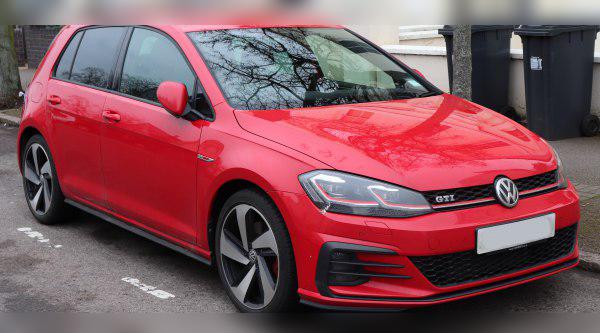
1.4 TSI CUKB (Golf 7 GTE) Hybrid – Experiences, Issues, Fuel Consumption and Used Car Maintenance
Key points (TL;DR)
- Hybrid powertrain: This is not a regular petrol engine, but a Plug-in Hybrid (PHEV). It combines a 1.4 TSI engine and an electric motor for excellent performance.
- Reliability: The base (EA211 engine) is very reliable; the timing chain issues of older TSI engines have been solved (this one uses a belt).
- Gearbox: It uses a specific DQ400e 6-speed DSG gearbox that requires regular maintenance and can be an expensive item.
- Fuel consumption: Phenomenal if you charge it regularly (below 3 l/100 km), but average if you drive with an “empty” battery (around 6–7 l/100 km).
- Complexity: More components mean more potential failures (high-voltage battery, charger, hybrid module).
- Recommendation: Ideal for those who can charge the car at home or at work.
Contents
- Introduction and use case
- Technical specifications
- Reliability and Maintenance
- Specific parts and Costs
- Fuel Consumption and Performance
- Additional options and Tuning
- Gearbox (DQ400e)
- Buying tips and Conclusion
Introduction and use case
The engine with the code CUKB is the heart of Volkswagen’s popular “sporty hybrid” – the Golf 7 GTE. Although the basic architecture is known from standard 1.4 TSI engines (EA211 series), the CUKB has undergone significant modifications to withstand the specific demands of hybrid driving. These engines are frequently started and stopped (the start-stop system works constantly), and often rev high while still cold when the driver accelerates hard (kick-down). Because of this, the crankshaft and connecting rod bearings are coated with a special polymer layer for protection.
This engine is important because it represents a bridge between classic GTI performance and ecological efficiency, offering a system output of 204 hp when both motors work together.
Technical specifications
| Parameter | Value |
|---|---|
| Engine displacement | 1395 cc (1.4 litres) |
| Power (Petrol engine) | 110 kW (150 hp) |
| Power (System – Petrol + Electric) | 150 kW (204 hp) |
| Torque (Petrol engine) | 250 Nm |
| Torque (System) | 350 Nm |
| Engine code | CUKB |
| Injection type | Direct injection (TSI/GDI) |
| Charging | Turbocharger (single-scroll) + intercooler |
| Camshaft drive | Timing belt |
Reliability and Maintenance
Does this engine have a timing belt or a chain?
The CUKB engine belongs to the EA211 family, which means it uses a timing belt. This is a big advantage compared to older 1.4 TSI engines (EA111) that had problematic chains. The belt has proven to be very reliable, quiet and durable.
What are the most common issues with this engine?
Although more reliable than its predecessors, the CUKB has its weak spots:
1. Coolant leaks: Most often at the thermostat housing and water pump. The housing is plastic and cracks over time due to thermal cycles.
2. Turbo actuator: The rod that controls the wastegate valve can stick, which leads to loss of power and the “Check Engine” light (EPC error).
3. Carbon buildup: As with any direct injection engine, carbon deposits build up on the intake valves, although less than on older generations.
4. High-voltage system: On GTE models, problems can include corrosion on high-voltage battery connectors or loss of battery capacity after many years.
At what mileage should the major service be done?
The manufacturer often states an interval of 210,000 km for timing belt replacement, which is overly optimistic. Experienced mechanics recommend replacing the timing kit (belt, tensioners, water pump) between 120,000 km and 150,000 km or every 5 to 7 years, whichever comes first. A snapped belt will cause catastrophic engine damage.
How many litres of oil does this engine take and which grade is recommended?
The engine takes approximately 4.0 litres of oil. Fully synthetic oil of grade 5W-30 (VW 504.00 / 507.00 standard) is recommended, or the newer 0W-20 (VW 508.00) for newer model years to improve fuel economy. Considering the hybrid operating mode, where the engine often runs under load while not fully warmed up, high-quality oil and regular changes (max 15,000 km or 1 year) are crucial.
Does it consume oil between services and what amount is considered normal?
Unlike the notorious older-generation 1.8 and 2.0 TSI engines, the 1.4 TSI CUKB does not have pronounced oil consumption issues. Consumption of up to 0.5 litres per 10,000 km is considered perfectly acceptable. If it consumes more than that (e.g. 1 litre every few thousand km), this points to problems with piston rings or the turbocharger, but that is rare at low mileage.
At what mileage should the spark plugs be replaced?
Spark plugs should be replaced every 60,000 km or 4 years. This is extremely important on GTE models. When you floor the accelerator in “GTE mode”, the petrol engine starts instantly and must immediately deliver power. Bad spark plugs can cause knocking (detonation) and damage the engine in those moments.
Specific Parts (Costs)
Does the engine have a dual-mass flywheel?
Yes, it does. The configuration is specific because there is also an electric motor between the engine and the gearbox. The flywheel has to absorb the vibrations of the petrol engine before the power is transmitted further. Replacement is expensive (falls into the “very expensive, market-dependent” category) because the gearbox has to be removed and the job is more complex than on a regular Golf.
What kind of injection system does it have and are the injectors problematic?
It uses direct injection of fuel into the cylinders at high pressure. The injectors are generally durable and not as failure-prone as diesel injectors, but they are sensitive to poor fuel quality. Symptoms of bad injectors include rough idle (when the petrol engine is running) and increased fuel consumption.
Does this engine have a turbocharger (or two) and what is their lifespan?
It has one turbocharger. It is relatively small so that it can spool up quickly (reducing turbo lag). The electric motor helps when setting off, so the turbo is under less stress at low revs than on a regular petrol engine. With regular oil changes, the turbo easily lasts over 200,000 km.
Does this model have a DPF filter or an EGR valve that often clogs?
Since it is a petrol engine, it does not have a DPF (Diesel Particulate Filter). Models produced before 2018 generally do not have an OPF (Otto Particulate Filter) either. As for EGR, EA211 engines often use variable valve timing to achieve an internal exhaust gas recirculation effect, so a classic EGR valve that clogs with soot is not a primary issue here as it is on diesels.
Does this engine use AdBlue?
No. AdBlue fluid is used exclusively on diesel engines to reduce NOx emissions. This engine uses only unleaded petrol and electricity.
Fuel Consumption and Performance
What is the real-world fuel consumption in city driving?
This is the hardest question to answer for a PHEV because it depends on whether you charge the battery:
– With a full battery: You can cover the first 30–40 km with 0 l/100 km of petrol (electric-only driving).
– With an “empty” battery (hybrid mode): Expect consumption between 6.0 and 7.5 l/100 km in the city. The system will still use regenerative braking to recharge the battery for setting off and low-speed manoeuvring.
Is this engine “lazy” for the weight of the car it’s installed in?
The Golf GTE is heavy (around 1600 kg due to the batteries and two motors), but the engine is by no means lazy. The reason is the torque of the electric motor, available from zero rpm. The 0–100 km/h time is about 7.6 seconds, which is very respectable. The driving impression is that the car “pulls” strongly as soon as you touch the accelerator.
How does the engine perform on the motorway and at what rpm does it cruise at 130 km/h?
On the motorway, the electric motor helps less, so the 1.4 TSI carries most of the load. Still, 150 hp is more than enough to maintain high cruising speeds. At 130 km/h in 6th gear, the engine runs at about 2600–2800 rpm. The cabin is well insulated and the engine is quiet. Fuel consumption on the motorway is around 7–8 l/100 km because there is little opportunity for regeneration.
Additional Options and Modifications
Is this engine suitable for LPG conversion?
Technically it is possible, but economically and practically questionable. Due to direct injection, an expensive LPG system is required (either one that also uses petrol to cool the injectors, or liquid LPG injection). On top of that, you lose boot space, which is already reduced because of the batteries (on GTE models the fuel tank is under the boot floor and the battery under the seats, so space is limited). Not recommended.
How far can this engine be safely tuned (Stage 1)?
The CUKB engine itself can handle a power increase to about 170–180 hp. However, on GTE models, total system power after a remap (Stage 1) can go up to 240–250 hp and over 400 Nm of torque.
Caution: The DQ400e gearbox has a torque limit. Excessive tuning can lead to clutch slip or mechatronic failure. Always do a gearbox remap (TCU tune) together with the engine remap.
Gearbox
Which manual and automatic gearboxes are fitted to this engine?
In the Golf GTE, the CUKB engine comes with only an automatic DSG gearbox designated DQ400e. A manual gearbox is not available because the electronics must coordinate the operation of the petrol engine, electric motor and wheels.
What are the most common issues with the automatic gearbox (DQ400e)?
The DQ400e is a 6-speed gearbox with wet clutches. It is specific because it has three clutches (two for the gears, one to disconnect the engine from the electric motor).
– Mechatronics: The most expensive failure. Hydraulic pressure loss or electronic faults can occur.
– Jerking: When switching from electric to petrol power, the transition should be seamless. If there is jerking, this points to a problem with the separation clutch (K0 clutch) or the need for calibration.
Does this model have a dual-mass flywheel and how much does clutch replacement cost?
As mentioned, it does have a dual-mass flywheel. The clutch kit for the DQ400e is specific and replacement is expensive (market-dependent, but expect prices in the higher range). It is not the same as on a regular TDI model.
At what mileage does the gearbox need servicing and the oil changed?
This is critical: the oil in the DQ400e gearbox must be changed every 60,000 km. Do not skip this service! Old oil loses its properties, which leads to overheating of the electronics and clutch wear.
Buying a used one and Conclusion
When buying a used Golf GTE with the CUKB engine, check the following:
- Battery: Charge it fully and check the range (around 30–35 km is realistic for a used car; if it shows 15 km, the battery is degraded).
- Mode transitions: Put the car in “Hybrid” or “GTE” mode and check whether the engine starts/stops smoothly without harsh jolts.
- Service history: Check whether the DSG oil was changed at 60k km and whether the timing belt was replaced if the car is near that mileage.
Conclusion: The 1.4 TSI CUKB is an excellent, technologically advanced engine. If you have the possibility to charge it, you will drive cheaply in the city and quickly on the open road. If you do not have a charger and plan to drive it only on petrol, you are better off buying a regular 2.0 TDI or 1.5 TSI, because in this case you will just be hauling the extra weight of the batteries without the benefit of low consumption, while taking on the risk of more expensive hybrid system maintenance.
Was this content useful to you?
Your opinion helps us to improve the quality of the content.