EA113 / CRZA Engine
- Engine
- 1984 cm3
- Aspiration
- Turbocharger, Intercooler
- Fuel
- Petrol (Gasoline)
- Fuel injection system
- Direct injection
- Power
- 256 hp @ 6000 rpm
- Torque
- 330 Nm @ 2400 rpm
- Cylinders
- 4
- Valves
- 16, 4 per cylinder
- Cylinders position
- Inline
- Valvetrain
- DOHC
- Oil capacity
- 4.6 l
- Coolant
- 8 l
# Vehicles powered by this engine
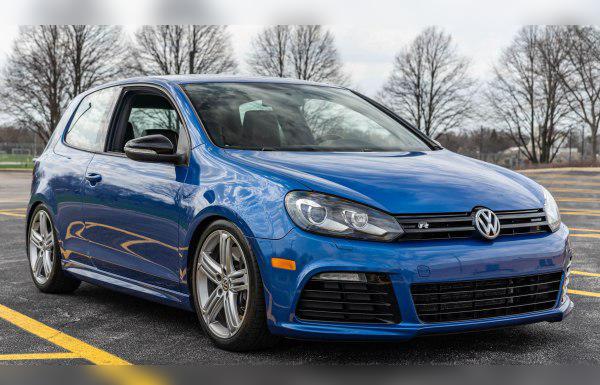
VW 2.0 TSI (EA113 / CRZA) – Experiences, problems, fuel consumption and used car buying guide
Key points (TL;DR)
- Engine basis: This is an upgraded version of the older EA113 block (timing belt), not the newer EA888 (chain) found in the standard Golf 6 GTI. It is much more robust for tuning.
- Achilles’ heel: The high-pressure fuel pump cam follower. It must be checked regularly!
- Drivetrain: Comes exclusively with 4MOTION (Haldex), which requires additional maintenance (oil in the differential/Haldex).
- Fuel consumption: Not for those on a tight budget. In the city it easily goes over 12–13 liters.
- Performance: The K04 turbocharger delivers serious acceleration, but has a slightly bigger turbo lag compared to weaker GTI models.
- Recommendation: An excellent choice for enthusiasts who want power and all-wheel drive, but it requires meticulous maintenance.
Contents
Introduction and applications
The engine with code CRZA (or the related CDLF in Europe) belongs to the legendary EA113 engine family. Although it was installed in the Golf 6 R, it is important to note that this is not the same engine as in the Golf 6 GTI (which uses the chain-driven EA888). For its top “R” version, Volkswagen decided to keep the older, proven belt-driven engine block with reinforced pistons and a larger turbo, as it proved more durable for high performance at the time.
This powerplant is the heart of a true sports car. With its 256 hp (in the CRZA specification, common on the US and some Asian markets, while the European version had 270 hp), it offers the explosiveness that hot-hatch fans love. However, with great power comes the need for specific maintenance knowledge.
Technical specifications
| Parameter | Value |
|---|---|
| Engine displacement | 1984 cc (2.0 L) |
| Power | 188 kW (256 hp) @ 6000 rpm |
| Torque | 330 Nm @ 2400–5200 rpm |
| Engine code | CRZA (EA113 family) |
| Injection type | Direct injection (FSI/TSI) |
| Forced induction | BorgWarner K04 Turbo + intercooler |
| Camshaft drive | Timing belt (main) + chain (between camshafts) |
Reliability and maintenance
Timing belt or chain?
This is the key difference compared to the standard Golf 6. The EA113 engine has a timing belt that drives the exhaust camshaft. However, there is also a small chain on the other side of the engine that connects the exhaust and intake camshafts. So you have both systems.
Most common failures
Although robust, this engine has several critical points:
- High-pressure fuel pump cam follower: This is the most well-known problem of EA113 engines. The small metal cup located between the camshaft and the HPFP wears out. If it gets pierced, the pump rides directly on the camshaft lobe, which leads to catastrophic damage (camshaft and pump need replacement, and metal shavings enter the engine). Symptoms: Loss of power, check engine light, metal-on-metal noise.
- PCV valve (oil separator): The membrane often tears. Symptoms: Rough idle, increased oil consumption, whistling noise from the engine bay.
- Diverter valve (DV): Factory valves with a rubber diaphragm crack under boost. It is recommended to replace them with the newer piston-type revision. Symptoms: Power loss under acceleration (boost leak).
- Ignition coils: They often fail, especially if the engine is tuned.
Service intervals and oil
The major service (replacement of timing belt, tensioner and water pump) is recommended every 100,000 to 120,000 km or 5 years. With such a powerful engine, do not wait until the last moment.
The engine takes approximately 4.6 liters of oil. Fully synthetic 5W-40 (or 5W-30) that meets VW 502.00 / 505.00 standards is recommended. Due to the high temperatures generated by the K04 turbo, high-quality oil is mandatory.
Oil consumption and spark plugs
All 2.0 TFSI/TSI engines consume some oil. On the EA113 this is usually less pronounced than on EA888 engines, but consumption of 0.2 to 0.5 liters per 1,000 km can be considered acceptable, especially with aggressive driving. If it exceeds one liter per 1,000 km, it points to problems with piston rings or the turbo.
Spark plugs should be replaced every 60,000 km on a stock engine. However, if the car is tuned, the interval is shortened to 20,000–30,000 km and colder plugs are often used (e.g. NGK BKR7EIX).
Specific parts and costs
Dual-mass flywheel and clutch
Yes, this engine has a dual-mass flywheel (DMF), regardless of whether it is paired with a manual or DSG gearbox. Replacing the clutch and flywheel set is expensive (depends on the market, but expect a serious bill). On manual versions, the stock clutch often slips if the power is raised above factory levels (Stage 1).
Fuel injection system and injectors
It uses high-pressure direct fuel injection. The injectors are generally reliable, but the main problem of direct injection is carbon buildup on the intake valves. Since fuel does not wash the valves, deposits accumulate and choke the engine. Cleaning (walnut shell blasting or chemical cleaning) is needed every 80,000–100,000 km.
Turbocharger
The engine uses a single large BorgWarner K04 turbocharger. This is an extremely robust turbo. With regular oil changes and proper cool-down after driving, its lifespan is long (often over 200,000 km). Failures are rarer than on smaller K03 turbos, but check for cracks on the exhaust housing (hot side).
DPF, EGR, AdBlue?
This is a petrol engine, so it has no DPF filter or AdBlue system. It also does not have the typical problematic EGR valve like diesels, but uses variable valve timing for internal exhaust gas recirculation. However, it does have a catalytic converter that can fail if the engine burns too much oil or has poor combustion.
Fuel consumption and performance
Real-world fuel consumption
Let’s be honest – this is not an economical car.
City driving: Expect between 11 and 14 l/100 km. In heavy traffic and winter, it can go up to 15 l.
Highway / open road: With a very light foot it can drop to 7.5–8.5 l/100 km, but that is rare.
Is the engine “lazy”?
Absolutely not. With 256 hp and all-wheel drive, this car launches hard from a standstill. However, due to the larger K04 turbo, the engine has a somewhat more noticeable turbo lag at low revs (below 2500 rpm) compared to the GTI model. But once the turbo spools up, the hit of power is brutal and it pulls linearly all the way to the redline.
Highway driving
This is a true king of the fast lane. At 130 km/h the engine spins at about 3,000–3,200 rpm (depending on the gearbox). Sound insulation is good, and there are ample power reserves for overtaking without needing to downshift.
Additional options and modifications
LPG conversion
Since this is a direct injection engine (FSI), installing LPG is complicated and expensive. It requires a special system (“Direct Liquid Injection” or a system that also injects some petrol to cool the injectors). Given the car’s sporty nature and the system’s complexity, LPG conversion is not recommended unless you cover huge mileages. The risk of injector failure and cylinder head overheating is increased.
Remap (Stage 1)
This engine is every tuner’s dream. The EA113 block with a K04 turbo has huge potential.
Stage 1 (software only): It can be safely raised to 300–310 hp and around 400–420 Nm of torque.
The engine handles this very well, but you must shorten the oil and spark plug change intervals. Also, before remapping, always check the condition of the cam follower.
Gearbox and drivetrain
Manual and DSG
The Golf 6 R came with either a 6-speed manual gearbox or a 6-speed DSG (DQ250) with wet clutch.
- Manual: Precise and robust. The most common issue is the clutch, which cannot withstand the higher torque after tuning. Replacing the clutch kit is moderately expensive.
- DSG (automatic): It is quicker and often more desirable on the R model. Failures include the mechatronics unit (the gearbox “brain”), which is very expensive to repair, and the flywheel, which can rattle when cold.
Gearbox and drivetrain maintenance
For the DSG gearbox, oil and filter changes are MANDATORY every 60,000 km. Skipping this service is a sure path to mechatronics failure.
Haldex coupling (4MOTION): This is often forgotten! The oil in the Haldex system (which controls drive to the rear wheels) should be changed every 40,000–60,000 km. If it is not changed, the pump fails and you are left with front-wheel drive only (the car will spin the front wheels on hard launches).
Buying used and conclusion
Before buying a Golf 6 R with this engine, do the following:
- Listen for the chain: Although it has a belt, the small camshaft chain (on the right side of the engine when viewed from the front) can rattle. This is a sign that the chain and tensioner need replacement.
- Check the cam follower: Ask the owner when it was last replaced. If they don’t know what that is – walk away or have it checked immediately at a workshop.
- Haldex test: Find a slippery surface or do a hard launch. If the front wheels spin while the rears don’t push, the Haldex pump is dead.
- Exhaust smoke: Bluish smoke under hard acceleration or engine braking indicates worn piston rings or a failing turbo.
Conclusion: The EA113 / CRZA engine is a fantastic piece of engineering. It offers raw power, durability for tuning and a genuine sports-car feel. It is not cheap to maintain and it “likes to drink”, but in return it puts a smile on your face every time you press the throttle. It is intended for true driving enthusiasts who are ready to pay for top-notch maintenance.
Was this content useful to you?
Your opinion helps us to improve the quality of the content.