EA111 / CAVD Engine
- Engine
- 1390 cm3
- Aspiration
- Turbocharging and Supercharger, Intercooler
- Fuel
- Petrol (Gasoline)
- Fuel injection system
- Direct injection
- Power
- 160 hp @ 5800 rpm
- Torque
- 240 Nm
- Cylinders
- 4
- Valves
- 16, 4 per cylinder
- Cylinders position
- Inline
- Valvetrain
- DOHC
- Oil capacity
- 3.6 l
- Coolant
- 5.6 l
# Vehicles powered by this engine
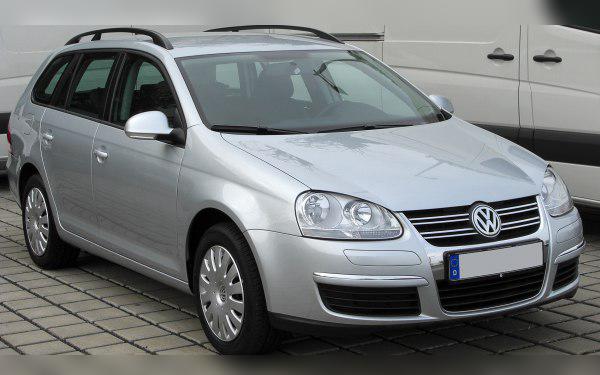
1.4 TSI (CAVD) 160 HP – Experiences, problems, fuel consumption and buying tips
Key points (TL;DR)
- Technology: "Twincharger" engine – uses both a supercharger and a turbocharger. Fantastic performance, but a very complex design.
- Main issue: Sensitive pistons (cracking of ring lands/pistons) and timing chain stretch.
- Timing drive: Uses a chain, not a timing belt. Requires strict attention to noises at cold start.
- Gearboxes: Comes with a 6-speed manual or 7-speed DSG (DQ200) gearbox. Dry-clutch DSG units are known for mechatronics failures.
- Maintenance: Does not tolerate "Long Life" service intervals. Oil must be changed every max. 10,000–15,000 km.
- Recommendation: An engine for enthusiasts who are ready for preventive maintenance. If you want “fill up and drive” reliability, this may not be the best choice.
Contents
- Technical specifications
- Reliability and Maintenance
- Specific Parts and Costs
- Fuel Consumption and Performance
- Additional Options and Modifications
- Gearbox (Manual and DSG)
- Buying Used and Conclusion
The engine designated EA111 / CAVD is one of the technically most interesting, but also most controversial powerplants from the Volkswagen Group of that era. Installed in models such as the VW Golf V Variant, this 1.4 TSI engine produces an impressive 160 HP thanks to a combination of a mechanical supercharger and a turbocharger. The idea was brilliant: the supercharger “irons out” the torque hole at low revs, and the turbo takes over at higher revs, delivering the linear power of a large-displacement naturally aspirated engine with low fuel consumption.
However, in practice this level of complexity brings very specific maintenance challenges. As someone who has seen many of these engines taken apart, I’ll tell you honestly what you can expect.
Technical specifications
| Parameter | Data |
|---|---|
| Engine displacement | 1390 cc (1.4 L) |
| Power | 118 kW (160 HP) |
| Torque | 240 Nm at 1500–4500 rpm |
| Engine code | CAVD (EA111 family) |
| Injection type | Direct injection (TSI/FSI) |
| Charging system | Twincharger (Mechanical supercharger + Turbocharger) |
| Camshaft drive | Chain |
Reliability and Maintenance
Does this engine have a timing belt or a chain?
The CAVD engine uses a timing chain. This is one of the weaker points of the EA111 series. The chain tends to stretch, and the hydraulic tensioner can fail, especially if the engine is frequently started and stopped or if unsuitable oil is used. The symptom is a metallic rattling noise at cold start that lasts more than a few seconds. If you hear this, replacement of the chain kit is urgent to avoid catastrophic failure (piston-to-valve contact).
What are the most common failures on this engine?
This is a list you must know before buying:
- Piston and ring land cracking: The most serious problem. Due to high thermal load and potential fueling issues (poor mixture), the piston crowns or ring lands can crack, leading to loss of compression and cylinder damage.
- Supercharger magnetic clutch: Integrated with the water pump. It often fails, which manifests as squealing noises or loss of low-end power because the supercharger does not engage.
- Carbon buildup: As with any direct injection engine, the intake valves get dirty over time, which gradually reduces performance.
- Ignition coils: They often fail, causing rough running and misfires.
At what mileage is the major service due?
Since the engine has a chain, a classic “major service” like with a belt is not specified at a fixed mileage, but real-world practice says otherwise. The chain, tensioner and guides should be replaced as soon as the first symptoms appear, which often happens between 80,000 and 120,000 km. Also, the auxiliary belt (driving the alternator, AC and water pump) should be regularly inspected and replaced at around 60,000–80,000 km.
How many liters of oil does this engine take and which grade is recommended?
The sump holds approximately 3.6 liters of oil. The recommended grade is 5W-30 or 5W-40, with mandatory adherence to VW specifications (most commonly VW 504.00 / 507.00). Since the engine has both a turbo and a supercharger, high-quality oil is absolutely critical.
Does it consume oil between services?
Yes, these engines are known for oil consumption. Consumption of up to 0.5 liters per 1,000 km is considered “acceptable” by the (often overly generous) factory standards, but in practice a healthy engine should not consume more than 1–1.5 liters per 10,000 km. Increased oil consumption is often the first sign of problems with the piston rings or the PCV valve (oil separator).
At what mileage should the spark plugs be replaced?
Due to the high specific output and complex ignition system, the spark plugs are under heavy stress. It is recommended to replace them every 30,000 to 40,000 km, even though the factory sometimes states 60,000 km. Use only high-quality iridium spark plugs (NGK or Bosch) specified for this engine code. A bad spark plug can cause detonation that destroys the pistons.
Specific Parts (Costs)
Does this engine have a dual-mass flywheel?
Yes, the 1.4 TSI (160 HP) has a dual-mass flywheel, regardless of whether it is paired with a manual or DSG gearbox. Its role is to dampen engine vibrations. When worn out, you can hear knocking at idle that disappears when you press the clutch (on the manual), or feel strong vibrations when switching the engine off. Replacement cost falls into the category: Expensive (varies by market).
What type of fuel injection system does it have and are the injectors problematic?
It uses direct fuel injection into the cylinders at high pressure. The injectors are generally durable but sensitive to poor fuel quality. They can start to “dribble” (not sealing properly), which washes oil off the cylinder walls and can lead to engine seizure. Preventive cleaning with quality additives is recommended.
Does this engine have a turbocharger (or two) and what is their lifespan?
This is a Twincharger. It has one exhaust-driven turbocharger and one mechanical Roots-type supercharger driven by a belt.
Supercharger: Operates at low revs (up to approx. 3500 rpm) and provides instant response. Its weak point is the magnetic clutch on the water pump that engages it.
Turbo: Takes over at higher revs. The turbo’s lifespan is around 150,000–200,000 km with proper maintenance, but the boost control system (wastegate) can sometimes be problematic.
Does this model have a DPF filter or an EGR valve?
As a petrol engine, it does not have a DPF filter (that’s for diesels), although newer petrol engines have GPFs (which this older model most likely does not have, depending on year and market). It does have an EGR valve (exhaust gas recirculation), which can get clogged with soot, causing rough running and triggering the “Check Engine” light.
Does this engine use AdBlue?
No. AdBlue is used exclusively on diesel engines to reduce NOx emissions. This engine runs on petrol only.
Fuel Consumption and Performance
What is the real-world fuel consumption in city driving?
Forget the factory figures. In a heavy body like the Golf V Variant, real-world city consumption is between 8.5 and 10.5 liters per 100 km, depending on how heavy your right foot is. If you constantly use the potential of the supercharger and turbo, consumption easily goes above 11 liters.
Is this engine “lazy” for the weight of the car?
Absolutely not. With 160 HP and 240 Nm available from low revs (thanks to the supercharger), this engine moves the Golf V estate with ease. The driving feel is as if you’re driving a much larger engine (e.g. a 2.0 naturally aspirated), because there is no turbo lag at take-off.
How does the engine perform on the motorway and at what revs does it cruise at 130 km/h?
The engine is an excellent cruiser. Thanks to the 6-speed manual or 7-speed DSG gearbox, at 130 km/h the engine spins at around 2,800 to 3,000 rpm. The cabin is quiet, and there is plenty of power for overtaking without frequent downshifts.
Additional Options and Modifications
Is this engine suitable for LPG conversion?
Because of direct injection (injectors are in the cylinder), a standard sequential LPG system cannot be installed. You need a dedicated system for direct-injection engines that either uses a mixture of petrol and LPG (to cool the petrol injectors) or uses liquid-phase LPG injection. The price of such a system is very high (often over 800–1000 EUR, depending on the market), so the cost-effectiveness is questionable unless you cover very high mileages.
How far can this engine be safely tuned (Stage 1)?
With a Stage 1 remap, power can be raised to around 190–200 HP. However, as an editor I have to warn you: I do not recommend tuning this particular engine (CAVD). The pistons are already at the limit of their strength from the factory. Increasing boost pressure and combustion temperatures dramatically raises the risk of piston ring land failure. If you still decide to tune it, choose only top-quality tuners and use 98/100-octane fuel.
Gearbox
Which manual and automatic gearboxes are fitted?
The following are most commonly paired with this engine:
- Manual: 6-speed (precise and reliable).
- Automatic: 7-speed DSG (code DQ200) with dry clutches.
Most common gearbox issues?
Manual: Generally very reliable. The main expense is the clutch kit and dual-mass flywheel.
DSG (DQ200): This is a “dry” DSG gearbox. The most common failures are rapid wear of the clutch plates (faster than on “wet” DSGs) and failure of the mechatronics unit (the gearbox brain). Symptoms include juddering when taking off, harsh gear changes or loss of odd/even gears. Repairs are expensive.
At what mileage should the gearbox be serviced and the oil changed?
Manual: Although VW says the oil is “lifetime fill”, I recommend changing it every 80,000–100,000 km for smoother shifting.
DSG (DQ200): In the gear section the oil is changed less frequently, but the hydraulic part of the mechatronics uses a specific fluid. Even though this is a dry-clutch gearbox, it is recommended to check and, if possible (depending on version), replace the fluid in the mechatronics at around 60,000 km. Still, with this gearbox the main focus is on the condition of the clutches rather than the oil itself.
Buying Used and Conclusion
When buying a used Golf V with the 1.4 TSI 160 HP engine, a thorough inspection is mandatory:
- Cold start: Insist that the car is completely cold. Listen to the chain during the first 3–5 seconds. If it rattles for longer, the chain needs replacing.
- Test drive: Pay attention to any “jerks” during acceleration between 2000 and 3000 rpm (transition from supercharger to turbo). If it jerks, it could be spark plugs, coils or an issue with the magnetic clutch.
- Compression test: If possible, measure compression in all cylinders. This is the only way to check the condition of the pistons/rings before it’s too late.
Conclusion:
The 1.4 TSI (CAVD) 160 HP engine delivers top-notch performance and driving enjoyment that very few engines of this displacement can offer. However, it is a “prima donna”. It demands premium fuel, high-quality oil, regular servicing and a careful owner. If you are buying a used car with an unknown history, the risk of expensive failures (pistons, chain, DSG) is high. It is intended for drivers who know what they are buying and have a budget for potential repairs, not for those looking for the cheapest means of transport.
Was this content useful to you?
Your opinion helps us to improve the quality of the content.