EA211 evo2 / DNKA Engine
- Engine
- 1498 cm3
- Aspiration
- Turbocharger, Intercooler
- Fuel
- Petrol (Gasoline)
- Fuel injection system
- Direct injection
- Power
- 158 hp @ 5500 rpm
- Torque
- 250 Nm
- Cylinders
- 4
- Valves
- 16, 4 per cylinder
- Cylinders position
- Inline
- Valvetrain
- DOHC
- Oil capacity
- 4.3 l
- Systems
- Start & Stop System
# Vehicles powered by this engine
1.5 TSI (EA211 evo2 / DNKA) – Experiences, problems, fuel consumption and used car buying guide
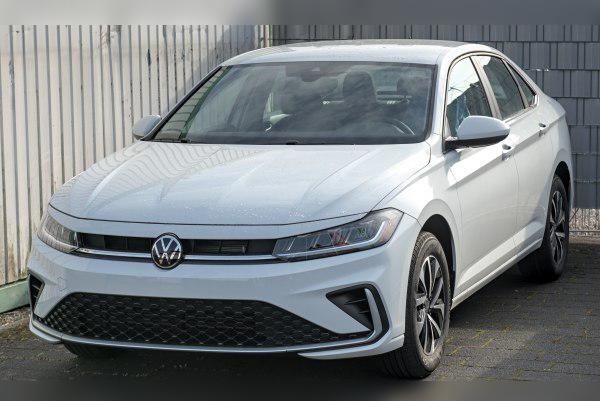
If you’re looking for a modern petrol engine from the Volkswagen Group, you’ve probably come across the 1.5 TSI badge. Here we’re talking about the latest iteration of this engine – the EA211 evo2 (engine code DNKA), which is installed in the refreshed Jetta VII, as well as in the latest Golf, Octavia and T-Roc models. This is an engine that promises diesel-like economy with petrol refinement, but it also comes with high technological complexity.
Key points (TL;DR)
- Biggest advantage: Excellent balance of performance and fuel consumption thanks to the ACTplus system (two-cylinder deactivation).
- Biggest drawback: System complexity. It has a VTG turbo (variable geometry), which is rare for petrol engines and expensive to repair.
- Major service: The timing drive uses a timing belt. Intervals are long, but caution is recommended.
- Gearbox: In the Jetta it is often paired with a Tiptronic (traditional automatic) gearbox, which is more reliable than older DSG variants with a dry clutch.
- Recommendation: An excellent choice for drivers who cover a lot of mileage and want to avoid diesel because of environmental restrictions or DPF issues in city driving.
Contents
- Technical specifications
- Reliability and maintenance
- Specific parts and costs
- Fuel consumption and performance
- Additional options (LPG and remapping)
- Gearbox: Tiptronic vs DSG
- Buying used and conclusion
Technical specifications
| Parameter | Value |
|---|---|
| Engine displacement | 1498 cc (1.5 L) |
| Power | 118 kW (158 hp) |
| Torque | 250 Nm at 1750–4000 rpm |
| Engine code | DNKA (EA211 evo2) |
| Injection type | Direct injection (TSI) – 350 bar |
| Forced induction | Turbocharger with variable turbine geometry (VTG) |
| Camshaft drive | Timing belt |
Reliability and maintenance
Belt or chain?
Unlike older TSI generations (EA111), which had a bad reputation because of the timing chain, the 1.5 TSI evo2 (DNKA) uses a timing belt. This is very good news. The system is quieter and generally more reliable. The manufacturer often quotes “lifetime” intervals or replacement at 210,000 km for some markets, but as an experienced mechanic I advise you to do the major timing service at a maximum of 150,000–180,000 km or 7–8 years of age, whichever comes first. A snapped belt will cause catastrophic engine damage.
Most common failures and symptoms
Although the engine is relatively new, here’s what real-world use shows:
- Oil consumption: TSI engines are known for this. On the evo2 version the tolerances are better, but you should still expect to top up around 0.5–1.0 L between services if you drive aggressively. The symptom is the yellow oil level warning light coming on.
- Carbon buildup: Due to direct injection, the intake valves are not “washed” by fuel. Over time, carbon deposits build up, which can lead to rough idle and loss of power. The solution is mechanical cleaning (“walnut blasting”) at higher mileage.
- ACTplus system: The two-cylinder deactivation system is improved compared to “evo1”, but it’s still complex mechanics. If you feel excessive vibrations when driving with a light throttle, it’s possible that the actuators are not operating smoothly.
- “Kangaroo” effect (jerking): This was a huge issue with the first 1.5 TSI engines (jerking when moving off in first gear while cold). On DNKA (evo2) engines the software has been significantly refined, but pay attention during cold starts.
Oil and spark plugs
This engine takes approximately 4.3 litres of oil (always check the exact figure by VIN). The recommended grade is now ultra-thin 0W-20 (VW 508.00 / 509.00 specification), often greenish in colour. This oil is crucial for the turbocharger and ACT system to work properly. Do not pour thicker oil “just because”!
Spark plugs should be replaced every 60,000 km or 4 years. Do not postpone replacement, because a bad spark plug can damage the ignition coil (which is expensive) or the catalytic converter.
Specific parts (costs)
Does it have a dual-mass flywheel?
Yes, in most configurations (especially with an automatic gearbox) this engine uses a dual-mass flywheel. Its job is to absorb vibrations, particularly when the engine is running in 2-cylinder mode. Replacement is not cheap, and failure symptoms include a metallic noise when switching the engine off and vibrations at idle. (Price: Expensive, depends on the market).
Fuel injection system and injectors
It uses a high-pressure system (up to 350 bar). The injectors are piezo-electric and extremely precise. They are not prone to widespread failures like old diesel injectors, but they are very sensitive to poor fuel quality. A single injector can be a significant expense.
Turbocharger
This is where the biggest peculiarity lies. The engine uses a VTG turbo (Variable Turbine Geometry). This is a technology that for decades was reserved for diesel engines because of the high exhaust gas temperatures in petrol engines. VW solved this by using special materials. Service life is long if you change the oil regularly and let the engine cool down after fast driving, but if it fails – prepare your wallet, because overhauling this type of turbo is complicated.
Emissions equipment (DPF/GPF/EGR)
This petrol engine has a GPF (Gasoline Particulate Filter) – the petrol equivalent of a DPF on diesels. It is located close to the engine for faster warm-up. Clogging is less common than on diesels because petrol burns cleaner, but it is possible if the car is driven exclusively in the city. There is no AdBlue fluid.
Fuel consumption and performance
Real-world fuel consumption
In city stop-and-go driving, you can realistically expect between 7.5 and 9.0 l/100 km, depending on how heavy your right foot is. The Jetta is not a small car. However, on the open road, thanks to cylinder deactivation and the “coasting” function, fuel consumption can drop to an impressive 4.5–5.5 l/100 km.
Is the engine “lazy”?
Absolutely not. With 158 hp and 250 Nm of torque available from as low as 1750 rpm, this engine has no trouble moving the Jetta’s body. The acceleration feels linear, more reminiscent of a stronger naturally aspirated engine than of the old-school turbo “kick”.
Motorway driving
This is the engine’s natural habitat. At 130 km/h in top gear, the engine spins at around 2200–2400 rpm (depending on the gearbox). This ensures a quiet cabin and low fuel consumption.
Additional options and modifications
LPG conversion?
In short: Not recommended. Because of direct injection, you need an expensive system that either uses the “liquid phase” (using the petrol injectors for LPG) or a system that still injects about 15–20% petrol to cool the injectors. The cost-effectiveness is questionable unless you drive more than 30,000 km per year.
Remapping (Stage 1)?
The engine can be remapped. A safe limit for Stage 1 is around 175–180 hp and 300 Nm. However, be careful if you have a gearbox with a torque limit (especially the DQ200 DSG). With Tiptronic there is a bit more headroom, but you lose the factory warranty and increase the thermal load on the VTG turbo.
Gearbox: Tiptronic vs DSG
The Tiptronic gearbox was installed in the Jetta VII. This is a key difference compared to European models (Golf, Octavia), which use DSG.
Tiptronic (Aisin 8-speed):
In the Jetta for the US and some other markets, a traditional automatic transmission with a torque converter (often made by Aisin) is used.
- Advantages: Extremely smooth in city driving, no jerks when moving off, robust.
- Disadvantages: Slower shift response compared to DSG, slightly higher fuel consumption.
- Maintenance: An oil change in the gearbox is recommended every 60,000–80,000 km, even if the manufacturer claims it is “lifetime”.
DSG (7-speed, dry clutch – DQ200):
If you come across a version with a DSG gearbox (often in Europe):
- Problems: Clutch wear in heavy city traffic and mechatronics failures.
- Clutch replacement: The DSG clutch kit is a consumable item and not cheap (Cost: Very expensive).
Buying used and conclusion
Before buying a Jetta or another model with the 1.5 TSI (DNKA) engine, make sure you do the following:
- Cold start: Start the car when the engine is completely cold. Listen for any rattling that might suggest chain noise (even though it has a belt, rattling can come from the cam phaser or the turbo’s wastegate valve).
- Test drive: Try to drive at a constant speed (e.g. 80 km/h) so that the 2-cylinder mode activates. If you feel a strong jolt when switching from 4 to 2 cylinders or noticeable vibrations, that’s not a good sign.
- Check for leaks: Remove the plastic engine cover (if possible) and look around the turbo housing and cylinder head for traces of oil or coolant (the water pump is part of the thermal management module and is known to leak).
Conclusion:
This engine is a technological gem that offers great performance with low fuel consumption. It is aimed at drivers who want a modern, quiet and flexible car. If you’re coming from an old diesel, you’ll be delighted by the quietness and throttle response. Just keep in mind that this is not a simple “old-school” engine – regular maintenance with quality oil and parts is essential for a long service life.
Was this content useful to you?
Your opinion helps us to improve the quality of the content.