EA888 / CPLA, CPPA Engine
- Engine
- 1984 cm3
- Aspiration
- Turbocharger, Intercooler
- Fuel
- Petrol (Gasoline)
- Fuel injection system
- Direct injection
- Power
- 210 hp @ 5300 rpm
- Torque
- 280 Nm
- Cylinders
- 4
- Valves
- 16, 4 per cylinder
- Cylinders position
- Inline
- Valvetrain
- DOHC
- Oil capacity
- 5.5 l
- Coolant
- 8 l
- Systems
- Start & Stop System
# Vehicles powered by this engine
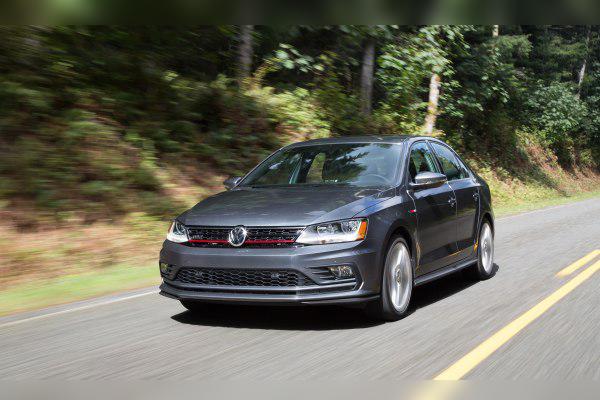
2.0 TSI EA888 (CPLA, CPPA) – Experiences, problems, fuel consumption and used car buying tips
Key points (TL;DR)
- Performance: Excellent power-to-weight ratio, the engine is very lively and potent.
- Reliability: Significantly better than the previous "Gen 2" generation (the massive oil consumption issue is solved), but it still requires attention.
- Biggest drawback: The thermostat housing and water pump (made of plastic) often crack and leak.
- Maintenance: Requires high‑quality oil and regular gearbox servicing (especially if it’s a DSG).
- Recommendation: An excellent choice for drivers who want sporty performance in a sedan body, provided the service history is known.
Contents
- Introduction and applications
- Technical specifications
- Reliability and maintenance
- Specific parts and costs
- Fuel consumption and performance
- Upgrades and modifications
- Gearbox
- Used car buying tips and conclusion
Introduction and applications
The engines with codes CPLA and CPPA belong to the third generation (Gen 3) of the famous Volkswagen EA888 engine family. This is very important, because the third generation fixes the disastrous flaws of the second generation (which was known for excessive oil consumption and piston failures). These specific engine codes are most commonly found in Volkswagen Jetta VI (facelift) GLI models, as well as in some versions of the VW Beetle, primarily on the North American market, but they are also frequently imported into Europe.
With its 210 horsepower, this unit turns the "boring" Jetta into a serious sports sedan that can rival the Golf GTI, while offering more discretion. It is a modern turbo petrol engine that delivers explosive response at low revs and linear power all the way to the redline.
Technical specifications
| Parameter | Data |
|---|---|
| Engine displacement | 1984 cc (2.0 L) |
| Power | 155 kW (210 hp) @ 5300 rpm |
| Torque | 280 Nm @ 1700-5200 rpm |
| Engine codes | CPLA, CPPA (EA888 Gen 3) |
| Fuel injection system | Direct injection (TSI/FSI) |
| Forced induction | Turbocharger (IHI) + intercooler |
| Number of cylinders / valves | 4 / 16 |
Reliability and maintenance
Timing system: chain or belt?
The 2.0 TSI EA888 Gen 3 uses a timing chain. Unlike older versions where the chain tensioner was a ticking time bomb, the system here is significantly improved. Still, the chain is not eternal. Chain stretch can occur at higher mileages (over 150,000 - 200,000 km). Symptoms include rattling on cold start that lasts a few seconds, or the "Check Engine" light coming on due to timing phase desynchronization.
Most common failures
Although more reliable than its predecessor, CPLA/CPPA engines have several weak points:
- Water pump and thermostat housing: This is the "Achilles’ heel" of this engine. The entire housing is made of plastic, which deforms over time due to heat cycles, leading to coolant leaks. If you smell coolant or see a puddle under the car, this is suspect number one.
- Carbon buildup: Since this is a direct‑injection engine, the valves are not "washed" by fuel. Over time, soot builds up on the intake valves, causing rough idle and power loss. Cleaning (walnut shell blasting) is recommended every 80,000 - 100,000 km.
- PCV valve (oil vapor separator): When the membrane in this valve tears, the engine may start consuming oil, produce a "whistling" sound, or have an unstable idle (vacuum leak).
Major and minor service
Since the engine has a chain, there is no classic "major service" at a fixed interval (as with a belt). The chain is replaced as needed (when it becomes noisy or diagnostics show it is stretched). However, the serpentine belt and its pulleys should be regularly inspected and replaced at around 100,000 - 120,000 km.
Oil: capacity and consumption
The engine holds approximately 5.7 liters of engine oil. Only fully synthetic oil of grade 5W-40 or 0W-40 that meets the VW 502.00 or VW 504.00 specification is recommended.
As for oil consumption: Gen 3 engines are drastically better than Gen 2. However, turbo engines do tend to "drink" some oil if driven aggressively. Consumption of about 0.5 liters per 3,000 - 5,000 km can be considered acceptable. If it uses a liter per 1,000 km, that points to an issue with the piston rings, turbo, or PCV valve.
Spark plugs and ignition coils
On turbo petrol engines, spark plugs are heavily stressed. It is recommended to replace them every 60,000 km. If the car is "chipped" (Stage 1), the interval should be shortened to 30,000 - 40,000 km. Ignition coils also tend to fail, which shows up as jerking under acceleration (misfire).
Specific parts (costs)
Dual‑mass flywheel
Yes, this engine has a dual‑mass flywheel, regardless of whether it is paired with a manual or DSG gearbox. Its role is to dampen the vibrations of the powerful four‑cylinder. Replacement is expensive (very expensive, depending on the market) and is usually done together with the clutch kit.
Fuel injection system and injectors
It uses high‑pressure direct injection. The injectors are generally reliable, but sensitive to poor fuel quality. Injector failure usually manifests as fuel "leaking" into the cylinder, which can wash oil off the cylinder walls and cause serious damage. Still, this is not a widespread issue.
Turbocharger
The engine uses a single IHI IS20 turbocharger (in most variants). This is a very capable turbo that spools up quickly. Its lifespan is long, often over 200,000 km with regular oil changes. A critical point can be the actuator (wastegate), which can seize or develop play, leading to power loss.
Emissions systems (EGR, DPF, AdBlue)
As a petrol engine, it DOES NOT have a DPF filter nor use AdBlue. It also does not have a conventional EGR valve that clogs with soot like on diesels; exhaust gas recirculation is performed internally via variable valve timing (VVT). However, it does have a catalytic converter, which can fail if the engine burns oil or has mixture problems.
Fuel consumption and performance
Real‑world fuel consumption
- City driving: Expect between 9 and 12 l/100 km. In heavy stop‑and‑go traffic and with a heavy right foot, this easily goes over 13 liters.
- Highway / open road: Here the engine is very efficient, consumption is around 6.5 to 7.5 l/100 km.
- Combined: A realistic average for most drivers is about 8.5 - 9.0 l/100 km.
Is the engine "lazy"?
Absolutely not. With 210 hp and 280 Nm available from as low as 1700 rpm, a Jetta with this engine "flies". 0–100 km/h takes about 7 seconds, which is quicker than most cars on the road. Overtaking is safe and fast, without the need to downshift on the motorway.
Behavior on the motorway
This is the natural habitat of this model. At 130 km/h in sixth gear, the engine runs smoothly, usually below 3,000 rpm (depending on the gearbox), which allows for quiet and comfortable cruising with enough power in reserve to accelerate up to 200 km/h effortlessly.
Upgrades and modifications
LPG conversion
Since this is a direct‑injection engine, LPG conversion is complicated and expensive (costly, depending on the market). A special system for direct injection (e.g. liquid phase) is required, or a system that also injects some petrol to cool the petrol injectors. In general, it does not pay off unless you cover very high mileages (over 30–40 thousand km per year).
Chiptuning (Stage 1)
EA888 engines are every tuner’s dream. A "Stage 1" remap (software only) can safely raise power to 250–260 hp and torque to over 350 Nm. The engine can handle this increase without issues, but keep in mind that it will shorten clutch life (on manual gearboxes) and requires more frequent servicing (oil every 8–10 thousand km).
Gearbox
Gearbox options
With this engine in the Jetta VI facelift, two options are most common:
- 6‑speed manual gearbox: Precise, with short throws, provides an excellent driving feel.
- DSG automatic gearbox (DQ250): This is a 6‑speed dual‑clutch gearbox with wet clutches.
Most common issues
- Manual: Generally bulletproof, but the clutch kit can wear out relatively quickly if driven aggressively or if the car is chipped, because the stock clutch is not designed for much higher torque.
- DSG: One of the best gearboxes on the market, but it requires maintenance. Possible failures include the mechatronics unit (the gearbox "brain"), which is expensive to repair, and rattling from the flywheel. Symptoms of problems are jerking when setting off, hesitation when changing gears, or harsh downshifts.
Gearbox servicing
- DSG: Oil and filter changes are MANDATORY every 60,000 km. Skipping this service is a sure path to costly mechatronics or clutch failure.
- Manual: Although manufacturers often say "lifetime fill", it is recommended to change the gearbox oil at around 100,000 - 120,000 km for smoother shifting and to preserve the gears.
Buying used and conclusion
Before buying a Jetta or Beetle with this engine, make sure to check:
- Coolant leaks: Look around the area under the intake manifold; the thermostat housing is a known weak point.
- Cold start: Insist on starting the car when the engine is completely cold. Listen to the chain – if it rattles for more than 2–3 seconds, it is ready for replacement.
- DSG service history: If there is no proof that the DSG oil was changed every 60k km, be cautious or negotiate a big discount.
- Exhaust smoke: Bluish smoke when revving or after idling indicates oil consumption (piston rings or valve stem seals).
Conclusion: Volkswagen’s 2.0 TSI (CPLA/CPPA) is a fantastic engine that offers a lot of driving fun. It is far more reliable than its predecessors and, with proper maintenance, can cover very high mileages. It is aimed at drivers who want GTI‑level performance but need a more practical or more discreet car. If you accept that you will probably have to replace the water pump and regularly check the oil level, this engine will put a smile on your face every single day.
Was this content useful to you?
Your opinion helps us to improve the quality of the content.