CLCA, CUAA Engine
- Engine
- 1968 cm3
- Aspiration
- Turbocharger, Intercooler
- Fuel
- Diesel
- Fuel injection system
- Diesel Commonrail
- Power
- 110 hp
- Torque
- 250 Nm
- Cylinders
- 4
- Valves
- 16, 4 per cylinder
- Cylinders position
- Inline
- Oil capacity
- 4.3 l
- Systems
- Particulate filter
# Vehicles powered by this engine
Key points in short (TL;DR)
- Two generations: The CLCA engines (older, Euro 5) and the newer series (Euro 6, often with AdBlue system) offer the same power but differ in complexity.
- Durability: This is a “de‑stressed” 2.0 engine. Since the same base handles up to 190 hp, the 110 hp version is extremely long‑lasting with proper maintenance.
- Major service: The engine is driven by a timing belt. It’s recommended to replace it earlier than the factory interval (around 160,000–180,000 km).
- Dual‑mass flywheel: Present on both manual and DSG gearboxes. This is the most expensive wear item you’ll face (costly, depends on the market).
- DPF and EGR: Like any modern diesel, it’s sensitive to city driving. It needs to be “blown out” regularly on open roads.
- Performance: 110 hp is the “sweet spot” for the Jetta. It’s no racer, but it’s noticeably more flexible and pleasant to drive than the 1.6 TDI.
- Recommendation: An excellent choice for drivers who cover a lot of highway mileage and value reliability over outright performance.
Contents
2.0 TDI (110 hp): Experiences, issues and maintenance
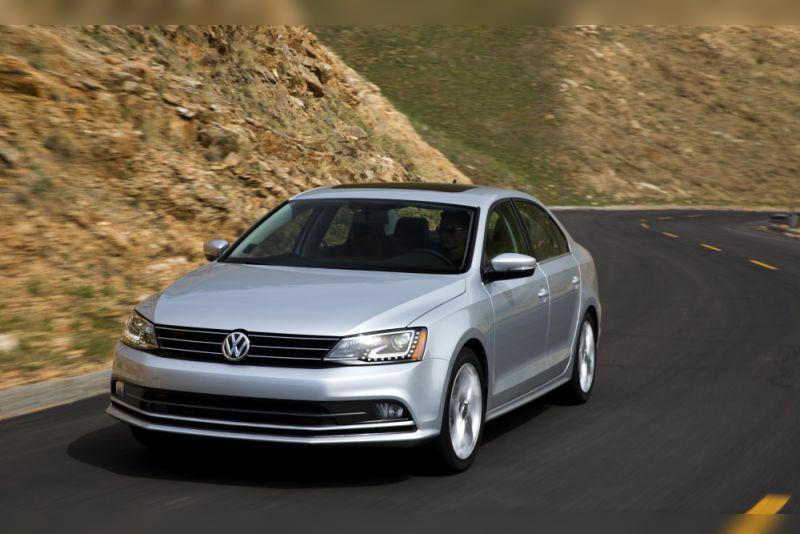
When talking about the Volkswagen Jetta VI (especially the 2014 facelift model), the 2.0 TDI engine with 110 hp is arguably the most rational choice. This engine was created as an answer to the need for a unit with more displacement and torque than the popular but sometimes sluggish 1.6 TDI, while still keeping fuel consumption and registration costs within reasonable limits.
It’s important to note that engine codes such as CLCA (often associated with transition models and markets without strict Euro 6 standards) and newer variants from the EA288 family (installed in the facelift) bring certain differences in exhaust after‑treatment systems. However, the mechanical basis – a robust cast‑iron block and Common Rail injection – remains a shared characteristic that promises hundreds of thousands of kilometers.
Technical specifications
| Engine displacement | 1968 cc |
| Power | 81 kW (110 hp) |
| Torque | 250 Nm at 1500–3000 rpm |
| Engine codes | CLCA, CUUA (note: CUAA is usually BiTurbo, here we focus on the 110 hp variants) |
| Injection type | Common Rail (direct injection) |
| Induction | Variable‑geometry turbocharger + intercooler |
| Number of valves | 16v (DOHC) |
Reliability and maintenance
Timing belt or chain?
This engine uses a timing belt to drive the camshafts. That’s good news, because VW chain‑driven engines from that period (mostly petrol) proved problematic. The belt drive on 2.0 TDI engines is reliable, quiet and predictable.
Most common failures
Although the engine is very reliable, age and mileage take their toll. Here’s what to expect:
- Water pump: A known weak point. It can start leaking or the plastic impeller can crack, leading to overheating. Symptoms include coolant loss or a sudden rise in engine temperature.
- EGR cooler: The internal cells of the EGR cooler often crack, so the engine “drinks” coolant which then evaporates through the exhaust (white smoke).
- Exhaust pressure sensors (G450): A common failure that triggers the check‑engine light and prevents DPF regeneration. Not very expensive (depends on the market), but annoying.
Major service
The manufacturer often lists optimistic intervals of 210,000 km for timing belt replacement. However, real‑world experience and mechanics’ advice say otherwise. It’s recommended to perform the major service between 160,000 km and 180,000 km or every 5 to 6 years, whichever comes first. A snapped belt causes catastrophic engine damage (pistons and valves colliding), so preventive replacement is crucial.
Oil: capacity and consumption
The engine takes approximately 4.3 to 4.6 liters of oil (depending on filter size and sump variant). You must use 5W‑30 oil that meets the strict VW 507.00 specification, especially because of the DPF filter.
As for oil consumption, these engines are significantly better than the older Pump‑Düse units. Consumption of around 0.5 liters per 10,000 km is considered completely normal. If it uses more than 1 liter per service interval, the turbocharger or valve stem seals should be checked.
Injectors
The system uses Common Rail injectors (often Bosch or Continental). They are generally very durable and can last over 250,000 km without issues, provided you use quality fuel. Symptoms of bad injectors include rough idle (“rocking” engine), hard starting or increased fuel consumption.
Specific parts (costs)
Dual‑mass flywheel
Yes, this engine has a dual‑mass flywheel, regardless of whether it’s paired with a manual or DSG gearbox. Its role is to dampen the vibrations of the strong diesel engine. Its typical lifespan is between 150,000 and 200,000 km, depending on driving style. Replacement is expensive (depends on the market) and is usually done together with the clutch kit.
Turbocharger
The engine uses a single variable‑geometry turbocharger. The turbo is not prone to sudden failures, but it does require cooling after hard driving (let it idle for a minute or two before shutting off). Failure symptoms include whistling (“siren” sound), loss of power and bluish smoke from the exhaust.
DPF, EGR and AdBlue
The Jetta VI facelift (after 2014) with this engine definitely has a DPF filter and EGR valve. If you drive exclusively in the city, DPF clogging is a matter of time, not “if it will happen”. The symptom is a DPF warning light and the car going into “safe mode” (reduced power).
AdBlue: Newer‑generation engines (EA288, Euro 6) use AdBlue fluid. The system is generally efficient, but the AdBlue pump heater and the injector that sprays urea can fail or clog with crystallized fluid, which are costly repairs (very expensive, depends on the market). The older variant (CLCA – Euro 5) usually doesn’t have an AdBlue system.
Fuel consumption and performance
Real‑world consumption
This is the engine’s strongest card. In heavy city traffic you can expect between 6.5 and 7.5 l/100 km. On the open road, consumption easily drops to 4.5 to 5.0 l/100 km. The average driver will see a combined figure of around 5.5 to 6 liters.
Is the engine “lazy”?
With 110 hp and 250 Nm, this engine is not sporty, but it’s far from lazy. Torque is available from low revs (around 1500 rpm), which makes driving smooth. For the Jetta, which is a relatively light sedan, this is more than enough power for overtaking and hills, especially compared to the 1.6 TDI, which needs to be revved harder.
Behavior on the motorway
This is the engine’s natural habitat. At 130 km/h in top gear (5th or 6th), the engine spins at a comfortable 2200–2400 rpm. The cabin is quiet, and the engine has enough power in reserve to accelerate up to 150 km/h without needing to downshift.
Additional options and modifications
Chip tuning (Stage 1)
Since the 110 hp version is essentially a software‑limited version of the stronger 2.0 TDI engines (which leave the factory with 140 or 150 hp), the tuning potential is huge. A safe Stage 1 remap can raise power to 140–150 hp and torque to over 320 Nm, without significantly affecting component longevity, provided the clutch and turbo are in good condition. This drastically changes the car’s character.
Gearbox: manual vs DSG
Options
This engine comes with two options: a 5‑speed manual (less commonly a 6‑speed on some markets for the 110 hp version) and a DSG automatic gearbox (usually the DQ250 with 6 speeds and wet clutch).
Failures and maintenance
- Manual gearbox: Very reliable. Problems are rare and usually related to the clutch kit and flywheel rather than the gearbox itself. Oil change in the gearbox is not specified, but recommended at 150,000 km.
- DSG gearbox: Requires strict maintenance. Oil and filter in the DSG must be changed every 60,000 km. If this is followed, the gearbox is long‑lasting. The most common failure is the mechatronic unit (the gearbox “brain”), whose repair is very expensive (depends on the market). Also, the dual‑mass flywheel on DSG often starts rattling before it completely fails.
Clutch cost: Replacing the clutch kit together with the dual‑mass flywheel is a costly job (expensive, depends on the market), but it’s usually done once every 150–200 thousand kilometers.
Buying used and conclusion
When buying a Jetta with this engine, pay attention to the following:
- Cold start: Listen to the engine while it’s cold. There should be no metallic knocking or uneven running.
- Engine shut‑off: When you turn the car off, there should be no “click‑clack” metallic noise. That’s a sure sign of a bad dual‑mass flywheel.
- Diagnostics: Check DPF load (soot mass) and injector corrections. This tells you how the car has been driven.
- Coolant traces: Look around the coolant reservoir and the engine for white residue from leaks (water pump, EGR).
Who is this engine for?
The VW Jetta 2.0 TDI (110 hp) is an ideal car for families and commuters who drive more than 15,000 km per year, mostly on open roads. It offers a perfect balance between power sufficient for safe driving and low fuel costs. Avoid it only if you drive exclusively short city trips (because of the DPF) – in that case a petrol engine is a better option.
Was this content useful to you?
Your opinion helps us to improve the quality of the content.