EA888 / CPLA Engine
- Engine
- 1984 cm3
- Aspiration
- Turbocharger, Intercooler
- Fuel
- Petrol (Gasoline)
- Fuel injection system
- Direct injection
- Power
- 210 hp
- Torque
- 280 Nm
- Cylinders
- 4
- Valves
- 16, 4 per cylinder
- Cylinders position
- Inline
- Valvetrain
- DOHC
- Oil capacity
- 5.5 l
# Vehicles powered by this engine
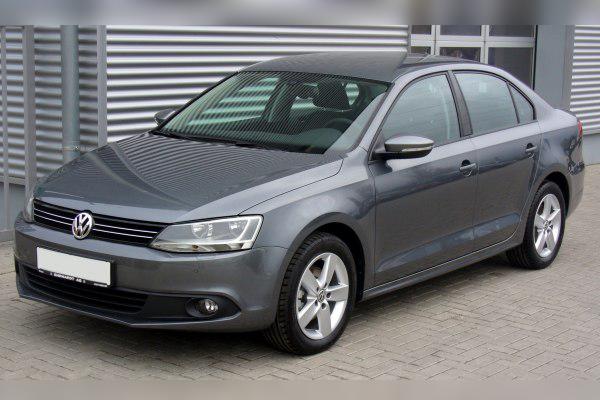
VW 2.0 TSI (EA888 Gen 3 / CPLA) 210 HP: Experiences, Problems, Fuel Consumption and Maintenance
Key points (TL;DR)
- Performance: Excellent power-to-weight ratio, the engine is very lively and potent in the Jetta body.
- Reliability: Significantly improved compared to the previous generation (Gen 2); the excessive oil consumption issue is largely resolved.
- Main drawback: The thermostat housing and water pump are made of plastic and prone to leaks.
- Timing chain: Although the tensioning system has been improved, the chain still needs to be monitored, especially at higher mileage.
- Maintenance: Requires high-quality oil and regular servicing; sensitive to poor fuel quality and neglecting oil change intervals.
- Tuning: Extremely rewarding for Stage 1 remap, where a significant power increase is easily achieved.
- Recommendation: An excellent choice for enthusiasts who want a high-performance petrol engine and are prepared for somewhat higher regular maintenance costs.
Contents
- Introduction and Applications
- Technical Specifications
- Reliability and Maintenance
- Specific Parts and Costs
- Fuel Consumption and Performance
- Additional Options (LPG and Tuning)
- Gearbox and Drivetrain
- Buying Tips and Conclusion
Introduction and Applications
The engine code CPLA belongs to the third generation (Gen 3) of the well-known Volkswagen EA888 engine family. This is a key piece of information because the third generation corrects many of the fatal flaws of the second generation (such as catastrophic oil consumption due to bad piston rings and timing chain tensioner issues). This 210 HP unit is most commonly found in Volkswagen Jetta VI models (often badged as GLI on the US market or Highline/Sport in Europe) after the facelift.
This is a modern turbocharged petrol engine that offers an excellent compromise between everyday usability and sporty ambitions. Unlike older versions, this engine has the exhaust manifold integrated into the cylinder head, which allows faster warm-up and better thermal efficiency, but also brings specific challenges for the cooling system.
Technical Specifications
| Parameter | Data |
|---|---|
| Displacement | 1984 cc (2.0 L) |
| Power | 155 kW (210 HP) @ 5300-6200 rpm |
| Torque | 280 Nm @ 1700-5200 rpm |
| Engine code | CPLA (EA888 Gen 3) |
| Injection type | Direct injection (TSI/FSI) |
| Induction | Turbocharger (IHI RHF5) + Intercooler |
| Number of cylinders/valves | 4 / 16v |
Reliability and Maintenance
Does this engine have a timing belt or a chain?
The CPLA engine uses a timing chain. This is a critical point for all EA888 engines. Although in this generation (Gen 3) the tensioning system and the chain itself are significantly improved compared to the notorious previous version, it is not lifetime. It is recommended to check the condition of the chain (its “stretch”) via diagnostics or visually through the inspection opening after 100,000 - 120,000 km. A rattling noise on cold start (first few seconds) is the first sign that the chain or tensioner is due for replacement.
What are the most common failures on this engine?
The biggest headache for CPLA owners is the thermostat module and water pump. The housing is made of plastic which, due to constant heating and cooling cycles, cracks and deforms, leading to coolant leaks. The symptom is loss of coolant without a visible puddle under the car (because it evaporates on the block) or the smell of coolant in the cabin.
Another common issue is the PCV valve (oil vapor separator). When the membrane tears, the engine may have an unstable idle, whistle, or create excessive vacuum in the crankcase, which can lead to crankshaft seal leaks.
At what mileage is the “major service” done?
Since the engine has a chain, a classic “major service” at a fixed interval like with a belt does not exist in that sense. However, the serpentine belt and its tensioners should be replaced at around 100,000 - 120,000 km or every 5-6 years. Chain replacement is done as needed, but in practice it is often necessary preventively between 150,000 and 200,000 km to avoid skipping.
Oil: Capacity, grade and consumption
The engine takes approximately 5.7 liters of engine oil. It is recommended to use synthetic 5W-30 or 5W-40 oil that meets strict VW standards (VW 502.00 / 504.00).
As for oil consumption: CPLA engines are drastically better than older 2.0 TSI units. However, it is still considered normal for the engine to consume 0.5 to 1 liter of oil per 5,000 - 8,000 km, especially if driven aggressively. If it uses a liter per 1,000 km, that indicates a problem, but in general this engine does not suffer from the systemic piston ring defect of its predecessors.
At what mileage should spark plugs be replaced?
For the CPLA engine, it is recommended to replace the spark plugs every 60,000 km. If the car is tuned (Stage 1), this interval should be halved to 30,000 km, and one step colder plugs should be used, because the higher combustion temperature wears the electrodes faster. Coils (ignition coils) can also fail, so if the engine starts to misfire or jerk, it is usually one of the coils.
Specific Parts (Costs)
Dual-mass flywheel
Yes, this engine has a dual-mass flywheel, regardless of whether it is paired with a manual gearbox or a DSG automatic. Its role is to dampen engine vibrations. Failure symptoms are metallic knocking when switching the engine off or vibrations at idle. Replacement is expensive (varies by market) and is usually done together with the clutch kit.
Fuel injection system and injectors
It uses direct fuel injection. Injectors are generally reliable but sensitive to poor fuel quality. A much bigger issue with this system is carbon buildup on the intake valves. Since fuel does not wash the valves (it is injected directly into the cylinder), deposits build up over time and choke the engine.
Symptoms: Rough running when cold, poorer throttle response. Mechanical cleaning of the intake valves (so-called “walnut blasting”) is recommended every 80,000 - 100,000 km.
Turbocharger
The engine has a single turbocharger (usually made by IHI). Turbo lifespan is directly related to regular oil changes and driving style (cooling the turbo after spirited driving). With proper maintenance, the turbo can last over 200,000 km. A common issue is wastegate rattle (the actuator rod), which can be heard as a metallic noise when lifting off the throttle, but this does not necessarily mean the turbo is done for.
Emissions: DPF, EGR, AdBlue
This is a petrol engine, so it does not have a DPF filter. It has a catalytic converter, which is expensive to replace. It also does not have an AdBlue system. There is a crankcase ventilation (PCV) system that has a similar ecological function to EGR in a broad sense, but a classic EGR valve that clogs with soot like on diesels is not a primary issue here.
Fuel Consumption and Performance
Real-world city consumption
Do not expect miracles. This is a 2.0 turbo petrol engine. In heavy city traffic (“stop-and-go”), real-world consumption is between 10 and 12 liters per 100 km. In winter and on short trips it can be even higher. If you are careful, you can get it down to 9 l/100 km, but that requires a lot of self-control.
Performance and “sluggishness”
This engine is absolutely not sluggish. With 210 HP and 280 Nm of torque available from as low as 1700 rpm, a Jetta with this engine really moves. In-gear acceleration is excellent, overtaking is safe and quick. The driving feel is sporty, and the engine pulls linearly all the way to the redline.
Highway driving
This is the natural habitat of this engine. At 130 km/h, depending on the gearbox (usually 6th gear), the engine spins at around 2,800 - 3,000 rpm, which is quite comfortable. Fuel consumption on the open road with normal driving drops to a reasonable 6.5 to 7.5 l/100 km.
Additional Options and Modifications
LPG conversion
Due to the direct injection system, LPG conversion is complicated and expensive. It requires a special “Direct Injection Kit” that still uses a certain percentage of petrol to cool the petrol injectors, or an even more expensive liquid LPG injection system through the petrol injectors. Given the high installation cost and complexity, cost-effectiveness is questionable unless you cover very high mileage.
Chip tuning (Stage 1)
EA888 engines are “kings” of tuning. This engine is extremely suitable for remapping. With a software-only change (Stage 1), power can be safely raised to 250-260 HP, and torque can go over 350-380 Nm. The engine handles this increase very well, provided it is mechanically sound (chain, turbo) and regularly serviced.
Gearbox
Types of gearboxes
With this engine in the Jetta VI you most commonly get:
- 6-speed manual gearbox: Precise, robust.
- 6-speed DSG (DQ250): Dual-clutch automatic gearbox with “wet” clutches (clutches run in oil).
Gearbox failures and maintenance
Manual gearbox: Very reliable. The most common expense is the clutch kit which, depending on driving style, lasts around 100,000 - 150,000 km. Oil change in the manual gearbox is not strictly prescribed, but it is recommended every 100,000 km.
DSG gearbox (DQ250): This is one of the best DSG gearboxes. It is much more reliable than the “dry” 7-speed DSG. However, it requires strict maintenance. Oil and filter in the DSG MUST be changed every 60,000 km. If this is neglected, the mechatronics unit (the gearbox “brain”) fails, and repairs are very expensive. Failure symptoms are jerks when setting off or delays when changing gears.
Used Car Buying and Conclusion
When buying a used Jetta with the 2.0 TSI (CPLA) engine, make sure to check:
- Cold start: Listen for chain rattle in the first 3-5 seconds.
- Coolant leaks: Check the coolant level and look for white traces (dried coolant) around the thermostat housing (at the front of the engine).
- DSG service history: If there is no proof that the gearbox oil was changed at 60k km intervals, be very cautious.
- Exhaust smoke: Bluish smoke when accelerating indicates oil consumption or a bad turbo.
Conclusion: The 2.0 TSI CPLA engine is an excellent choice for drivers who want performance but are not willing to pay for premium-brand maintenance (even though VW is close to that level). It has solved most of the “childhood diseases” of its predecessors. Maintenance is more expensive than on a basic diesel (especially considering fuel consumption and potential water pump issues), but in return you get a refined, fast and fun car. It is not for those who want the cheapest transport from point A to point B, but for those who also want to enjoy driving.
Was this content useful to you?
Your opinion helps us to improve the quality of the content.